
Cedar Wood Fence Installation in Galveston County, TX
Cedar privacy, board-on-board, shadowbox and picket fences, with matching cedar gates. Cedar is the upgrade from pine because its heartwood resists decay. On the Gulf Coast, three details decide how it ages: what the posts are, what touches the soil, and what the fasteners are made of.
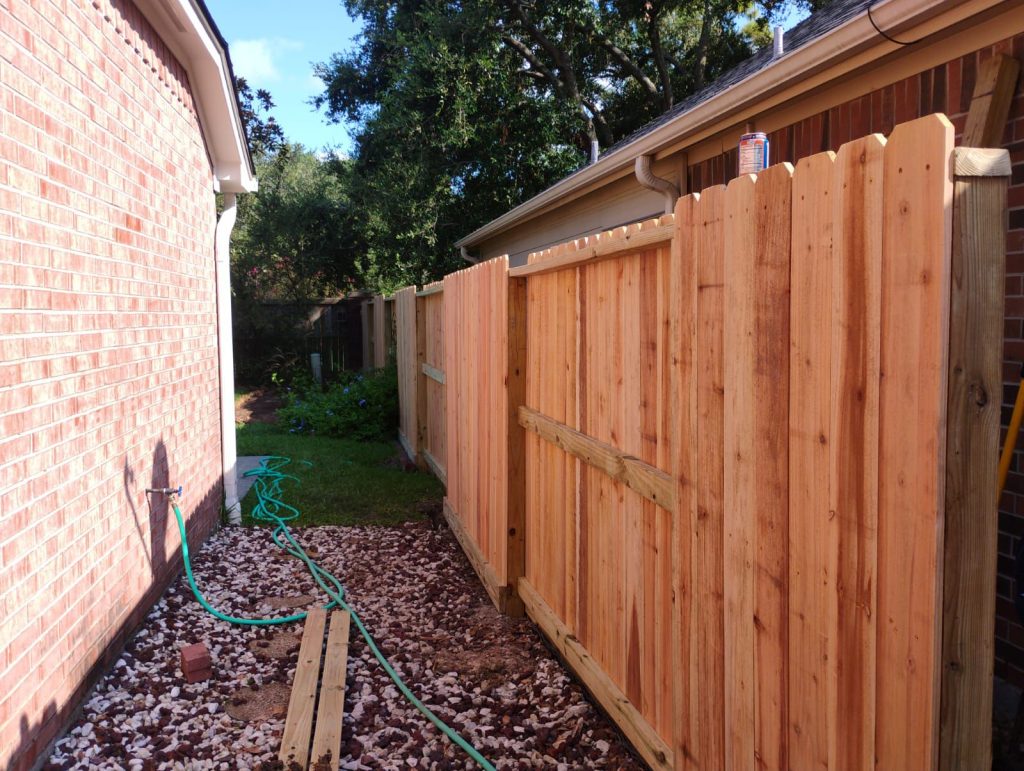
Cedar is worth it for the parts of a fence that stay above ground. The USDA Wood Handbook rates cedar heartwood "resistant" to decay, which it says generally gives satisfactory service above ground. In the ground, only "very resistant" heartwood generally holds up, so a cedar fence still needs ground-contact treated (UC4A) or galvanized steel posts and a treated rot board along the soil. Fasten cedar with stainless or hot-dip galvanized (ASTM A153) hardware, because plain steel leaves black iron stains. Near salt water, choose stainless.
Sources: USDA Forest Products Laboratory, Wood Handbook FPL-GTR-282 (2021), Tables 4-3, 14-1 and 15-6 and Chapters 8 and 16; Southern Forest Products Association, Pressure-Treated Southern Pine (2019).
Where cedar belongs on the fence
Cedar's value is its heartwood. The USDA Forest Products Laboratory groups woods by how well their heartwood resists decay. Cedars are in the resistant group. The handbook explains what that means in practice: resistant heartwood generally gives satisfactory service above ground, and only very resistant heartwood generally performs in contact with the ground. It also warns that resistance can be lower in warm, humid climates like ours.
So on a well-specified cedar fence, the pickets, cap and trim are cedar, and the parts that sit in or against wet soil are something else:
- Posts: pressure-treated pine tagged for ground contact (UC4A), or galvanized steel posts.
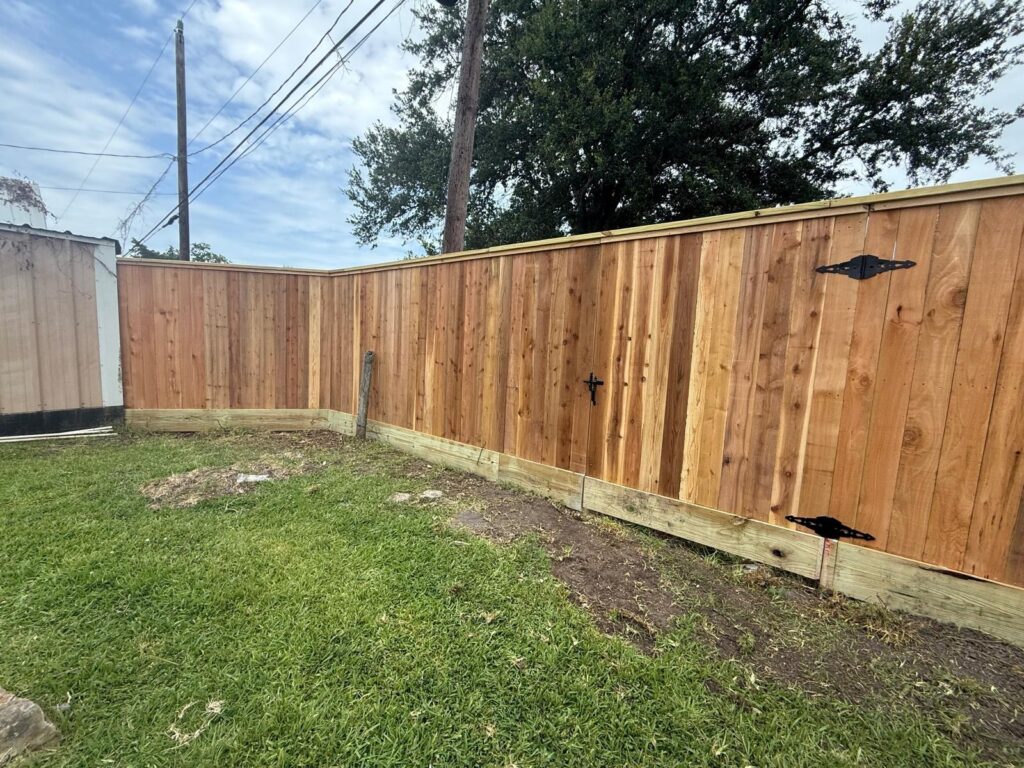
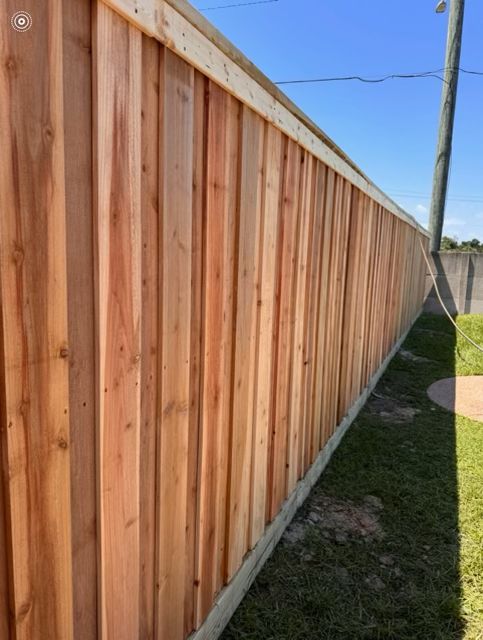
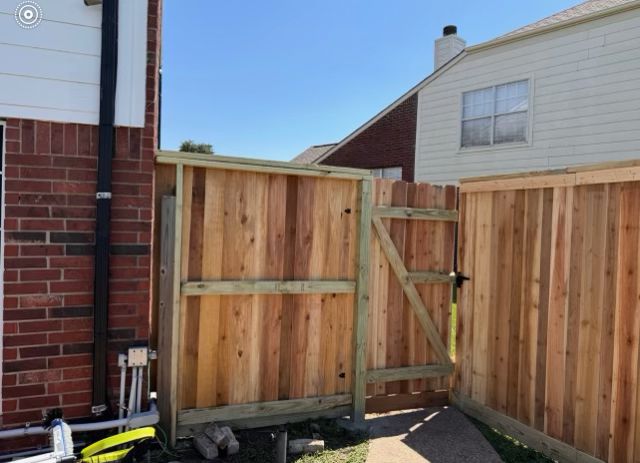
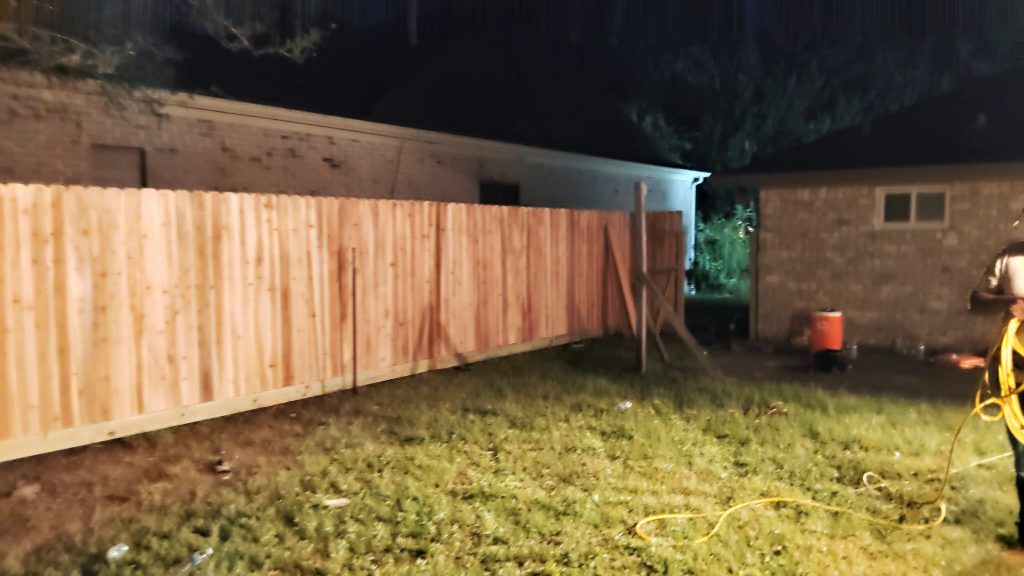
- Rot board: a treated board along the bottom that takes the splash and the soil, so the cedar pickets end above it. You can see one in the photos below.
- Rails: cedar, or treated pine rated for above-ground exposure (UC3B).
This is the same rule the wood fence guide applies to every species. For the rot and movement numbers side by side, read cedar vs pressure-treated pine.
Grades, sapwood and grain: what to look at on the pile
Two cedar fences can look alike on day one and age very differently. The difference is in the boards:
- Sapwood. The handbook is blunt: untreated sapwood of essentially all species has low resistance to decay. Sapwood is the pale outer band of the log, so a cedar board with a light edge has some. A little is normal in fence stock. Boards that are mostly pale won't have cedar's decay resistance.
- Knots and grade. Higher cedar grades have fewer and smaller knots and cost more. Knots also bleed extractives through paint, which matters if you plan a solid finish.
- Grain. Most fence boards are flat-grain. The handbook notes that vertical-grain boards swell less, and check and cup less. All-heartwood vertical-grain cedar is still available, but it is expensive.
- Movement. Western redcedar shrinks about 5.0% across a flat-grain board from green to oven-dry, less than the southern pines at 7.4–7.7%. That is why cedar privacy fences open smaller gaps as they dry. See sizing gaps for wood movement.
At the estimate, ask which grade the price is based on and whether you can see sample boards.
Cedar fence spec checker
Enter what a quote or a plan says about the posts, the bottom of the fence, the fasteners and the finish. The checker compares each one with the USDA Wood Handbook and the treated-wood guidance cited below.
How it decides: USDA Wood Handbook FPL-GTR-282 (2021) Table 14-1 (cedar heartwood is "resistant"; in ground contact only "very resistant" heartwood generally performs, and other woods usually need preservative treatment), Table 15-6 (UC4A for fence posts), and Chapters 8 and 16 (iron stain on cedar; stainless or ASTM A153 hot-dip galvanized). Southern Forest Products Association, Pressure-Treated Southern Pine (2019): salt water exposure is a particularly severe environment, stainless fasteners are required in severe environments, and electroplated galvanized fasteners are typically not accepted outdoors. It checks the spec, not the workmanship, and it isn't a quote.
Finishing cedar on the coast
Cedar doesn't need a finish to resist decay, because the resistance is in the heartwood. A finish is about looks and weathering. There are three routes:
- Let it weather. Unfinished cedar turns silver-gray. A clear water repellent slows the cracking and mildew that come with sun and rain. See does cedar need sealing here?
- Semi-transparent stain. It keeps the grain visible and doesn't peel. The handbook says it performs well on saw-textured boards, and to expect about half the service life on smooth ones.
- Paint or solid stain. Cedar's water-soluble extractives bleed through as reddish-brown stains, especially at knots. The handbook calls for a stain-blocking primer first.
For timing and upkeep, see how often to restain here, stain vs paint, and our staining and sealing service.
Cedar fence styles compared
| Style | Privacy | Boards per foot (5½″ boards) | Looks the same from both sides? |
|---|---|---|---|
| Solid privacy (butted) | Full at first; small gaps can open as boards dry | About 2.2 | No |
| Board-on-board | Full, even as boards shrink | About 3 | Yes |
| Shadowbox | Partial: you can see through at an angle | Depends on the overlap | Yes |
| Picket (3″ gaps) | Open | About 1.4 | No |
Boards per foot: 12 in ÷ board spacing. Board-on-board assumes two layers lapping 1½″ at each edge; picket assumes 5½″ boards with 3″ gaps. See the wood fence layout planner for your run.
From estimate to finished cedar fence
- Free on-site estimate. We walk and measure the line with you, and note gates, slopes, trees, drainage and any old fence that has to come out.
- Spec and a written price. The price covers the cedar grade, height, style, posts, rot board, gates, fasteners and any finish. Use the checker above to read it.
- Property line and permits. Know where your line is before posts go in. A survey is the reliable way. Check the city permit and any HOA rules.
- Installation. Posts first, then rails, rot board, pickets, cap and gates.
- Walkthrough. Check that the gates swing and latch, and agree when the cedar can take a finish.
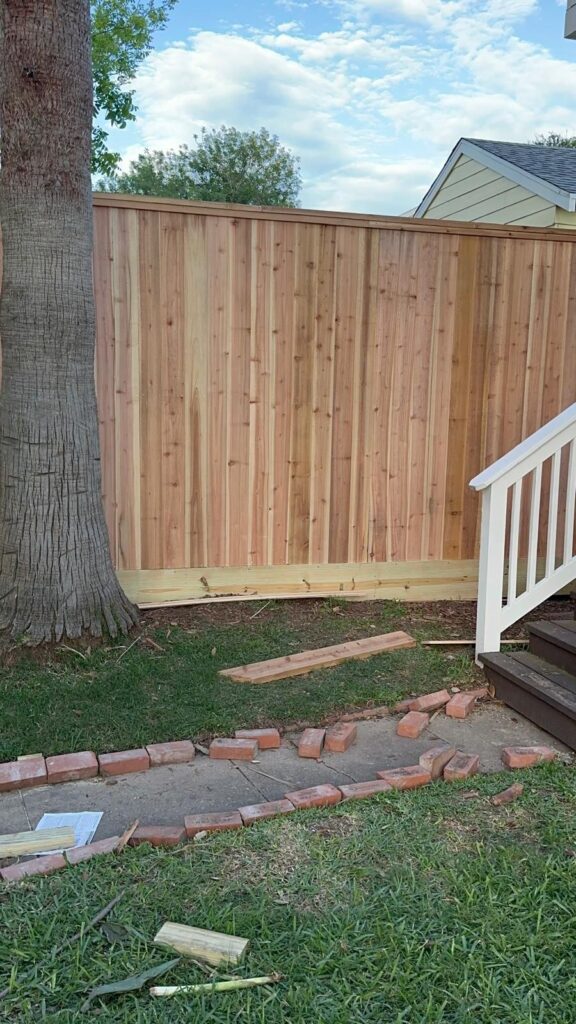
Finished cedar work: a custom cedar gate in Galveston, a cedar privacy fence in Galveston, and an 8 ft horizontal cedar fence.
What affects the cost of a cedar fence
You get a written price after the free on-site visit. The main things that move it:
- Grade. Clearer, more heartwood-rich cedar costs more than knotty fence stock.
- Length and height. An 8 ft fence uses longer boards and posts than a 6 ft one.
- Style. Board-on-board and shadowbox use more boards than butted privacy or picket. A cap and trim add more.
- Posts and hardware. Treated wood or galvanized steel posts, and stainless or hot-dip fasteners.
- Gates, finish and site work. Each gate adds framing and hardware. Staining adds labor. Removing an old fence, slopes and clearing all add time.
See wood fence cost per foot. Financing is available through the providers on our financing page, subject to credit approval.
What customers say on Google
5.091 Google reviews · read them all on Google
Installed Stained cedar wood fence yesterday by mustang fencing, thanks for the beautiful work.
Amazing work will go ahead and recommend everyone in friends and family We installed 8ft tall double sided stained cedar wood fence in our backyard, it's really looks great, installed perfectly nice finishing and cost effective, thanks mustang fencing.
I chose Mustang Fencing for my backyard due to their reputation for quality and security. Their wood fencing exceeded my expectations, durable and visually appealing. The customer service was top-notch, and the installation was quick and efficient.
Reviews shown word for word from the Mustang Fencing Services Google Business Profile (Galveston), captured 2026-09-27.
Questions we get about this
Is a cedar fence worth the extra cost over pine?
Should cedar fence posts go in the ground?
What is a rot board?
What nails or screws should be used on cedar?
Does cedar need to be stained?
Why do gaps open in a new cedar privacy fence?
Can you build a matching cedar gate?
Sources
Checked September 27, 2026. Rules change, so confirm with the City before you build.
- USDA Forest Products Laboratory, Wood Handbook: Wood as an Engineering Material, FPL-GTR-282 (2021) — Table 4-3 shrinkage (western redcedar radial 2.4%, tangential 5.0%); Table 14-1 heartwood decay resistance and the above-ground vs ground-contact guidance; Table 15-6 AWPA use categories; Chapter 8 fasteners; Chapter 16 iron stain, extractive bleed, stain-blocking primers, vertical-grain heartwood and semitransparent stains.
- Southern Forest Products Association, Pressure-Treated Southern Pine (2019 edition) — fasteners: salt water exposure as a severe environment, stainless in severe environments, electroplated galvanized typically not accepted outdoors, matching fastener and connector metals.
- City of Galveston Land Development Regulations, §2.501 — residential fence heights: 8 ft; front yard 4 ft solid or 5 ft if at least 60% transparent.
- City of Galveston Fence Permit Application (Rev. 03/2023) — the historic district, Cedar Lawn and 1,000 ft mean-high-tide questions.
Planning a cedar fence?
We'll walk the line, go over grades, posts and fasteners, and give you a written price. Free on-site estimates across Galveston County.

