
Composite Fence Installation in Galveston County, TX
Wood-look privacy fences in vertical or horizontal boards that you clean instead of stain. Here is what composite is made of, how a section goes together, and how to look after it in Gulf Coast heat and humidity.
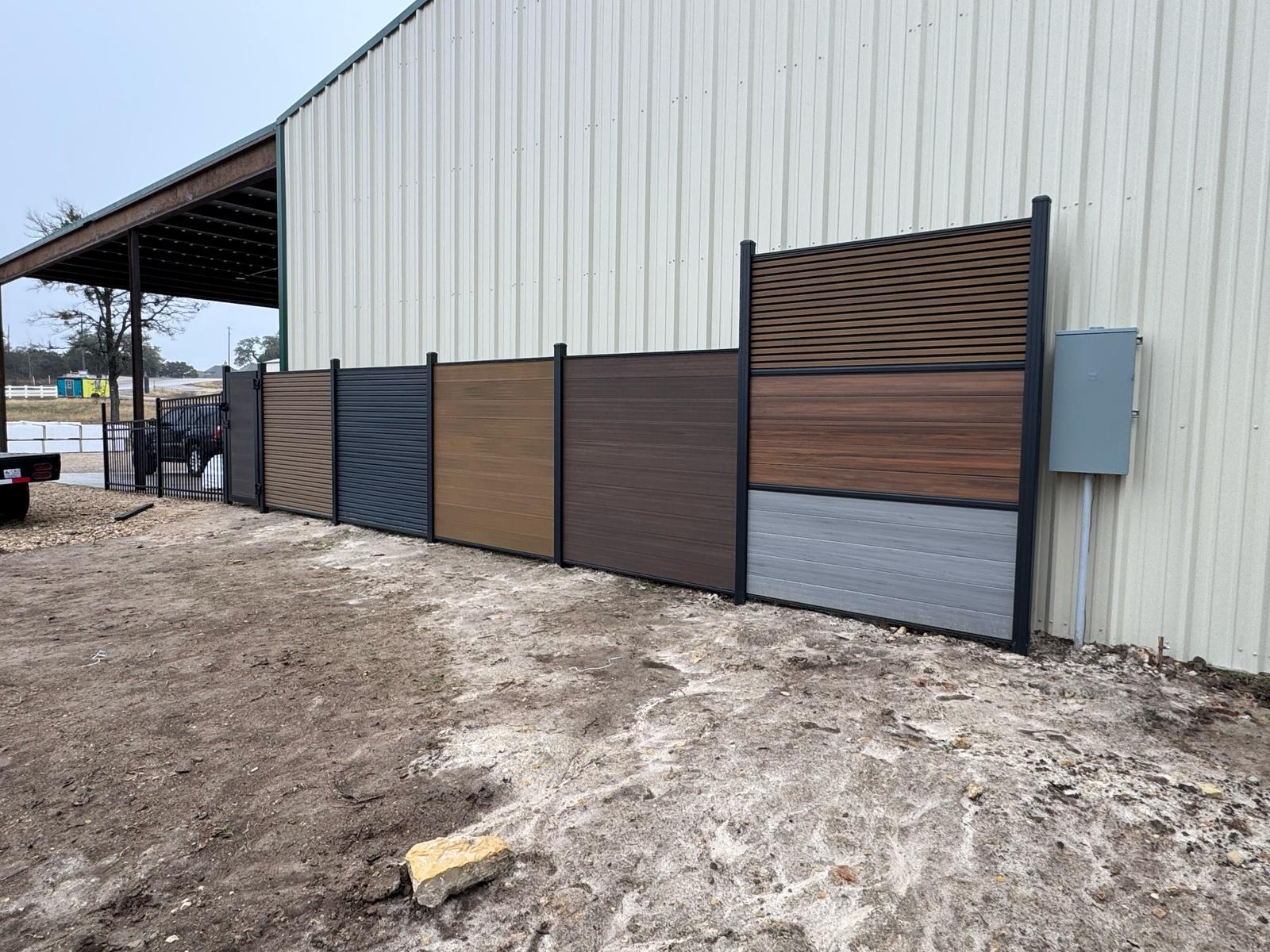
Composite fence boards are wood fiber or wood flour mixed into plastic (polyethylene, PVC or polypropylene) and extruded. The USDA says wood usually makes up less than 60% by weight, and that composites resist decay and swelling better than solid wood but are less stiff. You don’t stain them; you clean them, about twice a year. In the published Trex systems, posts are 5 × 5 in, 8 ft on center, set at least 30 in deep (36 in for an 8-ft vertical fence).
Sources: USDA Forest Products Laboratory, Wood Handbook (FPL-GTR-282, 2021), Ch. 11–12; Trex drawings FDS 106/108; Trex Horizontal Fencing installation guide; Trex Fence Care.
What composite fencing is, and what we install
A composite board is a blend: wood flour, fibers or particles mixed into a molten plastic and pushed through a die into a board shape. Some manufacturers add a harder surface layer for durability and color. Because every formula is proprietary, the USDA advises getting design data from the manufacturer; the properties vary from brand to brand.
We install composite fences for homes and businesses across Galveston County:
- Vertical board privacy, a full-height wall of boards between posts.
- Horizontal board privacy for a modern look; see our horizontal fence page for the style itself.
- Matching gates, built on a frame; see composite gates.
Deciding between materials? Composite sits between wood and vinyl: it looks more like wood than vinyl does, and needs less upkeep than wood. See composite vs vinyl and what composite fencing is made of.
Plan a composite fence run
Enter the length of a straight run. You’ll get the number of 8-ft sections, posts, boards and concrete holes, using the published Trex Seclusions (vertical) and Trex Horizontal drawings as the example system.
Straight run, no corners, gates not included (each gate needs its own posts and frame). Counts follow Trex drawings FDS 106/108 and the Trex Horizontal installation guide: 8 ft on center, 5 × 5 in posts, 19 vertical boards per section, 14 horizontal boards per 6-ft section and 19 per 8-ft section. Concrete is arithmetic: a 12-in round hole minus a 5 × 5 in post, times the embedment. Other brands and local codes differ, so the estimate sets the real numbers. No prices.
What holds a composite fence straight
Composite is less stiff than solid wood, so the systems lean on metal where it counts. In the Trex drawings:
- Posts are 5 × 5 in, set in concrete-filled holes 12 in across. The 6-ft fence calls for at least 30 in of embedment; the 8-ft vertical fence calls for 36 in, on a 12-ft post.
- Rails carry aluminum. The vertical system runs an aluminum bottom rail; the horizontal system slides an aluminum insert into the top rail and uses an aluminum bottom rail and L-channels at the posts.
- Spacing stays at 8 ft on center. The horizontal guide says its bottom rail and top-rail insert shouldn’t need cutting at that spacing.
- Heat and humidity: for horizontal boards, Trex suggests a back-bracing rail to reduce the risk of warping.
Both Trex documents tell installers to check local building codes before digging. That’s part of the estimate here, along with the City of Galveston fence rules below.
Care in Gulf Coast heat and humidity
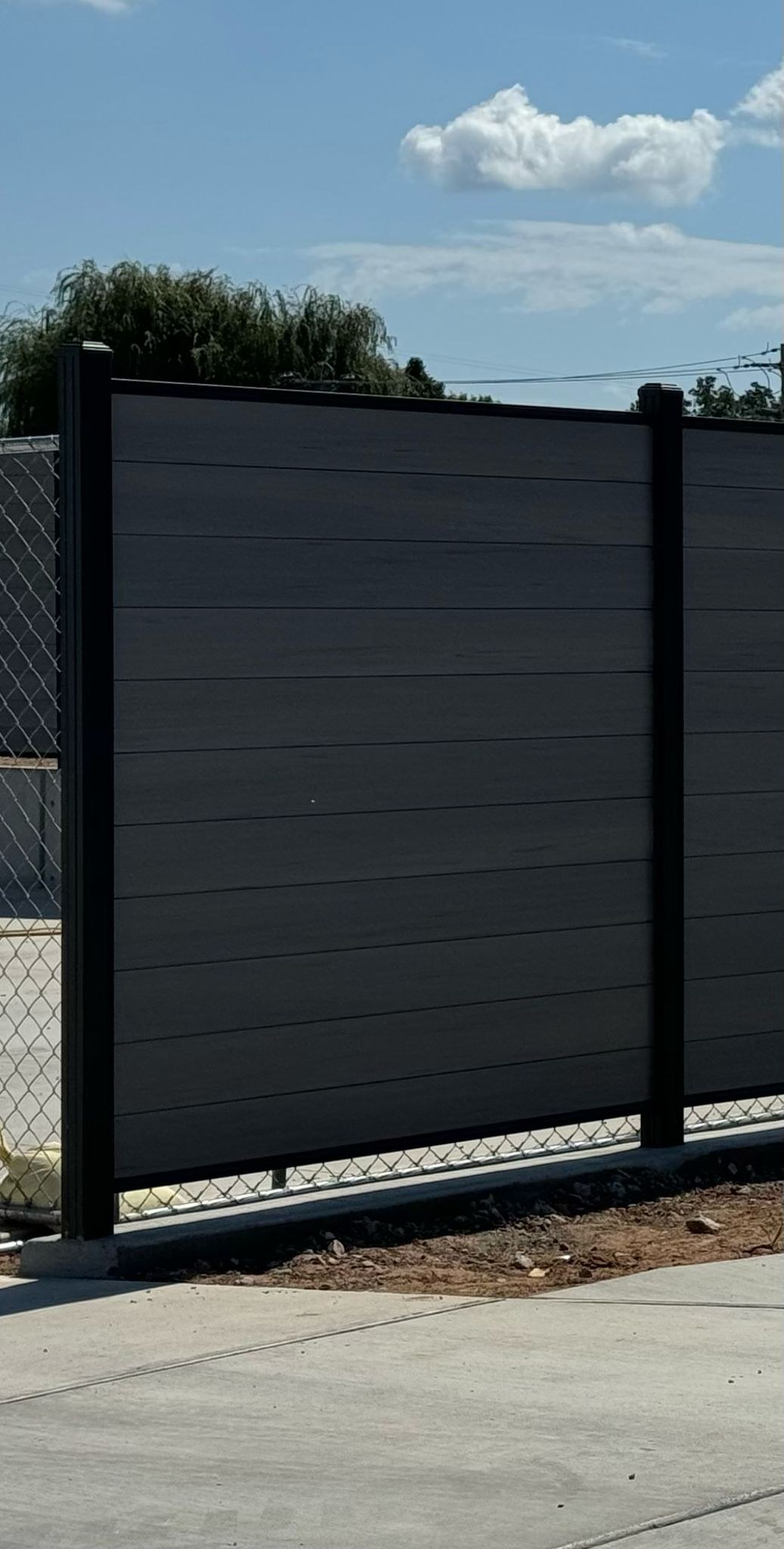
“Low maintenance” is not “no maintenance”. The upkeep is cleaning, and in Galveston’s humidity it matters more:
- Routine cleaning: soap, hot water and a soft-bristle brush, or a composite deck cleaner. Trex suggests cleaning just after installation and then every spring and fall.
- Mold and mildew: humid air alone is enough for mold to grow, according to the USDA. Trex recommends equal parts water and white vinegar, or a cleaner with sodium hypochlorite and detergent, scrubbed with a soft brush and rinsed.
- Pressure washers: Trex says one over 1,500 psi, or held closer than 12 in, can damage the fence and void the warranty. Sanding voids it too.
- New-fence discoloration: tannin leaching and scuffs usually weather out in about 12 to 16 weeks, per Trex.
- Cracks: the USDA notes that decay fungi can form voids in composites after water gets in through cracks in the surface layer. Better decay resistance than wood doesn’t mean immunity.
- Staining later: film-forming finishes such as paint and solid stain may not stick to composite; the USDA suggests a tape pull-off adhesion test first. Composites with a durable surface layer are meant to hold their color without it.
More on this: composite fence fading and mold in a humid climate.
Composite, wood and vinyl at a glance
| Composite | Wood | Vinyl | |
|---|---|---|---|
| What it is | Wood flour or fiber in PE, PVC or PP, extruded | Sawn boards; cedar or treated pine here | Rigid PVC profiles |
| Finish | None needed; film finishes may not stick | Seal or stain | None |
| Cleaning | Spring and fall; vinegar or hypochlorite for mildew | Wash before re-staining | Wash occasionally |
| Decay | Better than wood; fungi can enter through cracks | Depends on species and treatment | Doesn’t rot |
| Stiffness | Less stiff than wood; systems add aluminum | Stiffest of the three | Varies with the profile and reinforcement |
Composite and wood rows: USDA Wood Handbook (2021) Ch. 11, 12, 14, 16 and Trex Fence Care. General guidance, not a product warranty.
From estimate to finished fence
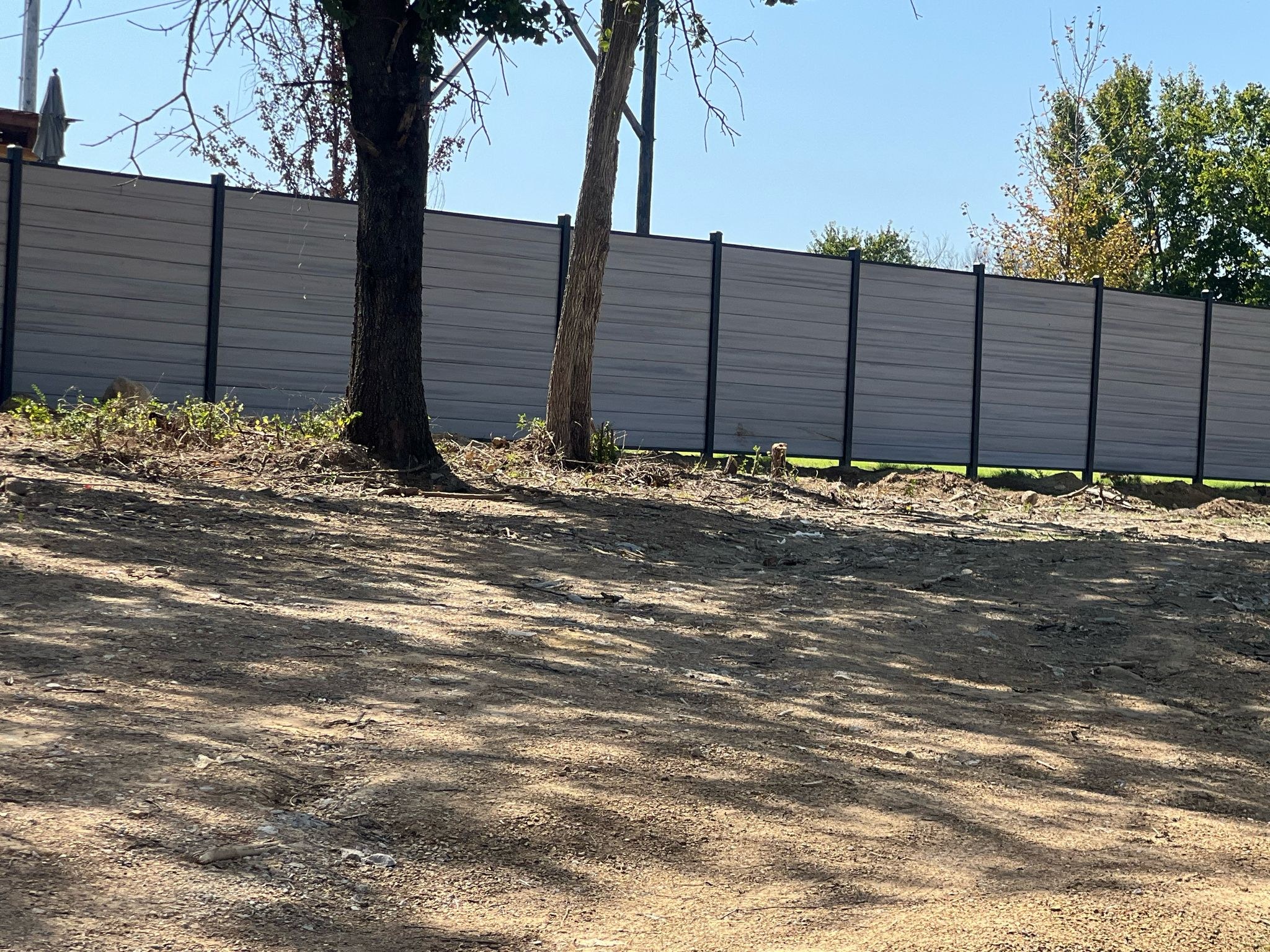
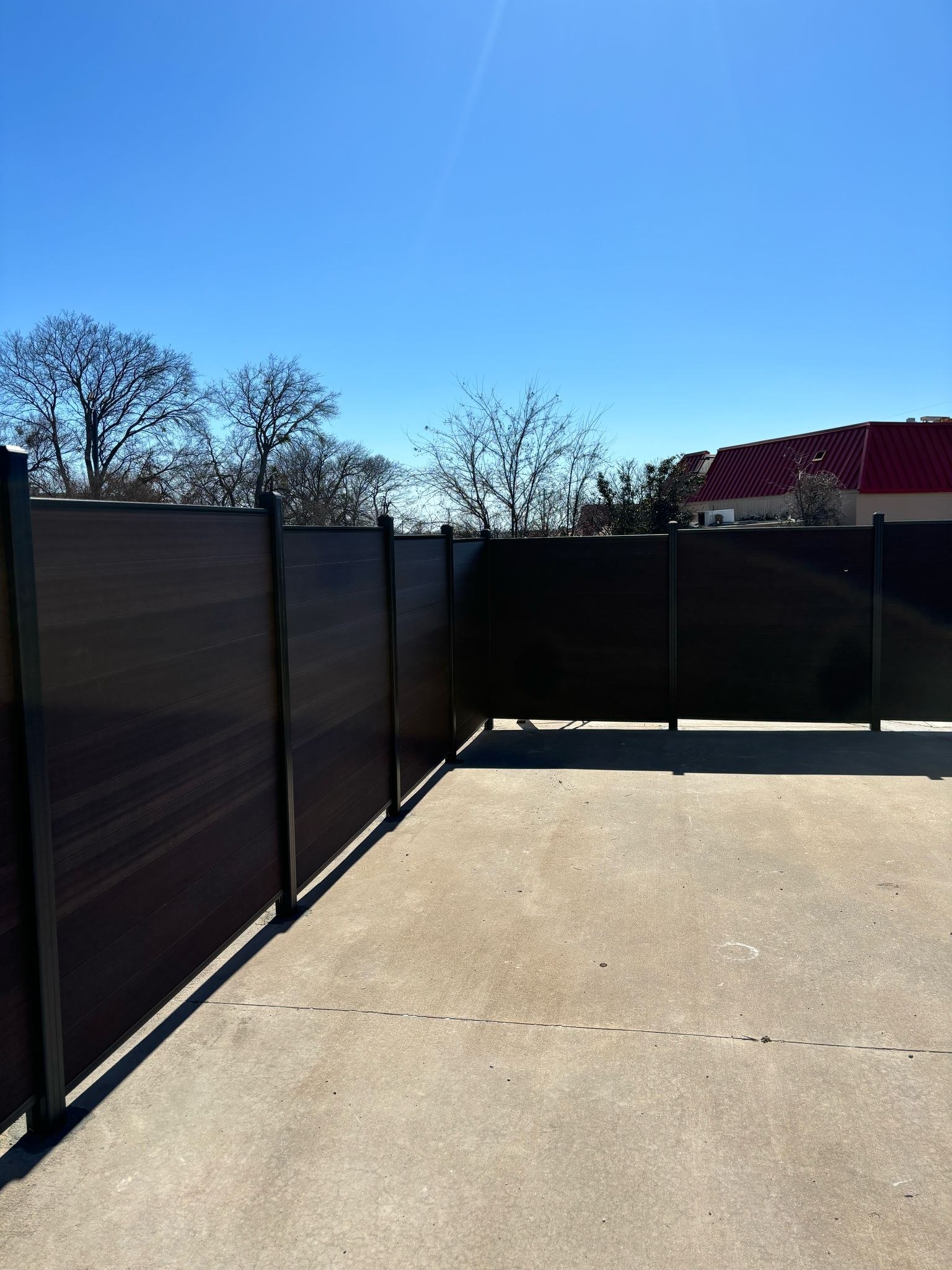
1. Free on-site estimate. We walk and measure the line, and note grade, drainage, utilities, trees and where gates go. We check the local rules for your address and any HOA requirements.
2. Choosing a system. Vertical or horizontal boards, color and surface finish, height, and gate style. Ask whether the boards have a protective surface layer and what the manufacturer’s care rules are, since warranties can depend on them.
3. Installation. Posts set in concrete at the depth the system and code call for, rails and boards installed, gates hung and adjusted. We walk the finished fence with you.
What affects cost and timing: length and height, vertical or horizontal boards, the product line and color, the number and width of gates, corners and slopes, removing an old fence, soil and access, and permits or HOA review. Financing is available through the providers on our financing page, subject to credit approval.
What customers say on Google
5.091 Google reviews · read them all on Google
Mustang Fencing exceeded my expectations! Durable and attractive fencing options available. Excellent customer service. Highly recommended for quality fencing solutions.
My new fence looks fantastic and has added both privacy and style to my yard. Highly recommend their services for anyone in need of fencing!
Love the quality and service. Totally recommend this for people who are looking for some nice finishings and top quality.
Reviews shown word for word from the Mustang Fencing Services Google Business Profile (Galveston), captured 2026-09-27.
Questions we get about this
What is a composite fence made of?
Does a composite fence need staining?
How do I clean mold or mildew off a composite fence?
Can I pressure wash a composite fence?
Does composite rot?
How far apart are composite fence posts?
Do you install matching composite gates?
Sources
Checked September 27, 2026. Rules change, so confirm with the City before you build.
- USDA Forest Products Laboratory, Wood Handbook (FPL-GTR-282, 2021) — Ch. 11–12: wood–plastic composites, wood content, stiffness, decay resistance; Ch. 14: decay voids in composites, mold in humid air; Ch. 16: finishing composites.
- Trex Seclusions drawings FDS 106 (6 ft) and FDS 108 (8 ft) — post size, length and spacing, embedment, hole size, picket count and size, aluminum bottom rail.
- Trex Horizontal Fencing Installation Instructions (THF-0620) — 8 ft on center, 30 in embedment, 12 in holes, aluminum top-rail insert and bottom rail, back-bracing tip for heat and humidity.
- Trex Fencing, Fence Care — cleaning schedule, mold and mildew cleaners, pressure-washer and sanding limits, tannin leaching.
- City of Galveston Land Development Regulations, Sec. 2.501 — residential fence heights.
Thinking about a composite fence?
We’ll measure the line, walk you through vertical and horizontal options, and explain the care each one needs in Gulf Coast humidity. Free on-site estimates across Galveston County.

