
Does Composite Fencing Fade, Mold, or Warp in Gulf Coast Humidity?
Composite doesn’t rot like wood, but Galveston’s heat and humidity still leave marks. Here’s what actually causes fading, mold and dimensional movement — and the real cleaning routine, not a guess.
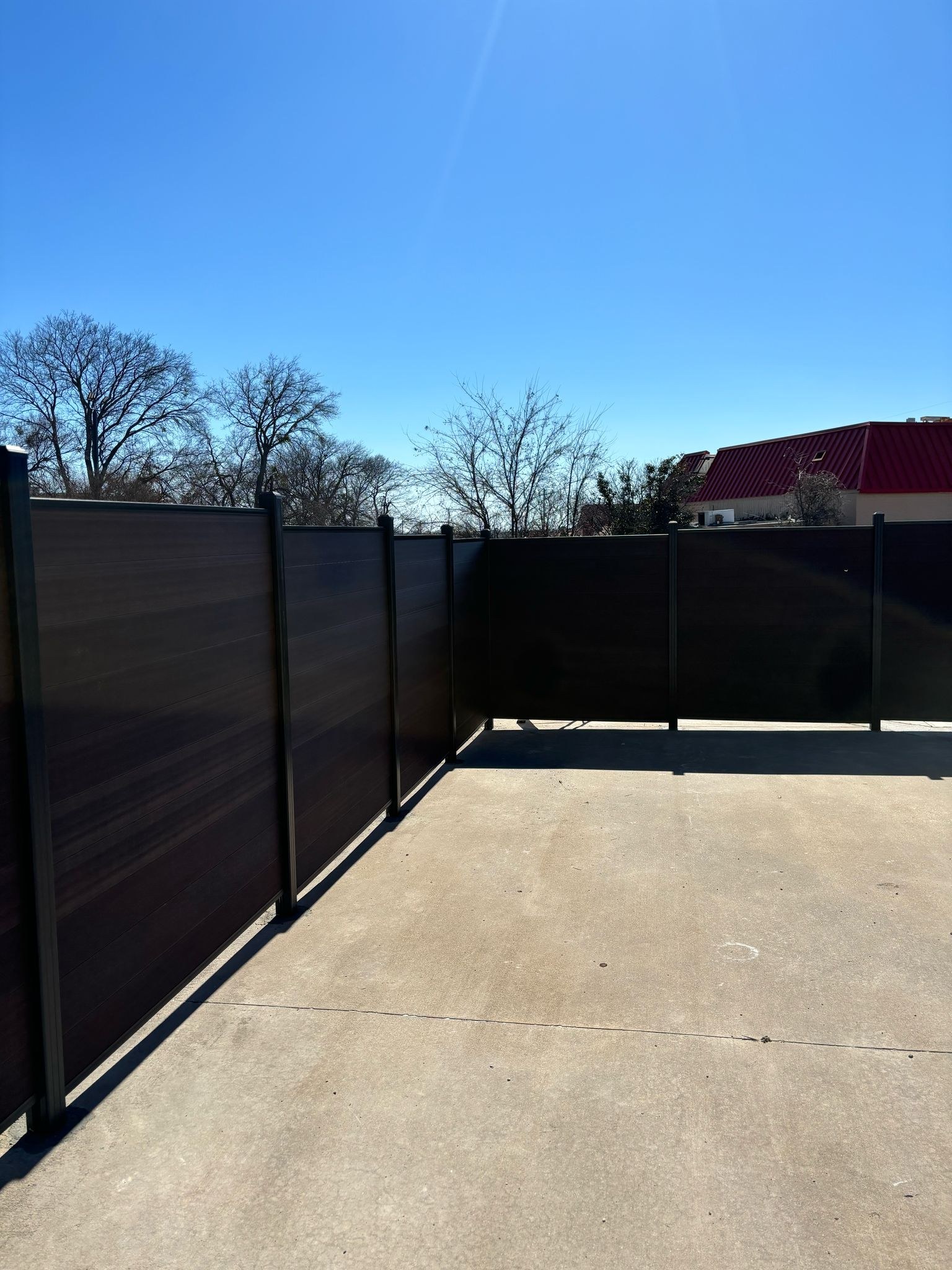
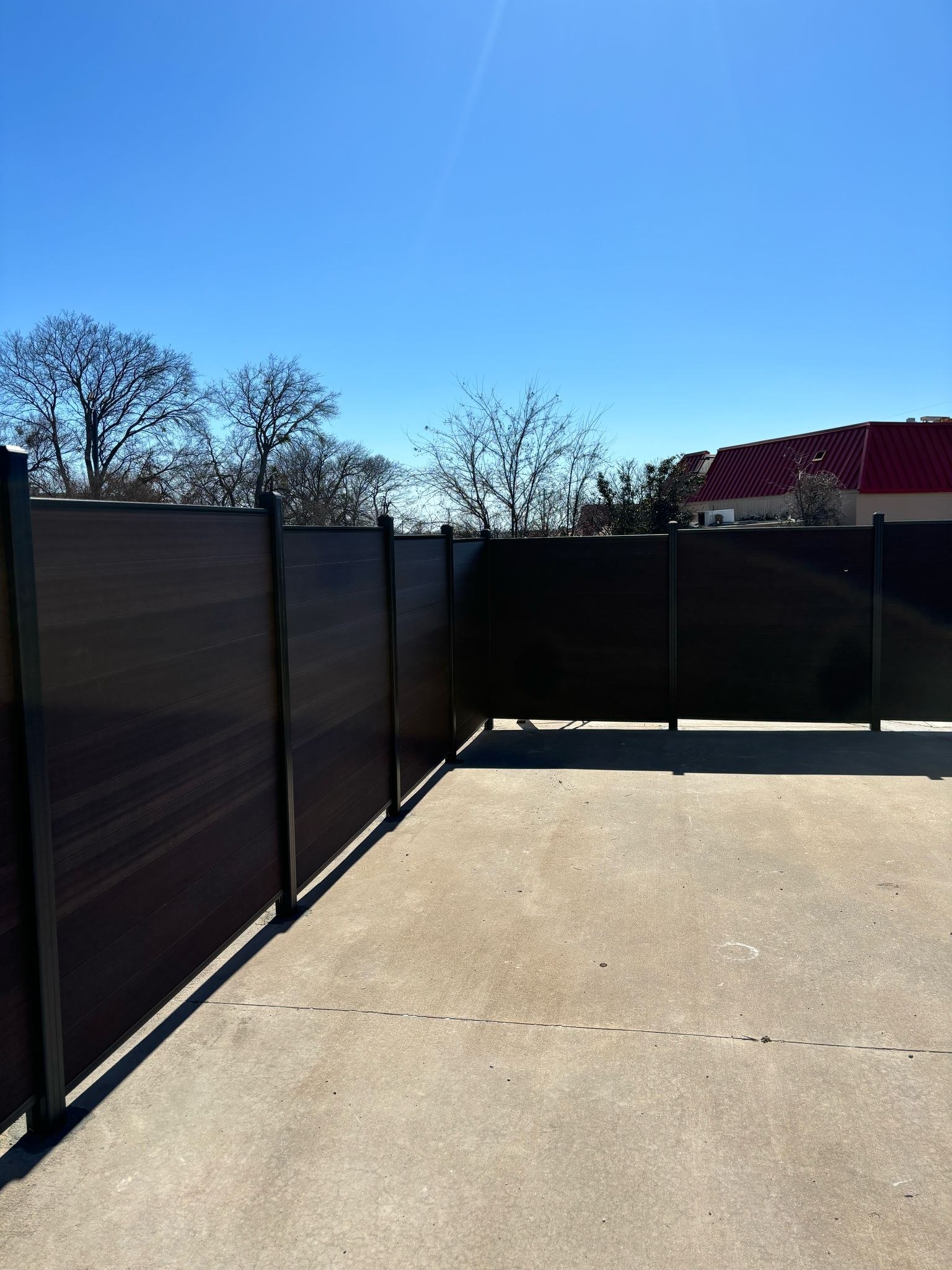
Composite won’t rot the way wood does, but it isn’t maintenance-free in a humid climate. Mold and mildew don’t feed on the board itself — they feed on organic debris (pollen, grass, leaves) that settles on the surface, especially in shaded, humid spots. Fading is mostly specific marks (chalk lines, tannin, scuffs) that lighten with weathering, not a published color-fade timeline. Warping is less likely than with solid wood because WPC has better dimensional stability when wet — but film-forming paint can still struggle to stick to it.
Sources: Trex Fencing, Fence Care; USDA Forest Products Laboratory, Wood Handbook (FPL-GTR-282, 2021), Ch. 12, 14, 16.
Mold feeds on debris sitting on the fence, not the fence
Per Trex’s own care guidance, mold and mildew do not feed on the composite material itself. What they feed on is microscopic organic matter — grass clippings, pollen, general debris — that settles on the surface and gives mold something to attach to. In a warm, humid climate like the Gulf Coast, that combination of shade, moisture and debris is what causes the visible discoloration, not a flaw in the board.
That also means the most effective long-term fix isn’t a stronger cleaner — it’s reducing the food source: trimming back bushes and landscaping that shade the fence, improving air circulation around the base, and clearing organic debris that piles up nearby.
The real cleaning routine
Trex recommends cleaning semi-annually — spring and fall — in mold-prone, humid climates, specifically to prevent pollen and debris from building up before they attract mold growth. When mold does show up, the guidance is a step-up sequence, not “reach for bleach first”:
- Start with soap and water. Warm water, dish soap, and a soft-bristle brush, scrubbing into the surface — mold grows into the pores of the composite, so it takes real scrubbing.
- If that’s not enough, a white vinegar solution. Equal parts water and white vinegar, sprayed and scrubbed, left to sit about an hour before rinsing.
- For persistent mold, a sodium hypochlorite (bleach) cleaner. Test an inconspicuous area first — bleach will lighten the composite surface, and acid-based cleaners can harm nearby plants.
One thing to avoid entirely: pressure washing above 1,500 PSI, or closer than 12 in. to the surface, which Trex says can damage the board and will void the warranty. A garden hose, not a pressure washer, is the right tool for rinsing.
Is it mold, or something else?
A quick read on what you’re likely looking at — not a diagnosis.
Based on the severity ladder above and Trex’s own cause-and-cleaning guidance. Always start with soap and water, test any stronger step in a small spot first, and never pressure-wash above 1,500 PSI or closer than 12 in. — see composite fence installation for post spacing and the install drawings.
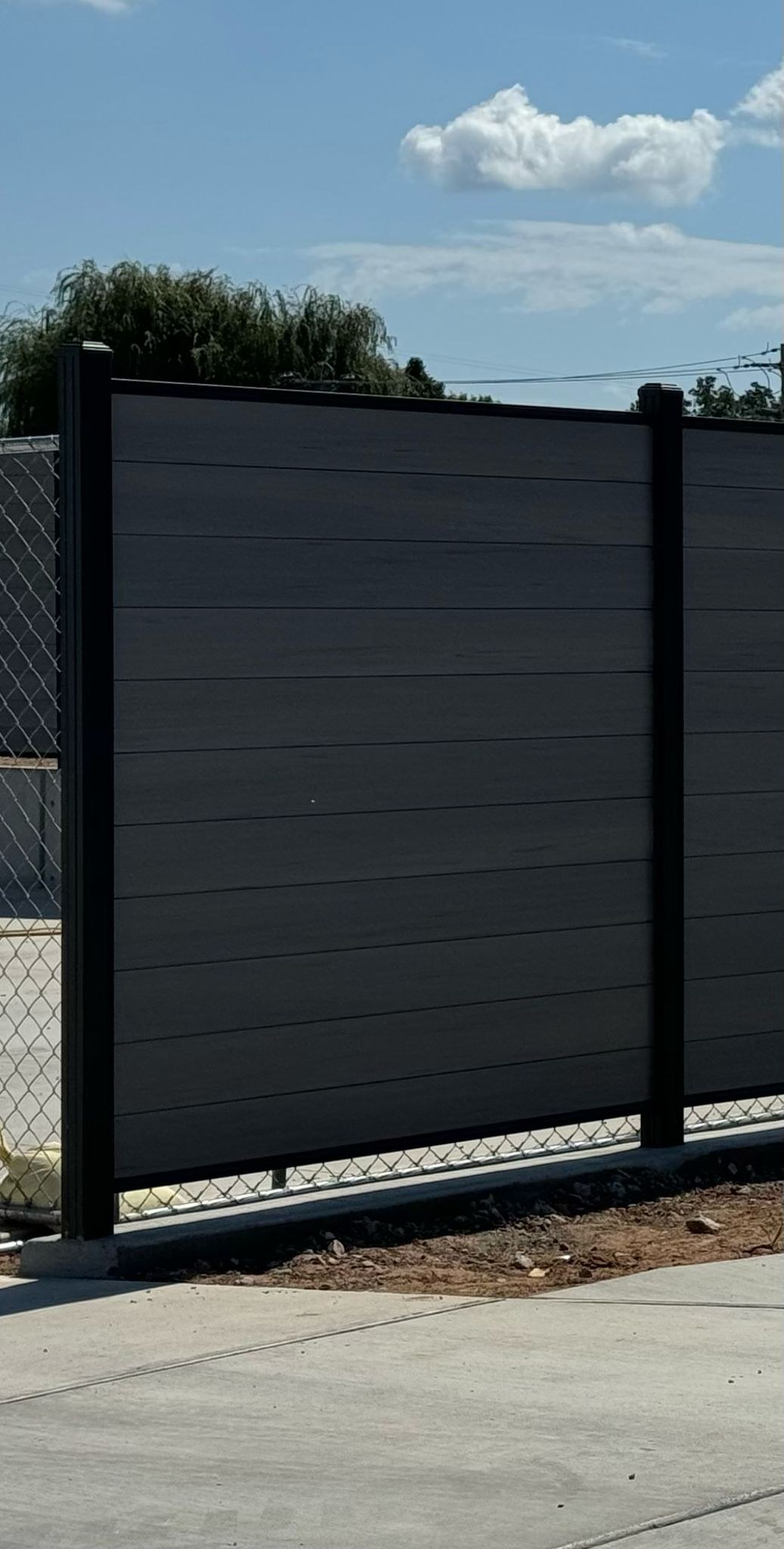
What about fading and warping specifically?
Fading: manufacturer guidance doesn’t publish a gradual, sun-driven color-fade timeline for composite the way it might for a stain. What it does document are specific marks resolving with weathering — scuffs and abrasions “can fade or disappear naturally after 12-16 weeks of weathering,” and tannin leaching (natural in any wood-containing product) clears with about 12 weeks of normal weathering. Composite also doesn’t need the annual re-staining wood does to hold its color.
Warping: wood-plastic composite has better dimensional stability when exposed to moisture than solid wood, per the USDA Wood Handbook — part of why it resists the swelling and warping that drives a lot of wood-fence maintenance. It isn’t immune to moisture problems altogether: decay fungi can still form voids inside a board once moisture gets in through a surface crack, and humid air alone is enough to support some mold growth even without standing water.
If you want to paint or restain it: clean off any existing mold or mildew first — the USDA notes the surface may need strong bleaching to remove dark mildew coloration before a finish will take. Film-forming finishes (paint, solid-color stain) can struggle to adhere to WPC; solvent-based penetrating stains are more likely to work than waterborne ones. Trex notes that once applied, a coating on composite can outlast the same coating on wood, since the board absorbs far less moisture.
What Galveston customers say
5.091 Google reviews · read them all on Google
had an excellent experience with mustang fencing From the initial consultation to the final installation, the team was professional, punctual, and attentive to detail. They helped me choose the perfect fence style to match my property and ensured everything was installed with precision. The quality of materials is top-notch, and the fence has completely transformed the look and security of my home. I highly recommend mustang services to anyone looking for reliable and high-quality fencing services!
White PVC fence. Beautifully done! Thanks Mustang it’s really looks perfect.
I am so pleased with the fence!! Your solution was exactly the right one and the team did a highly professional job. Frankly, I was amazed at how clean the job site was at the completion of the project. Feel free to list me as a reference and a very happy customer. Thanks again and please let the men know That I appreciate their hard work and quality craftsmanship.
Reviews shown word for word from the Mustang Fencing Services Google Business Profile (Galveston), captured 2026-10-12.
Questions we get about this
Does composite fencing actually mold in Galveston’s humidity?
How do I get mold off a composite fence?
Will my composite fence fade over time?
Can I paint or restain it if I don’t like the color?
Does pressure washing help keep it clean?
Sources
Checked October 17, 2026. Rules change, so confirm with the City before you build.
- Trex Fencing, Fence Care — Why mold grows on composite, the mold-removal severity ladder, semi-annual cleaning schedule, pressure-washing limit, and paint/stain guidance.
- USDA Forest Products Laboratory, Wood Handbook (FPL-GTR-282, 2021) — Ch. 12: WPC decay resistance and dimensional stability vs. solid wood when exposed to moisture; Ch. 14: decay voids and mold in humid air; Ch. 16: finishing WPC, adhesion of film-forming finishes, bleaching mildew before staining.
- City of Galveston Land Development Regulations, Sec. 2.501 — Residential fence height rules, which apply the same regardless of fence material.
Considering composite for a Gulf Coast yard?
We’ll walk your fence line, point out the spots most likely to need regular cleaning, and give you a written price. Free on-site estimates across Galveston County.