
Fence Staining & Sealing in Galveston, TX
A clear sealer keeps water out. A stain adds color and, for some types, some protection too. Neither stops the wood from rotting — that’s the wood’s own resistance or its treatment. On the Gulf Coast, constant humidity and full sun on south- and west-facing runs set the clock on both. Here’s how to read your boards and when to expect the next coat.

Sealing and staining are different jobs with different clocks. A clear water-repellent sealer has no pigment, and the Southern Forest Products Association says to reapply one every 1–2 years. A semitransparent stain lasts longer — the USDA Wood Handbook’s table gives 2–8 years, depending on the wood and whether the boards are smooth or rough-sawn. Solid-color stain and paint form a film and last longest, 6–20 years, but that film can peel if it goes on over sun-damaged or dirty wood. Full sun on a south- or west-facing run pushes every one of these toward the short end.
Sources: Southern Forest Products Association, Deck Finishing, Maintenance, and Inspection; USDA Forest Products Laboratory, Wood Handbook FPL-GTR-282 (2021), Table 16-2.
Staining and sealing are two different jobs
“Sealing” and “staining” often happen on the same visit, but the Wood Handbook treats them as different products with different jobs. A clear water-repellent sealer carries no pigment; its whole purpose is keeping water out, and it gives that up first. A stain adds color, and depending on the kind, either soaks into the wood the way a sealer does (semitransparent) or forms a thin film like paint (solid-color). None of them stops decay — that protection is either the wood’s own natural resistance or its pressure treatment. A finish protects its own job: how the surface looks, and which way the water moves.
All of them wear out faster here than the Handbook’s “average U.S. location.” It has no Galveston row for outdoor humidity, but the nearest Gulf cities, Mobile and New Orleans, run about 13–15% wood moisture content year-round, and its installation table recommends about 12% average for a damp, warm coastal area. That constant humidity, plus full Gulf sun on south- and west-facing runs, is the exact combination the Handbook says shortens a finish’s life and grows mildew.
How soon you’ll likely be back on a ladder
Lower bound of each product’s typical service-life range, in years. Full-sun south/west runs land here; shaded, rough-sawn runs land toward the high end of the ranges in the table below.
How often, by finish
| Water-repellent sealer | Semitransparent stain | Solid-color stain | Paint | |
|---|---|---|---|---|
| Forms a film? | No | No — soaks into the pores | Yes, like paint | Yes |
| Typical interval | 1–2 years (SFPA) | 2–8 years, by wood and surface (USDA) | 6–15 years, by wood and grain (USDA) | 6–20 years, by wood and grain (USDA) |
| How it tells you it’s due | Water stops beading | Fades, grain shows through, loses sheen | Thin or worn spots, chalky residue | Thin topcoats, chalk, or mildew film |
| Typical prep before recoating | Clean, dry surface | Clean, dry, bare wood | Wash mildew/dirt/chalk; can usually go over old paint | Wash off mildew, dirt and chalk |
Southern Forest Products Association, Deck Finishing, Maintenance, and Inspection; USDA Forest Products Laboratory, Wood Handbook FPL-GTR-282 (2021), Chapter 16 and Table 16-2. Written for decks and siding; the same products are used on fences.
When will your fence need the next coat?
Pick what’s on the fence now, the wood, the board surface, how much sun that run gets, and the date it was last finished. The checker applies the USDA Wood Handbook’s service-life table and the Southern Forest Products Association’s water-repellent interval.
Water-repellent interval: Southern Forest Products Association, "Deck Finishing, Maintenance, and Inspection" (southernpine.com, retrieved Sept 26, 2026; written for decks, same products used on fences). Stain and paint ranges: USDA Forest Products Laboratory, Wood Handbook FPL-GTR-282 (2021), Table 16-2, expected service life at an average contiguous-U.S. location. This is a planning estimate, not an inspection — use the five signs above to check the actual boards.
Can the new coat go over the old one?
It depends on what’s already there. A solid-color stain or paint forms a film, and the USDA Wood Handbook says a solid-color stain can usually go over existing paint. If the old film is still sound, one or two fresh topcoats are enough. The Handbook is direct about this: don’t repaint too often — if the paint is sound but just discolored with mildew, wash it instead.
A new semitransparent stain works differently: it only protects by soaking into open wood pores, so it needs bare wood. Over an old film finish it has nothing to soak into. A clear water-repellent sealer works the same way — it soaks back into gray, dry wood, but does little over sound paint.
Mildew on an otherwise sound coat doesn’t mean the wood underneath is rotting. The Handbook is specific: mildew “does not decay wood directly,” but its spores puncture microscopic holes in the coating and keep the next coat from bonding well. Wash it off before recoating.
What Galveston customers say
5.091 Google reviews · read them all on Google
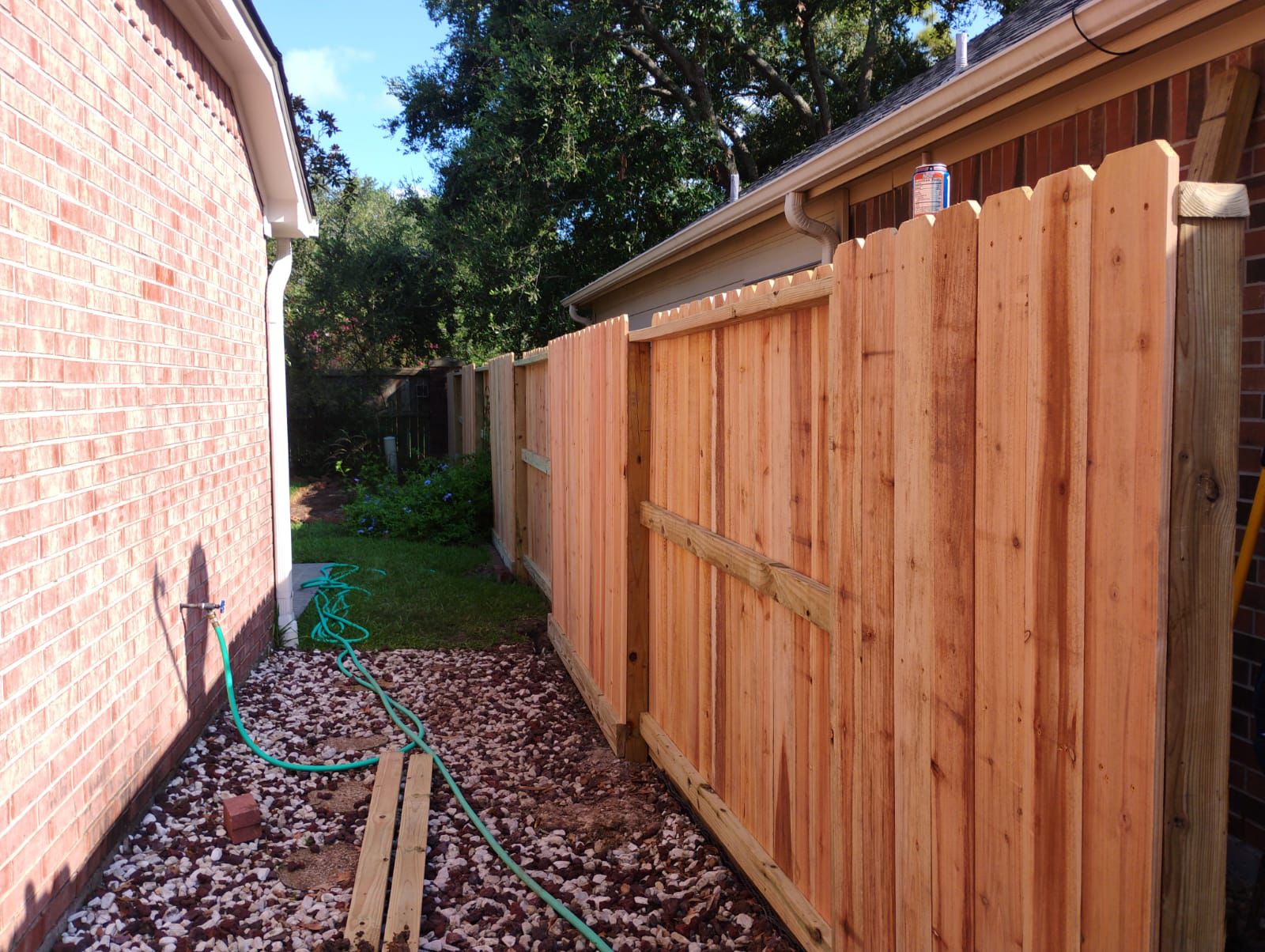
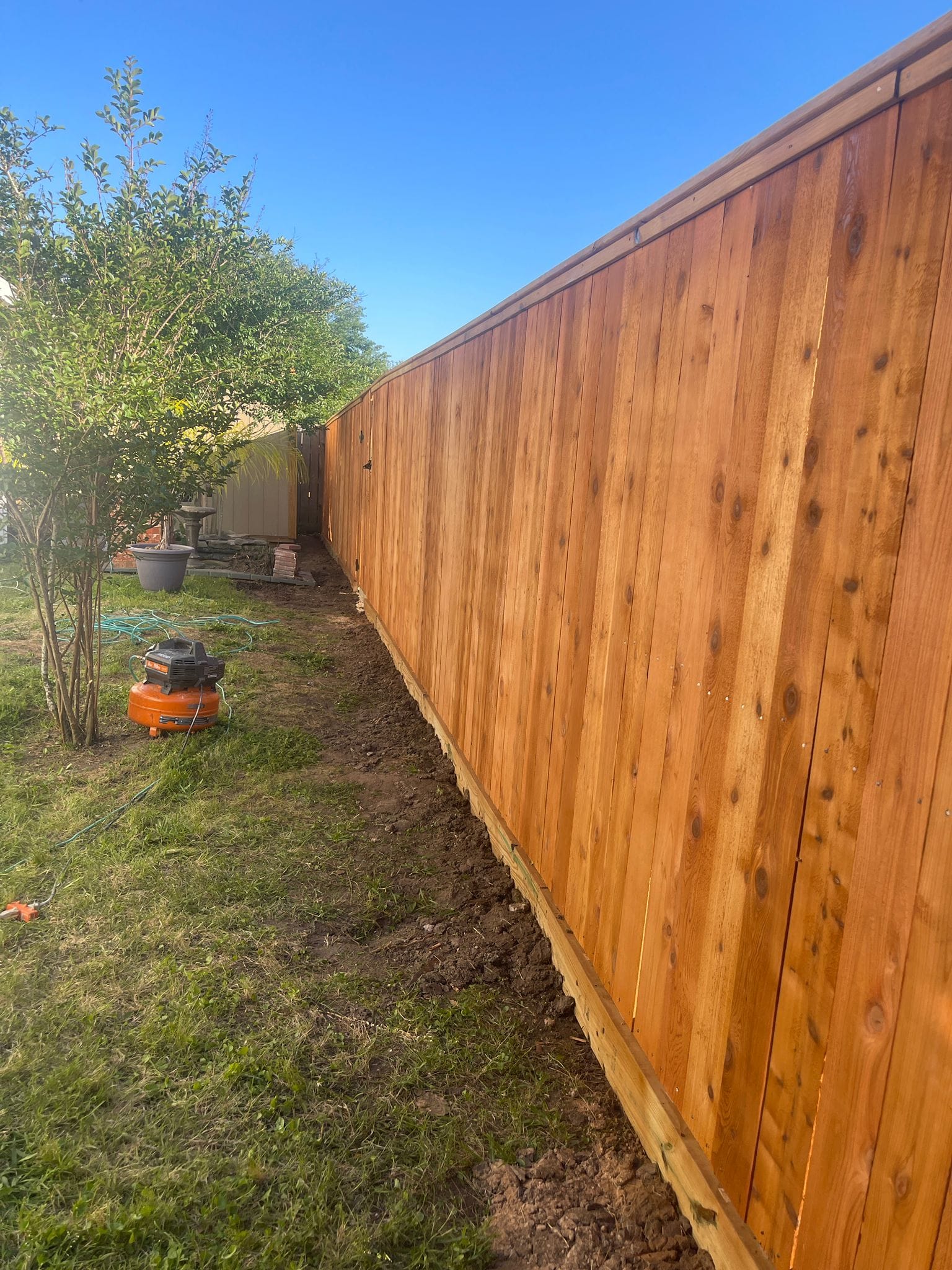
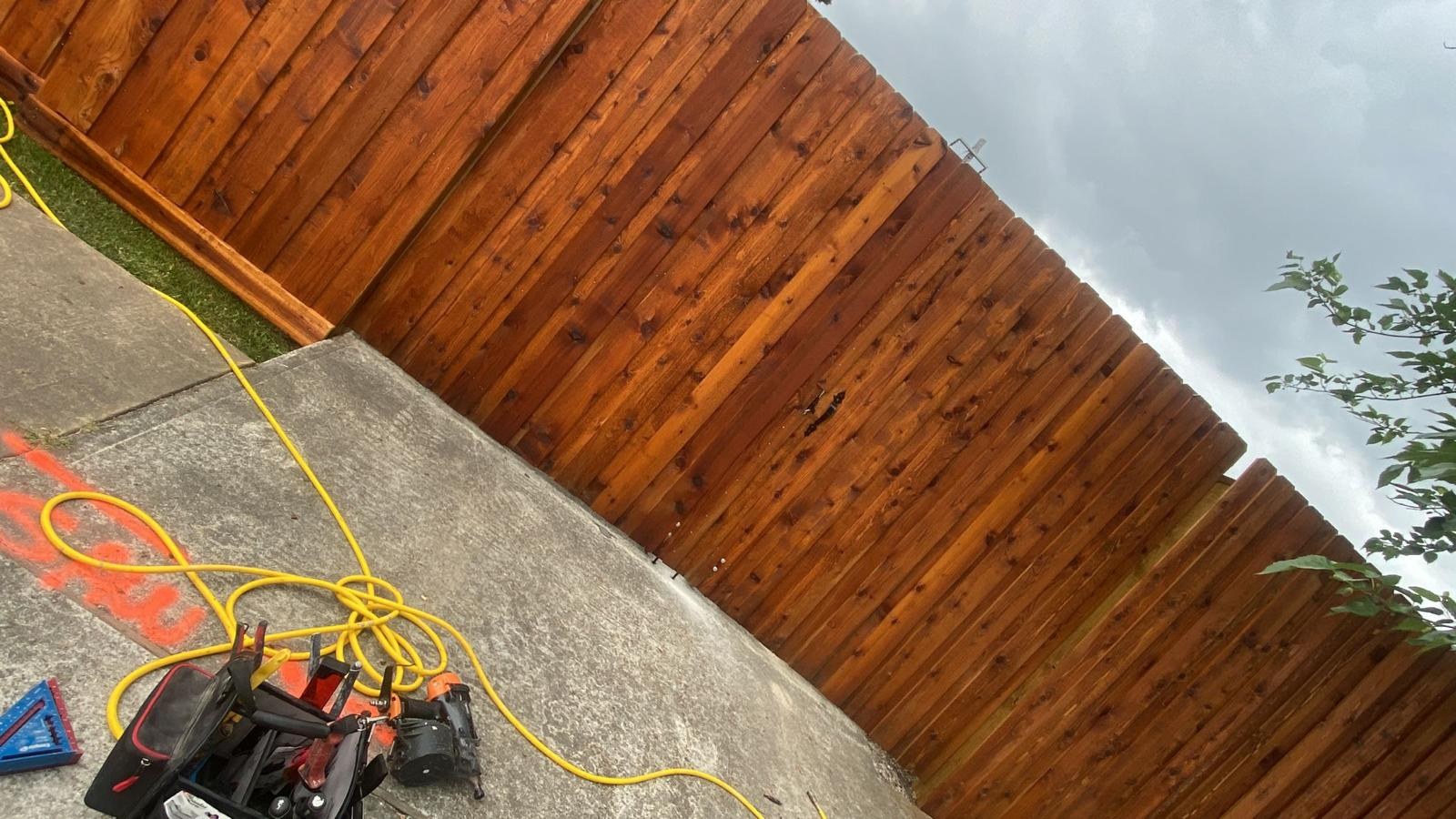
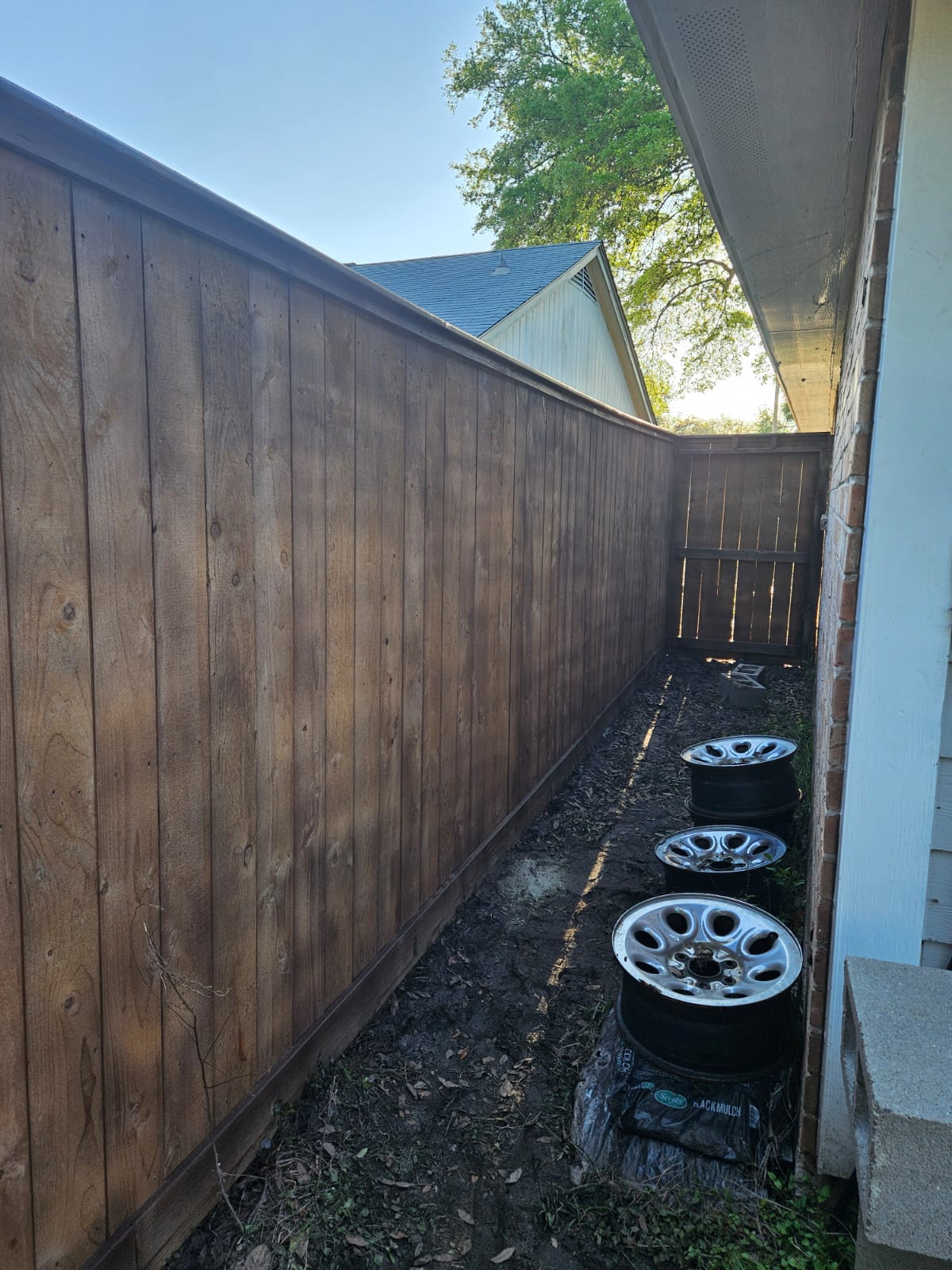
Amazing work will go ahead and recommend everyone in friends and family We installed 8ft tall double sided stained cedar wood fence in our backyard, it's really looks great, installed perfectly nice finishing and cost effective, thanks mustang fencing.
I have hired Mustang fencing services to fix my backyard fencing. Good wood to used. I really like theirs work. Best of luck
had an excellent experience with mustang fencing From the initial consultation to the final installation, the team was professional, punctual, and attentive to detail. They helped me choose the perfect fence style to match my property and ensured everything was installed with precision. The quality of materials is top-notch, and the fence has completely transformed the look and security of my home. I highly recommend mustang services to anyone looking for reliable and high-quality fencing services!
Reviews shown word for word from the Mustang Fencing Services Google Business Profile (Galveston), captured 2026-10-05.
Questions we get about this
How often does a wood fence need to be restained or resealed on the Gulf Coast?
What are the signs a fence needs a new coat?
Does mildew on a fence mean the wood is rotting?
Can a new coat go over the old one, or does it need to be stripped first?
Is a water-repellent sealer the same thing as a stain?
Why does the sunny side of my fence need attention before the rest?
Sources
Checked October 7, 2026. Rules change, so confirm with the City before you build.
- USDA Forest Products Laboratory, Wood Handbook: Wood as an Engineering Material, FPL-GTR-282 (2021) — Chapter 16: penetrating finishes and water repellency, mildew, refinishing and recoat intervals, chalk and surface prep, sunburn and shaded-vs-exposed paint life, oily-rag fire caution; Table 16-2 expected service life by wood, grain and finish; Chapter 13: outdoor and recommended installation moisture content (Tables 13-1 and 13-2).
- Southern Forest Products Association, Deck Finishing, Maintenance, and Inspection — Water-repellent reapplication interval (every 1–2 years); deck brightener for a weathered appearance. Written for decks; the lumber and finishes are the same ones used on fences.
Due for a new coat?
We’ll look at the boards, tell you what the fence actually needs, and give you a written price. Free on-site estimates across Galveston County.

