
When Can You Stain a New Pressure-Treated Fence?
It depends less on the weather than on the lumber you buy. Re-dried (KDAT) boards can be finished right away. Standard treated pine leaves the treating plant soaking wet: stain after about a month, paint after six. Here is why, and what goes wrong if you rush it.
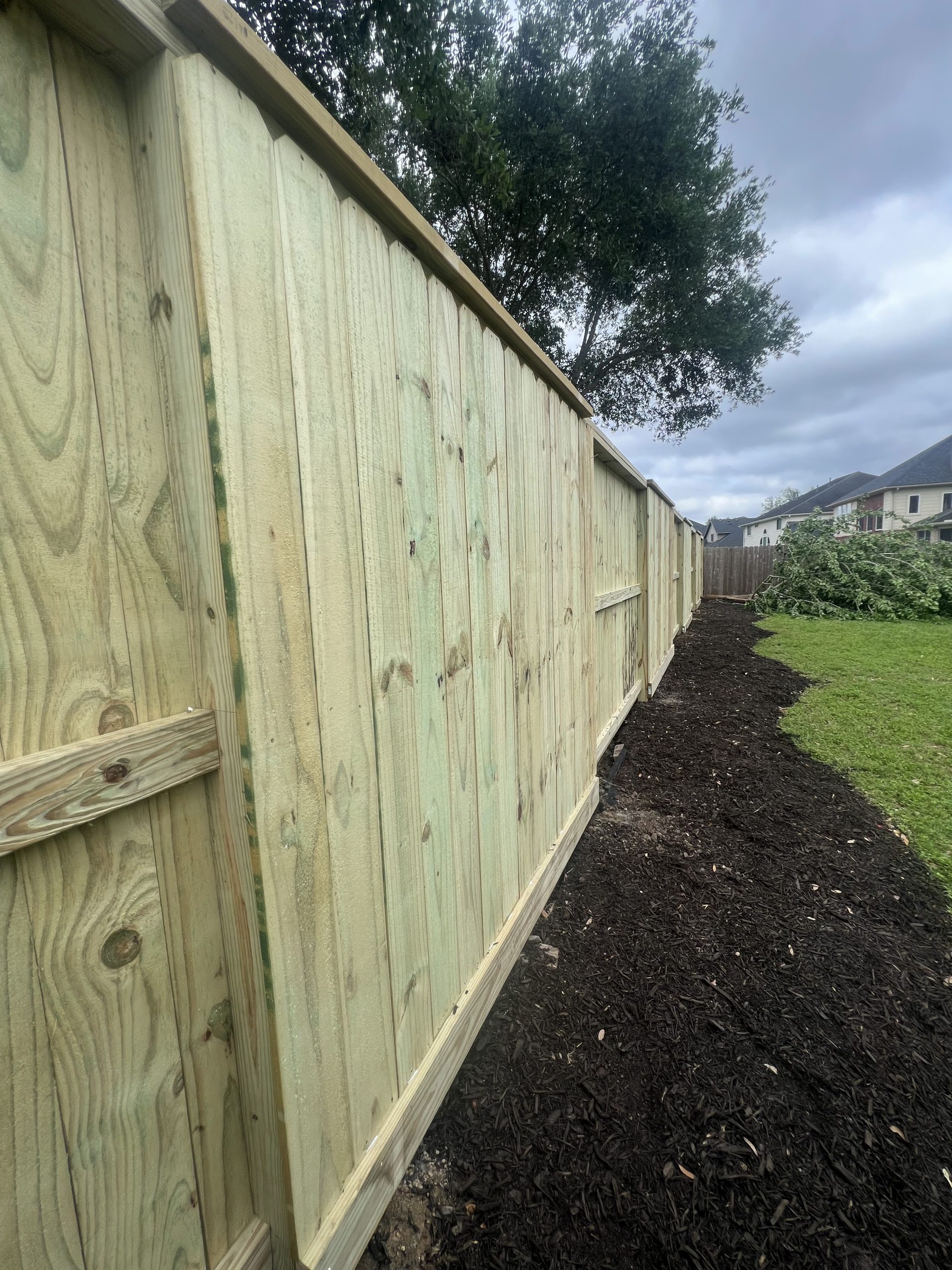
If the lumber is stamped KDAT or ADAT (re-dried after treatment), you can stain or paint it right away. Most treated pine isn’t re-dried. For that wet lumber, the Southern Forest Products Association says to wait 30 days before an oil-based semitransparent stain, and at least six months before paint, solid-color stain or water-based stain. Finish too soon and a stain can’t soak in, and paint blisters and peels as the trapped water leaves.
Sources: Southern Forest Products Association, deck finishing guidance and Pressure-Treated Southern Pine (2019); USDA Forest Products Laboratory, Wood Handbook FPL-GTR-282 (2021), Chapters 13, 15 and 16.
Why new treated pine has to wait
Pressure treatment uses water to carry the preservative deep into the wood. The Southern Forest Products Association (SFPA) says dimension lumber must be at 19% moisture content or less before treatment, and can exceed 50% when it comes out of the treating cylinder. It also says most pressure-treated Southern Pine is delivered without being re-dried. That is the lumber most fences are built from.
The USDA Wood Handbook adds the consequence: because water goes in with the preservative, “some drying and shrinkage will occur after installation unless the wood is kiln-dried after treatment.” A finish applied over that drying wood has two problems. A stain can’t soak into pores that are already full of water. A film such as paint gets pushed off from behind as the water works its way out.
Along this coast the boards will never dry out completely. The Handbook’s outdoor moisture table has no Galveston row, but the nearest Gulf cities, New Orleans and Mobile, sit at about 13–15% year-round. For outdoor wood in damp, warm coastal areas, it recommends about 12% at installation (9–14% for individual pieces). “Dry enough to finish” means the boards have come down from their wet, fresh-from-treatment state to the moisture level of the air around them.
How wet is “wet” treated pine?
Moisture content, % of the wood’s dry weight. Fresh-treated lumber can exceed 50%; New Orleans air runs 13.7–15.0% by month.
How long to wait, by lumber and finish
| KDAT or ADAT (re-dried) | Standard wet-treated pine | Water-repellent-treated pine | |
|---|---|---|---|
| Oil-based semitransparent stain | Right away | 30 days | 30 days (may need longer) |
| Water-based stain | Right away | At least 6 months | At least 6 months |
| Solid-color stain | Right away | At least 6 months | At least 6 months |
| Paint (primer + topcoats) | Right away | At least 6 months | At least 6 months |
Southern Forest Products Association, “Deck Finishing, Maintenance, and Inspection,” southernpine.com (retrieved Sept 26, 2026). Written for decks; the treated lumber and finishes are the same ones used on fences. Follow the finish maker’s label as well.
What happens if you stain treated wood too soon
It depends on the finish:
- Semitransparent (penetrating) stain. On wet wood, the stain can’t soak in and stays on the surface. The USDA Handbook says that if a stain still looks shiny an hour after application, it hasn’t penetrated. Left there, it forms a thin film that “may crack and peel within a year or two.” That is exactly what a penetrating stain is supposed to avoid.
- Paint and solid-color stain. SFPA says the wood has to be “dry both internally and on the surface; otherwise, as the wood dries, escaping moisture will cause blisters and poor paint adhesion.” The Handbook agrees that painting wet wood “increases the risk of blistering and peeling.” It adds that preservative can bleed through latex paints and solid-color stains if the wood is still wet from treatment.
If a stain is already on and still looks glossy, wipe off what hasn’t soaked in while it is wet. If paint went onto wet boards and is blistering, the loose paint has to come off before any new coat will hold.
When can your new fence take its finish?
Pick the lumber, the finish and the day the fence went up. The planner applies the Southern Forest Products Association’s wait times for pressure-treated Southern Pine and flags the USDA Wood Handbook’s cautions.
Wait times: Southern Forest Products Association, “Deck Finishing, Maintenance, and Inspection” (southernpine.com, retrieved Sept 26, 2026). SFPA writes this guidance for decks; the lumber and finishes are the same ones used on fences. Cautions: USDA Forest Products Laboratory, Wood Handbook FPL-GTR-282 (2021), Chapter 16. Always follow the stain or paint maker’s label too.
Can you wait too long?
Yes, and this is where the two sources pull in different directions. SFPA’s six-month wait protects paint from moisture coming out of the wood. But the USDA Handbook calls sun exposure before a film finish “a major cause of coating failures.” In its tests on denser woods such as southern yellow pine, little paint adhesion was lost until the boards had weathered for 3 to 4 weeks. Six months on a south- or west-facing run in Galveston is far beyond that.
So if you want a painted or solid-color treated fence, the clean answer is to buy KDAT lumber and finish it right away. If the fence is already built from wet lumber, wait the six months, then do the Handbook’s tape test. Press a strong tape firmly onto a board and snap it off. If wood fibers come away on the tape, paint will pull them off too. The fix is to sand to fresh wood (the Handbook suggests about 0.004 inch) and prime before it weathers again.
Stain is more forgiving. The Handbook says a penetrating finish actually lasts longer on weathered wood than on fresh. So a treated fence that has gone silver can still take a semitransparent stain. It just needs to be clean and dry first.
How to tell if your fence is ready
- Read the tag first. A KDAT or ADAT mark means the lumber was re-dried, and SFPA says coating can start immediately. No mark means you should assume it is wet.
- Use a moisture meter if you have one. A reading at or below 19% (SFPA’s kiln-dried benchmark), in the low-to-mid teens like the Gulf Coast air, means the boards have given up their treatment water. Pin meters need the species and temperature corrections in their instructions. Test several boards and a post, not one picket.
- The water-drop check is only a rough guide. Sprinkling water and watching whether it beads or soaks in is a common field check. Neither source uses it. It only tells you about the surface, and the inside of a 4×4 post is what SFPA’s six-month wait is about.
Whatever the finish, the Handbook’s basic rule for waterborne-treated wood is that it “can be painted or stained if the wood is clean and dry.” After rain, give it a few dry days. Keep sprinklers off the boards.
The decision that matters happens before the fence goes up
If you already know you want a painted or solid-color fence, ask for KDAT lumber at the estimate. SFPA recommends drying after treatment where “dimensional stability and tightness of fit are important.” It also removes the six-month wait. If you plan on a semitransparent stain, standard treated pine works, and you stain it about a month after we finish. For how much wet pine shrinks as it dries, see cedar vs pressure-treated pine. For whether it will warp, see will a treated pine fence warp? For choosing between stain and paint, see stain vs paint.
We go through lumber and finish plans at the free on-site estimate. See southern pine fences, wood fences and, for an existing fence, our staining and sealing service. For how often to recoat later, see how often to restain here.
What Galveston customers say
5.090 Google reviews · read them all on Google
Great work. Fast service. Very friendly. I recommend using this company to replace your fence.
Installed Stained cedar wood fence yesterday by mustang fencing, thanks for the beautiful work.
I chose Mustang Fencing for my backyard due to their reputation for quality and security. Their wood fencing exceeded my expectations, durable and visually appealing. The customer service was top-notch, and the installation was quick and efficient.
Reviews shown word for word from the Mustang Fencing Services Google Business Profile (Galveston), captured 2026-09-26.
Questions we get about this
How long should you wait to stain a new pressure-treated fence?
What happens if you stain treated wood too soon?
Do I need to paint or stain a pressure-treated fence?
Can you stain KDAT lumber right away?
How do I know if my treated lumber is KDAT?
Is it too late to stain a treated fence that has turned gray?
Sources
Checked September 26, 2026. Rules change, so confirm with the City before you build.
- Southern Forest Products Association, Deck Finishing, Maintenance, and Inspection — Wait times before finishing wet-treated, water-repellent-treated and re-dried Southern Pine; blistering from escaping moisture; water repellent recommendation.
- Southern Forest Products Association, Pressure-Treated Southern Pine (2019 edition) — Moisture content before (19% or less) and after treatment (can exceed 50%); most treated pine delivered without redrying; KDAT and ADAT; finishing treated wood; quality marks and use categories.
- USDA Forest Products Laboratory, Wood Handbook: Wood as an Engineering Material, FPL-GTR-282 (2021) — Chapter 16: finishing treated wood products, painting wet wood, penetrating-stain over-application, sunburn (including higher-density species), tape test, water-repellent preservatives. Chapter 15: waterborne preservatives and shrinkage after installation; end tags. Tables 13-1 and 13-2: outdoor and recommended moisture content.
Planning a new wood fence?
We’ll walk the line, talk through lumber and the finish you want, and give you a written price. Free on-site estimates across Galveston County.