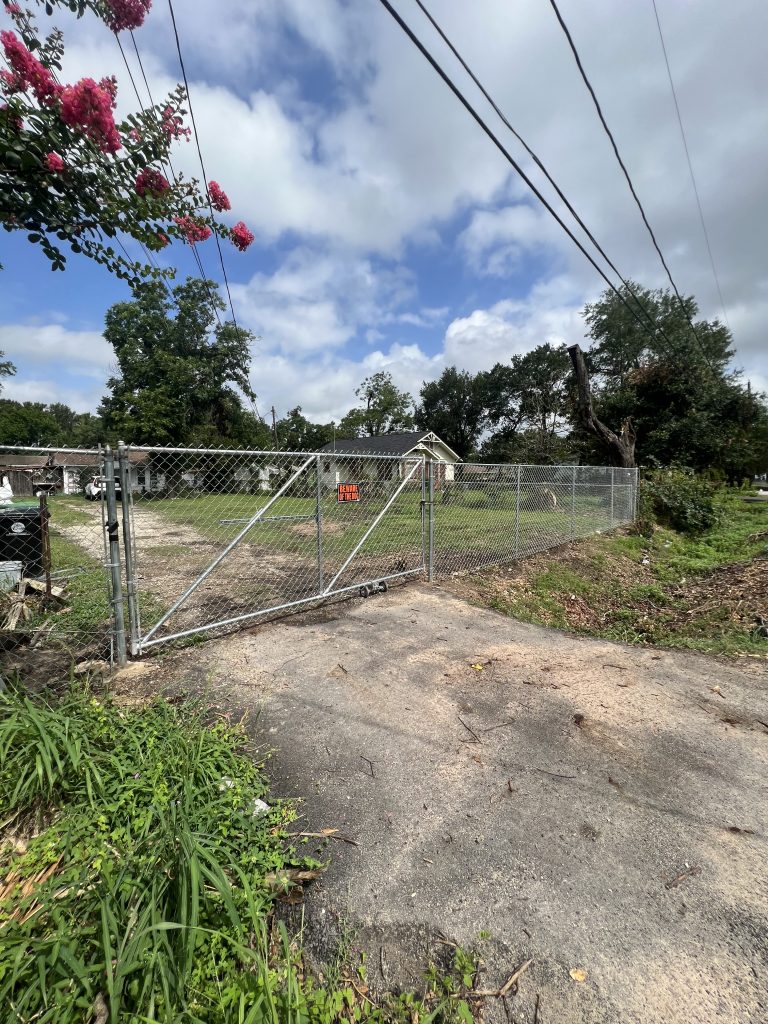
3-Rail Iron Fence in Galveston, TX
Three horizontal rails instead of two — top, middle and bottom — is what "3-rail" actually counts. Here’s where that comes from in a published fence spec, when a 4th rail gets added, and how rail spacing changes what a pool fence has to meet.

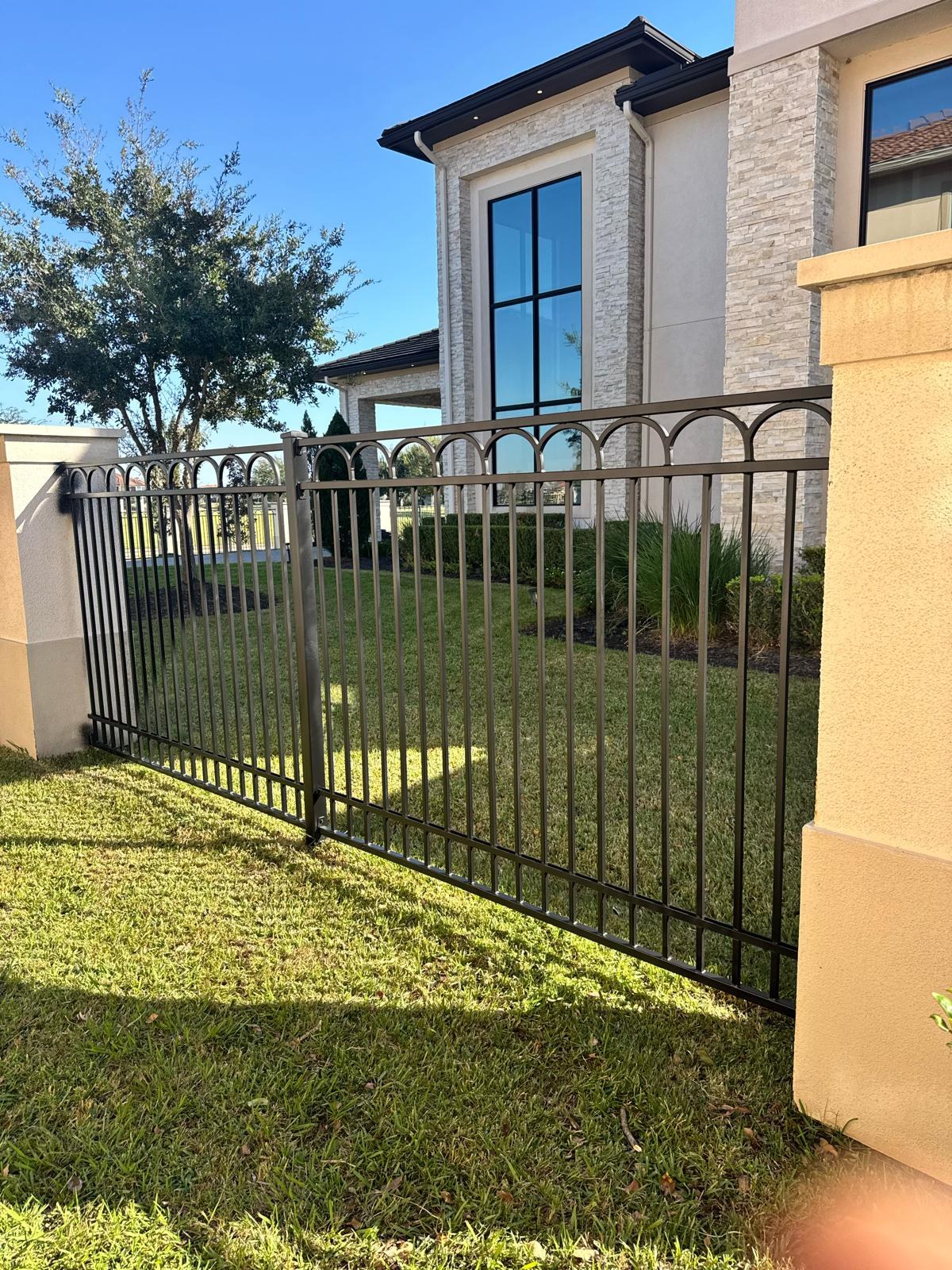
“3-rail” describes how many horizontal rails run through each section of an ornamental iron or aluminum fence — one at the top, one at the bottom, and a third in between for extra stiffness over a long span. A published fence specification (Ultra Aluminum’s Fence, Rail & Gate Specification) puts a number on that: 3 rails is the standard for most heights, moving to 4 rails once a section reaches 7 or 8 feet tall. The same spec is why: a top rail has to hold a 200 lb load at any point, plus 100 lb per linear foot in two directions at once — and, checked against the 2021 pool-barrier code, that rail count has a second effect, keeping every rail gap inside the bracket that requires the tighter picket spacing on a pool fence.
Source: Ultra Aluminum Fence, Rail & Gate Specification, Section 32 31 19, §1.03 & §2.04.
What "3-rail" actually counts
Rail count is a construction detail, not a style name like spear-top or flat-top — it’s the number of horizontal members that run between the posts inside one fence section, with pickets passing through them. The Ultra Aluminum Fence, Rail & Gate Specification (Section 32 31 19, §2.04.A) states it plainly: “There shall be 3 horizontal rails (4 rails for 7' and 8' high fence) in each section.” So 3 rails is the baseline across most residential heights, and a 4th is added specifically once a section reaches 7 or 8 feet.
The same spec sets load requirements that explain why: a top rail (§1.03.B.1) must withstand a 200 lb concentrated load applied at any point in any direction, plus a uniform 100 lb per linear foot horizontal load applied concurrently with 100 lb per linear foot vertical. A taller, unsupported span needs more intermediate support to keep meeting that same margin — which is the practical reason a 3-rail design reads as sturdier on a tall or long run, matching the "extra rigidity" this page has described for years.
Rail count and build specs by height
| Fence height | Rail count | Picket & post | Finish |
|---|---|---|---|
| 36–72 in (3–6 ft) | 3 rails | 1 in sq. picket, .062 in wall · posts 7 ft 1.5 in o.c. | AAMA 2604 powder coat |
| 84–96 in (7–8 ft) | 4 rails | Same picket & post spacing as above | AAMA 2604 powder coat |
| Above 96 in (9 ft+) | Not stated in this spec | — | Ask the manufacturer or installer |
Ultra Aluminum Fence, Rail & Gate Specification §2.02–§2.04 (6063-T5 aluminum, min. 35,000 psi yield; posts 2.5 in square, .075 in walls, .125 in on gate posts; AAMA 2604 finish requires 3,000-hr salt-spray resistance per ASTM B117 — AAMA 2603/603-only finishes are explicitly not acceptable).
Is "3-Rail Iron" actually iron?
Often not literally. The National Park Service’s guide to historic metals puts it bluntly: “almost all that is sold as wrought iron is really mild steel.” And the rail-count detail above comes from an aluminum fence specification — consistent with this page’s own longstanding advice that, near the coast, powder-coated aluminum gives a near-identical look to iron with far less corrosion. The two ASTM specifications that govern tubular-picket ornamental fencing, F2408 (galvanized steel) and F2589 (black steel), both state outright that their scope does not apply to solid-bar or wrought iron — so whichever material a "3-Rail Iron" fence ends up being built from, it falls under one of these published specs, not an informal standard.
If true wrought iron is what you want, the National Park Service’s Preservation Brief 27 is worth knowing: it notes wrought iron’s low carbon and slag content make it more corrosion-resistant than the mild steel sold under the same name today, but also that any iron or steel fence needs the same basics — no crevices that trap water, and a real primer-plus-topcoat paint system — to hold up. On the aluminum side, Ultra’s own spec requires an AAMA 2604 finish rated for 3,000 hours of salt-spray resistance (ASTM B117) and explicitly rejects anything meeting only the lighter AAMA 2603/603 standard.
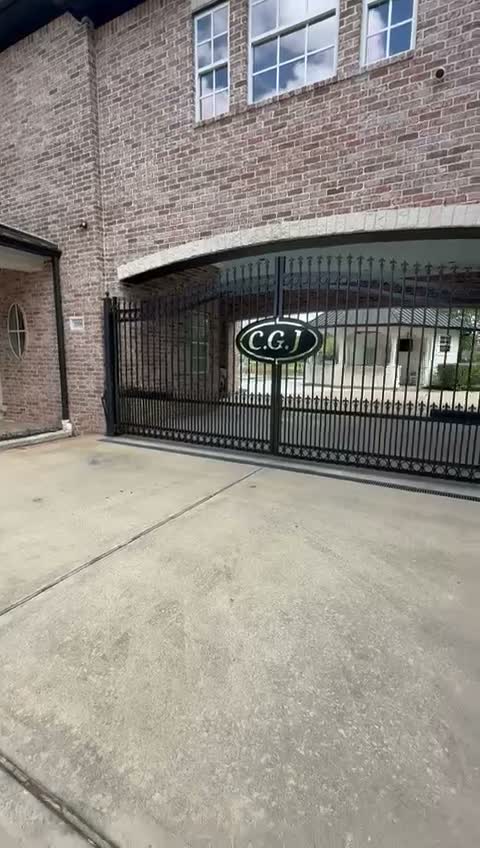
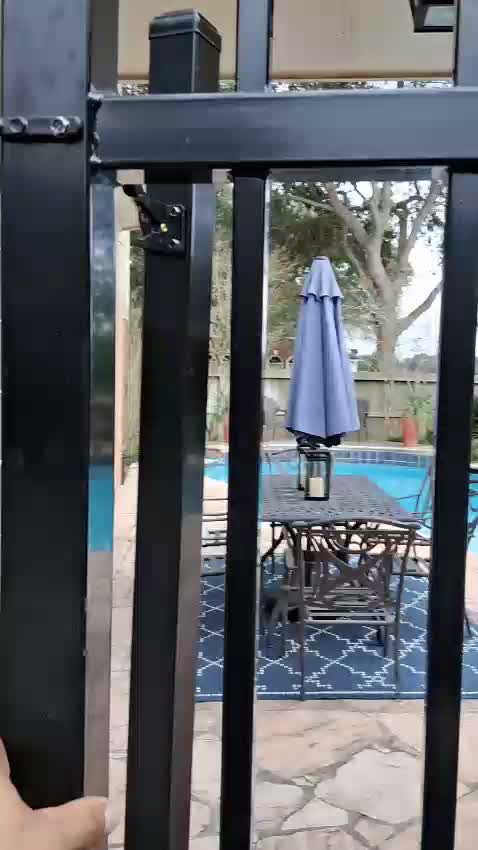
Rail spacing and Galveston’s pool fence code
Rail count by itself doesn’t decide a pool-barrier question — how far apart the rails actually sit does. Under the 2021 ISPSC (the code the City’s own pool permit application requires): where the top edges of the horizontal rails are closer than 45 inches apart, §305.2.5 requires those rails to sit on the pool or spa side of the fence, and caps the gap between vertical pickets at 1¾ inches. Where the rails sit 45 inches or more apart, §305.2.6 allows picket gaps up to 4 inches instead.
Run the numbers from the Ultra spec above and a 3- or 4-rail fence built to it keeps every rail-to-rail gap well under that 45-inch line at any height the spec defines — which means, in practice, a 3-rail (or 4-rail) design built this way is almost always going to land in the closely-spaced bracket if it’s doing pool-barrier duty. That’s not automatically a problem; it just means the pickets, not the extra rail, are what has to meet the tighter 1¾-inch spacing, and the rails need to face the pool. The calculator below runs that math for a specific height.
How many rails — and what that means for a pool
Pick a fence height from the sizes one aluminum manufacturer's spec defines, and say whether this run will double as a pool or spa barrier. A planning aid built from that spec and the 2021 ISPSC, not a permit decision.
Rail count: Ultra Aluminum Fence, Rail & Gate Specification §2.04.A (3 rails standard; 4 rails at 7/8 ft — the spec doesn't state a count above 8 ft). Gap math: height ÷ (rail count − 1), assuming even spacing — real installs can vary; confirm with your installer. Pool rule: 2021 ISPSC 305.2.5/305.2.6.
What Galveston customers say
5.091 Google reviews · read them all on Google
Mustang's team installed iron fence for me and did an absolutely incredible job! I would recommend this company to anyone I know!
We just installed iron gate and it looks amazing thank you very much mustang fencing .
had an excellent experience with mustang fencing From the initial consultation to the final installation, the team was professional, punctual, and attentive to detail. They helped me choose the perfect fence style to match my property and ensured everything was installed with precision. The quality of materials is top-notch, and the fence has completely transformed the look and security of my home. I highly recommend mustang services to anyone looking for reliable and high-quality fencing services!
Reviews shown word for word from the Mustang Fencing Services Google Business Profile (Galveston), captured 2026-10-26.
Questions we get about this
What does "3-rail" mean on an iron fence?
Is a "3-Rail Iron Fence" actually made of iron?
Why do taller fences get a 4th rail?
Does a 3-rail iron fence meet Galveston’s pool fence code?
How tall can a 3-rail iron fence be in Galveston?
Can I add a matching gate?
Sources
Checked October 26, 2026. Rules change, so confirm with the City before you build.
- Ultra Aluminum Fence, Rail & Gate Specification, Section 32 31 19 — Rail count by height (§2.04.A); top-rail load ratings (§1.03.B.1); picket, post and finish requirements (§2.02–§2.04).
- ASTM F2408-16 (scope) — Galvanized steel tubular picket ornamental fences; scope excludes solid bar or wrought iron.
- ASTM F2589-16(2021) (scope) — Black steel tubular picket ornamental fences; scope excludes solid bar or wrought iron.
- National Park Service, Metals in America’s Historic Buildings, Part I — "Almost all that is sold as wrought iron is really mild steel" (p.48).
- National Park Service, Preservation Brief 27 — Wrought iron composition and corrosion resistance; surface prep and paint-system guidance for iron/steel fencing.
- 2021 International Swimming Pool and Spa Code, Section 305 — 305.2.5 (closely-spaced horizontal members, under 45 in) and 305.2.6 (widely-spaced, 45 in or more) picket-gap rules.
- City of Galveston Land Development Regulations, §2.501 & §2.601 — Residential and nonresidential fence height caps (8 ft general, 12 ft tennis court).
Thinking about a 3-rail iron fence?
We’ll help you choose steel or aluminum, the right rail count, and a height that fits your property and Galveston’s codes — free on-site estimates.