
Southern Pine Fence Installation in Galveston County, TX
Pressure-treated southern pine privacy, board-on-board and picket fences: the most economical wood fence and a strong one. With pine, the treatment does the work the wood can't. So the tag on each board, the fasteners and how wet the lumber is matter as much as the style.
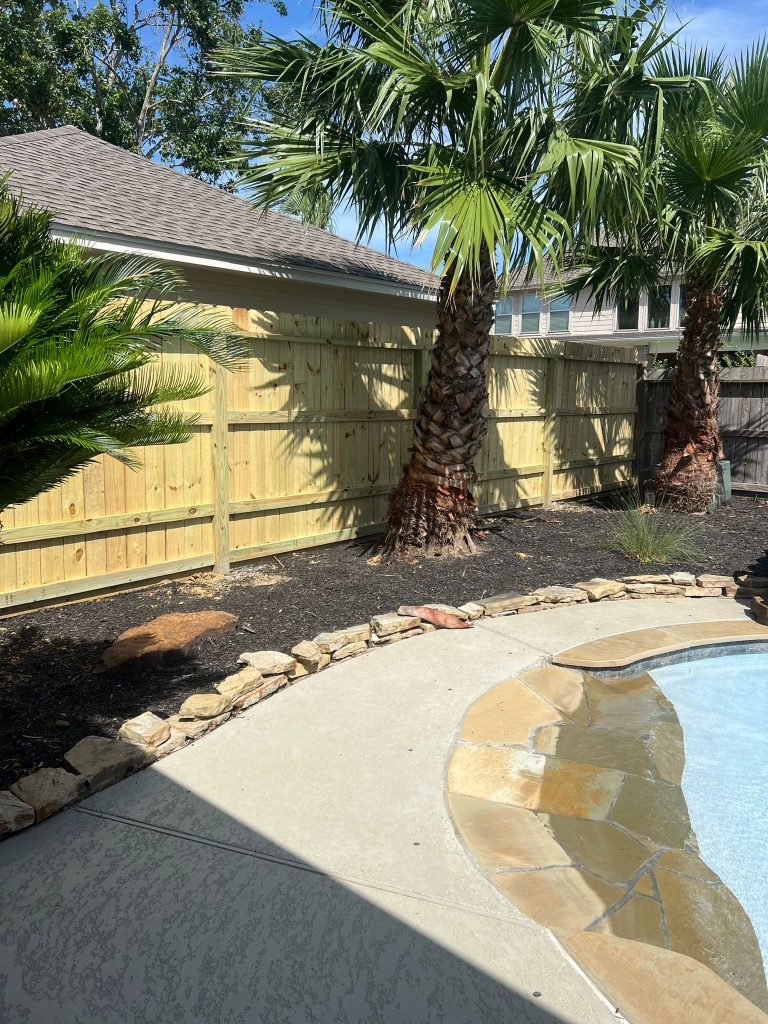
"Southern pine" is a group of species, mainly loblolly, longleaf, shortleaf and slash pine. Untreated, their wood has little natural decay resistance, so fence pine is pressure-treated, and each piece carries a tag saying what it was treated for. For a fence, the Southern Forest Products Association lists UC4A (ground contact) for posts, and UC3B for uncoated pickets and rails (UC3A only if they will be painted). Most treated pine arrives wet from treatment, so boards narrow as they dry. Use hot-dip galvanized or stainless fasteners, and stainless in salt spray.
Sources: Southern Forest Products Association, Pressure-Treated Southern Pine (2019), Table 3-1 and pp. 8 and 16–18; USDA Forest Products Laboratory, Wood Handbook FPL-GTR-282 (2021), Tables 4-3 and 14-1.
What you are buying when you buy "treated pine"
Southern pine is sold as one lumber group, often stamped SYP (southern yellow pine). The USDA Wood Handbook puts pines like these in its slightly or nonresistant decay group, so for outdoor use the wood is pressure-treated: preservative is forced deep into the wood in a sealed cylinder. The treatment is what lets pine last in a fence. Pine itself is strong and economical.
That makes three things worth checking on any pine fence quote:
- The use category on each part. Posts, rot boards, rails and pickets face different conditions and are treated to different levels.
- Whether the lumber is wet or dried after treatment. This decides how much the boards shrink after the fence goes up.
- The fasteners. Copper-based preservatives corrode ordinary steel.
Pine vs cedar? Read cedar vs pressure-treated pine. Worried about warping? See pressure-treated pine pros and cons. All species: the wood fence guide.
Which treatment goes where on a pine fence
| Part | Service condition | Use category (SFPA Table 3-1) |
|---|---|---|
| Posts | Set in soil or concrete | UC4A ground contact |
| Rot board (kickboard) | Touches or sits at the soil line | UC4A ground contact |
| Rails | Above ground, exposed to weather | UC3B (UC3A only if painted or coated) |
| Pickets and trim | Above ground, exposed to weather | UC3B (UC3A only if painted or coated) |
Southern Forest Products Association, Pressure-Treated Southern Pine (2019), Table 3-1 (fences) and "Use Ground Contact for Long-Term Performance". The USDA Wood Handbook Table 15-6 lists the same categories: UC3B fence pickets and rails, UC4A fence posts.
Treated pine: does the tag match the job?
Pick the use category on each part of the quote or on the lumber tags. The checker compares each one with the Southern Forest Products Association's fence table and flags fastener and drying questions to ask.
How it decides: Southern Forest Products Association, Pressure-Treated Southern Pine (2019), Table 3-1 (fences: pickets, rails, slats and trim UC3A if coated or UC3B if uncoated; posts in ground contact UC4A), the "Use Ground Contact for Long-Term Performance" tip, and its fastener guidance (hot-dip galvanized, 304 or 316 stainless, silicon bronze or copper; electroplated typically not accepted outdoors; salt water exposure a particularly severe environment where stainless is required). A higher category than needed passes, because it is treated for harsher service. It checks the tags, not the treating, and it isn't a quote.
Wet or dried after treatment?
Treating standards require lumber to be dry before treatment: 19% moisture or less for dimension lumber. Then water carries the preservative in, and SFPA notes the wood can leave the cylinder at over 50% moisture. Most treated southern pine is delivered without being redried. Drying after treatment, in a kiln (KDAT) or in air (ADAT), can be specified, and SFPA recommends it where dimensional stability and tight fit matter.
What that means for your fence: wet boards shrink as they dry toward the outdoor equilibrium moisture. The USDA's Gulf Coast figures (Mobile and New Orleans) run about 13–15% through the year. Across a 5½-inch flat-grain loblolly board, that is roughly 7/32 inch. On a butted privacy fence, those small gaps are why many owners choose board-on-board.
Fasteners, cut ends and finishing
Fasteners. SFPA summarizes the model codes: fasteners in treated wood should be hot-dip galvanized, type 304 or 316 stainless steel, silicon bronze or copper. Electroplated galvanized fasteners are typically not accepted outdoors. Salt water exposure is one of the particularly severe environments where stainless is required. Hinges, screws and brackets should be the same metal, to avoid galvanic corrosion. See how much weight gate hinges hold.
Cut ends. Treatment protects a zone of the wood, not always the whole board. SFPA says any cut or hole that goes through the treated zone should be field-treated under AWPA Standard M4, usually with copper naphthenate. That matters most on post tops and anything cut near the ground.
Finishing. A finish isn't needed for the treatment to work, but it slows weathering. Wet treated pine has to dry first: SFPA suggests waiting 30 days for a semi-transparent oil stain and 6 months for paint or solid stain. See when to stain a new pressure-treated fence and our staining and sealing service.
From estimate to finished pine fence
- Free on-site estimate. We walk and measure the line with you, and note gates, slopes, trees, drainage and any old fence that has to come out.
- Spec and a written price. The price covers height, style, posts, rot board, gates, fasteners and any finish. Use the tag checker above to read it.
- Property line and permits. Know where your line is before posts go in. A survey is the reliable way. Check the city permit and any HOA rules.
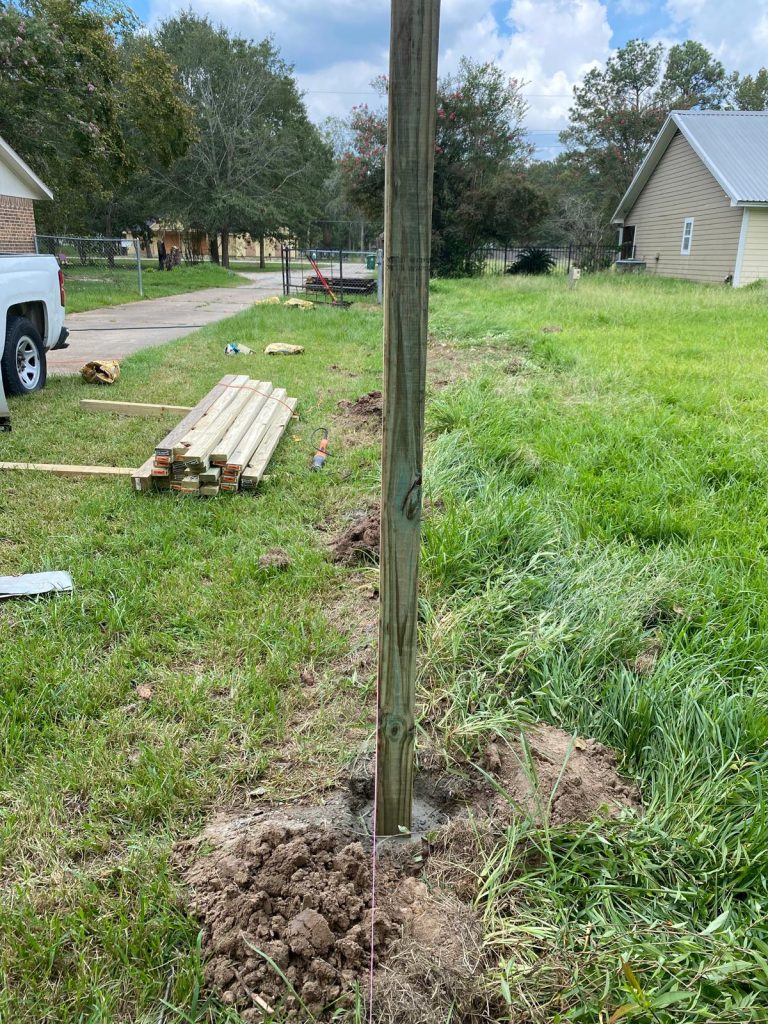
- Installation. Posts first, then rails, rot board, pickets and gates.
- Walkthrough. Check that the gates swing and latch, and agree when the pine will be dry enough to finish.
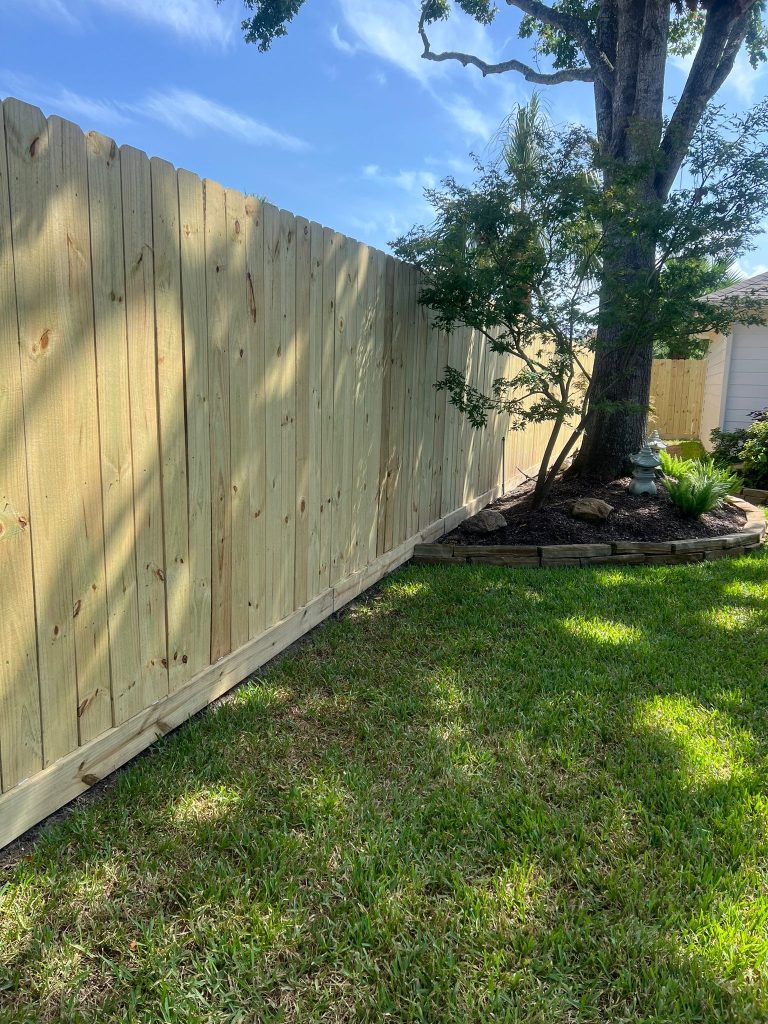
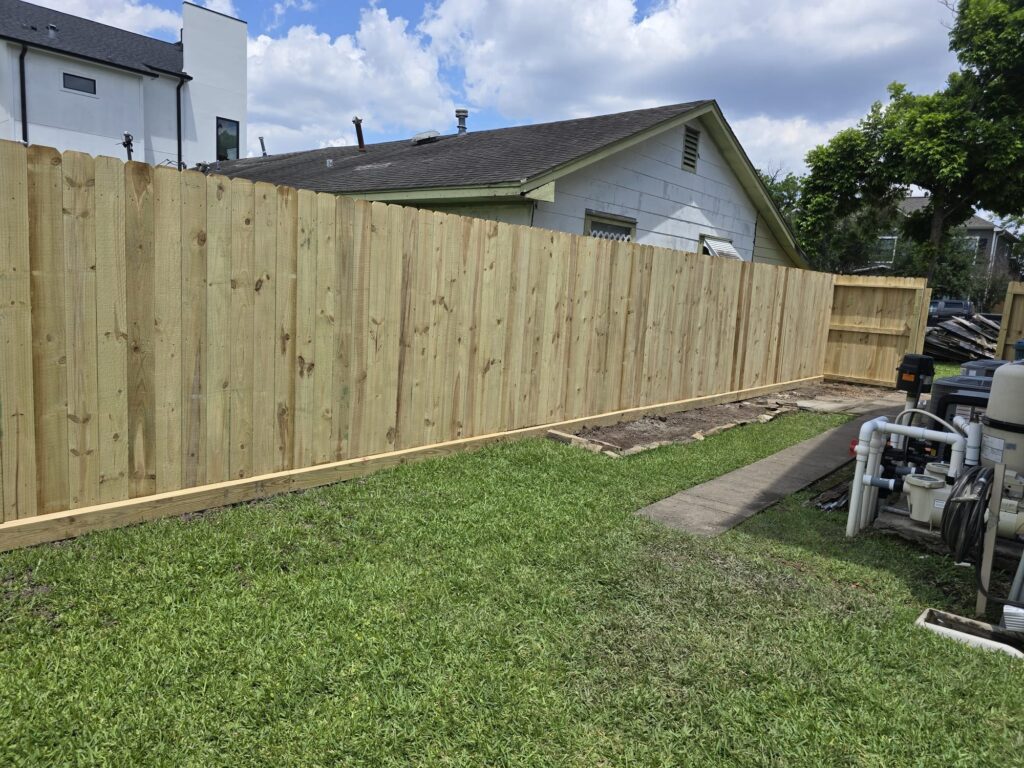
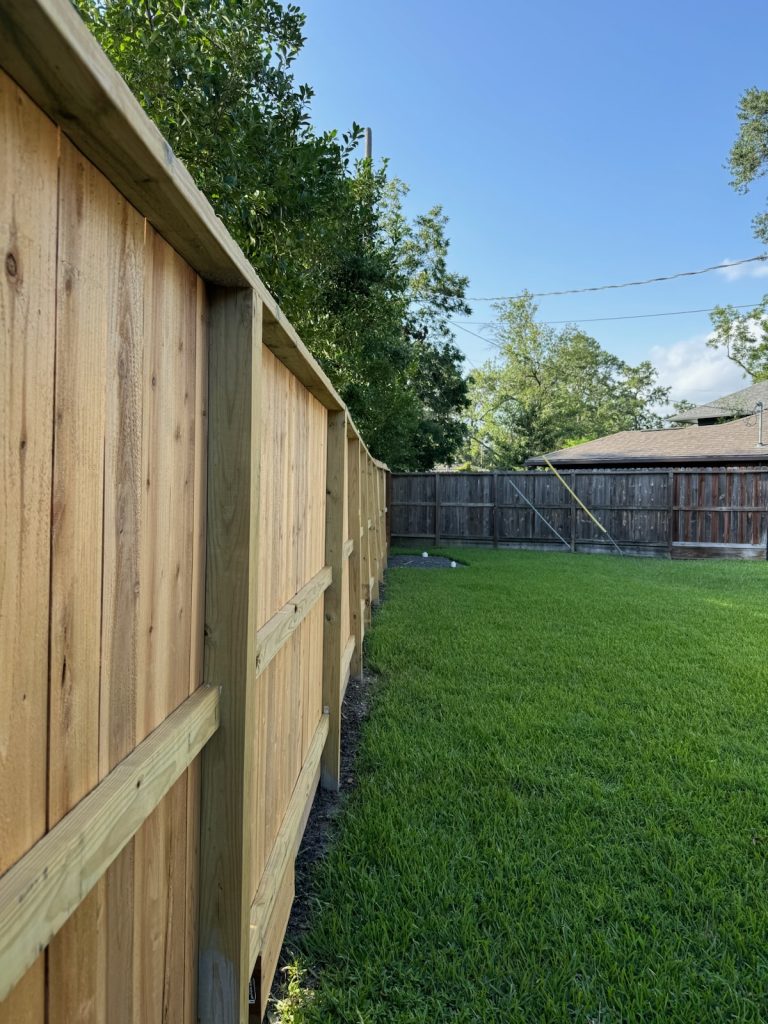
Finished pine work: a pine privacy fence in Galveston and a 77 ft pine fence on Tiki Island.
What affects the cost of a pine fence
You get a written price after the free on-site visit. The main things that move it:
- Length and height. An 8 ft fence uses longer boards and posts than a 6 ft one.
- Style. Board-on-board and shadowbox use more boards than butted privacy or picket. A top cap and trim add more.
- Lumber spec. Heavier treatment categories and lumber dried after treatment can cost more than standard stock.
- Posts and hardware. Treated wood or galvanized steel posts, and hot-dip or stainless fasteners.
- Gates, finish and site work. Each gate adds framing and hardware. Staining adds labor once the wood is dry. Removing an old fence, slopes and clearing add time.
See wood fence cost per foot. Financing is available through the providers on our financing page, subject to credit approval.
What customers say about their wood fences
5.091 Google reviews · read them all on Google
I chose Mustang Fencing for my backyard due to their reputation for quality and security. Their wood fencing exceeded my expectations, durable and visually appealing. The customer service was top-notch, and the installation was quick and efficient.
My new fence looks fantastic and has added both privacy and style to my yard. Highly recommend their services for anyone in need of fencing!
Amazing work will go ahead and recommend everyone in friends and family We installed 8ft tall double sided stained cedar wood fence in our backyard, it's really looks great, installed perfectly nice finishing and cost effective, thanks mustang fencing.
Reviews shown word for word from the Mustang Fencing Services Google Business Profile (Galveston), captured 2026-09-27.
Questions we get about this
Is pressure-treated pine good for a fence in Galveston?
What does UC4A mean on a lumber tag?
Can above-ground treated lumber be used for posts?
Why does a new pine fence get gaps between the boards?
What is KDAT lumber?
When can I stain a new pressure-treated pine fence?
What nails or screws work with treated pine?
Sources
Checked September 27, 2026. Rules change, so confirm with the City before you build.
- Southern Forest Products Association, Pressure-Treated Southern Pine (2019 edition) — quality marks (end tag or ink stamp); Table 3-1 fence use categories; the ground-contact tip; moisture before and after treatment and KDAT/ADAT; fasteners and connectors; field treatment of cuts under AWPA M4.
- Southern Forest Products Association, Finishing, Maintenance and Inspection — wait 30 days for semi-transparent oil stain and 6 months for paint or solid-color stain on wet treated wood.
- USDA Forest Products Laboratory, Wood Handbook: Wood as an Engineering Material, FPL-GTR-282 (2021) — Table 4-3 shrinkage (loblolly 7.4%, longleaf 7.5%, shortleaf 7.7%, slash 7.6% tangential); Eq. 4-9; Table 13-1 outdoor equilibrium moisture (Mobile, New Orleans); Table 14-1 decay resistance; Table 15-6 AWPA use categories.
- City of Galveston Land Development Regulations, §2.501 — residential fence heights: 8 ft; front yard 4 ft solid or 5 ft if at least 60% transparent.
- City of Galveston Fence Permit Application (Rev. 03/2023) — the historic district, Cedar Lawn and 1,000 ft mean-high-tide questions.
Planning a pine fence?
We'll walk the line, go over the lumber spec, posts and fasteners, and give you a written price. Free on-site estimates across Galveston County.

