
How Much Weight Can My Gate Hinges Actually Hold?
As much as the maker’s stated maximum gate weight, for the gate size the rating assumes, and only if the post holds. Here is how to read a hinge rating, why wide gates are hard on hinges, and a checker for your gate.
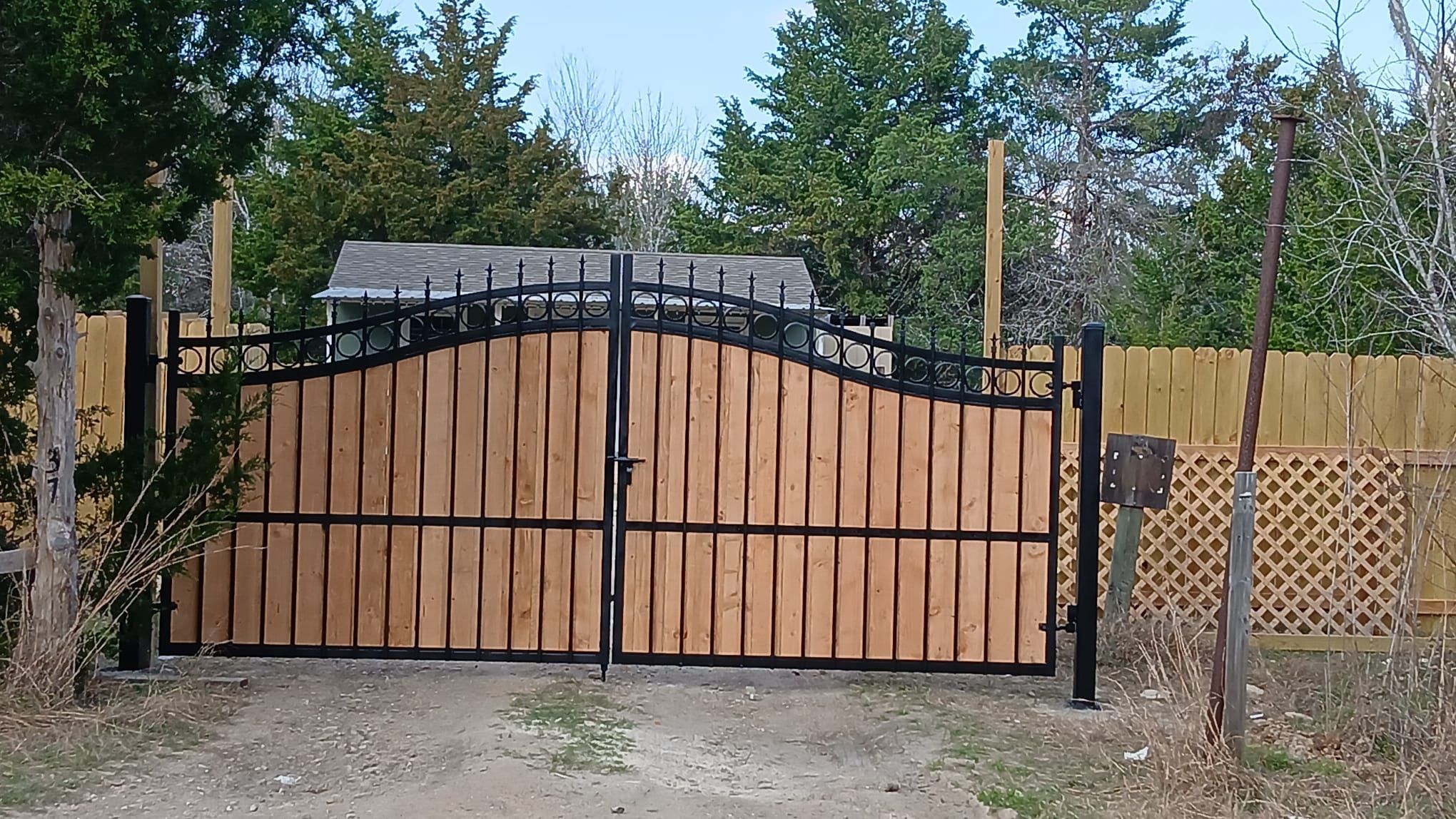
Use the hinge maker’s “maximum gate weight”, not the biggest number on the box. D&D Technologies rates one heavy weld-on hinge at 2,000 lb of load but 1,000 lb of maximum gate weight, for a gate of about 6 by 8 feet. Across Locinox’s range, stated maximums run from 60 kg to 440 kg (about 130 to 970 lb). Then check leverage: a wide leaf pulls its top hinge off the post and pushes the bottom one in, and that sideways force grows with width and shrinks as the hinges are spread apart.
Sources: D&D Technologies product data (CI3075); Locinox hinge overview; Ultra Aluminum Section 32 31 19 specification. The formula is basic statics, shown under the drawing below.
Two numbers on a hinge spec, and which one to use
Hinge packaging and spec sheets often carry more than one weight figure, and they don’t mean the same thing. D&D Technologies’ Shut It BadAss VersaWeld, a weld-on ball-bearing hinge, lists both:
- “Load rating per gate: 2,000 lb (900kg)”
- “Maximum gate weight: 1,000 lb (450kg)”, with an approximate gate size of 6 ft wide by 8 ft high.
The gate you hang should be under the maximum gate weight, the smaller number. D&D’s page doesn’t explain the split, but the safe reading is simple: a gate also swings, stops hard, gets leaned on and catches wind, so hang it under the smaller number. The gate size matters too. A hinge rated for a 6-foot leaf is not automatically rated for the same weight on a 14-foot leaf, because the wider leaf has far more leverage on it (next section).
Other makers publish one maximum per model. Locinox’s hinge table lists a maximum gate weight in kilograms for each hinge, from 60 kg for a light garden-gate hinge to 440 kg for the largest size of its GBMU hinge, and says every hinge “has been tested for at least 500.000 movements.” The chart below shows how wide that spread is inside a single brand. If a hinge has no stated gate weight at all, you don’t know its capacity, whatever it looks like.
Stated maximum gate weight, selected Locinox hinges
Pounds, converted from the kilogram figures in Locinox’s hinge overview (kg × 2.2046).
Why wide gates are hard on hinges: leverage
A swing gate is a lever. Its weight acts at about the middle of the leaf, half the width out from the hinges. To keep the leaf from rotating down, the top hinge pulls away from the post and the bottom hinge pushes into it. From basic statics, each of those sideways forces is about:
gate weight × (leaf width ÷ 2) ÷ distance between the hinges
That is on top of carrying the gate’s weight. Two examples:
- A 100 lb walk gate, 4 ft wide, with hinges 4 ft apart: 100 × 2 ÷ 4 = 50 lb sideways on each hinge.
- A 300 lb drive gate, 12 ft wide, with hinges 4 ft apart: 300 × 6 ÷ 4 = 450 lb sideways on each hinge.
Three times the weight became nine times the sideways force, because the leaf is also three times as wide. That is why wide single leaves sag first, and why the fixes that work are the ones that change the geometry: spread the hinges farther apart, support the latch end with a wheel or a latch post, or split the opening into a double gate. For double gates, see drop rods and center stops; for the trade-offs, single vs double swing gates.
Sideways force on each hinge vs hinge spacing
A 300 lb leaf, 12 ft wide, weight centered 6 ft from the hinge line, latch end unsupported.
Check a gate against its hinges
Enter the leaf and the hinge’s stated maximum gate weight. The checker shows the sideways force on each hinge from leverage, and whether the weight is inside the maker’s limit. It does not price anything.
Force = weight × (width ÷ 2) ÷ hinge spacing, assuming the weight is centered on the leaf and nothing supports the latch end. Real gates vary: a support wheel, a diagonal brace, or a heavy latch-side frame changes the numbers. Ratings: D&D Technologies and Locinox product data; post sizes: CLFMI Section 32 31 13, table 2.9 B (chain link only). This is a checklist, not an engineering design.
Not sure your hinges are up to the gate?
We’ll weigh the leaf, check the spacing and the post, and put the hinge model and hardware on a written quote. Free on-site estimates across Galveston County.
Hinge types, and where their numbers come from
- Strap and T-hinges are the usual choice on wood gates. They are screwed or bolted into wood, so what they hold depends as much on the fasteners, the gate frame and the post as on the hinge. If the hinge has no stated gate weight, treat it as unknown and keep wood leaves narrow or add a steel frame. See wood gates.
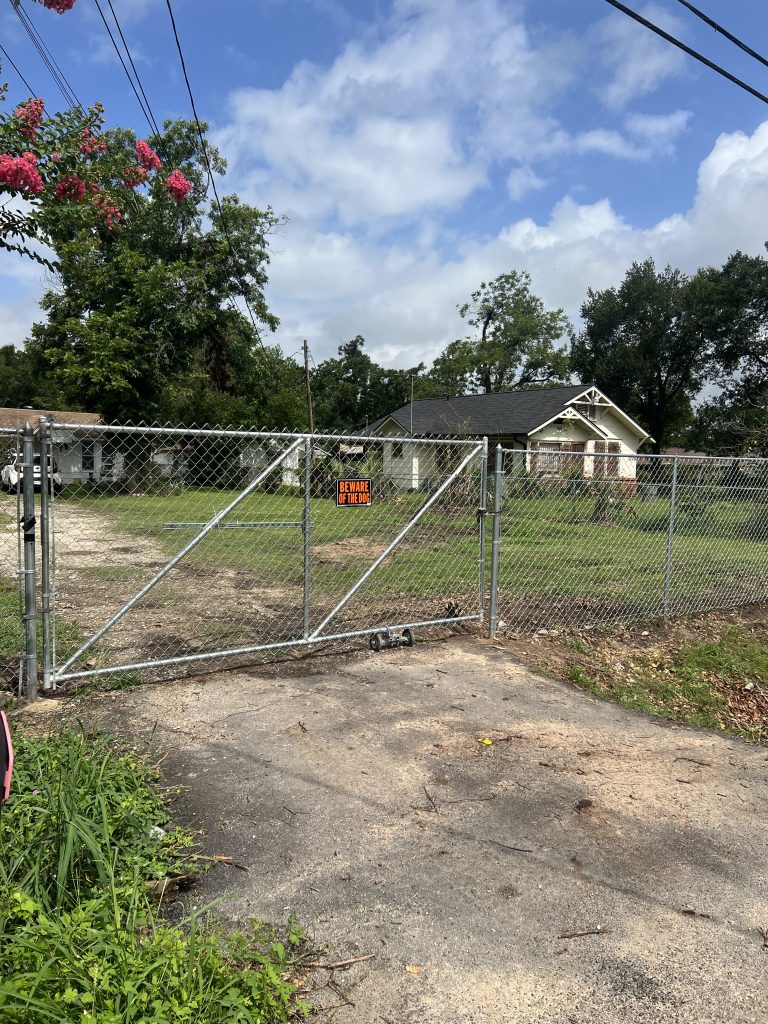
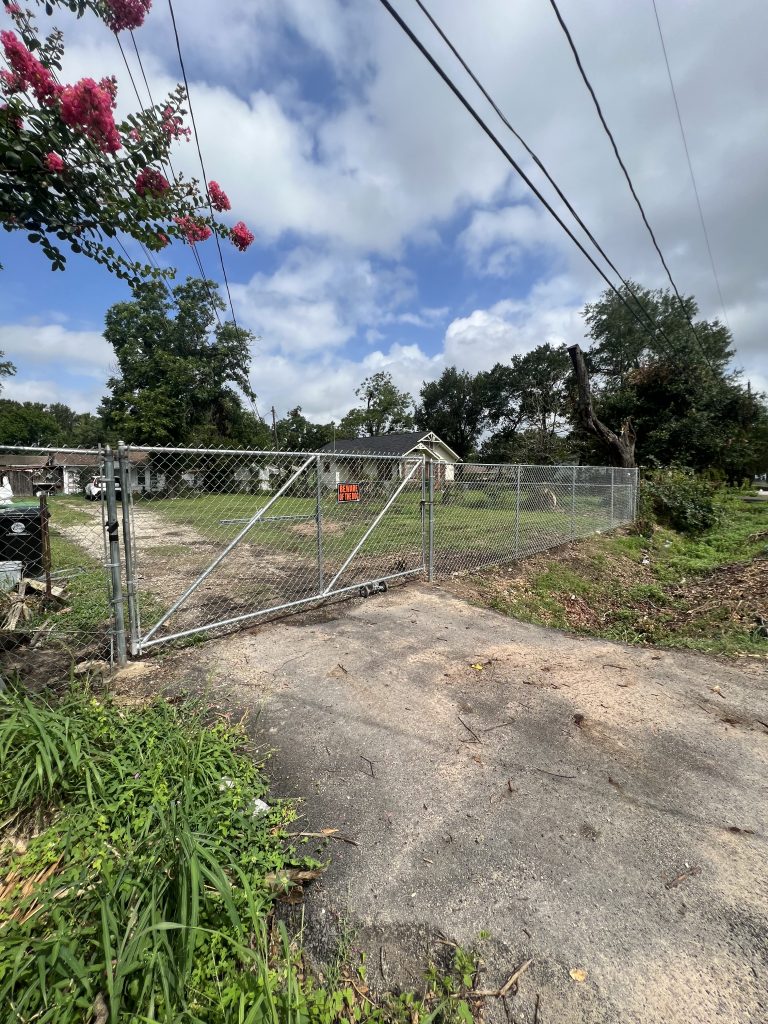
- Chain link gate hinges are specified by the industry, not by weight. The Chain Link Fence Manufacturers Institute’s spec calls for “galvanized malleable iron or heavy gauge pressed steel post and frame hinges” and sizes the gatepost by leaf width. See chain link gates.
- Bolt-on adjustable hinges bolt to the post and gate frame. Locinox says its typical hinge “is adjustable in 4 ways,” and publishes a maximum gate weight for each model.
- Weld-on bearing hinges are welded to steel posts and frames, with sealed bearings. D&D’s VersaWeld is one; its 1,000 lb maximum is at the heavy end.
For ornamental steel gates, Ameristar’s commercial spec puts the choice with the gate maker: “Type and quantity of gate hinges shall be based on the application; weight, height, and number of gate cycles. The manufacturers’ gate drawings shall identify the necessary gate hardware.” The U.S. military’s security fence standard (UFC 4-022-03) says the same in fewer words: “Hinge selection must consider size of the gate and frequency of use.” A gate that opens fifty times a day at a business needs more than the same gate at a weekend house.
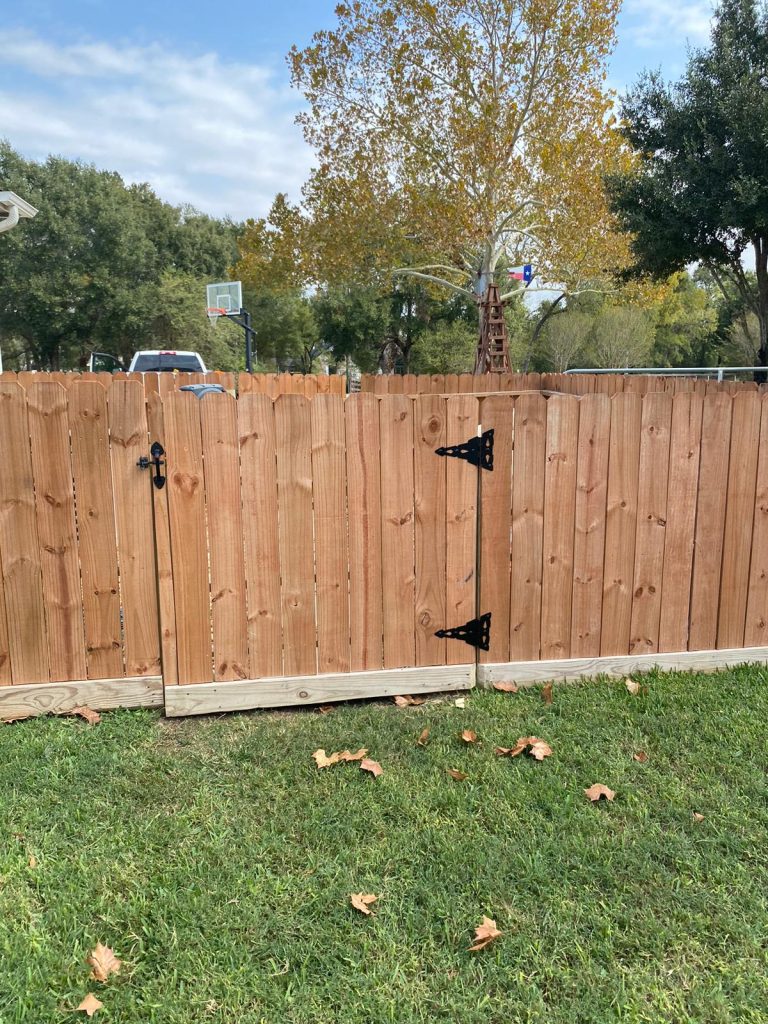
The hinge is only as strong as the post
Every pound of that sideways force goes into the hinge post, and from there into the ground. A strong hinge on a light post just moves the failure: the post leans, the leaf drops at the latch end, and the gate starts dragging. That is why the chain link spec sizes swing gateposts by leaf width, stepping up as leaves get wider and taller. It also calls for gates hung plumb, with 3 inches of bottom clearance where the grade allows and no more than 3 inches between the gate frame and the post at the hinge.
Latch-side strength matters as well. Ultra Aluminum’s specification requires its swing gates to “support a 300 lb. vertical load on the latch side of the gate without collapsing.” That is a test of the frame and hinges together, and it is the kind of number worth asking any gate maker for.
If a heavy gate is going on an existing post, check the post first. For what goes wrong when hinges or posts are undersized, see why gates sag. For posts and wind on the island, see hurricane-ready fencing.
What to ask before a heavy gate is hung
- What does the leaf weigh? Ask the gate maker, or weigh the parts. A guess is where hinge problems start.
- Which hinge, and what is its stated maximum gate weight? Get the model on the quote. Compare the weight to the maximum, not to a load rating, and check the gate size the rating assumes.
- How far apart are the hinges? On a wide leaf, spreading them makes a large difference (see the chart above).
- What holds up the latch end? A wheel, a latch post or a brace, especially on leaves 10 ft and wider.
- What size is the hinge post, and how deep is its footing? In writing. For chain link, compare it with the CLFMI table.
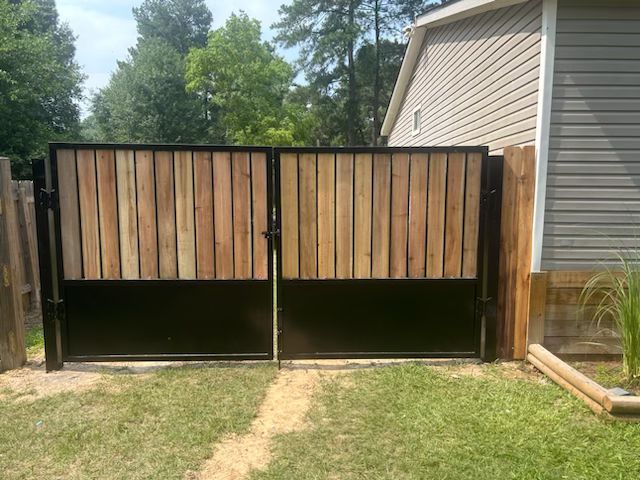
For drive gate styles and sizes, see our driveway gate page.
What Galveston customers say
5.091 Google reviews · read them all on Google
Very professional and friendly. Gotten automatic gates done and they are done to perfection! Thank you
We just installed iron gate and it looks amazing thank you very much mustang fencing .
had an excellent experience with mustang fencing From the initial consultation to the final installation, the team was professional, punctual, and attentive to detail. They helped me choose the perfect fence style to match my property and ensured everything was installed with precision. The quality of materials is top-notch, and the fence has completely transformed the look and security of my home. I highly recommend mustang services to anyone looking for reliable and high-quality fencing services!
Reviews shown word for word from the Mustang Fencing Services Google Business Profile (Galveston), captured 2026-10-05.
Questions we get about this
How much weight can gate hinges hold?
What is the difference between a hinge load rating and maximum gate weight?
Why do wide gates sag even with heavy hinges?
Does spacing the hinges farther apart help?
How many hinges does a heavy gate need?
What hinges are used on chain link gates?
Sources
Checked September 27, 2026. Rules change, so confirm with the City before you build.
- D&D Technologies, Shut It BadAss VersaWeld Hinge (CI3075) — Load rating per gate 2,000 lb (900 kg); maximum gate weight 1,000 lb (450 kg); approximate gate size 6 ft by 8 ft; weld-on, two sealed ball bearings.
- Locinox, Hinge overview — Maximum gate weight in kg for each hinge model (60 to 440 kg); every hinge tested for at least 500,000 movements.
- Chain Link Fence Manufacturers Institute, Guide for Specifying Commercial/Industrial Chain Link Fence, Section 32 31 13 — Malleable iron or heavy gauge pressed steel hinges; swing gatepost size by leaf width (table 2.9 B); gates plumb, 3 in bottom clearance, 3 in maximum hinge and latch offset (§3.5).
- Ameristar, Montage Commercial ornamental steel fence catalog and guide specification — §3.04: type and quantity of gate hinges based on weight, height and number of gate cycles; the maker’s gate drawings identify the hardware.
- Ultra Aluminum, Fence, Rail and Gate Specifications (Section 32 31 19) — Swing gates shall support a 300 lb vertical load on the latch side without collapsing.
- UFC 4-022-03, Security Fences and Gates (U.S. Department of Defense) — §3-5: hinge selection must consider size of the gate and frequency of use; weld hinges for tamper resistance.
Hanging a heavy or wide gate?
We’ll look at the opening, the leaf, the posts and the ground, and put the hinge model, post size and latch-end support on a written quote. Free on-site estimates across Galveston County.