
Farm & Ranch Fencing in Galveston, TX
Ranch-rail fencing marks a big lot and holds horses or cattle without blocking the view. Choose it by what it has to hold. That sets the height, the rails, whether it needs wire mesh backing, and how the corners and gates are braced.
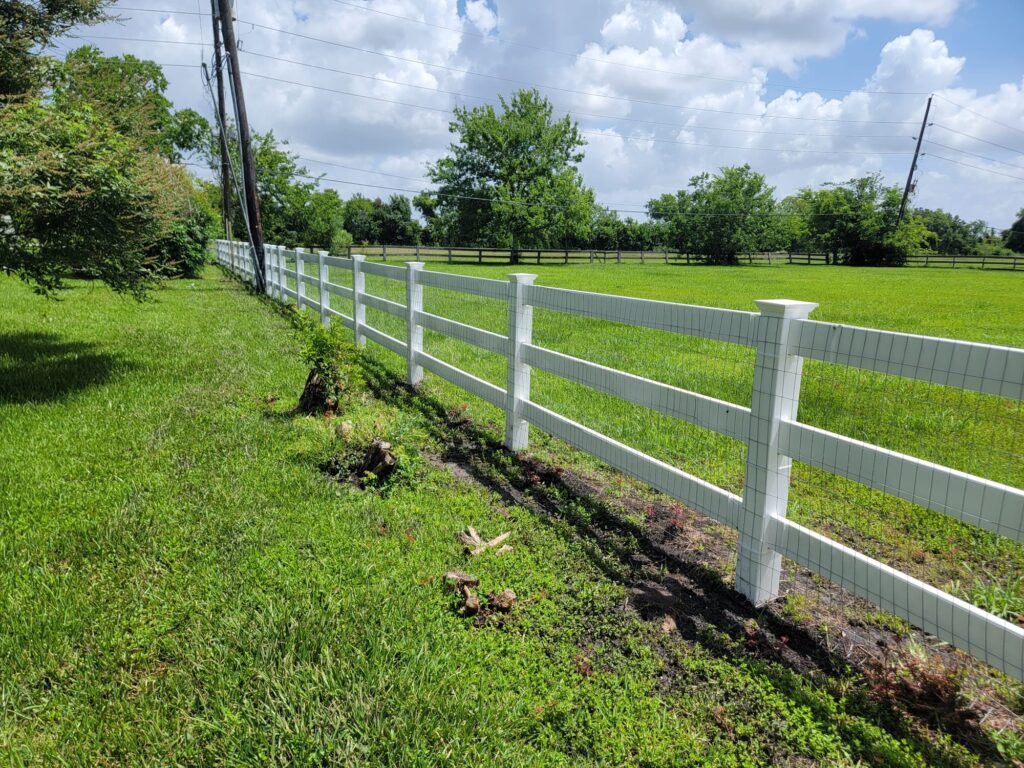
Size a ranch fence to what it holds. Extension guides recommend at least 60″ for a horse perimeter fence, with the bottom 6–8″ off the ground. For cattle they recommend at least 54″. For horses, rail or board fences beat barbed wire. Brace the fence wherever it starts, stops or turns 20° or more, and on both sides of every gate. Set the brace posts at least 3 ft deep. If the pasture borders a U.S. or state highway, Texas law says your animals can’t roam its right-of-way.
Sources: UGA Extension B1192; UT Extension PB1541; USDA NRCS Texas Conservation Practice Standard 382 (2021); Texas Agriculture Code §143.102.
What we install, and for whom
Larger lots in mainland Galveston County, such as parts of Santa Fe and Hitchcock, often need an open fence. It should mark a long boundary or hold animals, not block the view. That usually means one of these:
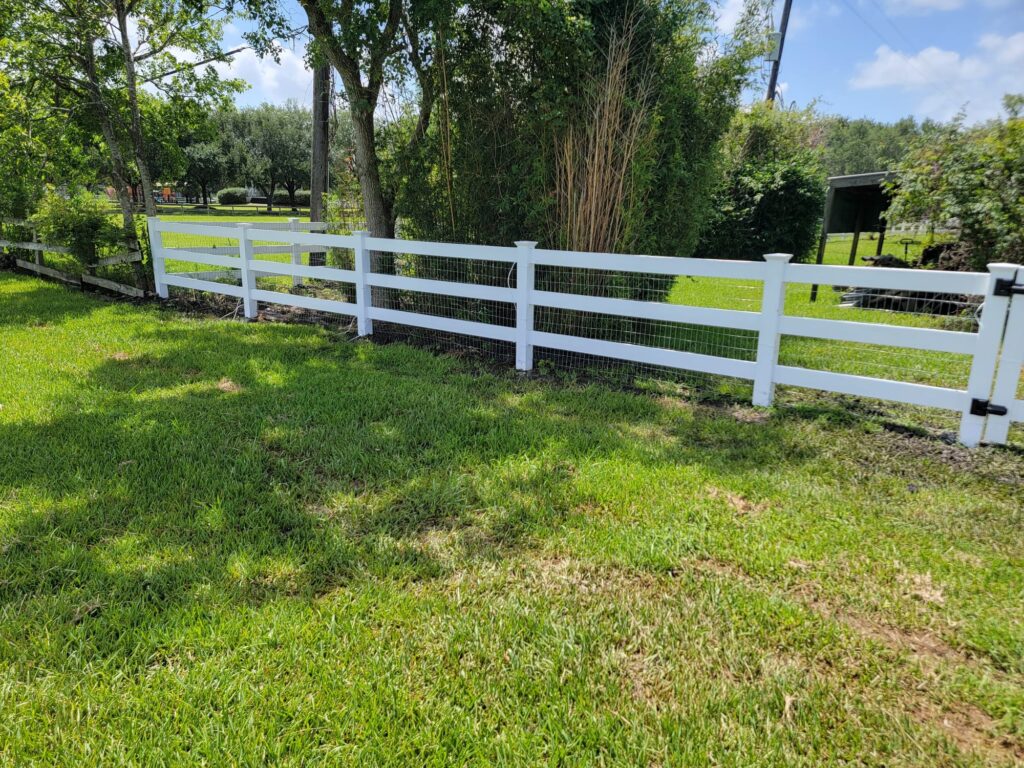
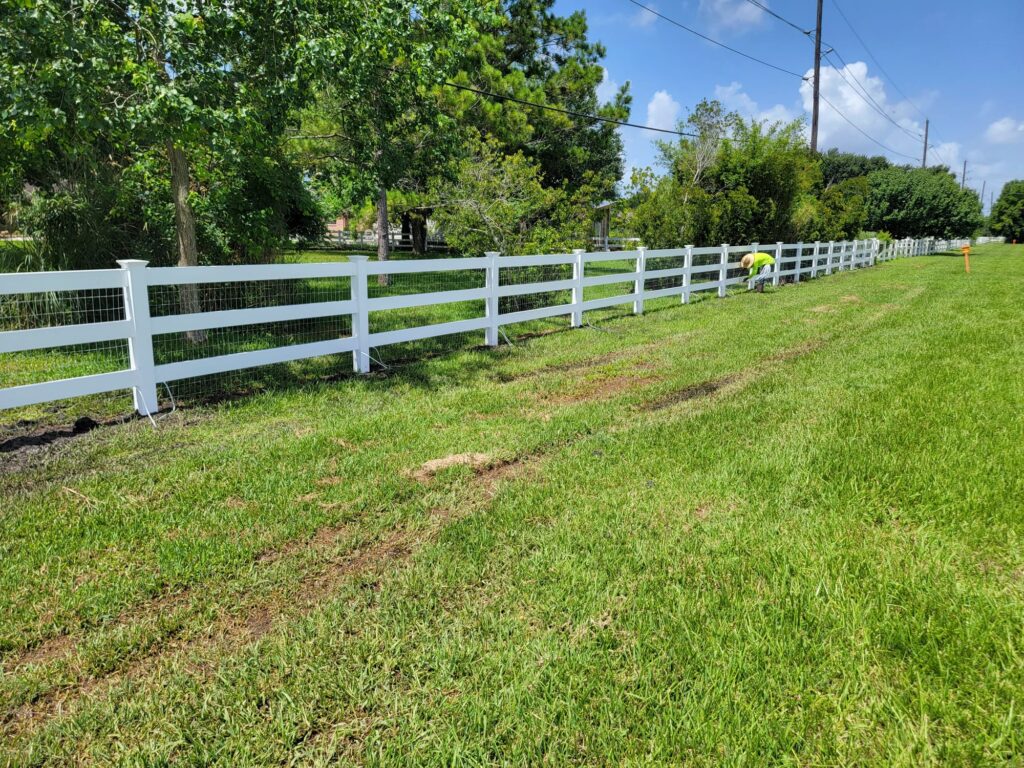
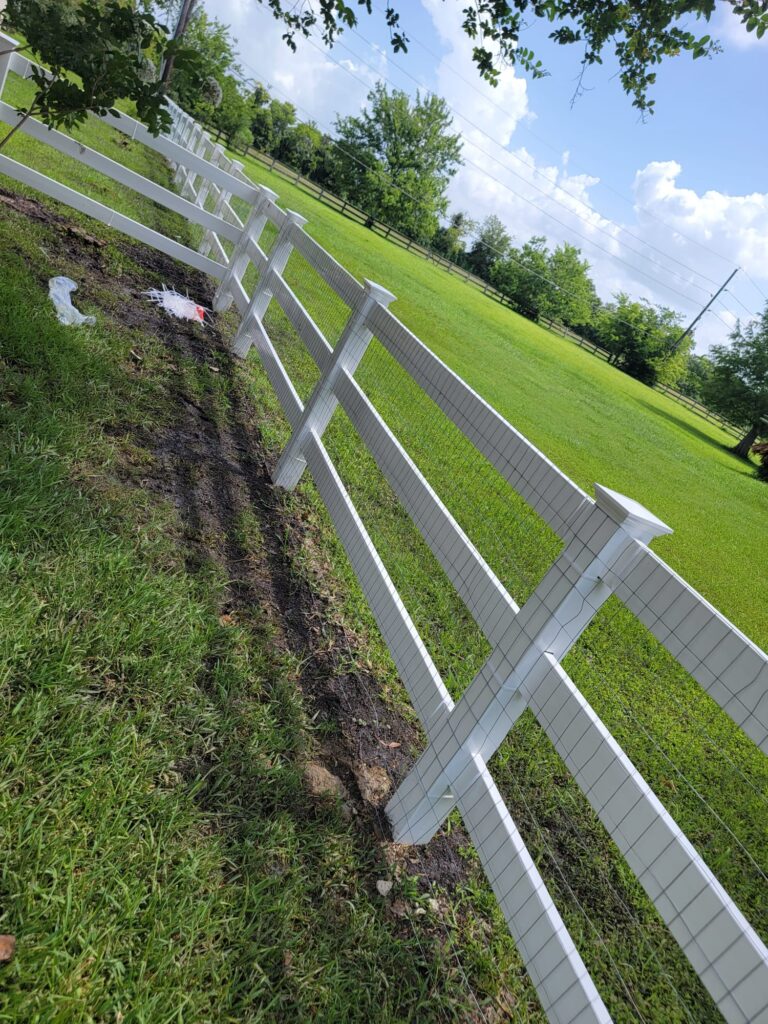
- Vinyl ranch rail. Two, three or four white rails. It needs no paint and looks clean at a distance. See ranch rail fencing and vinyl fences.
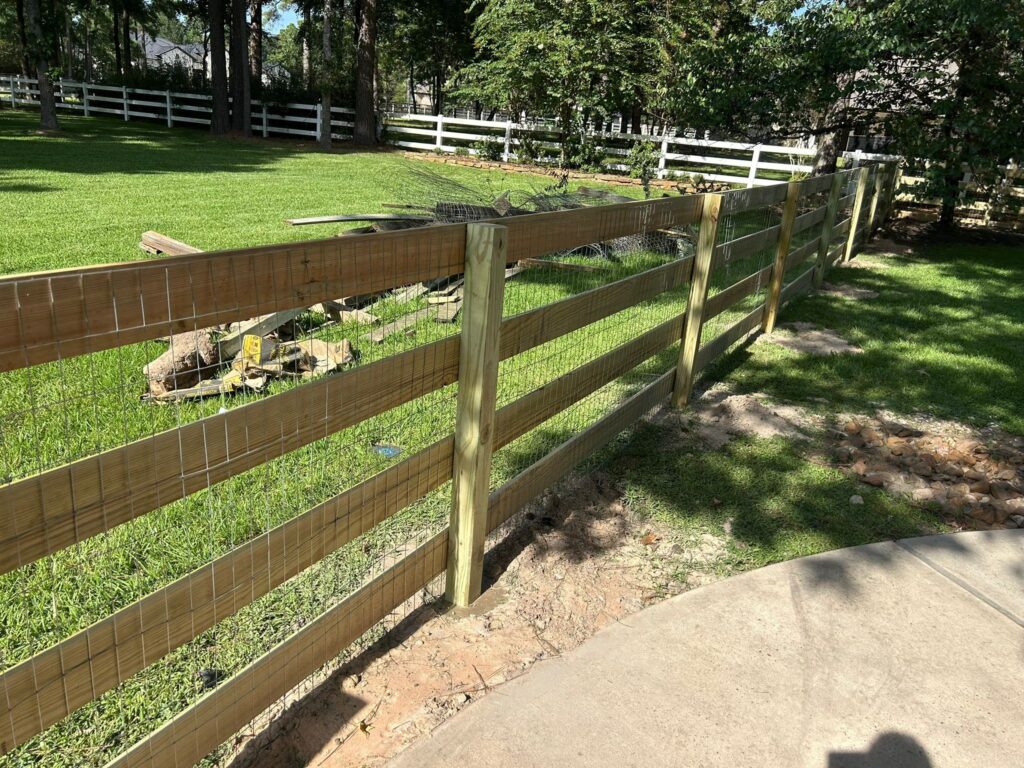
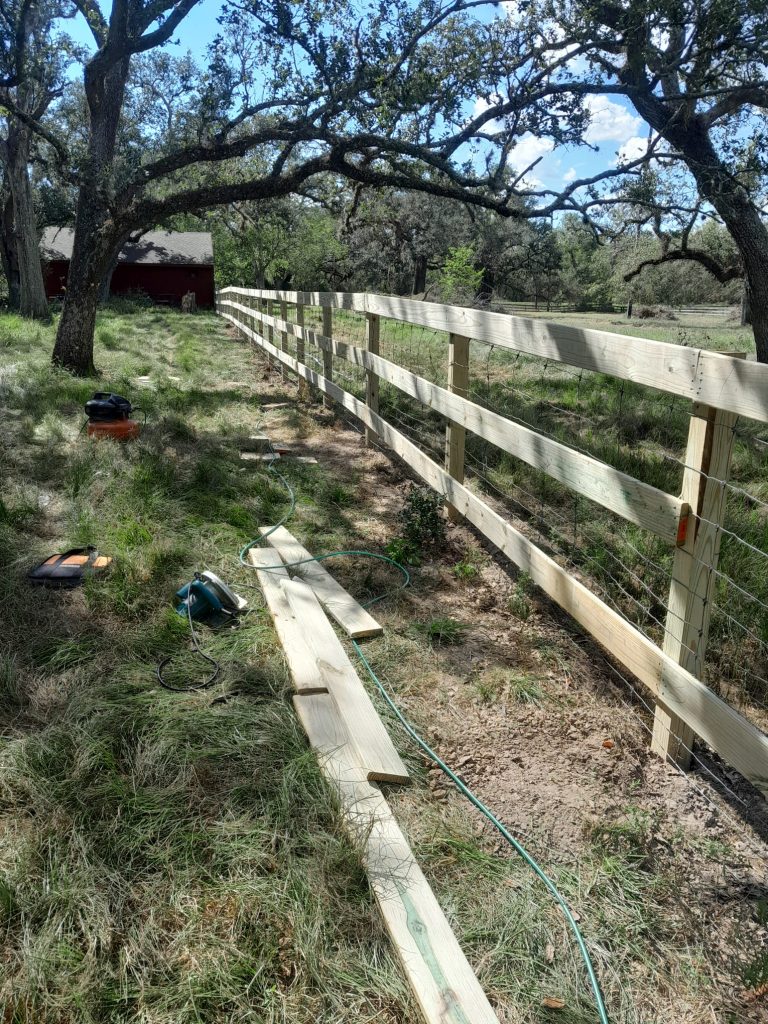
- Wood ranch rail. Treated pine rails on wood posts. It costs less to start and can be stained. See wood ranch rail.
- Rail with wire mesh backing. Either style with welded or woven wire behind the rails. It holds dogs, foals and small animals that could slip between the rails.
- Farm and ranch gates. Wide equipment gates and walk gates, hung on braced posts. See farm-style gates, cattle guard vs. gate and pipe vs. panel gates.
Not sure which fits? Start with ranch fence vs. farm fence or the best fence for horses and cattle.
Ranch fence planner
Tell us what the fence has to hold and how the line runs. You’ll see the height the extension guides recommend, how many brace assemblies the layout needs, and the rules that come with it.
Heights: University of Georgia Extension B1192 (horses: perimeter at least 60″, dividers 54″, bottom 6–8″ off the ground) and University of Tennessee PB1541 (cattle perimeter at least 54″). Braces: USDA NRCS Texas Conservation Practice Standard 382 (where the fence starts, stops or turns 20° or more, and on both sides of gates) and UGA B1192 (braced line assemblies about every 650 ft). Highway: Texas Agriculture Code §143.102 and §143.108. The count assumes the turns split the line into roughly equal runs. A planning aid, not a design.
Recommended and legal fence heights for livestock
Inches. Extension recommendations for the animal, and the heights Texas law uses.
Choosing the fence for the job
| Need | Fence | Why |
|---|---|---|
| Horses | Vinyl or wood rail, 60″ at the perimeter; mesh backing for foals | Rails are easy for horses to see. Avoid barbed wire and steel T-posts |
| Cattle | Rail, 54″ or more at the perimeter; mesh backing or a lower rail if calves could slip through | Perimeter height per UT Extension |
| Dogs and small animals | Three rails with wire mesh backing | Mesh closes the gaps between rails |
| Boundary or road frontage | Two- or three-rail vinyl or wood | Marks the line and keeps the view open |
UGA Extension B1192; UT Extension PB1541; USDA NRCS Texas CPS 382 (2021).
What happens at the estimate and install
- Free on-site estimate. We walk the line with you and note what the fence has to hold, the corners and turns, the gates and the ground: wet spots, slopes and trees.
- The line. Long rural lines follow the survey. If the corners aren’t marked, get them located before posts go in.
- Corners, gates and braces first. The braced corners and gate posts carry the fence, so they are set first. Rails and any mesh backing go on after.
- Gates hung and checked. Wide gates are hung on braced posts and adjusted to swing and latch.
What affects cost and timing
You get a written price after the free on-site estimate. What moves it (see also farm and ranch fence cost):
- Length. Rail fencing is priced mostly by the foot.
- Rails and backing. A third or fourth rail, or wire mesh backing, adds material.
- Material. Vinyl costs more than wood to start and needs less upkeep.
- Corners, turns and gates. Each needs a brace assembly or heavier posts.
- The ground. Clearing brush, wet or sandy soil, and slopes add time.
Financing is available through the providers on our financing page, subject to credit approval.
What Galveston customers say
5.091 Google reviews · read them all on Google
My new fence looks fantastic and has added both privacy and style to my yard. Highly recommend their services for anyone in need of fencing!
Very professional and friendly. Gotten automatic gates done and they are done to perfection! Thank you
had an excellent experience with mustang fencing From the initial consultation to the final installation, the team was professional, punctual, and attentive to detail. They helped me choose the perfect fence style to match my property and ensured everything was installed with precision. The quality of materials is top-notch, and the fence has completely transformed the look and security of my home. I highly recommend mustang services to anyone looking for reliable and high-quality fencing services!
Reviews shown word for word from the Mustang Fencing Services Google Business Profile (Galveston), captured 2026-10-12.
Questions we get about this
How tall should a horse fence be?
How tall should a cattle fence be?
Is barbed wire OK for horses?
Vinyl or wood ranch rail: which is better?
Where does a ranch fence need braces?
Do I have to keep my livestock off the highway?
Is financing available for a ranch fence?
Sources
Checked September 26, 2026. Rules change, so confirm with the City before you build.
- USDA NRCS Texas, Conservation Practice Standard 382: Fence (2021) — brace assemblies at starts, stops, turns of 20° or more and gates; post depth; horses and barbed wire.
- University of Georgia Extension, Bulletin 1192: Fences for Horses — horse fence heights; bottom clearance; H-brace proportions; braced line assemblies every 650 ft.
- University of Tennessee Extension, PB1541: Planning and Building Fences on the Farm — cattle perimeter and handling-facility heights; fences for horses.
- Texas Agriculture Code, Chapter 143 — §143.102 and §143.108 livestock on highways; §143.028 sufficient fence; §143.001 cropland fence.
Where we install farm & ranch fencing
We install farm & ranch fencing across Galveston County and the Bay Area side of the mainland. We serve these towns directly:
Also serving La Marque, Bacliff, San Leon, Clear Lake Shores.
Fencing a pasture or a big lot?
We’ll walk the line, count the corners, turns and gates, and recommend the rails, height and backing for what the fence has to hold. Free on-site estimates across Galveston County.

