
Ranch fence vs. farm fence: what’s actually different?
Both styles hold livestock, but they’re built to solve different problems — containing cattle and horses across open pasture, versus also excluding smaller animals from crops or a coop. Here’s what land-grant extension guides and Texas’s own fence law say about each.
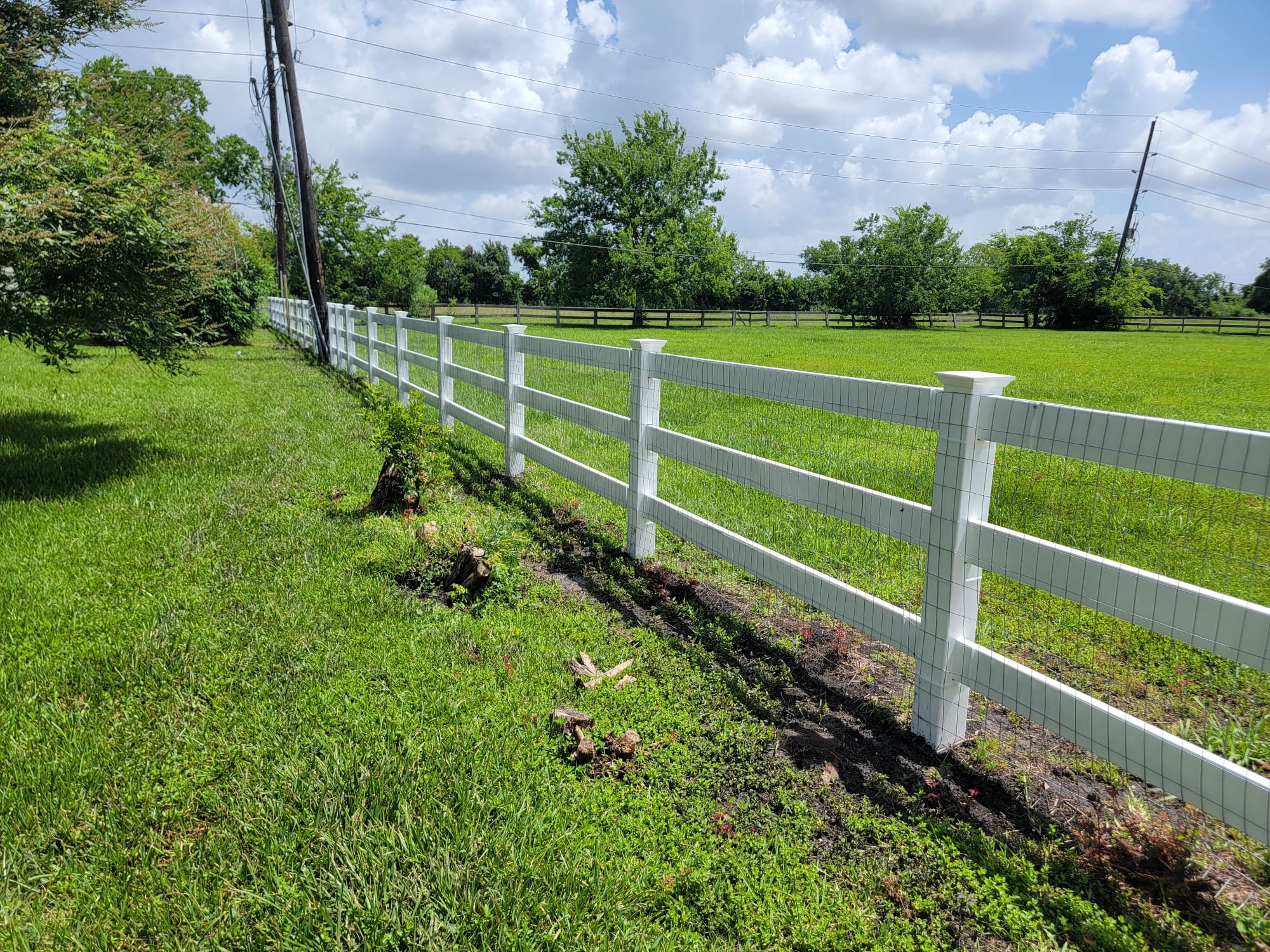
They’re both livestock fences, but they solve different problems. Ranch fencing is built to contain large animals — cattle and horses — across a long, open perimeter, with wide rail spacing that keeps sightlines clear. Farm fencing is built to exclude as much as contain: keeping hogs, goats, or other animals out of cropland or a coop, which usually means tighter spacing or wire mesh added to the rails. Texas’s own “sufficient fence” law treats these as separate problems too, with two different minimum heights.
Sources: Univ. of Georgia Extension Bulletin 1192 “Fences for Horses”; Univ. of Tennessee Extension PB1541 “Planning & Building Fences on the Farm”; Texas Agriculture Code Chapter 143 (retrieved 2026-09-26 via the Texas Legislative Council).
What ranch fencing is built for
Ranch fencing exists to contain large livestock — cattle and horses — across a long, open perimeter, while keeping clear sightlines for monitoring animals. The classic look is two to four horizontal rails on evenly spaced posts. Extension guides put real numbers on “how tall is tall enough”: University of Tennessee Extension recommends at least 54 inches for a cattle perimeter fence, and University of Georgia Extension recommends at least 60 inches for a horse perimeter fence, because horses are more likely to try to jump a fence than to go through or under it when spooked.
In a rail fence, every section carries its own load — unlike a wire fence, where the corner and brace-post assemblies do most of the work. That’s part of why rail posts are sized and spaced consistently down the whole run (UGA Extension B1192).
What farm fencing is built for
Farm fencing has a broader job: contain livestock, yes, but also keep unwanted animals out of crops, a garden, or a coop, and in some cases add privacy around a homestead. That “keep out” half of the job is why Texas law treats it differently — the state’s “sufficient fence” standard around cultivated land requires at least 5 feet of height, specifically because it has to stop hogs from passing through (Texas Agriculture Code §143.001). That’s taller than either extension group’s recommended cattle or horse perimeter height, because it’s solving a different problem: excluding a determined, ground-level animal, not containing cattle or horses.
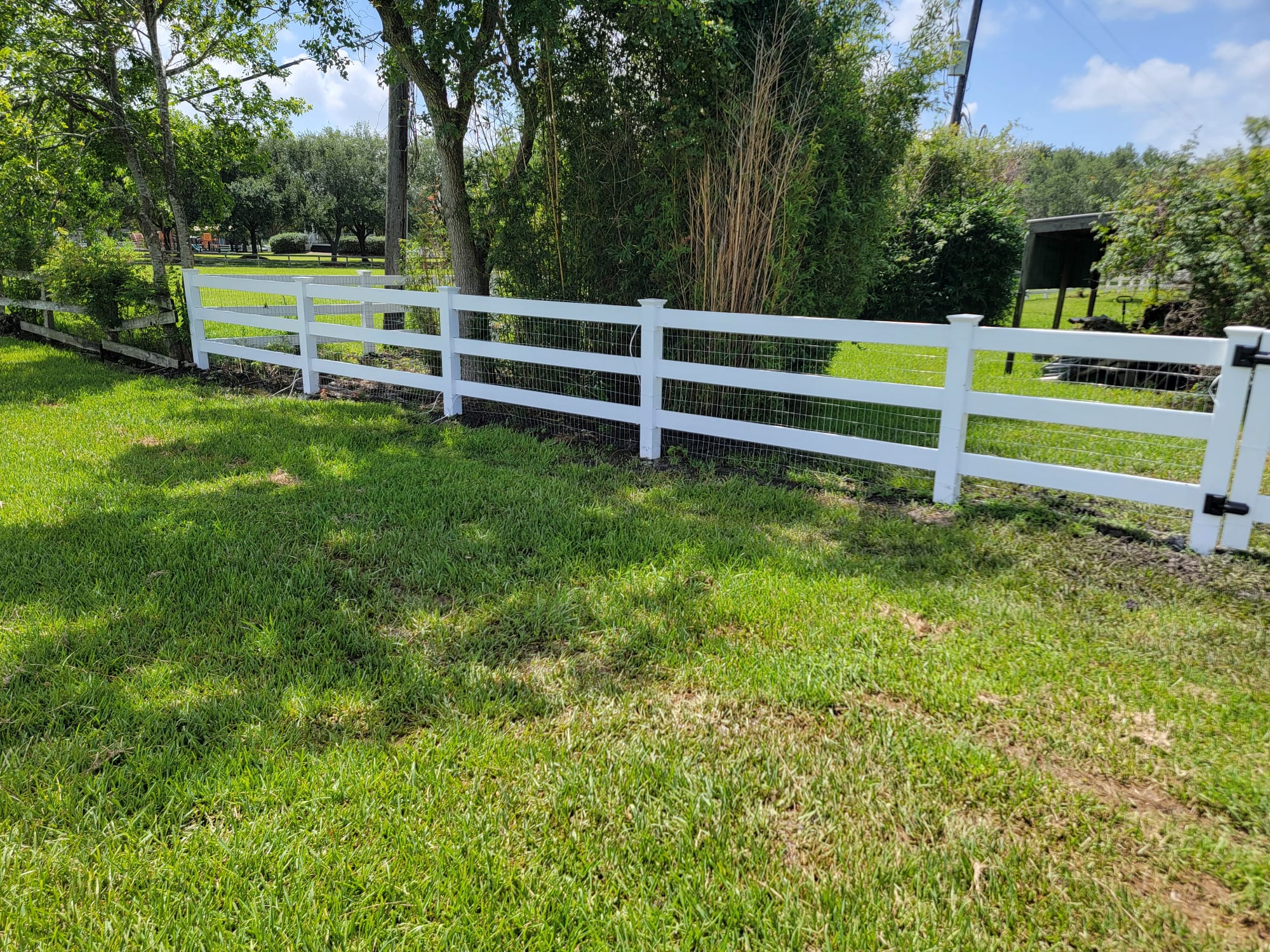
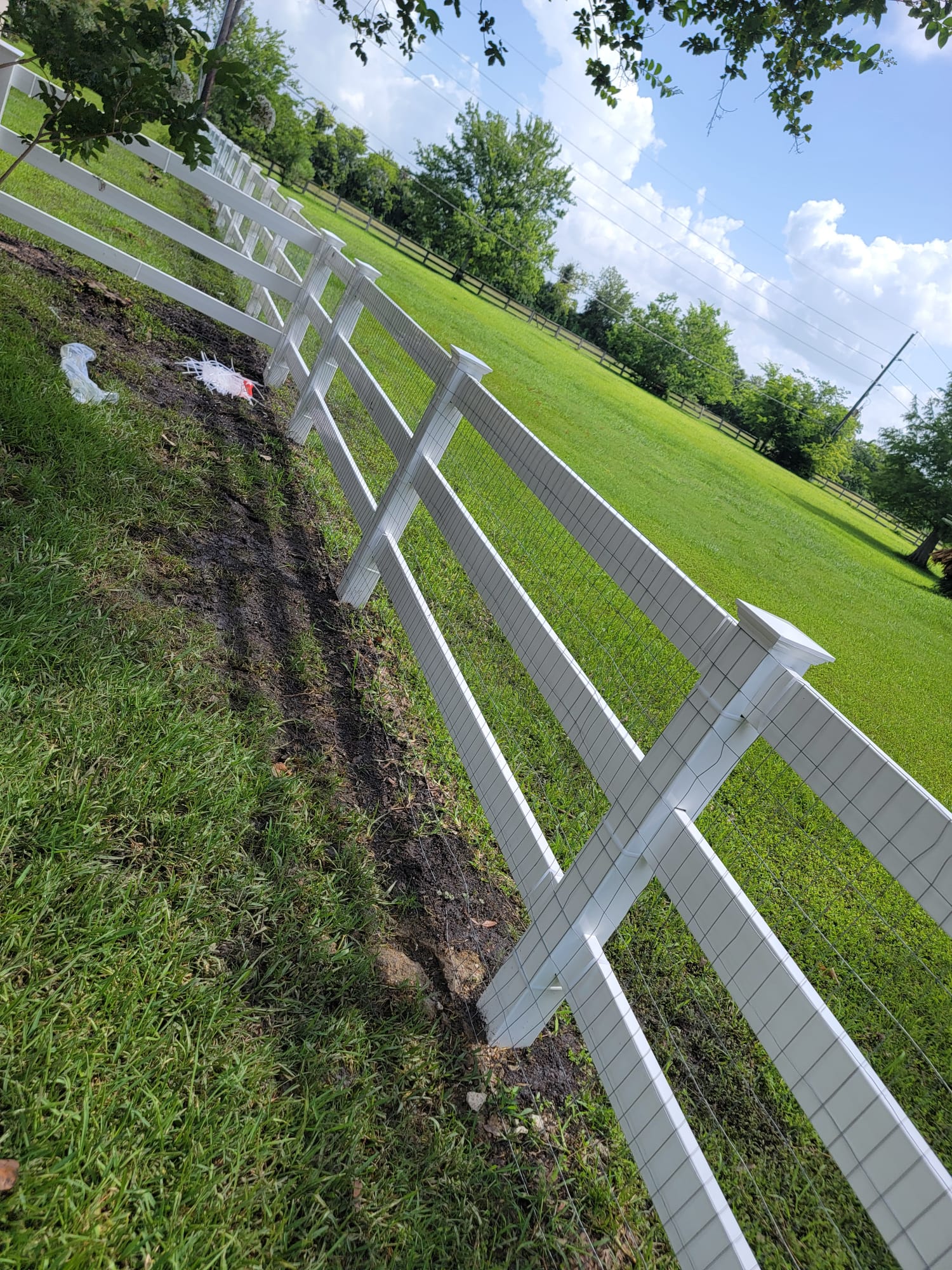
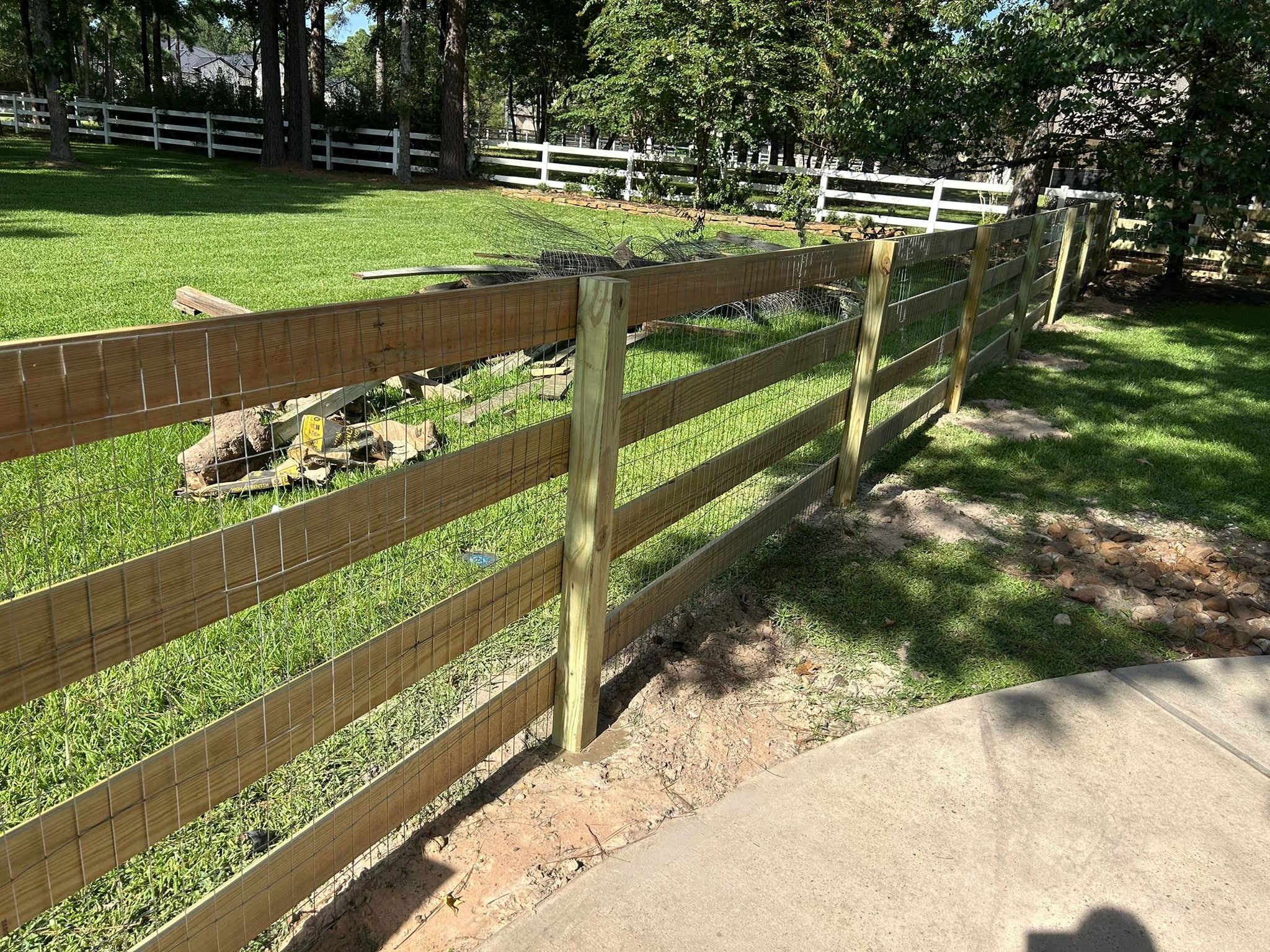
Denser material usually follows from that job: woven wire, tighter picket spacing, or wire mesh added to an existing rail fence. University of Tennessee Extension’s own swine guidance is specific about where that mesh needs to go — close to the ground, since swine escape by rooting underneath — and caps that fence at 54 inches for that purpose.
Why many Galveston-area properties use both
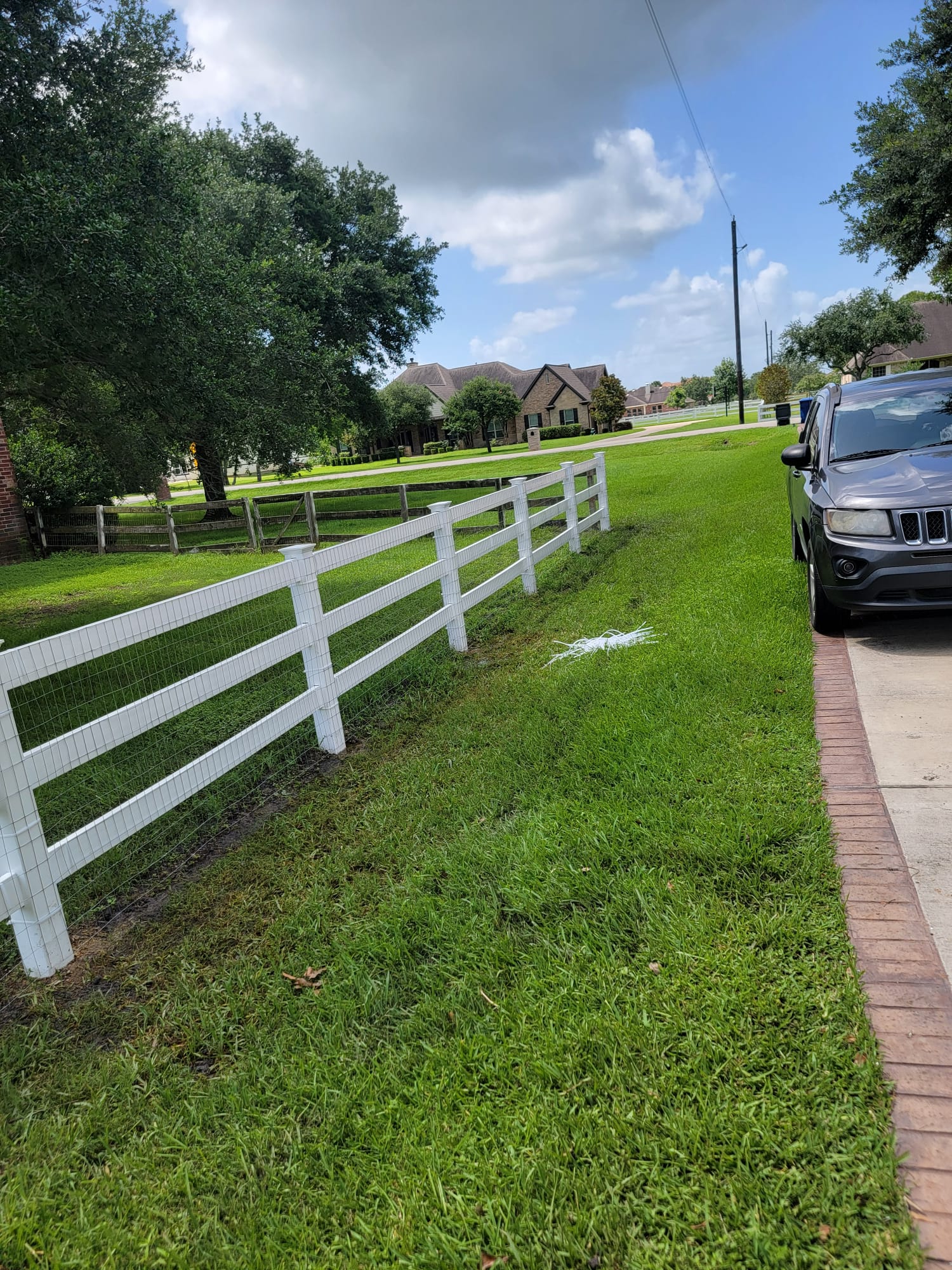
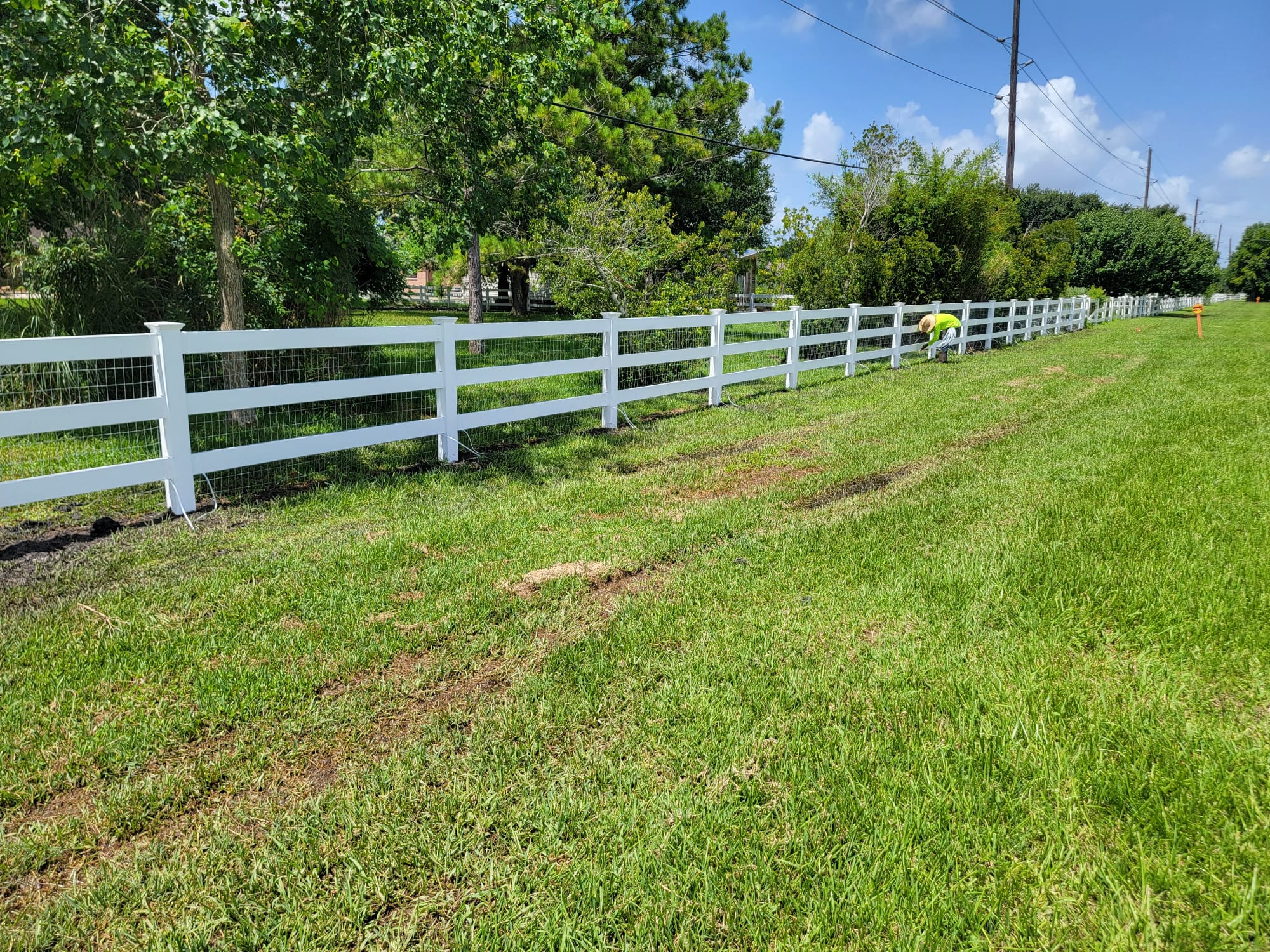
Many working properties switch fence styles rather than picking one: ranch-style rail for the main pasture perimeter where cattle or horses need room and sightlines, and tighter farm-style fencing (often the same rails with wire mesh added) around a garden, coop, or smaller enclosure where excluding a determined animal matters more than covering distance cheaply. Matching the fence to what it actually has to contain or exclude — rather than defaulting to one style for the whole property — avoids paying to retrofit it later.
Which fence type fits your property
Tick whatever applies. This points you to a starting fence type, not a quote — actual height, spacing and material still depend on a site visit.
Based on Univ. of Georgia Extension B1192, Univ. of Tennessee Extension PB1541, and Texas Agriculture Code §143.001/.028 (see Sources below).
What customers say
5.091 Google reviews · read them all on Google
True professionalism is very rare in this day and age, these guys live upto their word and deliver on their service! Our fence was down in the July storm and these guys came and gave a reasonable quote, after confirming I received a time line and they delivered! Will recommend them to everyone I know who needs fencing done.
Mustang Fencing exceeded my expectations! Durable and attractive fencing options available. Excellent customer service. Highly recommended for quality fencing solutions.
Absolutely loved my fence once i saw the finished product. No hassle, no rude interactions, and no inconveniences everything was just perfect. One of the best fencing companies in Texas
Reviews shown word for word from the Mustang Fencing Services Google Business Profile (Galveston), captured 2026-10-19.
Questions we get about this
Can ranch fencing be used to contain smaller livestock like goats?
Is farm fencing more expensive than ranch fencing?
Do ranch and farm fences need different post spacing?
What’s the minimum legal fence height in Texas?
Is Galveston County open range or closed range?
Sources
Checked October 19, 2026. Rules change, so confirm with the City before you build.
- Univ. of Georgia Cooperative Extension Bulletin 1192, “Fences for Horses” (retrieved 2026-09-26) — Horse perimeter fence minimum 60 in.; cross-fence 54 in.; posts, gates, H-brace specs; welded-wire caution.
- Univ. of Tennessee Extension PB1541, “Planning & Building Fences on the Farm” (retrieved 2026-09-26) — Cattle perimeter minimum 54 in.; handling-facility minimum 60 in.; swine fencing built close to the ground, capped at 54 in.
- Texas A&M AgriLife Extension AGEC-PU-114, “A Landowner’s Guide to Fence Law in Texas” (retrieved 2026-09-26) — Open range vs. closed range stock law; no consolidated public list of county status.
- Texas Agriculture Code, Chapter 143 (Texas Legislative Council, retrieved 2026-09-26) — §143.001 cultivated-land fence (5 ft, must stop hogs); §143.028 open-range sufficient fence (4 ft, 4 rails); §143.021-.034 closed-range stock-law duty and penalties.
Get a number for your actual fence line
A free on-site estimate tells you which posts, rails, and mesh (if any) your property actually needs — and what it costs per foot.