
Automatic Gate Installation in Galveston, TX
New automated driveway gates, or an opener retrofit onto an existing swing or slide gate. The decisions that matter are the opener type for your gate, the UL 325 / ASTM F2200 safety requirements every automated gate has to meet, and how people and vehicles will get through the access point.

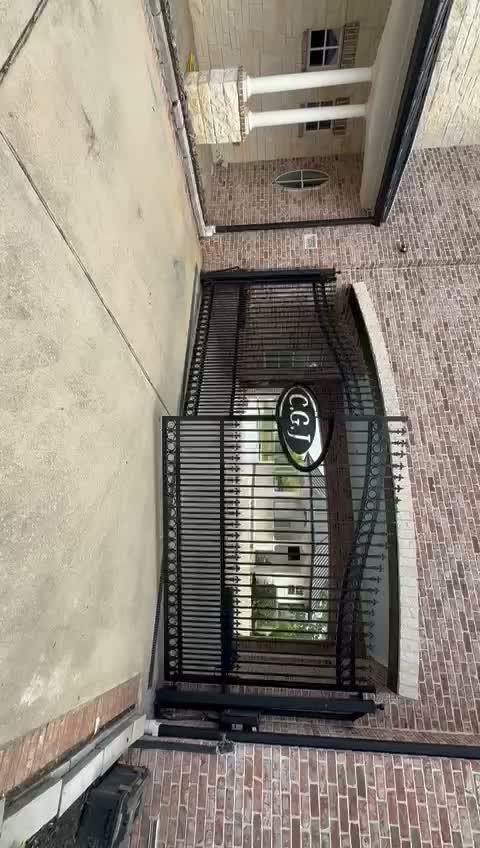
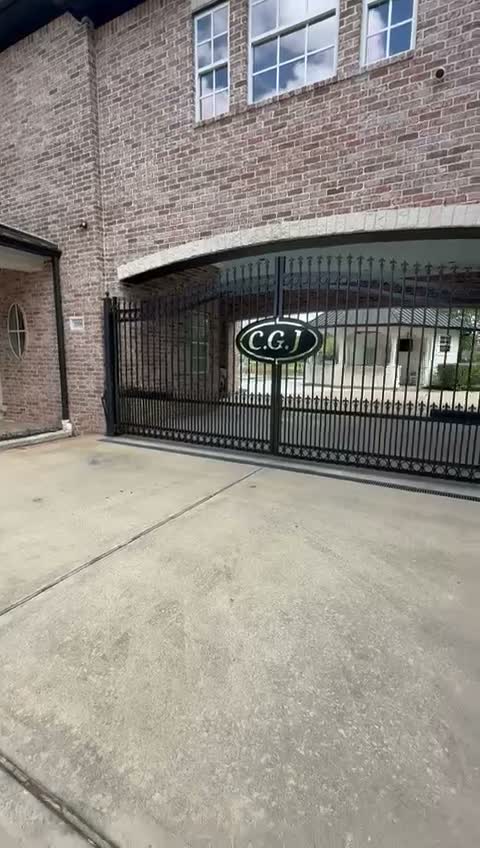
An automatic gate is a vehicular gate — swing, slide, or less commonly vertical lift or pivot — fitted with a powered operator. Because a moving gate can trap or strike someone, the City of Galveston’s adopted building code requires automated gates to be built to ASTM F2200 and to use an operator listed to UL 325. That standard sets the minimum number of safety sensors, the force a gate is allowed to exert, how far the controls sit from the gate, and how many warning signs have to be posted.
Sources: City of Galveston Ordinance No. 23-011/23-012 (2021 IBC §3110 / IRC Appendix AO); ASTM F2200-24 scope; UL 325 7th ed. and DASMA TDS 353 (rev 1/25), Tables 32.1–32.2.
Who this page is for
This page is for anyone adding power to a driveway gate in Galveston County:
- New installation — a swing, slide, or other gate type going in from scratch with an operator from day one.
- Opener retrofit — adding an operator to an existing manual swing or slide gate, provided the gate and its posts/hardware are solid enough to carry one.
- Replacing an older operator — swapping out a non-monitored or non-UL 325 unit for a current one.
For the fence and perimeter decisions around the gate, see commercial fencing and residential security fencing. For day-to-day credentials, keypads, and visitor management once the gate is installed, see gate automation & access control. For manual gates without an operator, see wrought iron, chain link, and custom gate design. If there’s no power run to the gate at all, solar gate installation avoids trenching power out to a remote driveway or ranch entrance.
Opener & gate-type decision table
| Option | What it is | Best for | Trade-off |
|---|---|---|---|
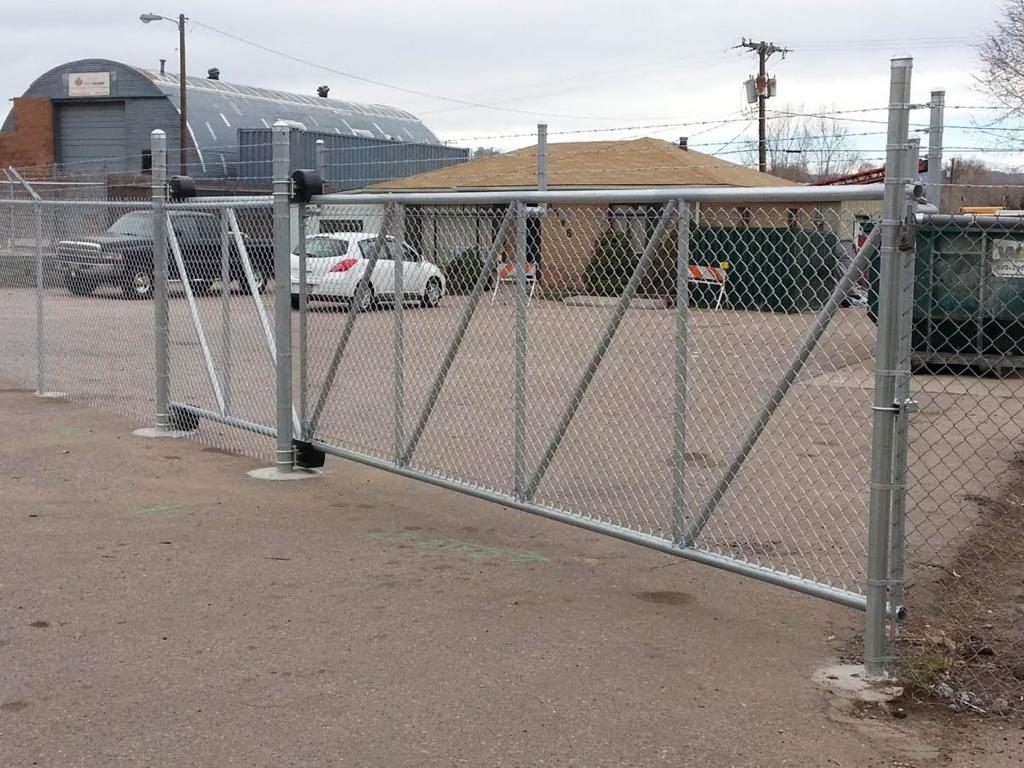
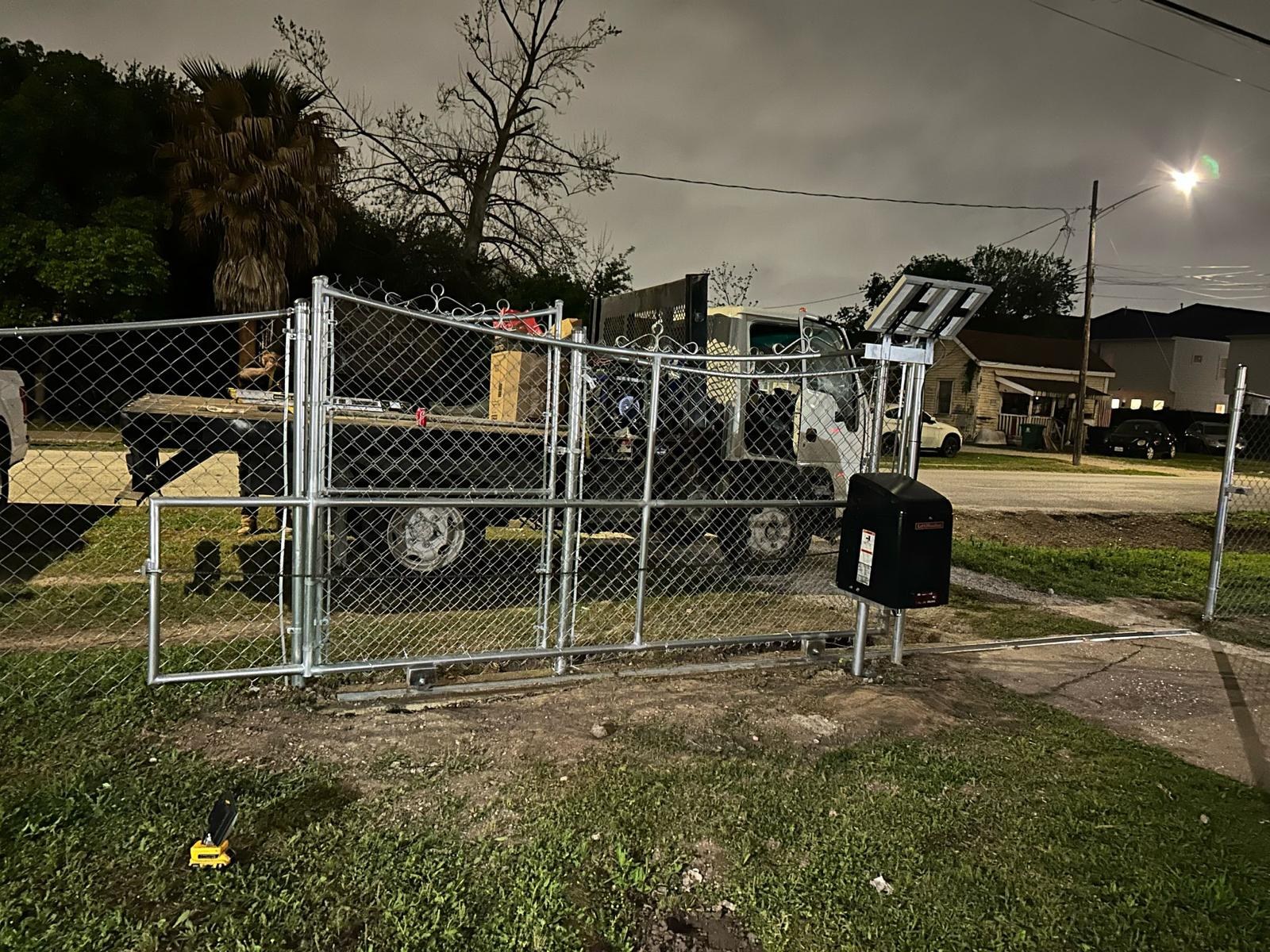
| Cantilever slide operator | Motor drives the gate on carriages; the gate overhangs the opening when open, with no ground track | Wide openings and sandy or debris-prone drives near the coast | Needs clear overhang space beside the opening roughly equal to the gate’s own length |
| V-track (ground-track) slide operator | Motor drives the gate along a track set in a trench in the ground | Narrow side yards with no room for an overhang | The track has to stay level and clear — sand, shell, or storm debris can jam it |
| Single swing operator | One articulated-arm or underground operator swings a single gate leaf | Standard driveways with clear swing room on one side | Needs the full swing radius kept clear, which can be tight on a sloped or narrow drive |
| Dual swing operators | Two matched operators, one on each leaf, meeting in the middle | Wide or ornamental entries, estate-style drives | Two operators to install, wire, and maintain instead of one |
ASTM F2200-24 scope (gate types addressed: horizontal slide, horizontal swing, vertical lift, vertical pivot, overhead pivot, horizontal bifold); general cantilever vs. ground-track trench/debris trade-off per manufacturer sliding-gate-system documentation. Checked Oct 9, 2026.
Swing vs. slide: the safety difference, not just the space
Beyond the footprint each type needs, UL 325 treats swing and slide gates differently for entrapment protection. A swing or vehicular-barrier-arm operator is the only category allowed to use a Type C device — an inherent force-limiting or adjustable-clutch mechanism capped at 40 lb of force at the leading edge — as one of its two protection means. Slide, vertical lift, vertical pivot, and horizontal bifold operators aren’t on that list in UL 325 Table 32.1, so they rely on non-contact sensors (Type B1, typically a photo-eye pair), contact sensors (Type B2, an edge device), or a continuous-pressure control (Type D) instead.
Every gate type also needs at least one pedestrian gate separate from the vehicle gate, so people aren’t walking through — or standing in — the vehicle gate’s path.
Automatic gate safety & access scope checker
Pick the gate type, the property's use and whether people walk through this access point. You'll get the UL 325 class that applies, the minimum entrapment-protection means for that gate type, whether a 40 lb force-limiting device is an option, and a pedestrian-gate note. This is a planning aid, not a code inspection — a free on-site estimate confirms the exact setup.
UL 325 7th ed. (via DASMA TDS 353): Class I residential, Class II commercial/limited public access, Class III industrial, Class IV guarded industrial with supervision. Table 32.2: minimum independent entrapment-protection means by gate type and direction of travel. Table 32.1: Type C (inherent force-limiting/clutch, 40 lb max) is listed for swing and vehicular-barrier-arm operators only. ADA 404.2.3: 32 in minimum clear width for a manual gate, 36 in if the opening is more than 24 in deep. Planning aid only, not a code or engineering review.
Minimum entrapment-protection means to open, by gate type
UL 325 Table 32.2: independent, monitored means required in the opening direction of travel
What Galveston customers say
5.091 Google reviews · read them all on Google
Very professional and friendly. Gotten automatic gates done and they are done to perfection! Thank you
We just installed iron gate and it looks amazing thank you very much mustang fencing .
I am so pleased with the fence!! Your solution was exactly the right one and the team did a highly professional job. Frankly, I was amazed at how clean the job site was at the completion of the project. Feel free to list me as a reference and a very happy customer. Thanks again and please let the men know That I appreciate their hard work and quality craftsmanship.
Reviews shown word for word from the Mustang Fencing Services Google Business Profile (Galveston), captured 2026-10-12.
Questions we get about this
What safety standard does an automatic gate have to meet in Galveston?
How many safety sensors does an automatic gate need?
What is the difference between a swing and a slide gate opener?
Do I need a separate gate for people?
Can I add an opener to my existing gate?
How often does an automatic gate need maintenance?
Sources
Checked October 9, 2026. Rules change, so confirm with the City before you build.
- 2021 IBC §3110, Automatic Vehicular Gates, as adopted by City of Galveston Ordinance No. 23-011 — requires automated gates to comply with ASTM F2200 and operators to be listed to UL 325.
- 2021 IRC Appendix AO, Automatic Vehicular Gates, as adopted by City of Galveston Ordinance No. 23-012 — scope for one- and two-family dwelling vehicular gates; same ASTM F2200 / UL 325 requirement.
- ASTM F2200, Standard Specification for Automated Vehicular Gate Construction — performance- and prescriptive-based requirements; the six gate types the standard addresses.
- UL 325, Door, Drapery, Gate, Louver, and Window Operators and Systems (7th ed.) — entrapment-protection types and tables (reprinted with permission in DASMA TDS 353), warning-sign and control-placement requirements.
- 2010 ADA Standards for Accessible Design, §404.2.3 Clear Width — minimum clear width for a manual gate opening on an accessible route.
Where we install automatic gates
We install automatic gates across Galveston County and the Bay Area side of the mainland. We serve these towns directly:
Also serving La Marque, Bacliff, San Leon, Clear Lake Shores.
Planning an automatic gate?
We’ll look at your gate or driveway, the opener type that fits it, and the access points people and vehicles actually use, then walk through what UL 325 and ASTM F2200 require for your setup. Free on-site estimates across Galveston County.

