
Chain Link Fence Installation in Galveston County, TX
Galvanized and black vinyl-coated chain link for back yards, dog runs, side yards, and commercial lots. It is the lowest-maintenance way to fence a large area. The choices that matter are the wire gauge, the coating, the post size and footings, and whether you add slats.
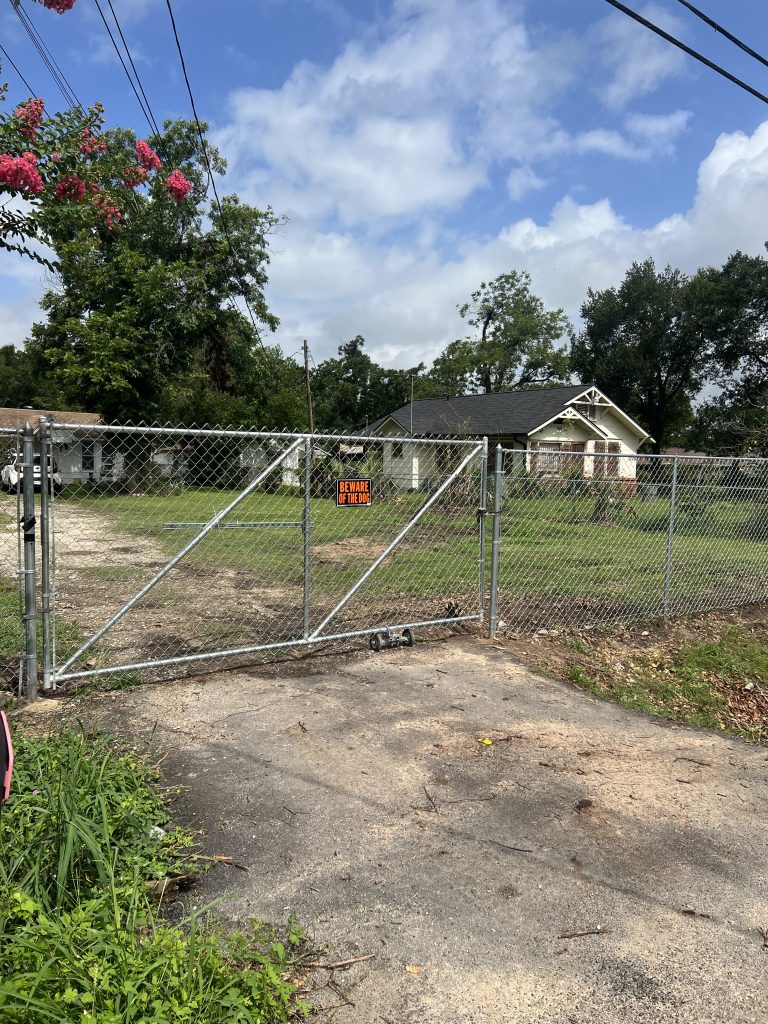
Chain link is steel wire woven into a diamond mesh and stretched between steel posts. Heavier wire has a lower gauge number: #9 gauge is 0.148 inch thick and #11 is 0.120 inch. The fabric is galvanized (zinc-coated), and it can also be vinyl-coated in black. The industry wind guide recommends line posts no more than 10 feet apart. ASTM F567 sets footings at 24 inches deep plus 3 inches for each foot of fence over 4 feet. In a City of Galveston front yard, the limit is 4 feet if solid, or 5 feet if at least 60% transparent.
Sources: CLFMI Chain Link Fence Wind Load Guide (WLG 2445, 2018), which applies ASTM F567 and ASTM F1043; City of Galveston Land Development Regulations §2.501 and §2.601.
Chain link fences we install
Chain link works when you need to fence a lot of ground, keep pets or equipment in, and see through the fence.
Chain link styles we install
The fabric, the coating and whether it carries slats are the three choices that set how a chain link fence looks and performs.
- Commercial chain link for lots, yards and equipment areas. See commercial fencing.
- Walk and drive gates in the same fabric. See chain link gates.
Chain link is one option among our metal fences. If you need privacy more than visibility, compare it with a wood fence or read chain link vs privacy fence.
The choices that decide how it performs
Wire gauge. Gauge is the wire thickness, and a lower number means thicker wire. #9 gauge wire is 0.148 inch and #11 gauge is 0.120 inch. Heavier wire resists cutting, climbing damage and dents from impacts better, which is why commercial fences often use it. For a back yard, lighter fabric is common. See 9 vs 11 gauge explained.
Mesh size. The mesh is the distance between parallel wires, usually about 2 inches for yards. Smaller mesh is harder to climb and harder for small dogs to push through, but it uses more wire and catches more wind.
Coating. Galvanizing is a zinc coating that corrodes before the steel does. A vinyl coating adds a second barrier and a color. Close to the Gulf, salt speeds up corrosion of any exposed steel. Look at cut ends, fittings and fasteners, not just the fabric. The Village of Tiki Island's fence ordinance requires metal parts and fasteners to be hot-dipped galvanized.
Posts and rails. Posts are steel pipe. Terminal posts at ends, corners and gates are larger because they hold the fabric tension. A top rail stiffens the top edge, and a bottom tension wire keeps the fabric from being pushed out at the ground.
Slats. Slats add privacy, but they make the fence act like a solid wall in wind (see drawing A-2).
Chain link post & footing planner
Enter the run length, height and post size. You'll see the minimum post count at the 10 ft spacing limit, the minimum footing size, and what City of Galveston height rules apply where the fence goes.
Post count: the run divided into spaces of no more than 10 ft (CLFMI's recommended maximum line post spacing), plus one. Corners, gates and wind can call for more posts. Footings: the ASTM F567 minimums quoted in the CLFMI Wind Load Guide. Your soil and design wind speed can call for deeper footings. Height rules: City of Galveston LDR §2.501 and §2.601. Other cities have their own codes. Planning aid only, not an engineering check.
Minimum footing depth by fence height
ASTM F567: 24 inches, plus 3 inches for each foot of fence height over 4 feet
Galvanized, vinyl-coated or slatted?
| Option | Looks like | Best for | Trade-off |
|---|---|---|---|
| Galvanized | Silver mesh and posts | Dog runs, back yards, large lots, equipment areas | The most utilitarian look |
| Black vinyl-coated | Black mesh, usually with black posts | Yards facing a street or garden, where the fence should disappear | Costs more than galvanized |
| Slatted (semi-privacy) | Mesh with vertical slats | Screening a yard, trash area or equipment | Catches much more wind, so it needs heavier posts or closer spacing |
| Commercial weight | Heavier gauge fabric, larger posts | Commercial lots, storage, utilities | More steel, and the most cost |
Wind load comparison: CLFMI WLG 2445. Colors and slat products vary by manufacturer; see samples at your estimate.
From estimate to finished fence
- Free on-site estimate. We walk the line with you and measure it. We note corners, gates, slopes and anything in the way, such as trees, generators, AC units and drainage.
- Choices and a written price. Gauge, coating, height, gates and slats, priced for your layout.
- Property line and permits. Know where your line is before posts go in. A survey is the reliable way. If you're inside the City of Galveston, the fence permit application asks the questions above.
- Installation. Terminal and line posts are set in concrete. The rail, tension wire and fabric go on once the footings can take the tension, then the gates are hung.
- Walkthrough. We check the gates swing and latch, and that the fabric is tight.
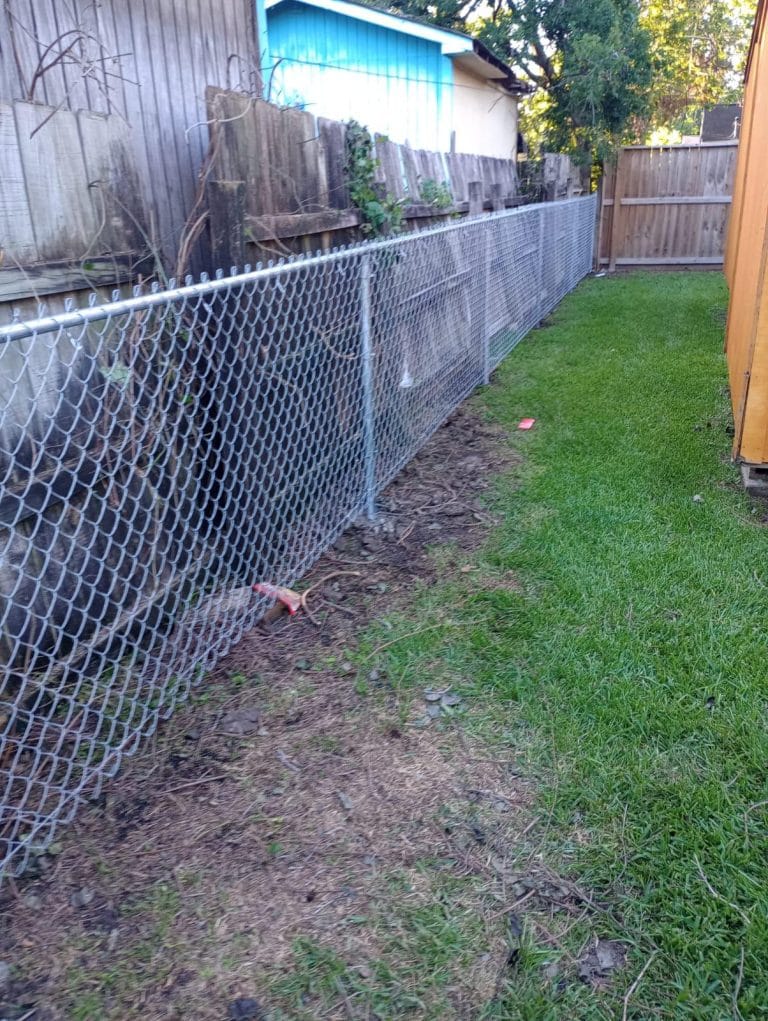
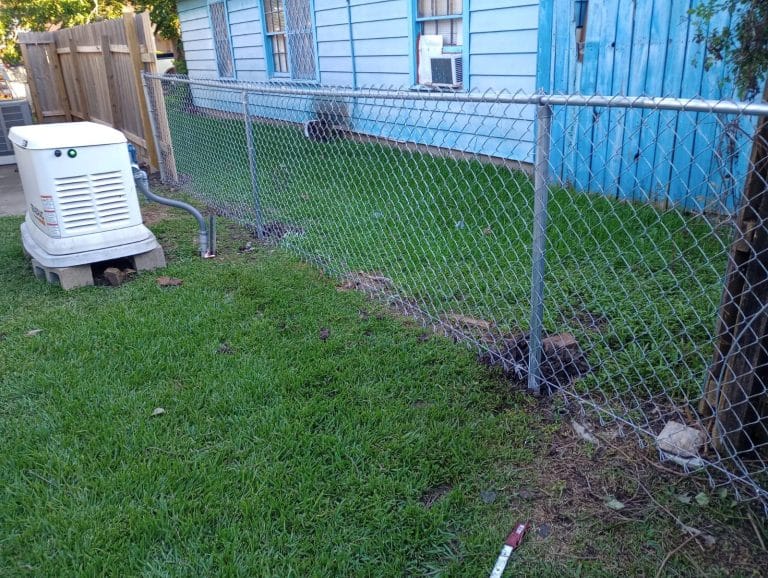
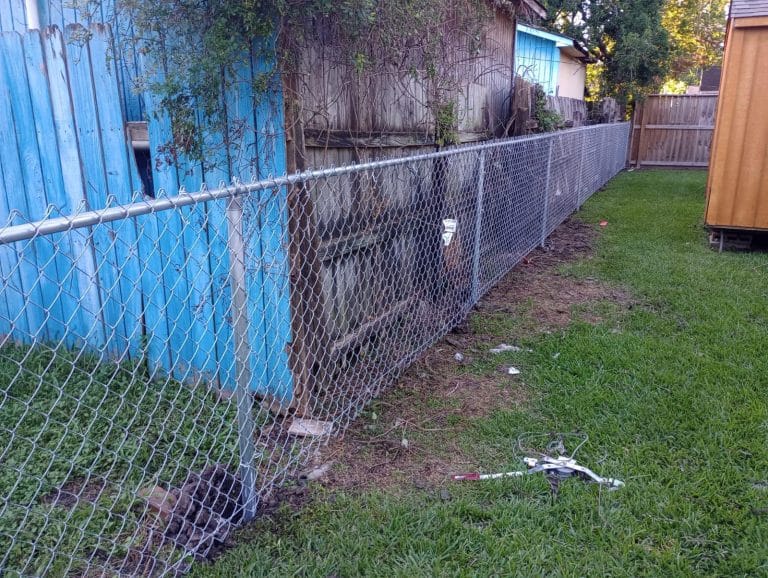
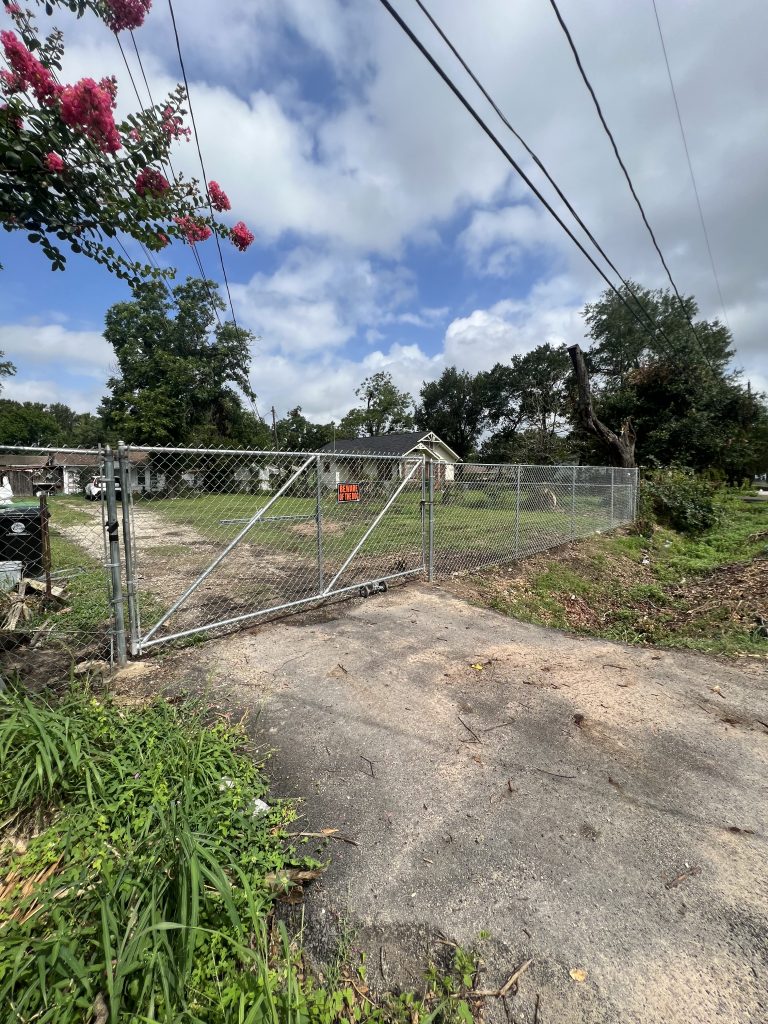
See a finished job: a 4 ft galvanized chain link fence in Galveston.
What affects cost and timing
We give you a written price after the free on-site visit. The main things that move it:
- Length and height. Taller fences need more fabric, bigger posts and deeper footings (see the chart above).
- Gauge and coating. Heavier wire and vinyl coating cost more than light galvanized fabric.
- Corners and gates. Each one adds a terminal post, and each gate adds hardware.
- Slats. The slats themselves, plus the heavier posts or closer spacing they can require.
- Site conditions. Removing an old fence, clearing brush, slopes, and soft or wet ground.
Timing depends mostly on the length, the number of gates, the permit (if one is needed) and the weather. For typical numbers, see our chain link cost guide. Financing is available through the providers on our financing page, subject to credit approval.
What Galveston customers say
5.091 Google reviews · read them all on Google
Very professional and friendly. Gotten automatic gates done and they are done to perfection! Thank you
had an excellent experience with mustang fencing From the initial consultation to the final installation, the team was professional, punctual, and attentive to detail. They helped me choose the perfect fence style to match my property and ensured everything was installed with precision. The quality of materials is top-notch, and the fence has completely transformed the look and security of my home. I highly recommend mustang services to anyone looking for reliable and high-quality fencing services!
My new fence looks fantastic and has added both privacy and style to my yard. Highly recommend their services for anyone in need of fencing!
Reviews shown word for word from the Mustang Fencing Services Google Business Profile (Galveston), captured 2026-10-12.
Questions we get about this
What is the difference between 9 gauge and 11 gauge chain link?
How far apart should chain link fence posts be?
How deep do chain link fence posts need to be?
Is chain link a good option for a pool perimeter?
Is chain link good for dogs?
Do privacy slats affect a chain link fence in high wind?
Sources
Checked September 25, 2026. Rules change, so confirm with the City before you build.
- Chain Link Fence Manufacturers Institute, Wind Load Guide for the Selection of Line Post and Line Post Spacing (WLG 2445, 2018) — ASTM F567 footing depth and diameter, 10 ft maximum recommended post spacing, mesh coefficients (solid panel = 1; #9 ga 1¾″ mesh = 6.4), wire diameters by gauge.
- City of Galveston Land Development Regulations, Article 2, §2.501 and §2.601 — residential and nonresidential height limits, front-yard solid vs 60% transparent limits, materials, and the barbed wire rule.
- City of Galveston Fence Permit Application (Rev. 03/2023) — the historic district, Cedar Lawn, 1,000 ft mean-high-tide and barbed wire questions.
- Village of Tiki Island Code of Ordinances, Division 6: Fences — posts anchored for 110 mph winds; metal and fasteners hot-dipped galvanized.
Where we install chain link fences
We install chain link fences across Galveston County and the Bay Area side of the mainland. We serve these towns directly:
Also serving La Marque, Bacliff, San Leon, Clear Lake Shores.
Planning a chain link fence?
We'll walk the line, measure it, and recommend the gauge, coating, posts and gates for how you'll use it. Free on-site estimates across Galveston County.

