
Straight answers from a local fence and gate contractor serving Galveston and Brazoria Counties.
Both work well for containment — the right choice depends on your specific pet’s behavior
This is a genuinely common, practical question separate from the general cost/value comparison, because pet containment has its own specific considerations that don’t always track with which fence is “better value” overall.
Chain link for pets: strengths and watch-outs
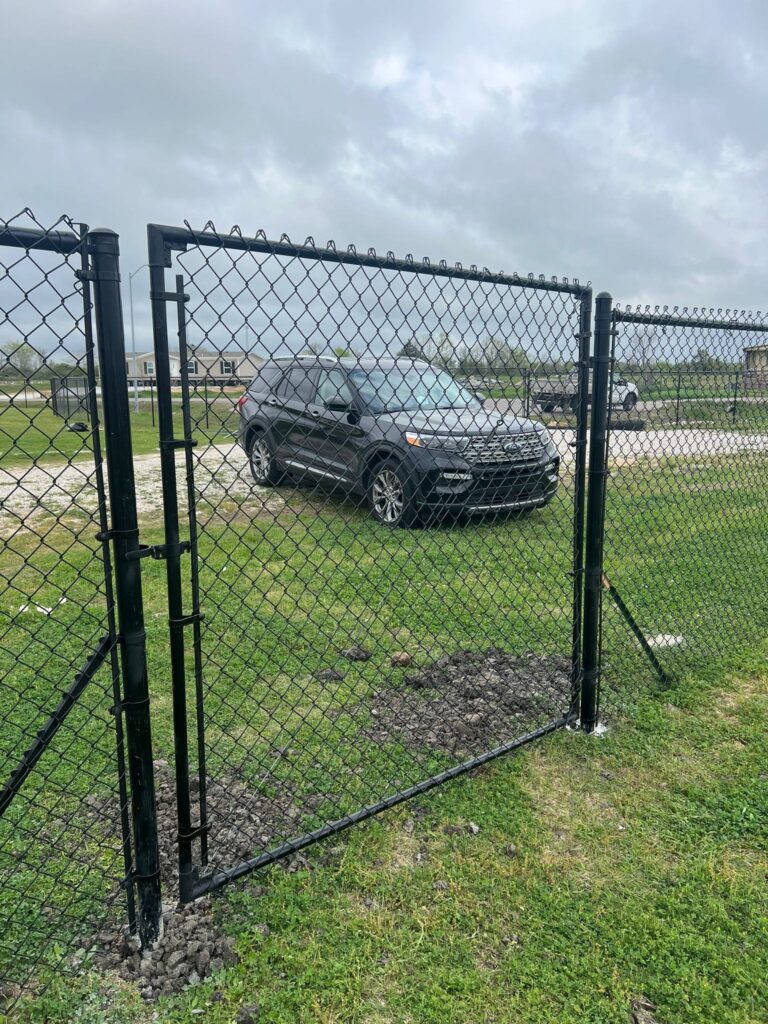
Chain link is widely used for pet containment because it’s durable, cost-effective for enclosing a large area, and the mesh design means your dog can see through it — which some owners prefer since it reduces the “barrier frustration” some dogs display against a fully solid fence.
The trade-offs: chain link’s visibility works both ways — some dogs become more reactive to passing people, cars, or other animals precisely because they can see (and bark at) everything happening beyond the fence, whereas a solid fence limits that visual triggering. Chain link is also easier for a determined dog to climb (paws can get footholds in the mesh) compared to a smooth solid surface, and standard chain link doesn’t stop digging at the base any better than any other fence type unless a buried barrier or tight-to-grade installation is used.
Wood for pets: strengths and watch-outs
A solid wood privacy fence removes the visual triggers that make some dogs reactive, and a well-built wood fence with no gaps at ground level is generally harder to squeeze under than chain link’s open bottom edge (though digging is still possible with any fence lacking a buried barrier).
The trade-offs: wood fences need to be checked for gaps between boards or at the bottom where a smaller dog could squeeze through, and over time, wood can warp or a board can loosen, creating an escape gap that wouldn’t have been there at installation — periodic inspection matters more here for pet safety specifically than it does for a fence with no pet behind it.
What actually matters most, regardless of material
- Height relative to your dog’s jumping ability — a fence tall enough for one dog may not contain a more athletic jumper.
- A tight bottom gap — whichever material you choose, minimizing the gap between the fence and the ground reduces both squeeze-through and digging-adjacent escape routes.
- Gate latch security — many pet escapes happen through an improperly latched or child-opened gate, not through the fence line itself.
Bottom line
If your dog is reactive to outside stimuli, a solid wood (or vinyl) privacy fence often helps more than the material’s raw strength does. If cost and covering a large area matter most and your dog isn’t a climber, chain link is a proven, durable option. For persistent diggers or jumpers, the fence height and ground-level detailing matter more than which of these two materials you pick.
Related Questions
How tall should a fence be to keep a large dog contained?
Can I add a dig-guard to an existing chain link or wood fence?
Does a solid fence reduce dog reactivity/barking?
Ready for a real number for your property? Request a free on-site estimate from Mustang Fencing Services.