
Vinyl Fence Installation in Galveston County, TX
Vinyl privacy, semi-privacy, picket and ranch-rail fencing. It won’t rot and never needs paint, which is why it suits salt air and humidity. How long it lasts comes down to what you can’t see once it’s built: how deep the posts go, the steel inside the rails, reinforced gate posts, and post spacing matched to how exposed your lot is to wind.
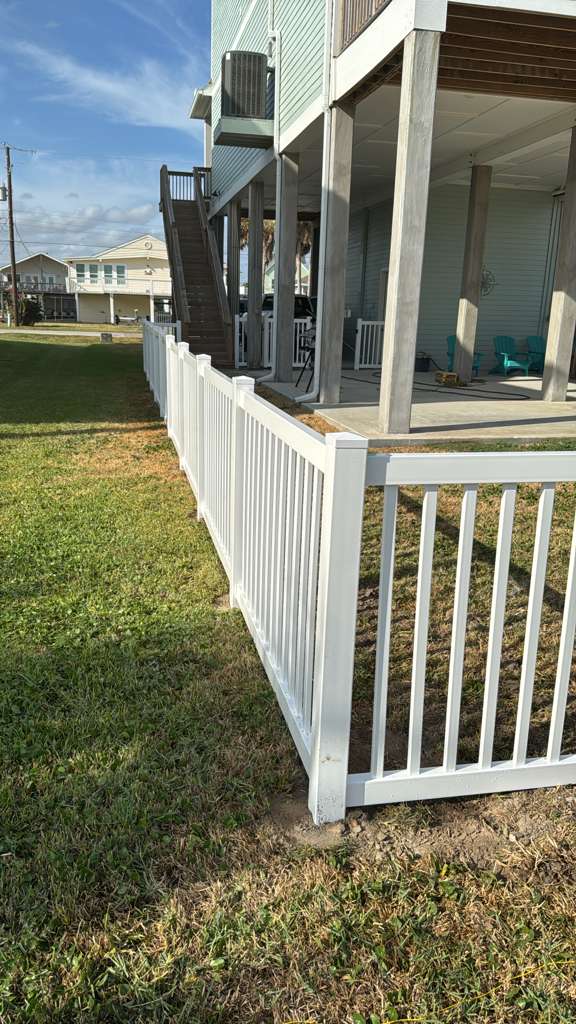
A vinyl fence is built from extruded rigid PVC. The material standard, ASTM F964, covers the PVC itself and says outright that it does not cover wind load, so the installation carries that job. One manufacturer’s guide calls for posts in concrete 30 in. deep (48 in. for 8 ft privacy), steel channel inside the rails and reinforced gate posts. On an open lot facing the water, the same maker tightens post spacing for one line from 97 in. to 75 in. and deepens the footing. In a Galveston front yard, a solid fence is limited to 4 ft.
Sources: ASTM F964 scope; CertainTeed Bufftech vinyl fence installation guide; City of Galveston LDR §2.501; 2021 ISPSC §305.2.1.
Vinyl fence styles we install
Vinyl and PVC are the same material; only the panel changes. Semi-privacy and ranch rail (below) round out the lineup, and every style comes with a matching gate.
- Semi-privacy: boards with small gaps, so some air and light get through. See semi-privacy vinyl.
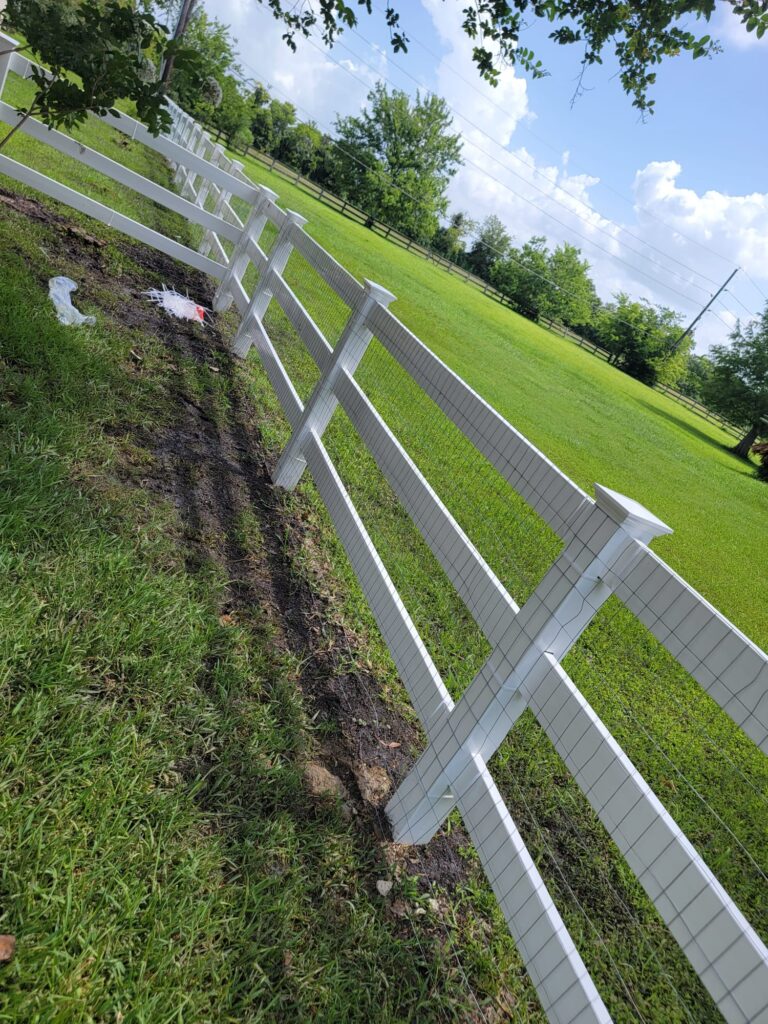
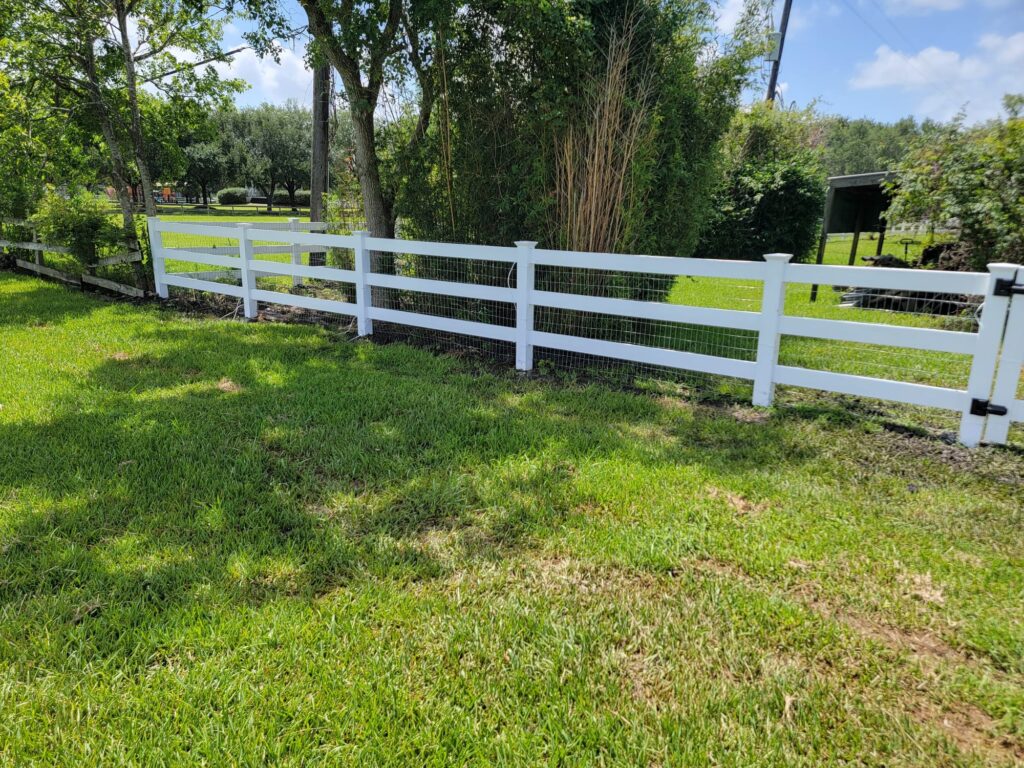
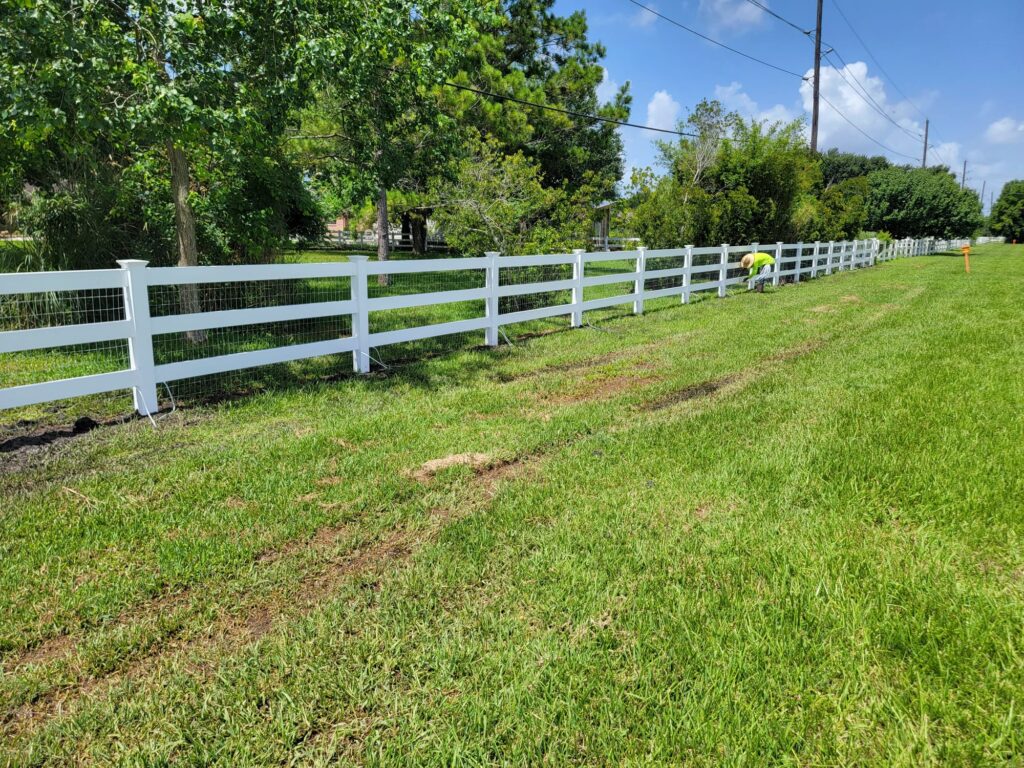
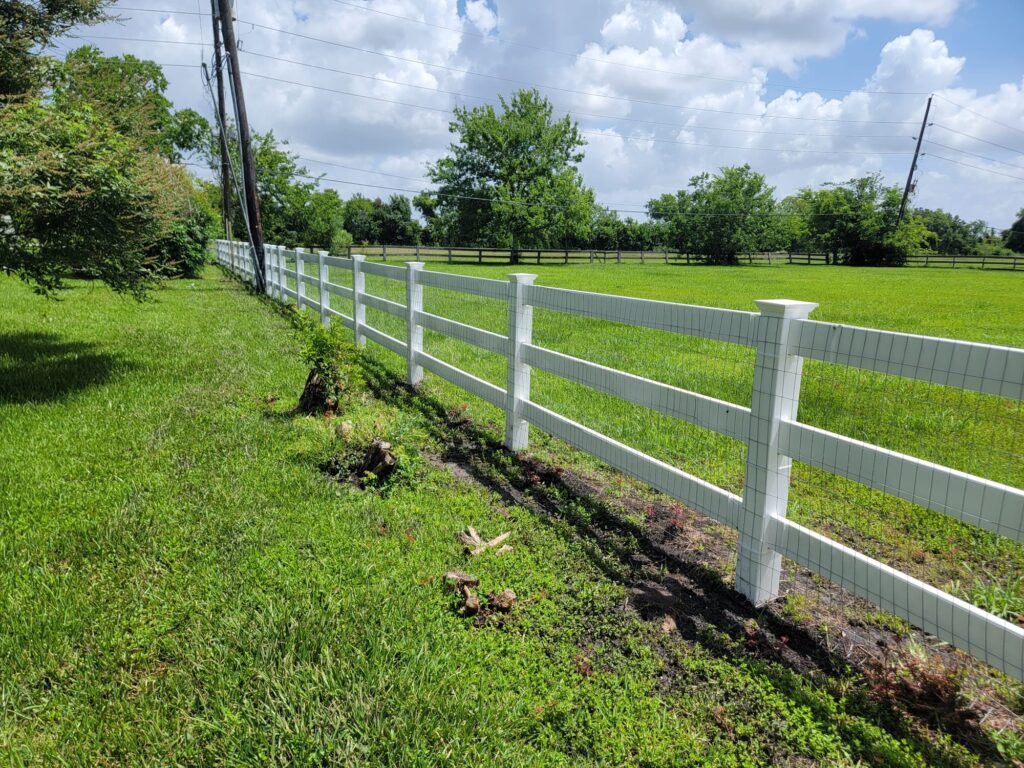
- Ranch rail: two to four horizontal rails for large lots and pastures, often with wire mesh behind them to hold pets. See post and rail vinyl and farm and ranch fencing.
- Matching gates in every style. See vinyl gates.
If you’re weighing vinyl against wood-look boards, read composite vs vinyl fence, and for how materials hold up on the coast, see coastal fence durability.
Vinyl fence planner
Enter the run and the site. You’ll get a post count, the hole size one manufacturer calls for, how wind exposure changes the spacing, and the Galveston height and pool rules that apply.
Post centers, hole sizes and the exposure spacing table: CertainTeed Bufftech vinyl fence installation guide (the spacing table is printed for its semi-privacy WindZone styles; other products publish their own). Privacy wind rating: Illusions Vinyl Fence 75 MPH Wind Kit instructions. Exposure categories: 2021 IRC §R301.2.1.4. Heights: City of Galveston LDR §2.501. Pool: 2021 ISPSC §305.2. Posts are counted as sections + 1, plus one per gate; corners and ends add more. A planning aid, not an engineering check.
How wind exposure changes post spacing
One manufacturer’s maximum post spacing for its semi-privacy line, by wind exposure and footing depth. The more open the lot, the closer the posts and the deeper the footing.
Wind and the Galveston lot
Building codes sort sites into wind exposure categories. The 2021 International Residential Code, which Galveston has adopted, defines them this way:
- Exposure B: “urban and suburban areas, wooded areas or other terrain with numerous closely spaced obstructions.”
- Exposure C: open terrain with scattered obstructions, generally under 30 ft tall.
- Exposure D: “flat, unobstructed areas exposed to wind flowing over open water” for at least 5,000 ft.
A fence tucked between houses in town sees very different wind from one on a lot that faces open Gulf or bay water. The chart shows how one manufacturer responds: closer posts and deeper footings as exposure rises. ASTM F964, the vinyl material standard, doesn’t address wind load at all. So ask for the specific product’s wind data and the installation it requires. For example, one maker certifies its privacy line to 75 mph only when it’s installed with heavy-duty posts and its wind kit. A solid privacy panel catches the most wind, and semi-privacy, picket and ranch styles let more of it through. No fence is hurricane-proof. See hurricane-ready fencing for the design choices and their limits.
Vinyl styles compared
| Style | Looks like | Wind | Galveston front yard | Pool barrier? |
|---|---|---|---|---|
| Full privacy | Solid boards, no gaps | Takes the full load; ask for the product’s wind rating | Solid: 4 ft max | Possible at 48″+ with compliant gates |
| Semi-privacy | Boards with small gaps | Some wind passes through | Usually treated as solid unless 60%+ open | Check gaps against the 4″ sphere |
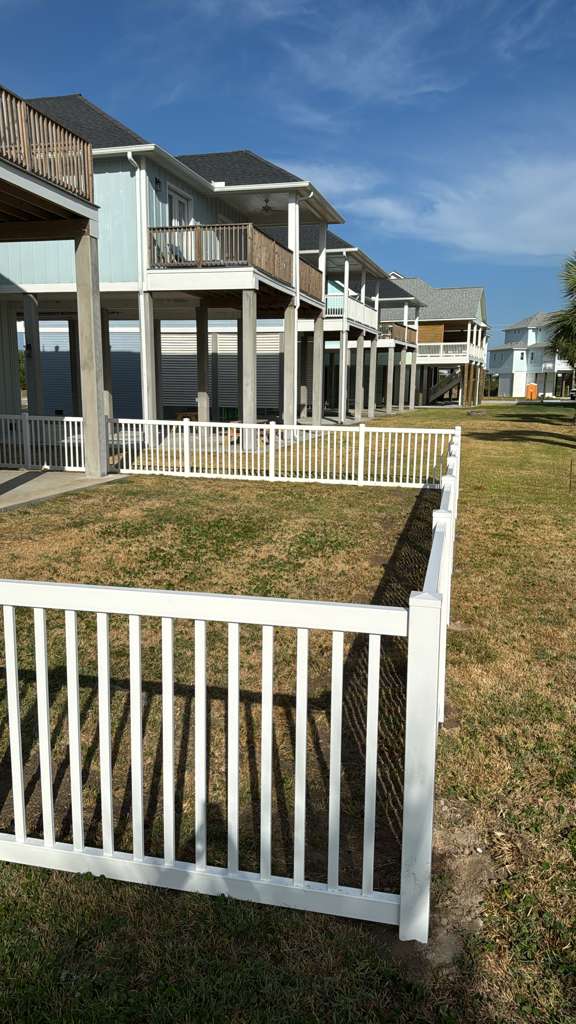
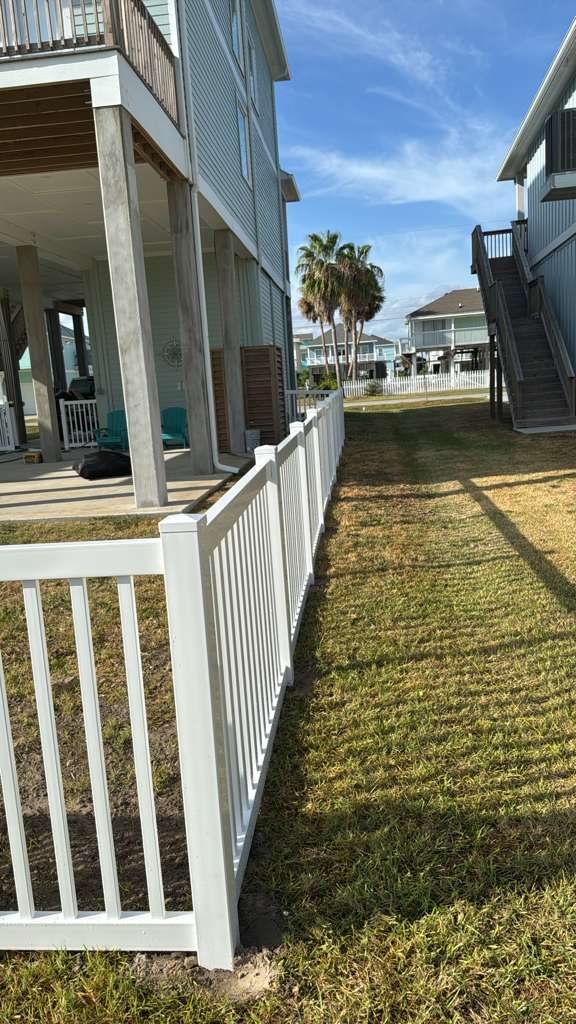
| Picket | Spaced pickets, often 3–4 ft | Much wind passes through | 5 ft max if 60%+ transparent | Only at 48″+ with gaps under 4″ |
| Ranch rail | 2–4 horizontal rails | Very little wind load | 5 ft max if 60%+ transparent | No: openings are far too large |
Heights: Galveston LDR §2.501. Pool: 2021 ISPSC §305.2. Wind: relative, based on how open each style is.
Care: what vinyl needs, and what it doesn’t
Vinyl never needs painting, staining or sealing, and it won’t rot or splinter. Care is mostly washing:
- One manufacturer recommends “a non-abrasive cleaner like a car wash soap” with a soft cloth or brush, and warns that vinyl “could be easily damaged if the wrong cleaners or washers are used.”
- Another suggests mild detergent and a plastic scouring pad, with a cleanser such as Soft Scrub® for stubborn stains.
- Check your product’s warranty for any cleaners it names or excludes.
- Look at the metal parts. Vinyl can’t rust, but gate hinges, latches and screws can, especially near salt water.
If a vinyl gate starts to drop, see how to fix a sagging vinyl gate.
What affects cost and timing
We give you a written price after a free on-site estimate. The main things that move it:
- Length and height. Longer and taller runs use more panels and posts.
- Style. Solid privacy panels use more material than picket or ranch rail.
- Wind exposure. Closer post spacing and deeper footings on open, waterfront lots mean more posts and concrete.
- Gates, each with reinforced posts and hardware.
- The ground. Slope (stepping or racking), roots, old footings and drainage.
- Removing an old fence, and any permit or HOA requirements.
Concrete needs time to set. One manufacturer says to leave a gate on blocks for 72 hours before hanging its weight on the posts. Financing is available through the providers on our financing page, subject to credit approval.
What Galveston customers say
5.091 Google reviews · read them all on Google
Very professional and friendly. Gotten automatic gates done and they are done to perfection! Thank you
Great work. Fast service. Very friendly. I recommend using this company to replace your fence.
had an excellent experience with mustang fencing From the initial consultation to the final installation, the team was professional, punctual, and attentive to detail. They helped me choose the perfect fence style to match my property and ensured everything was installed with precision. The quality of materials is top-notch, and the fence has completely transformed the look and security of my home. I highly recommend mustang services to anyone looking for reliable and high-quality fencing services!
Reviews shown word for word from the Mustang Fencing Services Google Business Profile (Galveston), captured 2026-10-12.
Questions we get about this
Is vinyl fencing a good choice for Galveston’s salt air and humidity?
How deep are vinyl fence posts set?
Will a vinyl fence survive a hurricane?
What is the difference between privacy and semi-privacy vinyl fencing?
Can a vinyl fence follow a slope?
Can vinyl fencing be used around a pool?
How long does vinyl fence installation take?
Is financing available for a vinyl fence?
Sources
Checked September 26, 2026. Rules change, so confirm with the City before you build.
- ASTM F964, Rigid PVC Exterior Profiles Used for Fencing and Railing — scope: material, dimensional and weatherability requirements; load-bearing characteristics such as wind load are not addressed.
- CertainTeed Bufftech vinyl fence installation guide — hole size and depth; post centers; steel channel in rails; ¼″ expansion; gate post stiffener or concrete and rebar; WindZone post spacing by exposure; stepping and racking; cleaning.
- Illusions Vinyl Fence installation instructions (2024) — post holes 10–12″ in diameter and 36–42″ deep, depending on local conditions.
- Illusions Vinyl Fence 75 MPH Wind Kit instructions — privacy line certified to 75 mph when installed with heavy-duty posts and the wind kit.
- Illusions Vinyl Fence FAQ — cleaning with a non-abrasive cleaner such as car wash soap and a soft cloth or brush.
- 2021 International Residential Code, §R301.2.1.4 Exposure category — definitions of exposures B, C and D (read via the UpCodes Texas IRC 2021 viewer).
- City of Galveston Land Development Regulations, §2.501 Fences and Walls — residential fences up to 8 ft; front yard 4 ft if solid or 5 ft if at least 60% transparent.
- 2021 International Swimming Pool and Spa Code, Section 305 — barrier at least 48″ tall; openings must not pass a 4″ sphere; gate rules.
- City of Galveston Swimming Pool Permit Application — new pools must comply with the 2021 ISPSC.
Where we install vinyl fences
We install vinyl fences across Galveston County and the Bay Area side of the mainland. We serve these towns directly:
Also serving La Marque, Bacliff, San Leon, Clear Lake Shores.
Planning a vinyl fence?
We’ll walk the line, check the slope and how exposed the lot is to wind, and recommend a style, height, post spacing and gates that fit your yard and the local rules. Free on-site estimates across Galveston County.

