
Composite Fence vs. Vinyl Fence: Which Fits Your Yard?
Vinyl is rigid PVC; composite is plastic filled with wood fiber. That one difference decides how each looks, what it reacts to on a coastal lot and how it wants to be cleaned. Here is what the makers’ own documents say, side by side.
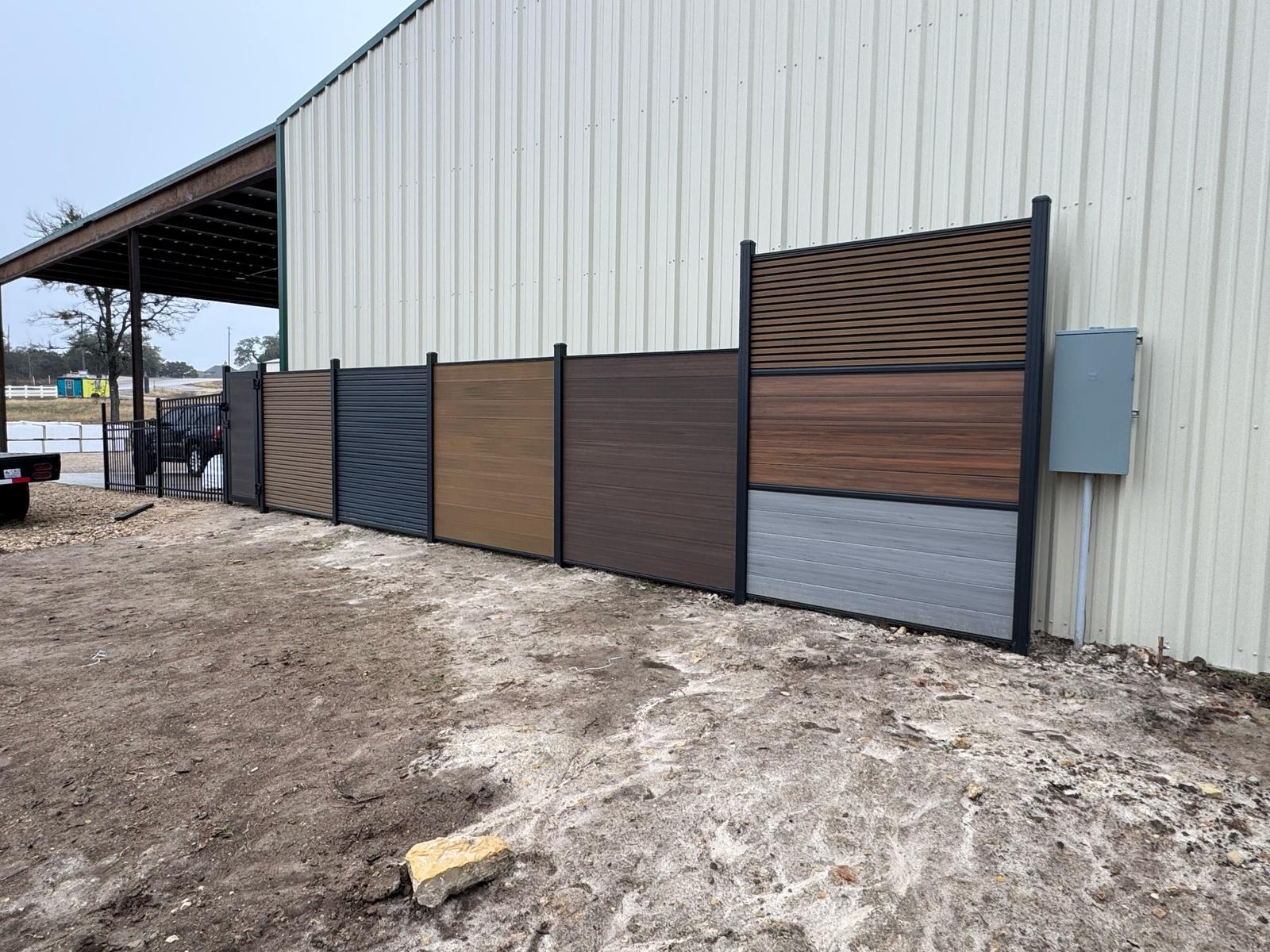
Choose composite if you want boards that look like wood without staining; choose vinyl if you want a clean solid colour that cleans with soap and water. Both are built the same basic way, posts in concrete about 30 in deep for a 6 ft fence. The differences are in what each reacts to: vinyl can distort from sunlight reflected off nearby glass, and composite in shade collects the debris mold grows on, so it needs spring and fall cleaning and no high-pressure washing. Neither is the “Gulf Coast” material by default. The yard decides.
Sources: USDA Forest Products Laboratory, Wood Handbook (2021) ch. 11–12; ASTM F964; Bufftech installation guideline; Trex Seclusions FDS 106 and Trex fence care. Read September 27, 2026.
What each one actually is
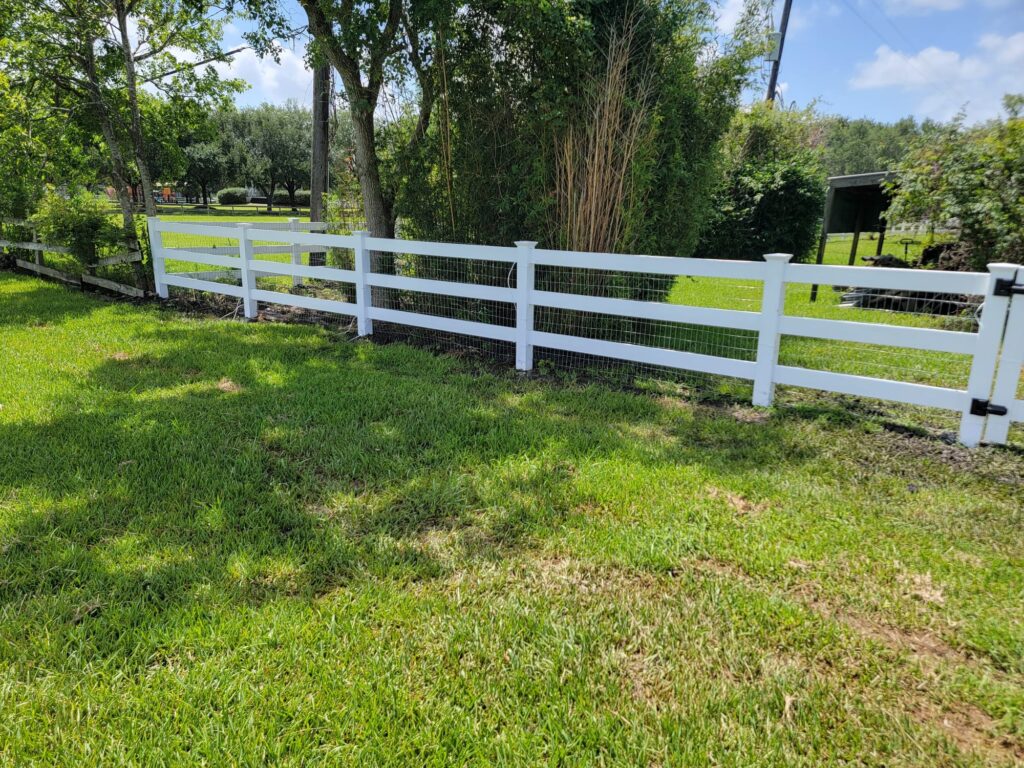
Vinyl fence is made of rigid PVC profiles: posts, rails and boards extruded from poly(vinyl chloride) compound. ASTM F964 is the product standard for those profiles in fencing and railing. Because PVC on its own is flexible over a long span, makers reinforce it: Bufftech ships its privacy panels with a galvanized steel channel inside the top and bottom rails, and puts aluminum stiffeners inside gate hinge and latch posts.
Composite fence is a wood-plastic composite (WPC). The USDA Forest Products Laboratory describes WPCs as a continuous plastic matrix with wood fiber as a filler or reinforcement, typically under 60% wood by weight. Its properties land between solid wood and unfilled plastic: stiffer than plastic alone, but much less stiff than wood. Every maker’s recipe is proprietary, which is why the Handbook says design data should come from the manufacturer. That is also why we quote a specific product line rather than “composite” in general.
Heat, sun and movement
Both materials move with temperature, and both makers build for it. Bufftech has installers cut an 8 ft vinyl panel ¼ in shorter than its steel stiffeners “for expansion and contraction,” so the panel can grow in its rail pockets. For composite, the USDA Handbook’s general finding is that WPCs are more stable with temperature changes than unfilled plastics and more stable with moisture than solid wood. So the common claim that composite moves more than vinyl in heat isn’t supported as a rule; product lines differ, which is why the maker’s gaps and spans are the ones we follow.
Vinyl has one specific weak spot: reflected sunlight. Bufftech’s warranty notice says intense sunlight reflected from glass or other reflective surfaces can build up heat and distort or melt a vinyl fence, and suggests a window screen or an awning over the source. On a lot where a big window, a glass door or a shiny metal wall faces the fence line, that section needs a plan before the fence goes in.
Humidity, mold and cleaning
On a humid coast, both fences get dirty; what differs is how you are allowed to clean them.
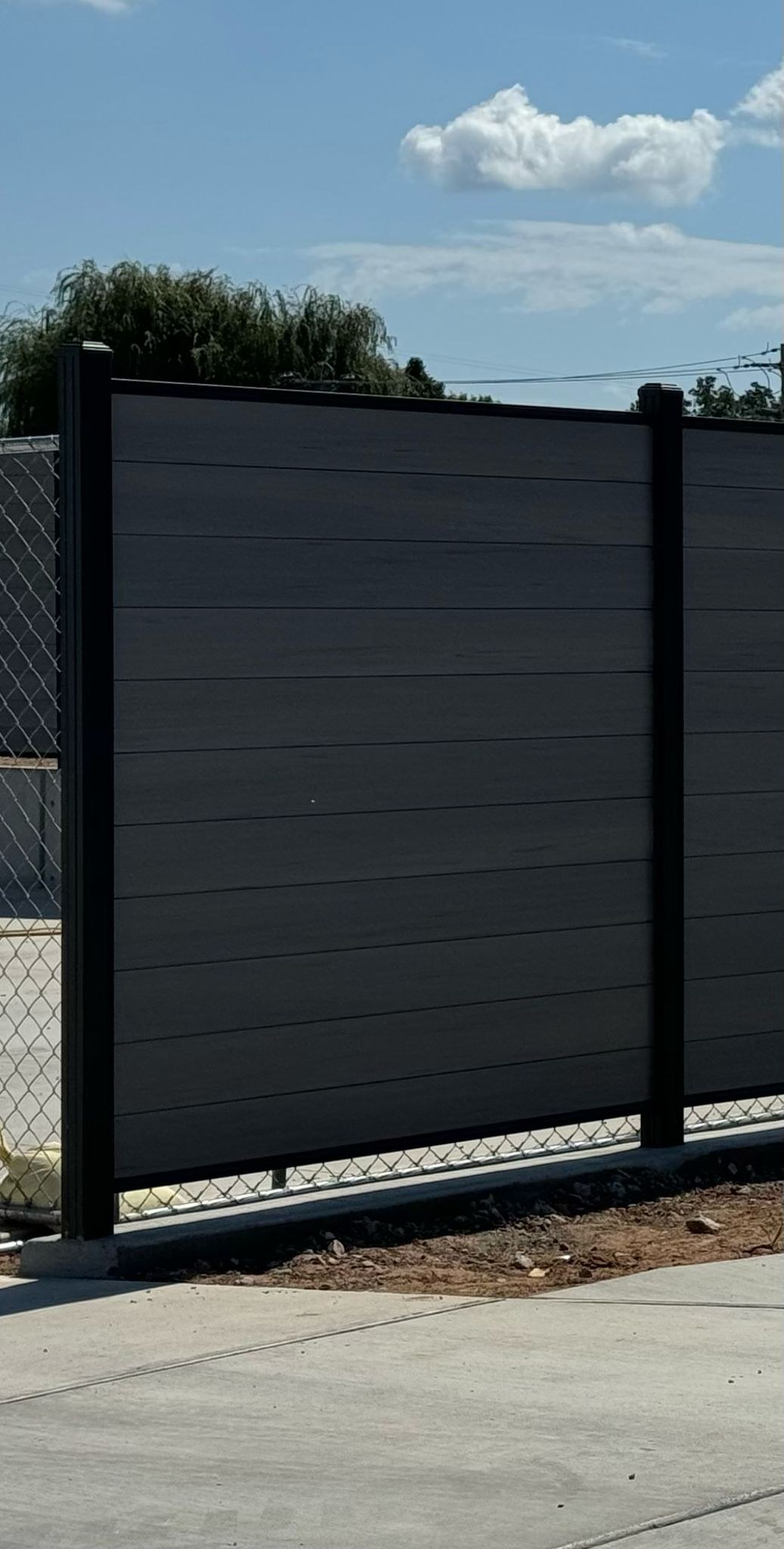
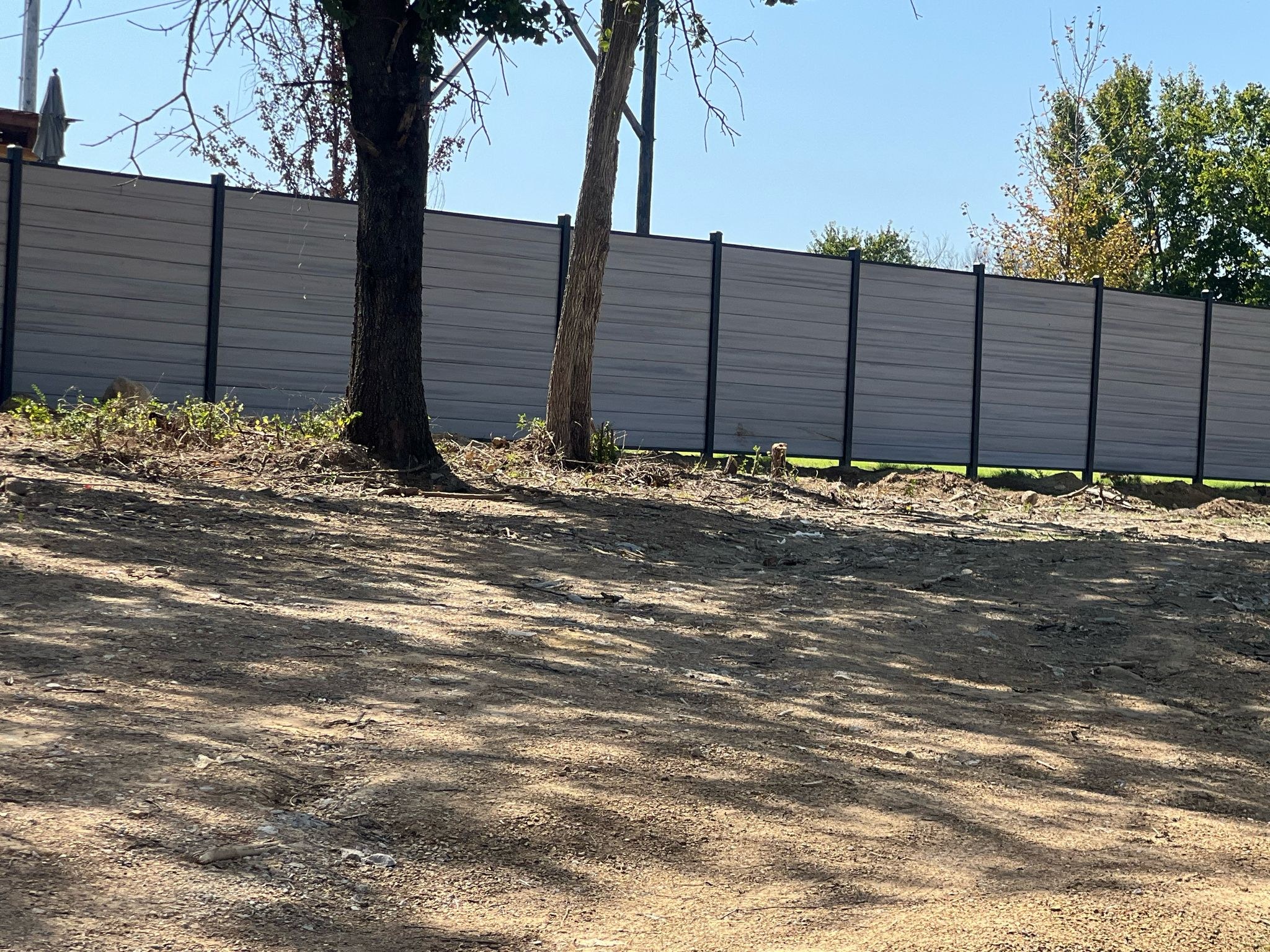
- Composite. Trex says mold and mildew don’t feed on the composite itself; they grow on pollen, grass clippings and debris that settle on the boards in warm, humid weather. Its fix starts with the site: trim back shrubs that shade the fence, improve air flow at the base, clear debris. Where mold is common it asks for cleaning every spring and fall with soap and a soft brush, or with a vinegar solution or a cleaner containing sodium hypochlorite and detergent. A pressure washer over 1,500 PSI, or held closer than 12 in, can damage the boards and voids the warranty. New boards can also show tannin leaching that fades over about 12 weeks of weathering.
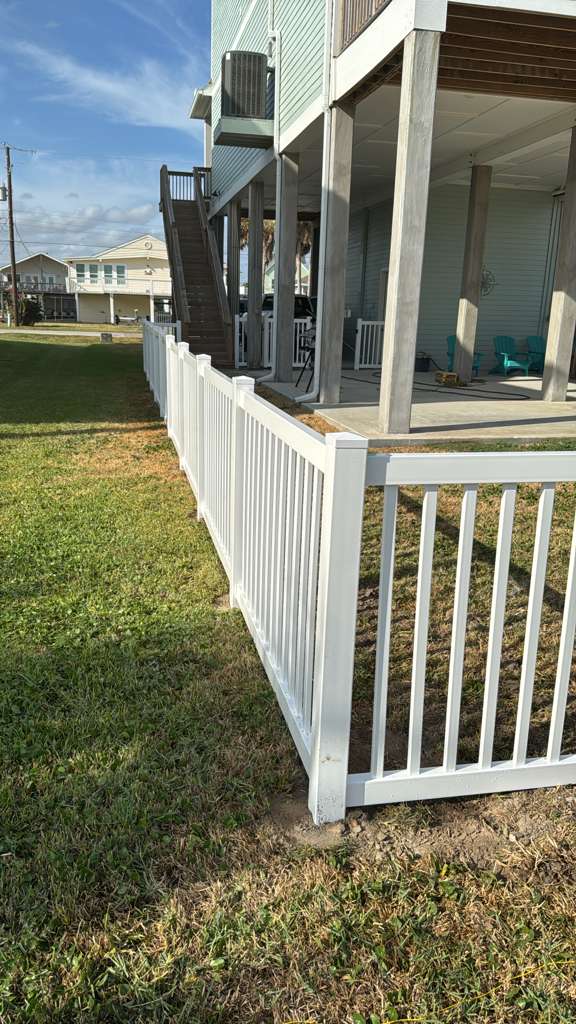
- Vinyl. Bufftech’s care section calls for mild detergent and a plastic scouring pad, with a listed cleanser for stubborn stains. There is no wood fiber, so there are no tannins to weather out and no staining ever.
Neither needs paint or stain. If the fence line is shaded and planted, budget the time for composite’s twice-a-year wash; if it’s open and sunny, that matters less.
Composite or vinyl: what does your yard say?
Answer five questions about the fence line. The checker says which points on this page apply to your yard and which material they lean toward. No prices; we quote both on site.
Based on the Bufftech installation guideline, the Illusions 75 MPH Wind Kit instructions, the Trex Seclusions FDS 106 drawing and Trex fence care guide, and the USDA Wood Handbook (2021). Read September 27, 2026.
Wind, height and the build
A solid 6 ft privacy fence is a sail in either material, and the rating comes from the tested system, not the material name. Illusions, for example, certifies its vinyl privacy fences to 75 mph at up to 8 ft only when they are built with its heavy-duty posts and 75 MPH Wind Kit. The Trex Seclusions drawings we reviewed show post size, spacing and embedment but no wind rating, so for any composite line we ask the maker for its tested numbers before quoting an exposed site. See the best fence material for hurricane wind in Galveston.
Height is a code question before it is a material one: the City of Galveston caps residential fences at 8 ft (LDR 2.501), with lower limits in front yards. At 8 ft, Bufftech digs its privacy post holes 48 in deep instead of 30, and Trex publishes a separate 8 ft drawing.
Side by side
| Vinyl (PVC) | Composite (WPC) | |
|---|---|---|
| What it is | Rigid PVC profiles (ASTM F964) | Plastic with wood fiber filler, typically under 60% wood |
| Look | Usually smooth, solid colours | Wood-grain boards |
| Reinforcement | Steel channel in rails; aluminum in gate posts (Bufftech) | Aluminum bottom rail (Trex Seclusions) |
| Posts, 6 ft | 30 in holes in concrete; 72 or 96 in centres | 30 in min. typ. in concrete; 96 in centres |
| Heat watch-out | Reflected sunlight from glass can distort it | Maker’s gaps and spans; more temperature-stable than unfilled plastic (USDA) |
| Cleaning | Mild detergent, plastic scouring pad | Soap and soft brush; spring and fall where mold-prone; no pressure washer over 1,500 PSI |
| Stain or paint | Never | Not needed |
What drives the price of each
We don’t publish prices on guide pages, and the cost gap between the two depends more on the product line than on the category. What moves a quote either way: the height and style, the post size and embedment the maker requires, any reinforcement or wind kit, the number of gates (and the stiffeners or anti-sag hardware they need), slope, and how much old fence comes out first. We price both on the same site visit so you can compare the same fence line. Financing is available through the providers on our financing page, subject to credit approval.
What Galveston customers say
5.091 Google reviews · read them all on Google
Mustang Fencing exceeded my expectations! Durable and attractive fencing options available. Excellent customer service. Highly recommended for quality fencing solutions.
My new fence looks fantastic and has added both privacy and style to my yard. Highly recommend their services for anyone in need of fencing!
Love the quality and service. Totally recommend this for people who are looking for some nice finishings and top quality.
Reviews shown word for word from the Mustang Fencing Services Google Business Profile (Galveston), captured 2026-09-27.
Questions we get about this
Is composite fencing better than vinyl?
Does composite fencing expand more than vinyl?
Does composite fencing get moldy in humid weather?
Can I pressure wash a composite or vinyl fence?
How deep are the posts for a 6 ft composite or vinyl fence?
Sources
Checked September 27, 2026. Rules change, so confirm with the City before you build.
- USDA Forest Products Laboratory, Wood Handbook (FPL-GTR-282, 2021), chapters 11–12 — wood-plastic composites: make-up, under 60% wood, properties versus wood and unfilled plastic, maker design data.
- ASTM F964, Rigid PVC Exterior Profiles Used for Fencing and Railing — the product standard for vinyl fence profiles.
- Bufftech (CertainTeed), Molded and Extruded Fence Installation Guideline — hole depth and size, concrete, steel channel and aluminum stiffeners, ¼ in expansion cut, reflected-sunlight notice, care.
- Illusions Vinyl Fence, 75 MPH Wind Kit installation instructions — privacy fences certified to 75 mph up to 8 ft with heavy-duty posts and the kit.
- Trex Seclusions 6 ft drawing, FDS 106 — 96 in on centre, 91 in between posts, 5×5 posts, 30 in minimum typical embedment, 12 in hole, aluminum bottom rail.
- City of Galveston, Land Development Regulations, Sec. 2.501 — residential fences and walls limited to 8 ft; lower front-yard limits.
- Trex Fencing, Fence Care — cleaning, mold and mildew, tannin leaching, pressure-washing limit and warranty condition.
Comparing composite and vinyl for your yard?
We’ll walk the fence line with you, look at sun, shade, glass and wind exposure, and price both materials for the same run on one written estimate. Free on-site estimates across Galveston County.