
What Are the Pros and Cons of a Vinyl Fence?
Vinyl never needs paint or stain, but the manufacturer’s own literature draws real limits around it: the base PVC standard doesn’t cover wind rating, reflected sunlight can distort a panel, and most warranties exclude storm damage. Here is what the manufacturers’ own installation guides, warranty notices and the ASTM product standard actually say, plus a checker for your specific lot.
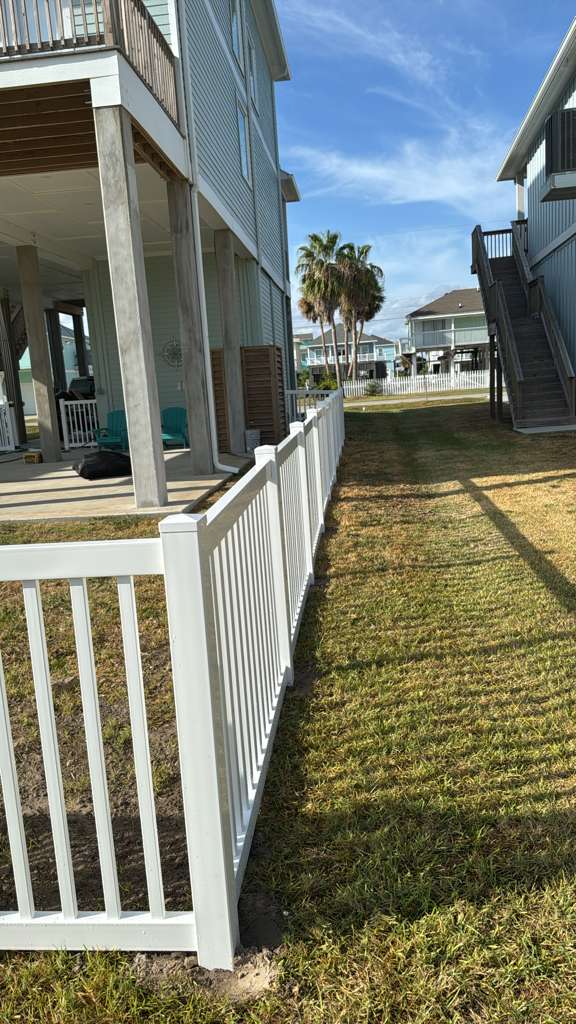
Vinyl’s biggest pro is also its simplest: there’s no species, stain or paint decision, ever — just mild soap and a soft cloth. Its real cons aren’t about rotting or cracking in the cold; they’re about three things the manufacturers’ own literature calls out. First, the base product standard (ASTM F964) explicitly does not address wind load, so a wind rating has to come from the manufacturer’s own hardware and engineering, not the panel material itself. Second, Bufftech’s own installation guideline warns that sunlight reflected off glass or metal can build enough heat to distort or melt a panel. Third, most vinyl fence warranties — including Barrette’s — exclude hurricane, tornado, hail and flood damage as an “act of God,” which matters on the Gulf Coast specifically. None of this makes vinyl a bad choice; it means the pros and cons are more specific than “never paint it” and “might crack.”
Sources: ASTM F964; Bufftech installation guideline and warranty notice; Illusions Vinyl Fence 75 MPH Wind Kit instructions and FAQ; Barrette Outdoor Living catalog and warranty.
What you’re actually buying
Vinyl fence is rigid PVC, standardized by ASTM F964. There’s no species or treatment-class decision the way there is with wood — one material, built to one set of dimensional, extrusion-quality and weatherability requirements, regardless of which yard it goes in. Because PVC alone is flexible over a long span, manufacturers reinforce it: Bufftech ships its privacy panels with a galvanized steel channel inside the top and bottom rails, and aluminum stiffeners inside the gate hinge and latch posts. That reinforcement — not a species choice — is what a vinyl quote is pricing on the structural side.
The clearest pro: nothing to refinish, ever
Bufftech’s own care guidance for its vinyl fencing is a mild detergent, applied with a plastic scouring pad. Illusions’ FAQ page says the same thing in different words: there’s no staining, painting or sealing schedule, because there’s no wood fiber to protect. That’s the real, sourced version of “low maintenance” — not an absence of any care at all, since the next section covers what can still go wrong.
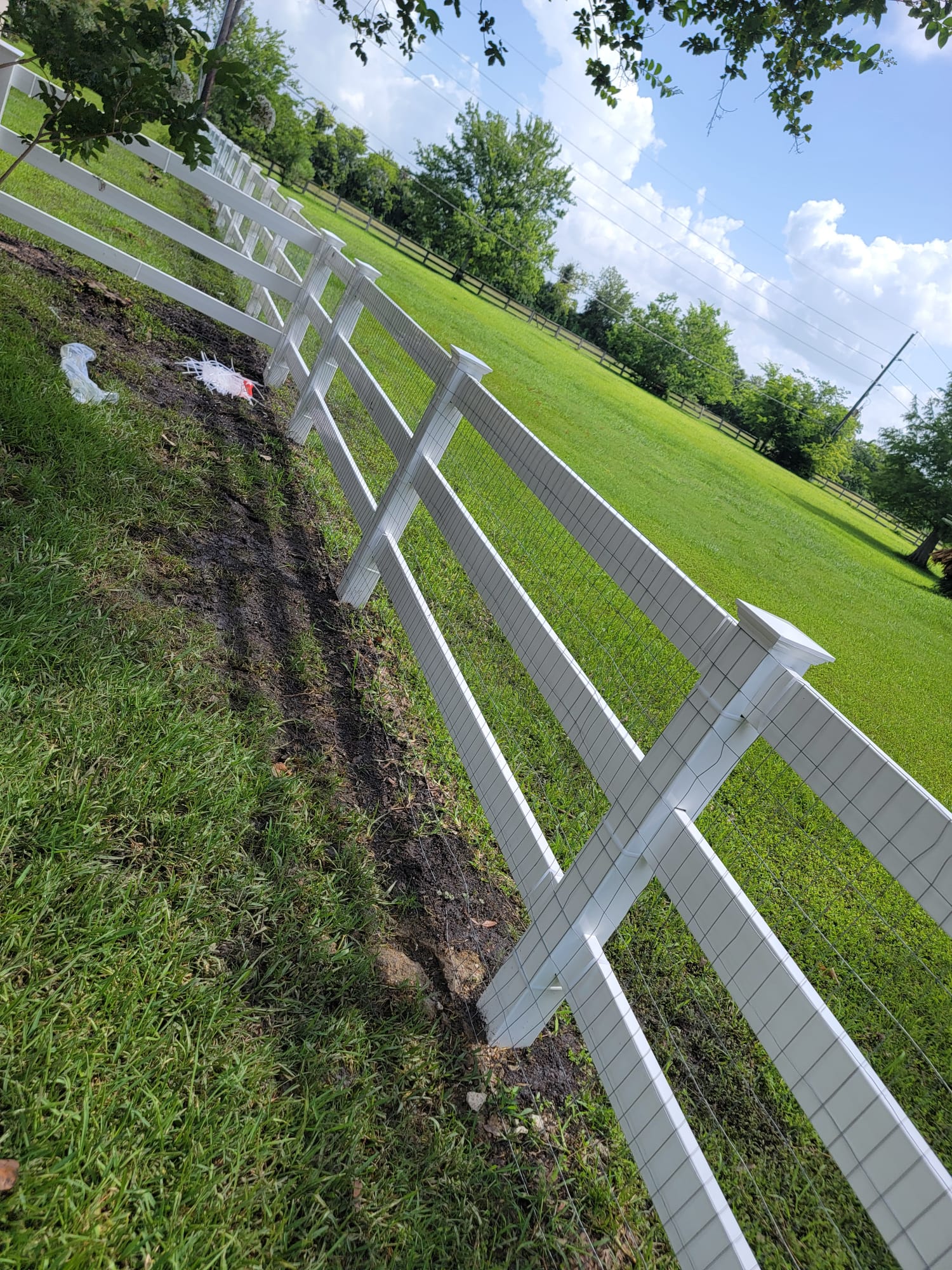
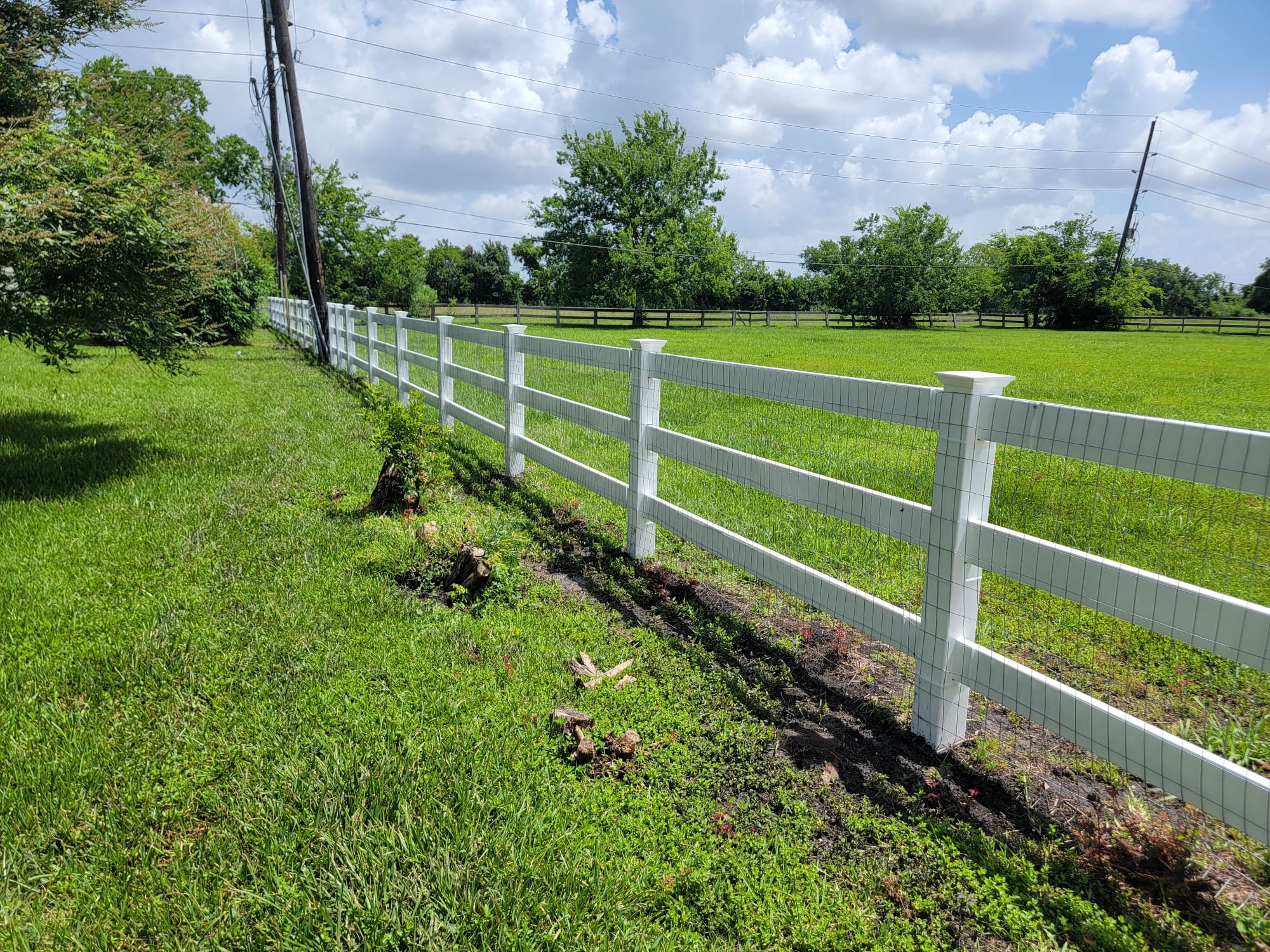
Pros and cons, side by side
| Pro | Watch for | |
|---|---|---|
| Maintenance | Mild detergent and a soft cloth — no staining or painting, ever (Bufftech; Illusions) | Illusions’ own FAQ: durable, but can be damaged by the wrong cleaners or pressure washing |
| Material | One standardized product (ASTM F964) with no species or treatment-class decision | ASTM F964’s own scope says it does not address windload or loadbearing performance |
| Structure | Reinforced by the maker — galvanized steel rail channel, aluminum gate-post stiffeners (Bufftech) | That reinforcement, not the PVC alone, is what carries the fence — ask what’s inside the panel |
| Wind rating | Can be engineered to 75 mph at up to 8 ft with the right posts and kit (Illusions) | Only with heavy-duty posts and the wind kit — a “Wind Code Approved” badge alone states no speed (Barrette) |
| Storms | PVC itself does not rot, warp or need post-storm refinishing the way wood does | Warranties commonly exclude hurricane, tornado, hail and flood damage as an “act of God” (Barrette) |
| Height rule | Same City of Galveston rule as any material: up to 8 ft at a home (LDR §2.501) | Front yard still caps at 4–5 ft — vinyl’s height limit is not different from wood’s |
Does your yard put a vinyl fence at risk?
Answer four questions about the fence line. The checker flags which of the risks above actually apply to your yard — it doesn’t price anything.
Based on Bufftech’s installation guideline and reflected-sunlight warranty notice, the Illusions 75 MPH Wind Kit instructions and FAQ, ASTM F964’s own scope, and Barrette Outdoor Living’s catalog and warranty. Read October 25, 2026. Planning aid only, not an engineering determination.
What Galveston customers say
5.091 Google reviews · read them all on Google
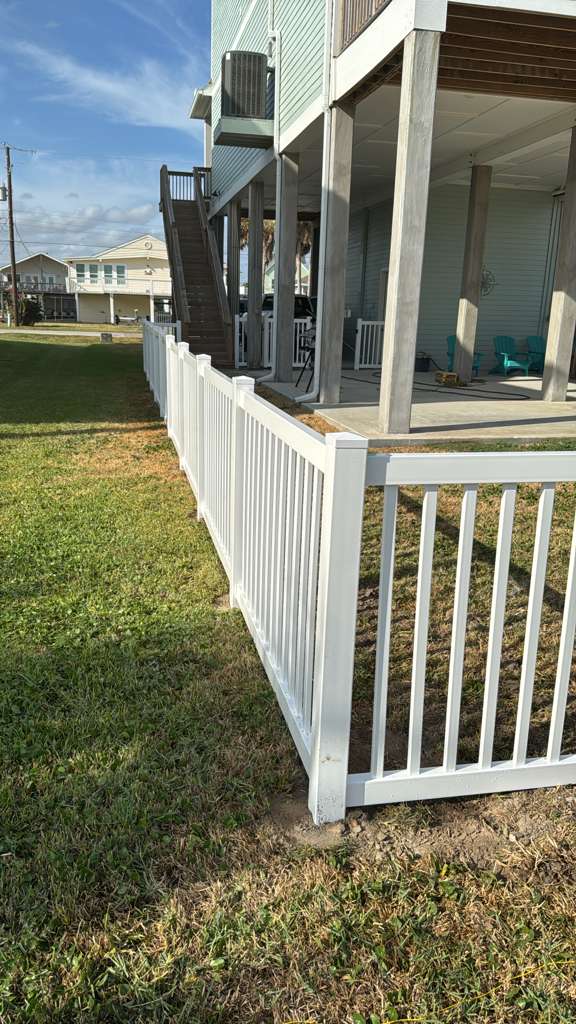
White PVC fence. Beautifully done! Thanks Mustang it’s really looks perfect.
I am so pleased with the fence!! Your solution was exactly the right one and the team did a highly professional job. Frankly, I was amazed at how clean the job site was at the completion of the project. Feel free to list me as a reference and a very happy customer. Thanks again and please let the men know That I appreciate their hard work and quality craftsmanship.
Excellent work. They came in handy after the hurricane hit our backyard. Friendly people too.
Reviews shown word for word from the Mustang Fencing Services Google Business Profile (Galveston), captured 2026-10-19.
Questions we get about this
Does vinyl fencing ever need to be painted or stained?
Can a vinyl fence withstand hurricane-force wind?
Will a vinyl fence melt or warp in the Texas sun?
Does a vinyl fence warranty cover storm damage?
Is vinyl fencing hard to clean?
Sources
Checked October 25, 2026. Rules change, so confirm with the City before you build.
- ASTM F964, Rigid PVC Exterior Profiles Used for Fencing and Railing — The product standard for vinyl fence profiles; Note 2/Abstract: does not address windload or loadbearing characteristics.
- Bufftech (CertainTeed), Molded and Extruded Fence Installation Guideline — Steel channel and aluminum stiffeners, post depth, reflected-sunlight notice, care guidance.
- Illusions Vinyl Fence, 75 MPH Wind Kit installation instructions — Privacy fences certified to 75 mph up to 8 ft only with heavy-duty posts and the kit.
- Illusions Vinyl Fence, FAQ page — Cleaning guidance; durable but can be damaged by the wrong cleaners or washers.
- Barrette Outdoor Living, Vinyl Fence Product Catalog (2024) — “Wind Code Approved” badges with no stated wind speed; warranty exclusions; gate care note.
- City of Galveston, Land Development Regulations, Sec. 2.501 — Residential fence height limits, the same regardless of material.
Weighing vinyl against another material?
We’ll walk the fence line with you, check for reflective surfaces and wind exposure, and give you a written price with the right posts and hardware for your lot. Free on-site estimates across Galveston County.