
Who Pays for a Shared Fence Between Neighbors in Texas?
Whoever agrees to. Texas’s fence statutes are about farm land and livestock, and none of them splits the cost of a backyard boundary fence. So the line, the money, the good side and the upkeep all come down to what you and your neighbor put in writing. Here is what to settle before anyone digs.
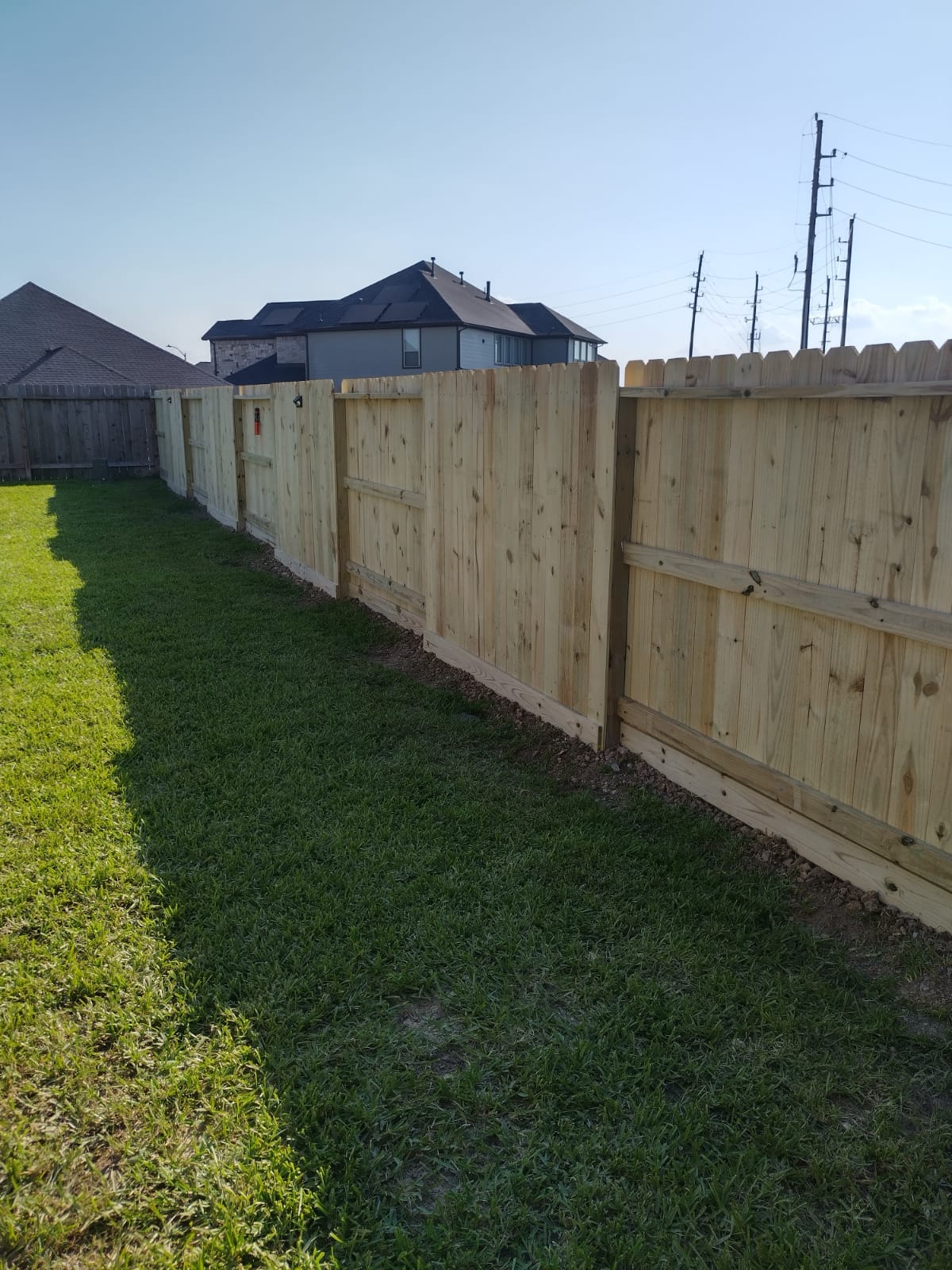
In Texas, whoever agrees to pay does. The state’s fence statutes, in Agriculture Code Chapter 143, deal with fencing cultivated land and keeping livestock in; none of them splits the cost of a residential boundary fence. So there is no “good neighbor fence law” to lean on. A good neighbor fence is a style that looks the same from both sides. If you want to share a fence, agree in writing before it is built: where it stands (from a survey), who pays what, which face goes where, and who maintains it. A fence built on the line stands on both lots, so it needs both owners’ consent.
Sources: Texas Agriculture Code Ch. 143; Texas Civil Practice and Remedies Code 16.021–16.030; City of Galveston Fence Permit Application (Rev. 03/2023). Read September 26–27, 2026.
What Texas law says, and what it doesn’t
Texas does have fence statutes. They are in Agriculture Code Chapter 143, “Fences; Range Restrictions”, and they are about farm and ranch land: a farmer’s “sufficient fence” around cleared land in cultivation must be at least five feet high and hog-proof (143.001), counties can hold local-option elections on whether livestock may run at large, and there are rules about livestock on highways. None of them tells two homeowners how to split the cost of the fence between their back yards.
That is why the searches for a “good neighbor fence law” in Texas come up empty. The phrase describes a style, not a statute: a fence built so both yards see the same finished face. See what a good neighbor fence is.
So for an ordinary residential lot line in Galveston County, the practical rules are simple:
- A fence on your land is yours. You decide whether to build it, you pay for it, and you maintain it, subject to the City code and any deed restrictions.
- A fence on the line is on both lots. Neither neighbor should build, change or remove it without the other’s agreement.
- Who pays for a shared fence is whatever you agree. Put it in writing before anyone orders material.
If there is an HOA, its guidelines may set the style of fences along lot lines; it may regulate the type of fencing (Property Code 202.023(c)(2)). See common HOA fence rules.
Start with the line, not the price
Most neighbor fence arguments are about where the fence goes, not who pays. Settle that first, with a survey rather than an old fence or a guess.
- City of Galveston. On the fence permit application, the applicant certifies that “the permission of the owner and authorized lessee (if any) of the premises has been obtained” and that the fence doesn’t violate any deed restrictions. If the fence will stand on the line, your neighbor owns part of the ground under it, so get their permission in writing before you apply.
- Village of Tiki Island. A licensed surveyor must survey the lot and stake the corners before any fence is built (Sec. 6-301(c)), and no fence may be built beyond the property lines (6-302(a)).
- Why years matter. Texas law lets someone who holds land in “peaceable and adverse possession” gain title once the owner’s time to sue runs out: 3, 5 or 10 years, depending on the facts (Civil Practice and Remedies Code 16.024 to 16.026, 16.030). Whether a particular fence counts is a question for a court, not for this page. The practical point: don’t leave a fence standing where it shouldn’t be, and don’t accept one on your land without a written agreement.
More in do I need a survey before installing a fence? and how close to the property line can I build?
Adverse possession limitation periods in Texas, in years
Time to sue to recover land held in peaceable and adverse possession, by the kind of claim
Which side faces whom
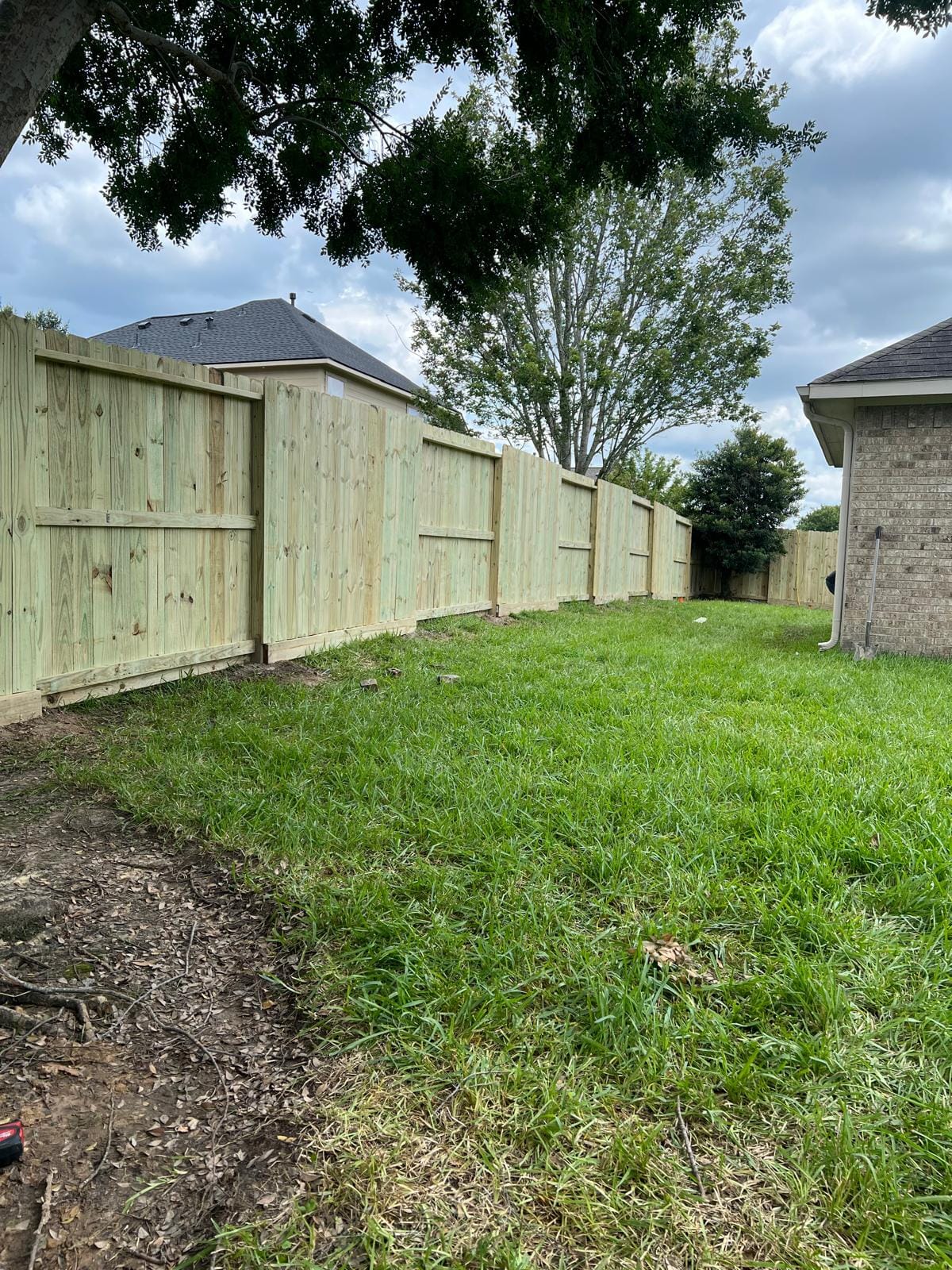
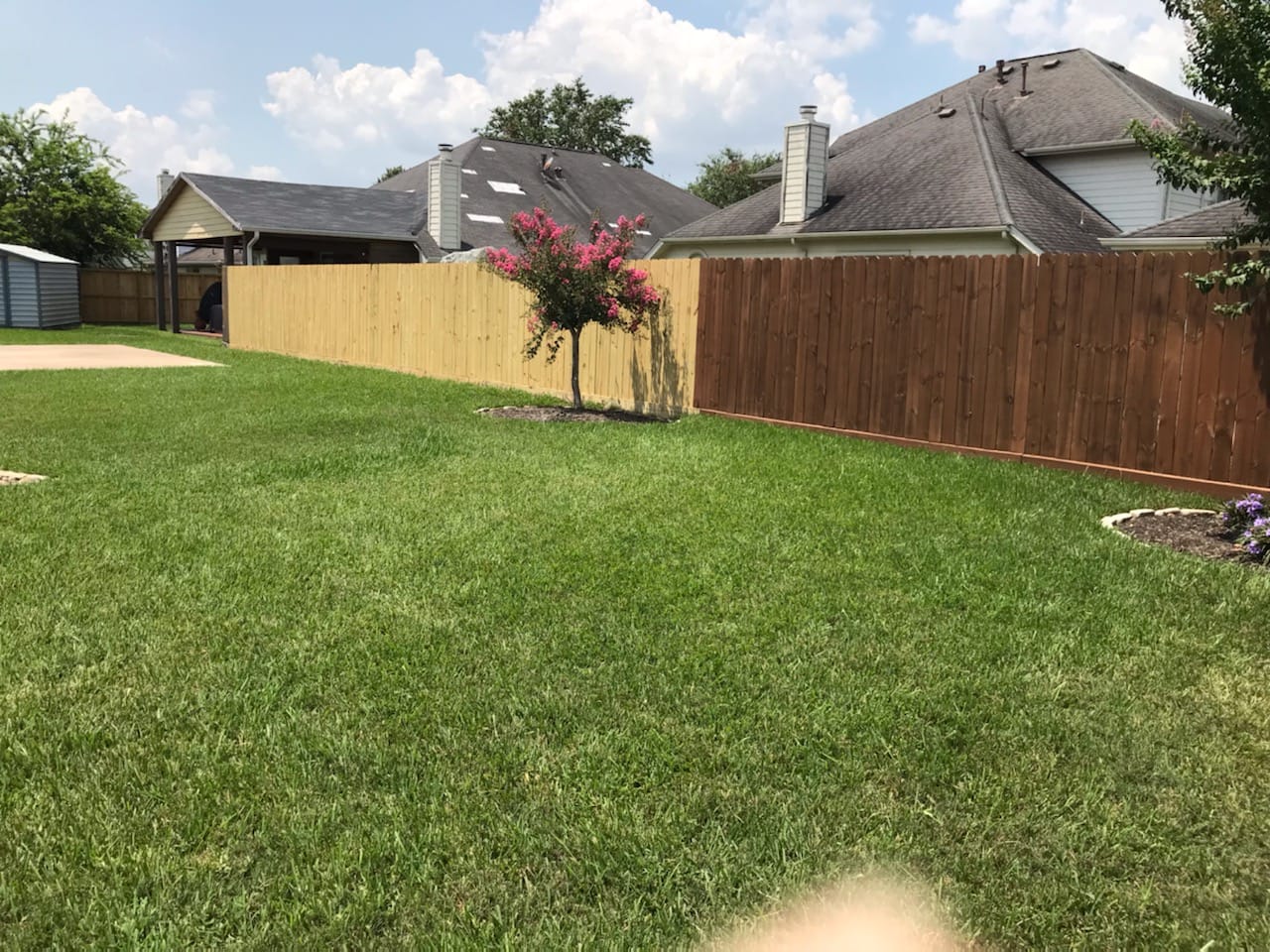
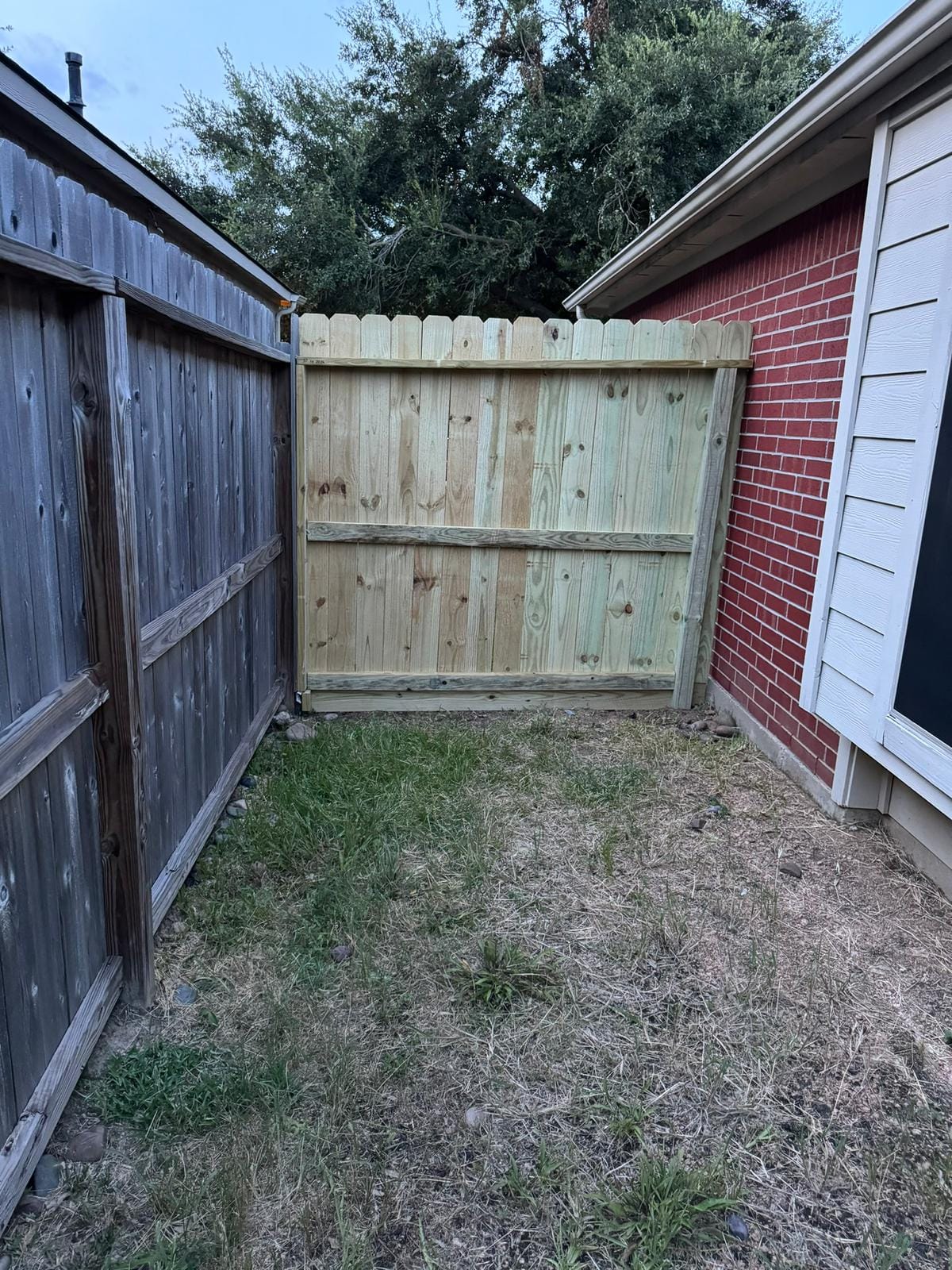
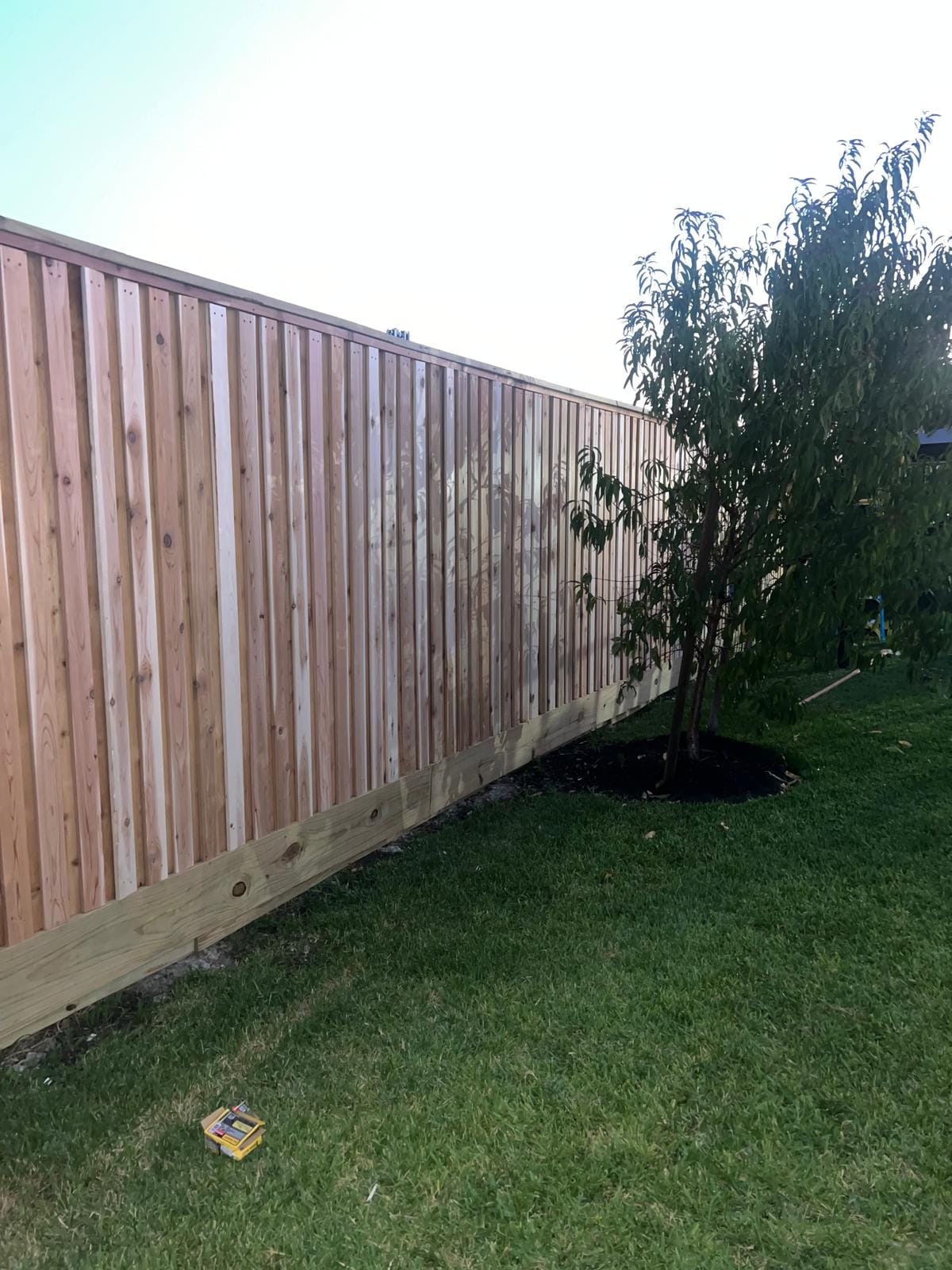
No Texas statute says which face of a fence has to point at the neighbor. It is a courtesy, a design choice, or an HOA rule. On a standard board fence one side is the smooth board face and the other shows the posts and rails. Some owners give the neighbor the smooth side; some keep it for themselves. If you are sharing the cost, both of you have a say.
A good neighbor design avoids the question: panels alternate faces from bay to bay, or boards are hung on both sides of the rails, so each yard sees the same thing. Board-on-board fences look finished from both sides too. See every fencing material we install, good neighbor fences and privacy fence installation.
Shared fence agreement checklist
Answer a few questions about the fence you and your neighbor are planning. The checklist lists what to put in writing, splits the cost you enter from your own written quote, and flags permit and survey steps. It isn’t legal advice, and it doesn’t price the fence.
Based on the City of Galveston Fence Permit Application (Rev. 03/2023), Village of Tiki Island Code 6-301(c) and 6-302(a), Texas Property Code 202.023(c)(2) and Civil Practice and Remedies Code Ch. 16, read September 27, 2026. Texas’s fence statutes (Agriculture Code Ch. 143) don’t split the cost of a residential boundary fence, so the split here is whatever you and your neighbor agree. Talk to a Texas real estate attorney about a boundary dispute.
Splitting a fence line with a neighbor?
We’ll measure, mark the line and quote the job so you both know the height, material and cost before anyone signs anything. Free on-site estimates across Galveston County.
What to put in a shared fence agreement
A one-page agreement, signed and dated by both owners before the work starts, prevents almost every argument in this article. Cover:
- The line. Where the fence stands, from the survey: inside one lot or on the line.
- The fence. Height, material, style, gates, and which face goes where. Attach the written quote.
- The money. Each owner’s share, when it is paid, and to whom.
- Removal. Who takes out and hauls away the old fence, if there is one.
- Upkeep. Who stains, repairs and replaces it, including after a storm, and how costs are split then.
- Approvals. Who applies to the HOA, if either lot has one, and who pulls the City permit.
- A sale. What happens if either house is sold. A private agreement may not bind the next owner; ask an attorney if that matters to you.
If your neighbor won’t share the cost, you can still build a fence on your own land at your own cost. That is the “A” option on the drawing above.
If you can’t agree
Keep it factual and on paper. Get the survey, put your proposal in writing, and give your neighbor time to answer. If the disagreement is about where the line is, it is a boundary dispute, and that is a job for a Texas real estate attorney, not a fence contractor. If a fence you built without approval is the problem in an HOA, see can my HOA make me remove my fence?
What a fence company can do: measure, mark the fence line from the survey, and put the height, material, style and face on one written quote that both of you can read and sign against.
What Galveston customers say
5.091 Google reviews · read them all on Google
Mustang Fencing Services was dependable and honest from start to finish. They stuck to our timeline and budget, and the fence looks fantastic. I appreciate their hard work and would recommend them to anyone.
Great work. Fast service. Very friendly. I recommend using this company to replace your fence.
Mustang fencing company really tried in the reconstruction of my fence. They carried ma along side the construction, that shows how professional their job and delivered a good job.
Reviews shown word for word from the Mustang Fencing Services Google Business Profile (Galveston), captured 2026-10-05.
Questions we get about this
Who pays for a fence between neighbors in Texas?
Is there a good neighbor fence law in Texas?
Can I build a fence on the property line?
Who maintains a fence on the property line?
Does my neighbor have to pay for half of a new fence?
Which side of the fence faces the neighbor?
Sources
Checked September 27, 2026. Rules change, so confirm with the City before you build.
- Texas Agriculture Code, Chapter 143: Fences; Range Restrictions — 143.001 sufficient fence around cultivated land (at least 5 ft); local-option stock law elections; livestock at large and on highways. No residential cost-sharing provision.
- Texas Civil Practice and Remedies Code, Chapter 16, Subchapter B — 16.021 definitions (adverse, peaceable possession), 16.024 (3 years), 16.025 (5 years), 16.026 (10 years), 16.030 (title through adverse possession).
- City of Galveston, Fence Permit Application (Rev. 03/2023) — Applicant certifies the owner’s permission has been obtained and the fence does not violate deed restrictions.
- Village of Tiki Island, Fence Ordinance (Code Ch. 6, Div. 6) — 6-301(c) licensed survey with corners staked before any fence; 6-302(a) no fence beyond the property lines.
- Texas Property Code, Chapter 202 — 202.023(c)(2): an HOA may regulate the type of fencing.
Sharing a fence with a neighbor?
We’ll measure, mark the line from your survey, and put the height, material, style and which face goes where on one written quote you can both sign against. Free on-site estimates across Galveston County.