
Common HOA Fence Rules: Height, Material, Color and Placement
Your HOA’s guidelines, Texas law and the City code all set fence rules, and you have to meet all three at once. Here is what each one covers, how they stack up, and a checker that tells you which height limit you can actually build to.
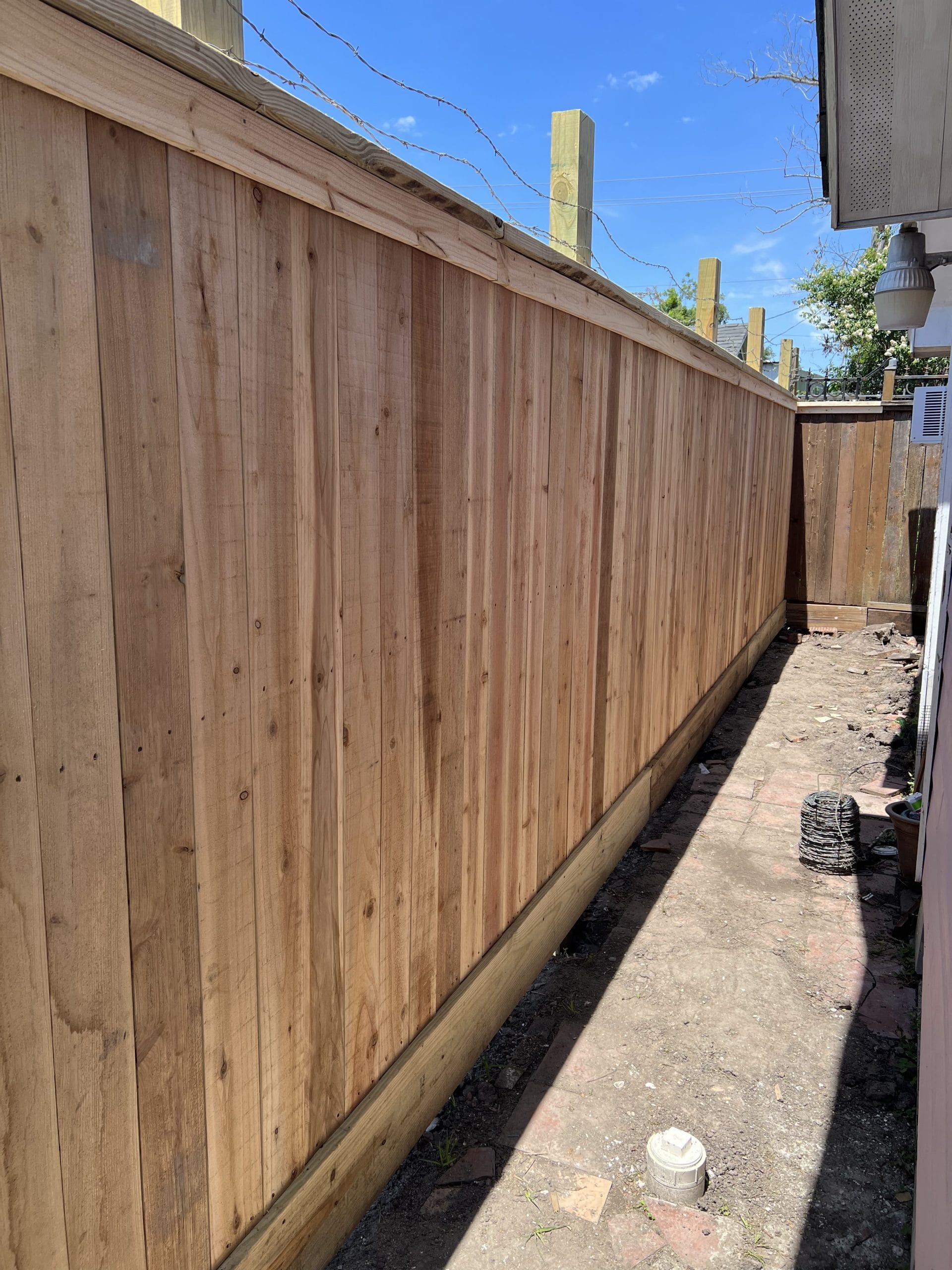
Most HOA fence rules cover the same handful of things: height, material and style, color or finish, which side faces out, and where the fence may go. Your recorded deed restrictions and guidelines set the numbers. Texas law lets the HOA regulate the type of fencing but not prevent a perimeter fence (Property Code 202.023). The City sets its own caps: in Galveston, 8 ft for a residential fence, and in a front yard 4 ft solid or 5 ft if at least 60% transparent (LDR 2.501). You have to meet every layer, so the lowest limit is the one you build to. Beyond individual yards, Mustang Fencing Services also handles HOA and community fence installation for shared perimeter, amenity and pool fencing across Galveston County.
Sources: City of Galveston Land Development Regulations Sec. 2.501; Village of Tiki Island Code Sec. 6-302; Texas Property Code 202.023 (as amended September 1, 2025). Read September 27, 2026.
Three layers of fence rules, and you have to pass all of them
A fence in a Galveston County subdivision answers to three sets of rules at once:
- Your deed restrictions and guidelines. Texas law calls them dedicatory instruments: the declaration, bylaws and “properly adopted rules and regulations” of the property owners’ association (Property Code 202.001). They only count once they are filed in the county real property records (202.006). This is where the HOA’s actual numbers live.
- State law. Since 2021, and again since September 1, 2025, the Property Code limits what those documents can do to a fence. An HOA “may not adopt or enforce a restrictive covenant that prevents a property owner from building or installing” a perimeter fence, but it keeps the power to regulate “the type of fencing that a property owner may install” (202.023(b), (c)(2)).
- The city or village code. In the City of Galveston, that is Section 2.501 of the Land Development Regulations. On Tiki Island, it is the village fence ordinance. These apply whether or not there is an HOA.
The layers don’t cancel each other. An HOA approval doesn’t let you exceed the City’s height, and a City permit doesn’t override your deed restrictions. The City of Galveston’s fence permit application makes the second point explicit: you sign that “the fence does not violate any applicable deed restrictions or other restrictions on the premises.” How to apply to the HOA, how long it takes and what to do if you are turned down are on our HOA fence approval guide. This page is about what the rules themselves say.
What each layer controls
| Rule | Your HOA’s guidelines | Texas Property Code | City of Galveston |
|---|---|---|---|
| Height | Can set its own limit, often by location on the lot. Read the number for each spot. | No height in the statute. The HOA may regulate “the type of fencing”: 202.023(c)(2) | 8 ft residential; front yard 4 ft solid or 5 ft if 60% transparent: LDR 2.501(B) |
| Material and style | Can list allowed or barred materials, styles and caps | May regulate the type; may not prevent a perimeter fence: 202.023(b), (c)(2) | Permit asks for the material. Barred-material list in 2.601 applies to nonresidential and mixed-use sites |
| Color and finish | Can set colors, stains and whether wood must be sealed | May limit a mesh pool enclosure’s colors, but not ban black mesh in metal frames: 202.022(b)(2) | No color rule in 2.501 |
| Placement | Can require setbacks from lot lines or the street | May bar fencing that obstructs a sidewalk, drainage easement or license area: 202.023(c)(3) | Front-yard height limits; lots within 1,000 ft of mean high tide send a site plan to the coastal division |
| Front of the house | Can bar it only if a restrictive covenant provides for it | Fencing in front of the front-most building line: 202.023(c)(5), with exceptions in (e) | 4 ft solid or 5 ft open in a front yard |
| Driveway gate | Can set where it sits | May require it 10 ft back from the right-of-way on a laned roadway: 202.023(c)(4) | Counts as part of the fence for height |
| Existing fence | Can require approval for replacement | Perimeter or front fencing installed before Sept 1, 2025 may be maintained: 202.023(d) | A new fence needs a permit |
Texas Property Code 202.022 and 202.023 (as amended effective September 1, 2025); City of Galveston LDR Sec. 2.501 and 2.601; City of Galveston Fence Permit Application (Rev. 03/2023).
Height: the lowest limit wins
Height is the rule people get wrong most often, because there are two numbers and they measure different things. In the City of Galveston, no residential fence may exceed 8 ft. In a front yard the limit drops to 4 ft for a solid fence, or 5 ft if the fence is at least 60 percent transparent. For an attached home or multifamily building, the open front-yard option goes to 6 ft (LDR 2.501(B)).
Your HOA’s guidelines can set a lower number, and often set different numbers for different parts of the lot. They cannot raise the City’s. So check both, for the exact spot the fence will stand, and build to the lower one. The drawing shows the City caps with an HOA line sitting below them; your guidelines give the real one.
On Tiki Island, the village ordinance is stricter than most HOA rules: no fence may exceed 6 ft in total, and it allows only see-through type fences, except as it otherwise provides (Sec. 6-302(b), (e)). If you live there, read our Tiki Island fence page before you pick a style.
Fence height limits in the local codes, in feet
Code maximums only. Your HOA’s guidelines can set lower numbers.
What “60 percent transparent” works out to
The extra foot in a Galveston front yard depends on the fence being at least 60 percent transparent. The LDR doesn’t say how the City measures that (we searched the full regulations), so ask Development Services about your design before you order. The arithmetic for one bay is simple: the open share is the gap divided by the picket plus the gap.
With 3½ in pickets, that means gaps of at least 5¼ in. A spaced picket fence with 1 in gaps is only about 22% open, so it doesn’t qualify for the 5 ft limit. Metal picket fences, with thin pickets and wide spaces, clear 60% more easily. The drawing shows both.
Material and style: what the HOA can decide
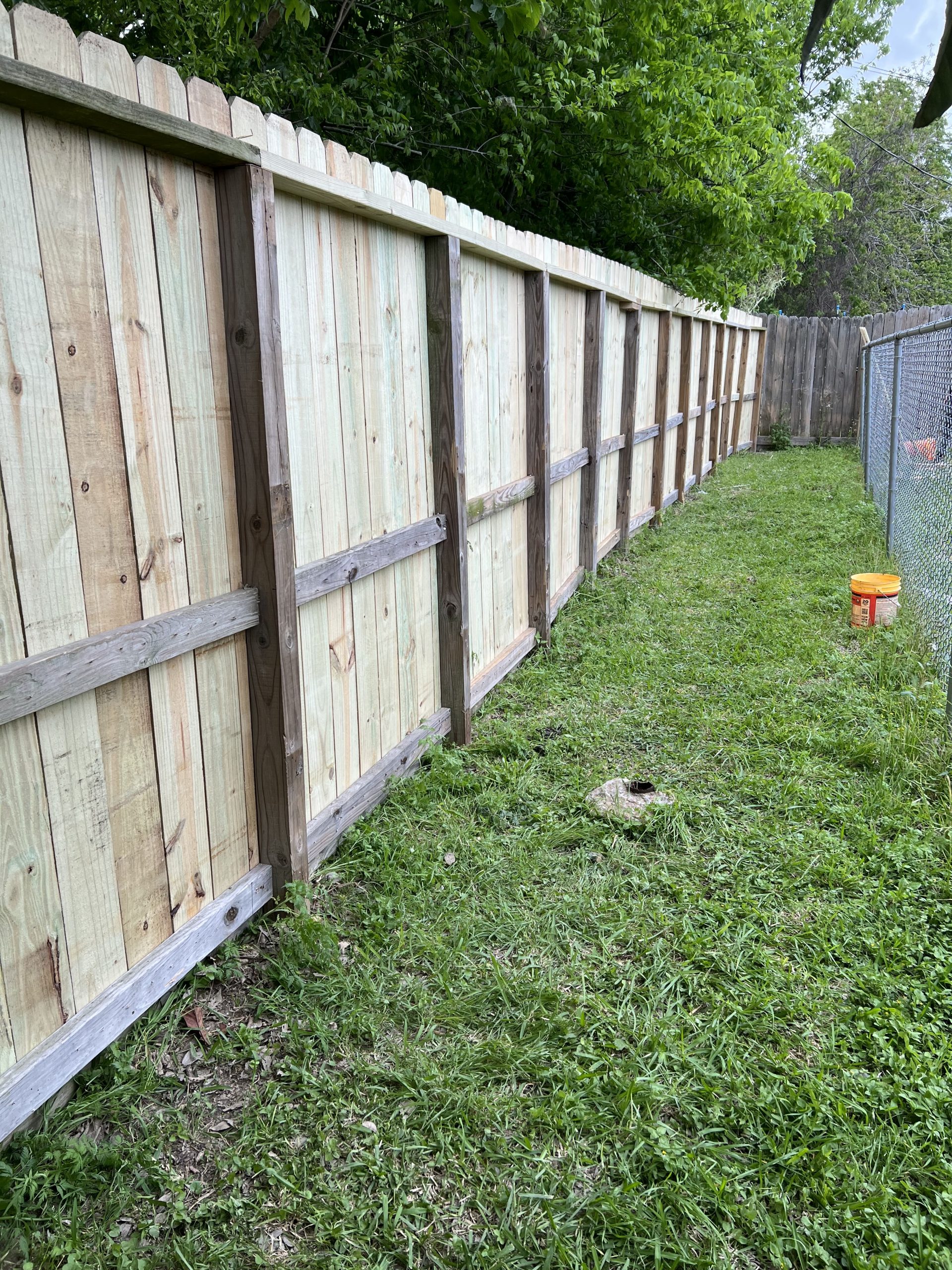
Under 202.023(c)(2) the HOA may regulate the type of fencing. In practice that is where the material list, the style, the cap and trim and the post type come from. What it can’t do is use those rules to block a perimeter fence altogether. If your guidelines allow one material in your spot, that is the fence you can build.
Look for these in the fence section of your guidelines:
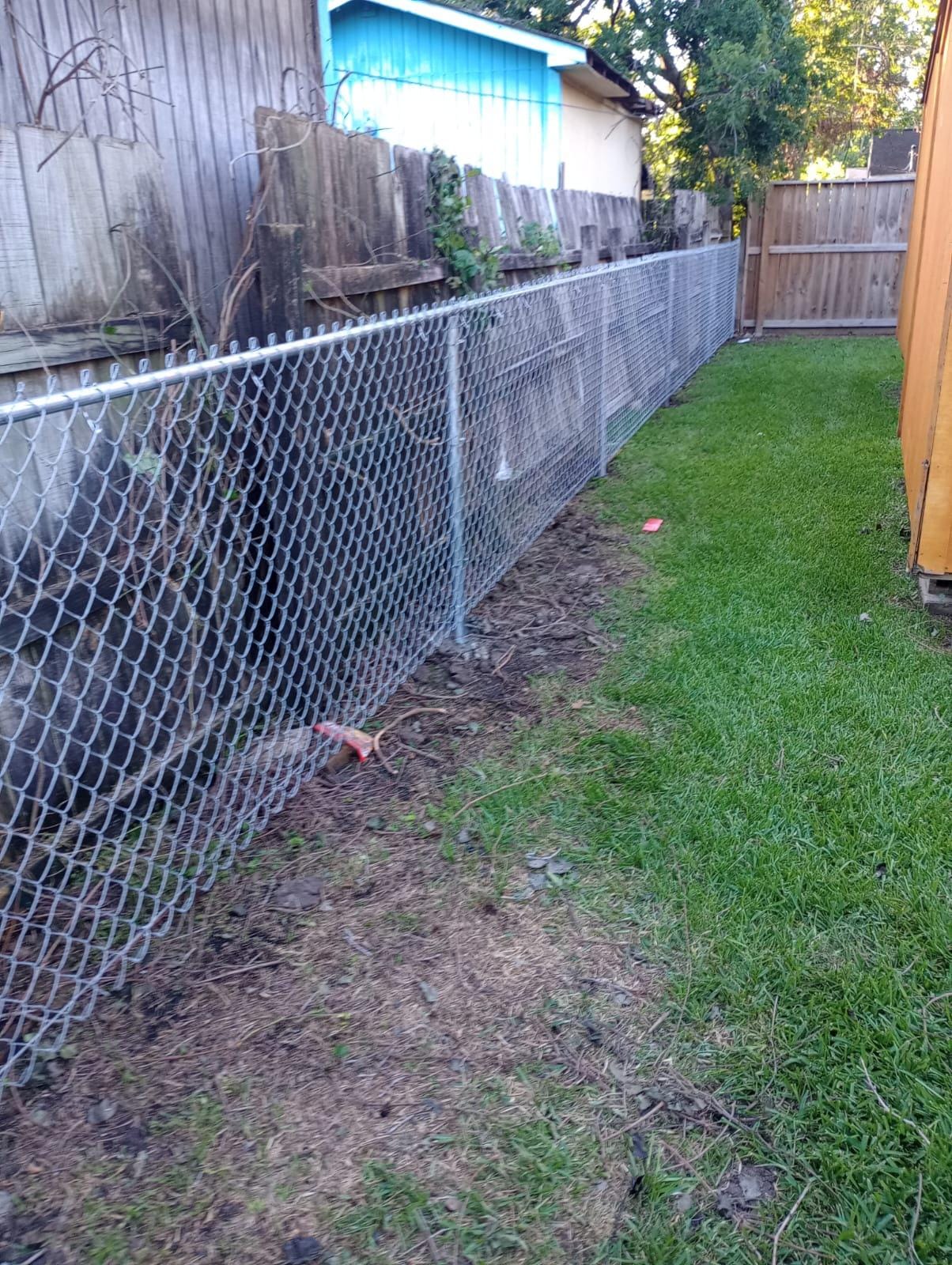
- Allowed materials: wood species, vinyl, composite, ornamental metal, chain link. Look for location exceptions too, such as chain link allowed only for a dog run or out of street view. Chain link has its own page: does chain link violate HOA rules?
- Style: board-on-board or side-by-side, dog-ear or flat top, cap and trim, lattice, horizontal boards.
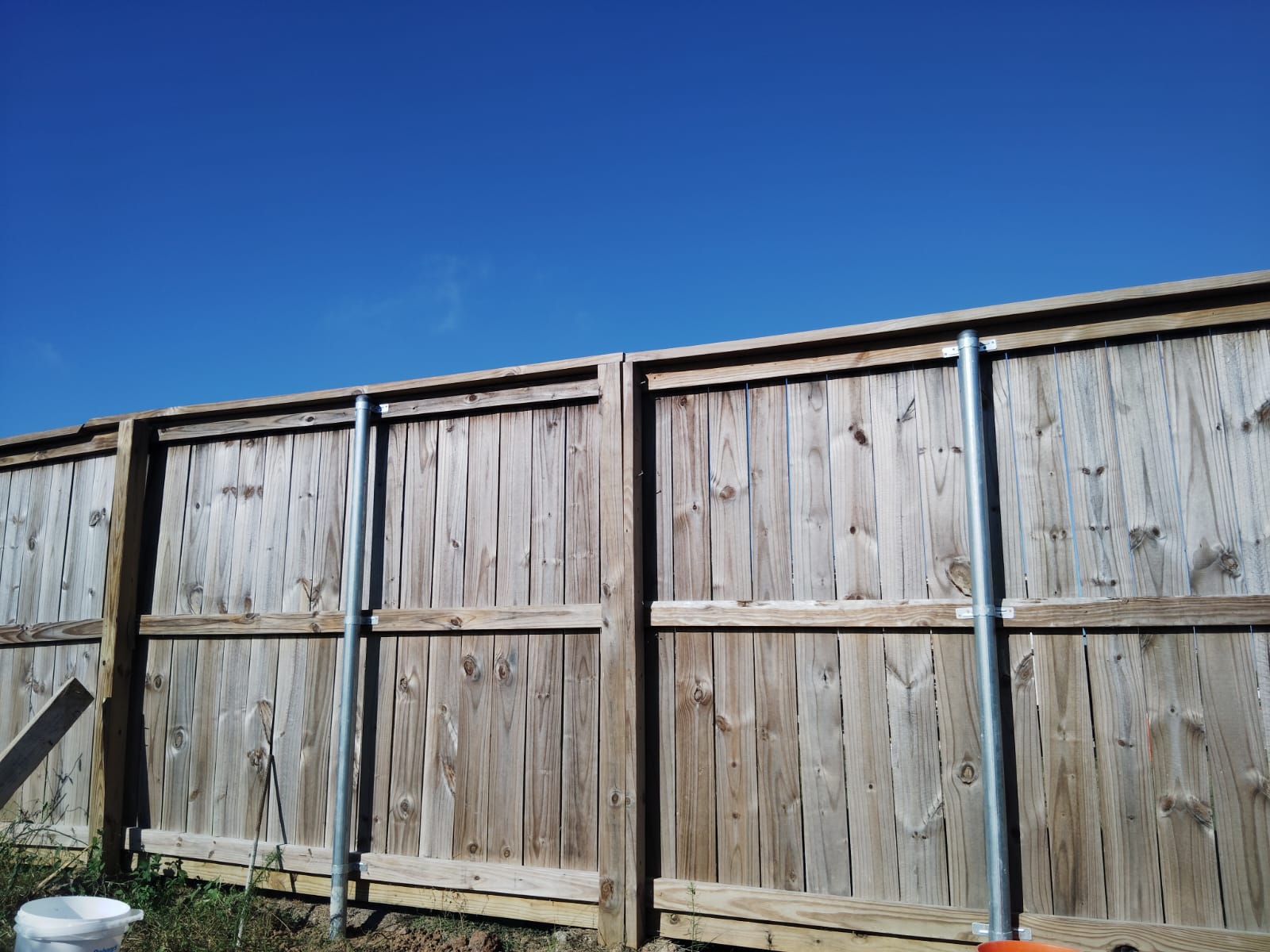
- Posts: whether posts may show on the street side, and whether steel posts must be hidden.
- Gates: matching material, width and hardware.
Two code points that people mix up with HOA rules. The City’s list of barred materials (scrap lumber, sheet metal, barbed or razor wire and so on, where visible from a street) is in LDR Section 2.601, which applies to nonresidential and mixed-use sites. The residential section, 2.501, has no material list. On Tiki Island, metal and chain link fences must be hot-dipped galvanized, fasteners included, and cut or damaged coating must be painted after installation (Sec. 6-301(b)).
For material choices on the coast, see wood fences, vinyl fences, aluminum fences and privacy fence installation.
Color, finish and which side faces out
These rules are about appearance, and they are entirely your HOA’s to set. Texas law has only one color rule for fences: an HOA may limit the colors of a protected mesh pool enclosure, but it may not prohibit one that is black mesh in metal frames (202.022(b)(2)). The City’s residential section has no color rule.
Look for:
- Stain or paint: a named color, a list, or “natural”. Some guidelines require wood to be sealed or stained within a set time.
- Finished side: whether the smooth face must face the street or the neighbors, and whether rails may show.
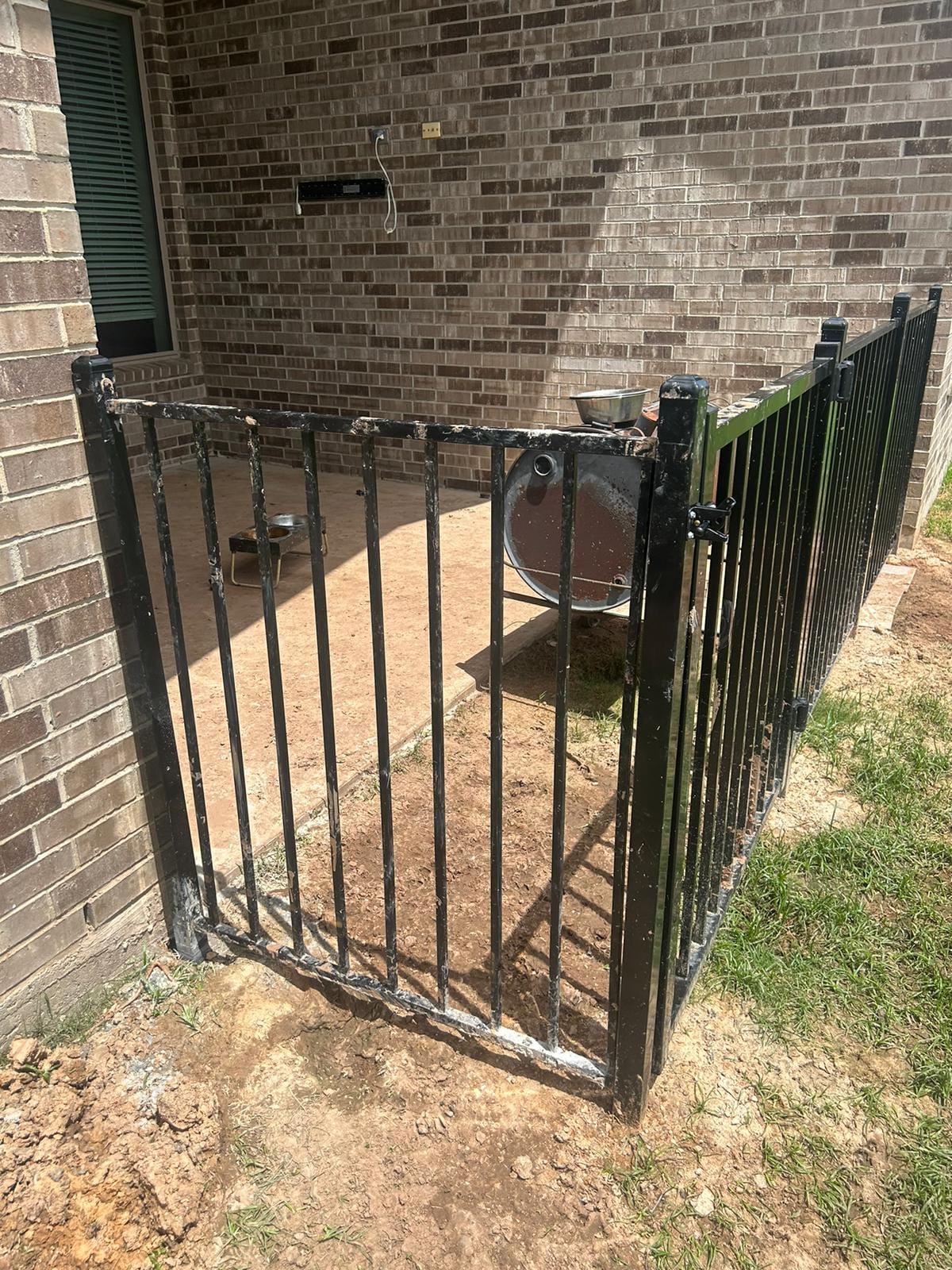
- Metal color: black, bronze or another powder-coat color for ornamental fences.
- Vinyl color: white, tan or wood-grain, if vinyl is allowed.
If the guidelines are silent on something, don’t assume it is allowed. Put it in the application and get it approved in writing. For finishing new wood, see when to stain a new pressure-treated fence.
Placement: easements, sidewalks and the front of the house
Where the fence goes is partly your HOA’s call and partly state law. Under 202.023(c), an HOA may:
- prohibit fencing that obstructs a license area, a sidewalk in the public right-of-way or installed for community use, or a drainage easement or drainage area;
- require a driveway gate to be set back at least 10 ft from the right-of-way where the driveway meets a laned roadway;
- prohibit fencing in front of the front-most building line of the house, but only if a restrictive covenant provides for it, and not if your address is confidential by law or you give the HOA law-enforcement documentation of a need for enhanced security (202.023(e)).
Your guidelines may add setbacks from the street or side lot lines. On Tiki Island, the ordinance itself bars any fence beyond the property lines or within a utility easement, and requires a survey by a licensed surveyor, with the corners staked, before any fence is built (Secs. 6-301(c), 6-302(a), (c), (d)).
All of this depends on knowing where the lines and easements are. Confirm the property line and any setback with a survey, not an estimate: a few inches over the line is a dispute with a neighbor. See do I need a survey before installing a fence? and how close to the property line can I build?. For driveway gate placement, see HOA approval for a driveway gate.
Fence rule stack checker
Pick where the lot is and describe the fence. The checker puts the city or village limit next to your HOA’s number, tells you which one you can build to, and lists what else to check. It reads the codes cited below, not your deed restrictions: type in your HOA’s number from your own guidelines.
Based on City of Galveston Land Development Regulations Sec. 2.501(B), Village of Tiki Island Code Secs. 6-301 to 6-303, and Texas Property Code 202.023, as read on September 27, 2026. “Front yard” and “60 percent transparent” are applied as the City defines and measures them; confirm with Development Services. Historic districts, the Cedar Lawn conservation district and lots within 1,000 ft of mean high tide get extra review on the City permit. Other cities have their own codes. A guide to the rules, not a permit or legal advice.
Replacing an old fence
Rules change, and old fences often don’t meet the current ones. Texas law protects some of them: an owner “may maintain any perimeter fencing or fencing in front of a dwelling’s front-most building line installed or constructed before September 1, 2025” (202.023(d)). The statute says maintain. It doesn’t say a complete tear-out and rebuild keeps that protection, so if you are replacing the whole run, apply under the current rules first.
Tiki Island has its own replacement rule: if a fence along a perimeter or property line is more than 50 percent damaged, the entire fence along that line must be replaced under the current ordinance (Sec. 6-303).
And if a fence is built differently from the approved plans, Texas law treats “the failure to construct improvements or modifications in accordance with approved plans and specifications” as a curable violation: before fining you, the HOA has to give written notice and a reasonable time to fix it (209.006). The cheaper route is to make sure the quote matches the approval. More in can my HOA make me remove my fence?
Get the rules in writing before you get a quote
- Get the recorded documents. Ask the management company for the declaration, any amendments and the current architectural guidelines. Owners are entitled to copies of association records (209.005). Only filed instruments count (202.006).
- Find the fence section and note the height, material, color, finished-side and setback rules for each spot where the fence will go.
- Check the code: LDR 2.501 in the City of Galveston, the village ordinance on Tiki Island. Use the checker above.
- Get a quote that names all of it: height, material, style, color and the fence line. Attach it to the application.
- Apply, and wait for written approval, then pull the City permit. The steps and deadlines are in our HOA approval guide.
What Galveston customers say
5.091 Google reviews · read them all on Google
Amazing work will go ahead and recommend everyone in friends and family We installed 8ft tall double sided stained cedar wood fence in our backyard, it’s really looks great, installed perfectly nice finishing and cost effective, thanks mustang fencing.
had an excellent experience with mustang fencing From the initial consultation to the final installation, the team was professional, punctual, and attentive to detail. They helped me choose the perfect fence style to match my property and ensured everything was installed with precision. The quality of materials is top-notch, and the fence has completely transformed the look and security of my home. I highly recommend mustang services to anyone looking for reliable and high-quality fencing services!
White PVC fence. Beautifully done! Thanks Mustang it’s really looks perfect.
Reviews shown word for word from the Mustang Fencing Services Google Business Profile (Galveston), captured 2026-10-05.
Questions we get about this
What fence rules do HOAs usually have?
How tall can a fence be in Galveston?
Can an HOA fence rule be stricter than the city code?
Can my HOA tell me what color my fence has to be?
Can my HOA ban chain link?
What are the fence rules on Tiki Island?
Sources
Checked September 27, 2026. Rules change, so confirm with the City before you build.
- Texas Property Code, Chapter 202: Construction and Enforcement of Restrictive Covenants — 202.001 (dedicatory instrument), 202.006 (instruments must be filed in county real property records), 202.022 (pool enclosures; black mesh in metal frames), 202.023 (security measures including perimeter fences; type of fencing; obstruction; driveway gate setback; front-most building line; pre-September 1, 2025 fencing; amended by S.B. 711).
- Texas Property Code, Chapter 209: Texas Residential Property Owners Protection Act — 209.005 (owner access to association records), 209.006 (notice and cure period before fines; building differently from approved plans is a curable violation).
- City of Galveston Land Development Regulations, Sec. 2.501 and 2.601 (Fences and Walls) — 2.501(B): 8 ft residential; front yard 4 ft solid or 5 ft if at least 60 percent transparent (6 ft for attached and multifamily). 2.601: nonresidential and mixed-use heights and prohibited materials.
- City of Galveston, Fence Permit Application (Rev. 03/2023) — Historic district, Cedar Lawn and 1,000 ft of mean high tide questions; applicant certifies the fence does not violate deed restrictions and complies with LDR 2.501 and 2.601.
- Village of Tiki Island Code of Ordinances, Chapter 6, Division 6: Fences — 6-300 (design approval), 6-301 (galvanized steel, survey, 110 mph anchoring), 6-302 (see-through type only, 6 ft maximum, no fence in utility easements, permit), 6-303 (more than 50 percent damaged must be replaced to code).
Want a quote your HOA can approve?
Send us the fence section of your guidelines. We’ll measure the lot and put the height, material, style, color and fence line on a written quote you can attach to your application. Free on-site estimates across Galveston County.
Pingback: HOA Fence Approval: Do You Need It, and How Long?