Commercial access control · Galveston, TX

Commercial Access Control That Matches the Standard, Not Just the Sales Pitch

"Commercial" isn’t just a bigger version of a residential gate — it’s a defined category in the gate-operator safety standard itself. UL 325 sets four operator classes based on who the site actually serves, and a multi-tenant building, hotel, retail property or similar public-facing site falls under a specifically different class than a single-family driveway. Add the City of Galveston’s own fire-code requirement that security-gate plans go to the fire department before a commercial gate gets built, and matching the right equipment to the right site becomes a documented requirement, not a preference.
  • Reviewed Oct 20, 2026
  • Source: UL 325 / DASMA TDS 353, 2021 IFC 501.3
  • Operator-class checker
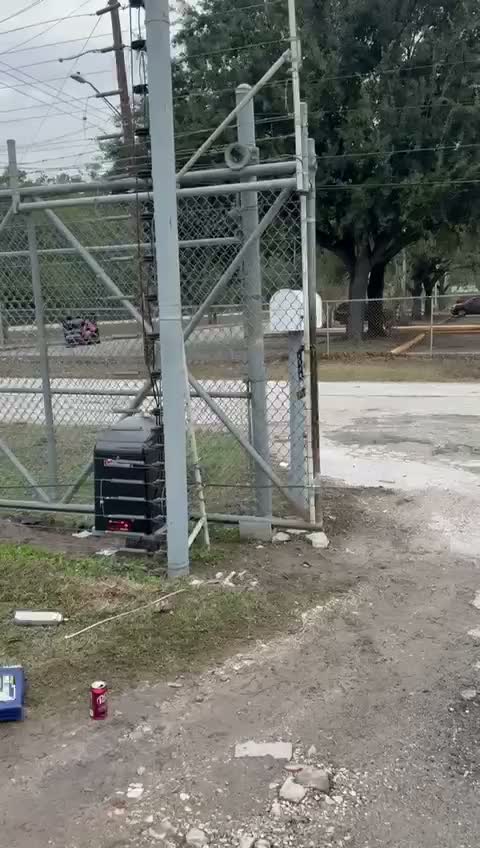
Tall galvanised chain link security fence with barbed wire at a commercial yard
A commercial security fence and gate line, Texas City. Commercial sites carry a different UL 325 operator classification than a residential driveway.
The short answer

UL 325 defines "commercial" with specific wording, not a sales label. Class II is written for "a commercial location or building such as a multi-family housing unit (five or more single-family units), hotel, garages, retail store, or other buildings accessible by or servicing the general public" — distinct from Class I (a one- to four-family residence) and from Class III/IV (industrial and restricted-access sites). DASMA's own guidance for dealers is direct: "sales personnel must match the site application with the class of operator." Separately, Galveston's adopted fire code requires security-gate construction documents to go to the fire department for review before a commercial gate is built. Mustang Fencing Services installs commercial fencing and gate systems across Galveston County, matched to the applicable class and local review requirements below.

4 classesUL 325 gate-operator classes, defined by who the site serves — residential, commercial, industrial, restricted-access
5+ unitsThe threshold UL 325 itself uses for "multi-family housing" under the Class II commercial definition
≥ 2 meansIndependent entrapment-protection methods required, each direction of travel, everywhere entrapment risk exists
2 sec / 2 inMaximum time to begin reversing after sensing an obstruction, and the minimum travel once it does

Sources: DASMA Technical Data Sheet #353 (UL 325, 7th ed.); 2021 International Fire Code §501.3, as adopted by the City of Galveston (Ordinance No. 23-013).

What actually makes an access control system "commercial"

UL 325, the gate-operator safety standard every automatic gate operator sold in the U.S. is built to, splits installations into four classes by who the site serves — not by gate size or budget. Class I covers a one- to four-family residence. Class II is the one most properties on this page fall under: a multi-family building of five or more units, a hotel, a retail store, or "other buildings accessible by or servicing the general public." Class III and IV step up to industrial and guarded, restricted-access sites. DASMA, the trade association that publishes the standard's own technical guidance, puts the obligation plainly on the dealer: "Fence dealer sales personnel must match the site application with the class of operator. The gate operator manufacturer should be contacted if there is any question about the site application."

Four stacked rows defining UL 325 gate operator classes verbatim: Class I, residential, for a one to four single family residence; Class II, commercial, for a multi-family housing unit of five or more units, a hotel, garages, a retail store, or other buildings accessible by or servicing the general public; Class III, industrial, for a factory or loading dock not accessible by the general public; Class IV, restricted access, for a guarded industrial location such as an airport security area supervised by security personnel.UL 325 GATE OPERATOR CLASSES — DEFINED BY WHO THE SITE SERVESCLASS I — RESIDENTIAL"...for use in garages or parking areas associated with a residence of one- tofour-single families."CLASS II — COMMERCIAL (this page)"...for use in a commercial location or building such as a multi-familyhousing unit (five or more single-family units), hotel, garages, retail store,or other buildings accessible by or servicing the general public."CLASS III — INDUSTRIAL"...for use in an industrial location or building such as a factory or loadingdock area or other locations not accessible by or intended to service thegeneral public."CLASS IV — RESTRICTED ACCESS"...for use in a guarded industrial location... such as an airport securityarea... in which unauthorized access is prevented via supervision by securitypersonnel."
CA-1
DrawingThe four UL 325 operator classes, by who the site serves
BasisDASMA TDS 353 (UL 325, 7th ed.)
ScaleNot to scale
A multi-tenant, hospitality or retail property is Class II by the standard’s own wording — not a bigger Class I.

What "commercial-grade" can mean in a fence/gate system — one published manufacturer example

SpecPublished figureWhy it matters for a commercial site
Picket / rail gauge.75 in sq x 14-gauge pickets; 2.5 in sq x 14-gauge posts (one manufacturer’s commercial line)Heavier-gauge steel than a typical residential ornamental fence of the same style
Finish systemMulti-stage pre-treatment, epoxy primer E-Coat, acrylic topcoatPublished corrosion protection for a longer-service commercial installation
Named applicationsCommercial developments, municipal facilities, self-storage, parking facilities, schools & universitiesThe manufacturer’s own stated use cases, for reference — not a claim about which product Mustang installs on any given job

Ameristar Montage Commercial ornamental steel fence catalog, cited as one widely sold commercial product line’s own published specification — an example of what "commercial-grade" means in writing, not an endorsement or an installed-product claim.

The fire department has to review commercial security-gate plans first

Past the operator class itself, a commercial security gate across a fire apparatus access road carries its own procedural step most residential installs never touch. The 2021 International Fire Code, Section 501.3, states plainly: "Construction documents for proposed fire apparatus access, location of fire lanes, security gates across fire apparatus access roads and construction documents and hydraulic calculations for fire hydrant systems shall be submitted to the fire department for review and approval prior to construction." The City of Galveston adopted the 2021 IFC as Ordinance No. 23-013 (January 26, 2023). This page cites the model code text only — Galveston's own local amendments to that section were not reviewed for this page, so confirm current local requirements with the fire marshal's office before finalizing a commercial gate design.
Two panels of UL 325 safety requirements. Entrapment protection: at least two independent means in each direction of travel where entrapment risk exists, and every external sensor must be monitored. Reversal timing: the gate must begin reversing within two seconds of sensing an obstruction and travel at least two inches, and the timer to close is disabled after a stop or reversal until reset. Two notes below cover sensor type differences and a 40 pound maximum force limit for Type C swing gates, two seconds after start-up.WHAT A COMMERCIAL AUTOMATIC GATE MUST MONITOR — UL 325ENTRAPMENT PROTECTION≥ 2 independent means, each directionof travel, where entrapment risk existsEvery external sensor must bemonitored — not just presentREVERSAL TIMINGReverse within 2 seconds of sensingan obstruction; travel ≥ 2 inchesTimer-to-close disabled after a stop/reversal, until the system is resetType A/B1/B2 sensors behave differently on a second obstruction (stop-only vs. stop-and-reverse) — covered in each operator’s own manual.A Type C (inherent force) swing gate must not exceed 40 lb of force at the leading edge, 2 seconds after start-up — relevant to pedestrian/ADA gates at commercial entries.
CA-2
DrawingWhat a commercial automatic gate must monitor
BasisDASMA TDS 353 (UL 325, 7th ed.)
ScaleNot to scale
These apply across classes — but a higher-traffic Class II site sees obstruction events more often than a single-family driveway, which is where monitoring quality shows up first.
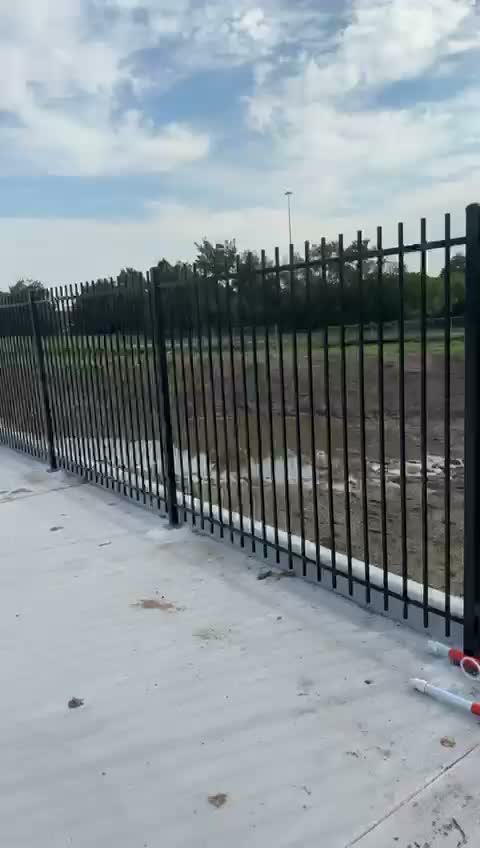
Black spear-top metal fence running alongside a concrete apron
Commercial-grade spear-top metal fencing along a commercial site, Galveston County.

Which UL 325 operator class does this site need?

Answer for the property in question. Points to the class definition that matches — the operator manufacturer's own labeling is what actually certifies a unit for that use, not this tool.

Likely class

DASMA Technical Data Sheet #353 (UL 325, 7th ed., Tables 32.1/32.2). A fence or gate dealer must match the site to the correct class — this tool reasons from the standard's own definitions, it does not inspect or certify a property.
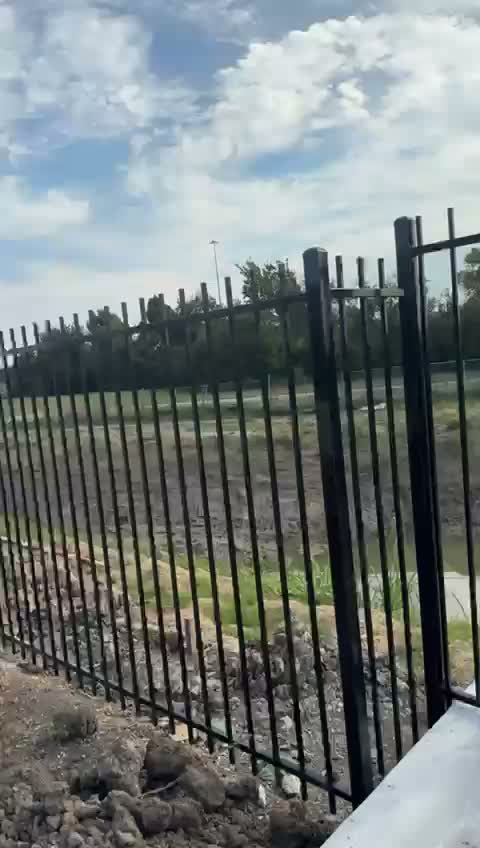
Black spear-top metal fence along a grass verge
Commercial spear-top metal fencing along a site perimeter, Galveston County.
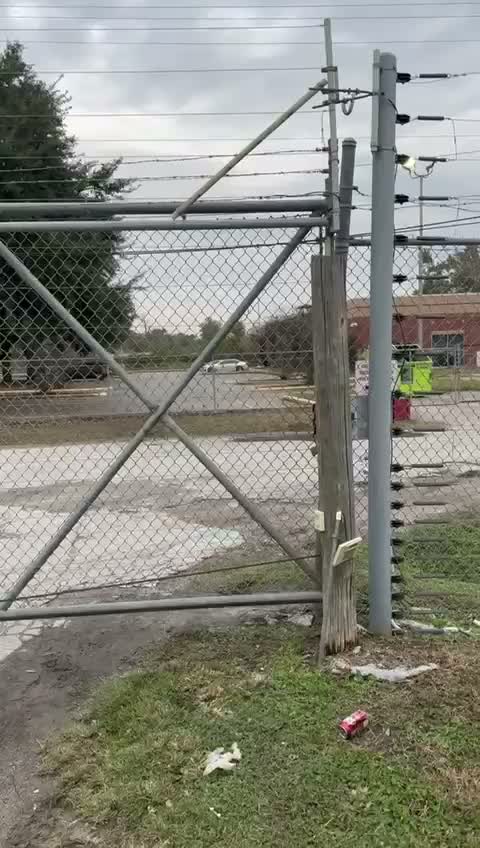
Galvanised chain link fence with barbed wire beside utility poles
Galvanized chain link security fencing with barbed wire, Texas City — a Class III/IV-type perimeter, not a public-facing entrance.
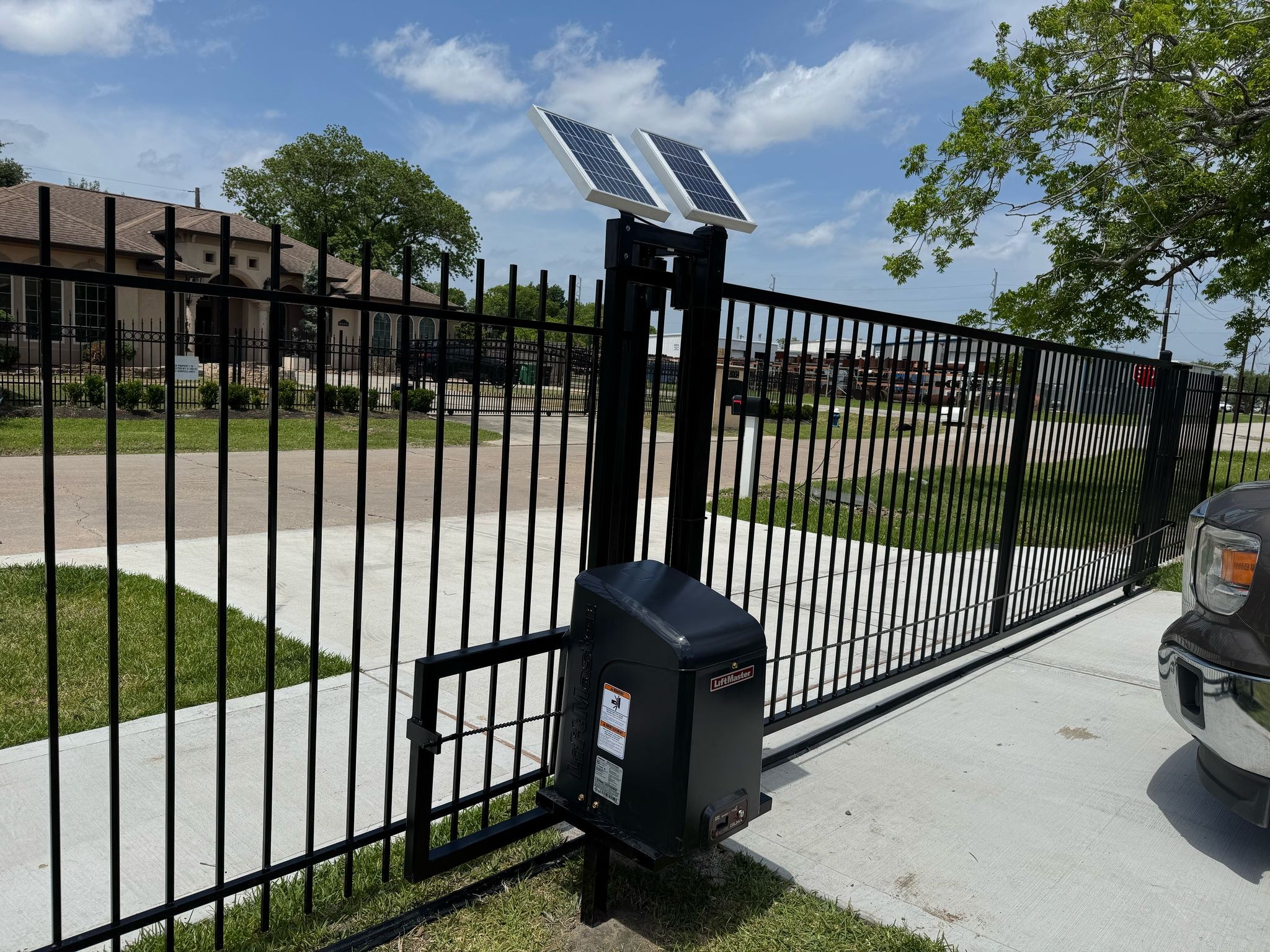
Black metal sliding driveway gate with a solar-powered operator beside a paved drive
An automated sliding gate with its own operator — the same entry-control building block scales up differently at commercial user counts.
★★★★★
We just installed iron gate and it looks amazing thank you very much mustang fencing .
Jordan Carrillo · Google review · a year ago
★★★★★
Very professional and friendly. Gotten automatic gates done and they are done to perfection! Thank you
Tannia Cravinas · Google review · a year ago
★★★★★
Mustang's team installed iron fence for me and did an absolutely incredible job! I would recommend this company to anyone I know!
Theodore Howitt · Google review · a year ago

Reviews shown word for word from the Mustang Fencing Services Google Business Profile (Galveston), captured 2026-10-19.

Questions we get about this

What makes a gate operator "commercial" instead of residential, specifically?
UL 325 defines it: Class II (commercial) covers a multi-family housing unit of five or more units, a hotel, garages, a retail store, or other buildings accessible by or servicing the general public — distinct from Class I (a one- to four-family residence). It’s a defined category in the safety standard, not a sales distinction.
Can a residential gate operator be used on a small multi-tenant property?
Not per the standard’s own definitions — DASMA’s guidance to dealers is that sales personnel must match the site application to the correct class, and a five-or-more-unit property is explicitly Class II (commercial), not Class I.
Does Galveston require fire department review before a commercial security gate is installed?
The 2021 International Fire Code, Section 501.3 (adopted by Galveston as Ordinance No. 23-013), requires construction documents for security gates across fire apparatus access roads to be submitted to the fire department for review and approval before construction. Confirm Galveston’s own local amendments with the fire marshal’s office, since those weren’t reviewed for this page.
What safety features does a commercial automatic gate need?
At minimum, per UL 325: at least two independent, monitored means of entrapment protection in each direction of travel where risk exists, a reversal beginning within 2 seconds of sensing an obstruction (traveling at least 2 inches), and — for a Type C swing gate — no more than 40 lb of force at the leading edge 2 seconds after start-up.
How does access control scale for a property with many employees, tenants or visitors?
Commercial-scale sites generally need a system sized for a larger number of individual users from the start — one that can add or revoke a single person’s access without resetting everyone else’s — rather than a residential-class keypad or remote system stretched past what it was built for.

Sources

Checked October 20, 2026. Rules change, so confirm with the City before you build.

  1. DASMA Technical Data Sheet #353, "UL 325 Entrapment Protection Requirements for Pedestrian & Vehicular Gate Operators" (rev. 1/25) — UL 325 7th ed. Class I-IV definitions; dealer site-matching duty; entrapment-protection and reversal-timing provisions.
  2. 2021 International Fire Code, Section 501.3 Construction Documents — Fire department review requirement for security gates across fire apparatus access roads; Galveston adoption via Ordinance No. 23-013.
  3. Ameristar Perimeter Security, Montage Commercial Ornamental Steel Fence catalog — Published commercial-grade material spec and named applications, cited as an industry reference example only.
Free on-site estimate

Specifying access control for a multi-tenant, retail or commercial property?

We’ll match the operator class, credential system and fire-code review step to the actual site — in writing, before any work starts. Free quotes across Galveston County.

Page reviewed October 20, 2026 by Mustang Fencing Services, Galveston. Next review due April 2027.

PLAN YOUR FENCE OR GATE PROJECT WITH US TODAY

Planning a new fence, a driveway gate or an automated entry? Tell us about your property and we’ll set up a free on-site estimate. We work with homeowners, HOAs and businesses across Galveston Island and Galveston County.

Prefer to talk? Call (346) 910-8641.

WHAT OUR CLIENTS ARE SAYING

Mustang Fencing

WE PROUDLY SERVE GALVESTON ISLAND & GALVESTON COUNTY

Areas we serve:

Galveston TX

Galveston Island

Jamaica Beach TX

Tiki Island TX

Bayou Vista TX

La Marque TX

Texas City TX

Hitchcock TX

Santa Fe TX

Dickinson TX

Bacliff TX

San Leon TX

Kemah TX

League City TX

Clear Lake Shores TX

OUR PARTNERS

Genie brand logo
LiftMaster brand logo