
Wood Fence Installation in Galveston County, TX
Cedar and pressure-treated pine privacy, board-on-board and picket fences, with redwood on request. On the Gulf Coast, the wood species, the treatment on the posts, and the fasteners decide how long a wood fence lasts. The style decides how it looks and how much wind it catches.
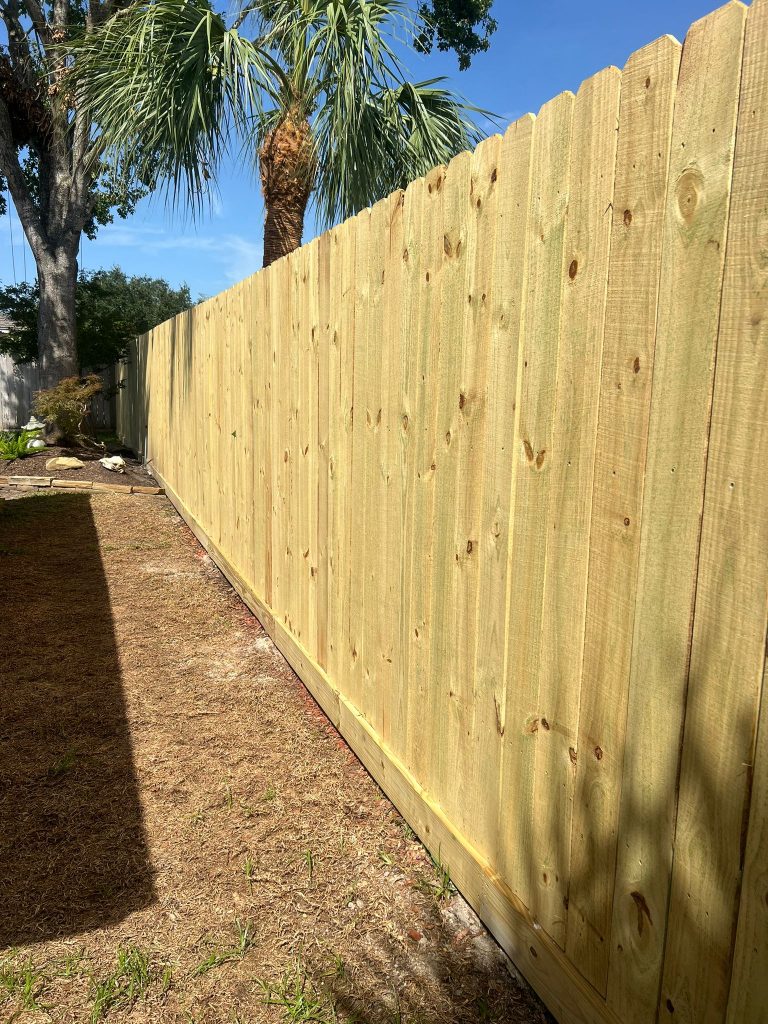
For a wood fence on the Gulf Coast, choose the species and the treatment together. The USDA Wood Handbook rates cedar heartwood as decay-resistant. It rates young-growth redwood as moderately resistant and common pines as slightly or non-resistant, which is why pine fence lumber is pressure-treated. Posts sit in the ground and call for ground-contact treatment (AWPA UC4A). Pickets and rails are UC3B. Use stainless or hot-dip galvanized fasteners. Inside the City of Galveston, a wood fence at a home can be up to 8 feet, or 4 feet if it is solid and in the front yard.
Sources: USDA Forest Products Laboratory, Wood Handbook FPL-GTR-282 (2021), Table 14-1 and Table 15-6 (AWPA use categories); City of Galveston LDR §2.501. Boards per foot: arithmetic from the planner below.
Cedar, pine or redwood?
The species sets the look, the price and how much protection the wood needs. The USDA Forest Products Laboratory groups heartwood by natural decay resistance. It also notes that resistance can be lower in ground contact and in warm, humid climates like ours, and that untreated sapwood of almost every species decays easily.
- Cedar (western red and similar cedars): heartwood rated resistant. It is lighter and more stable than pine, with a warm color, and it is the usual upgrade from pine. See cedar fences and does cedar need sealing here?
- Pressure-treated southern pine: pines not singled out in the table are rated slightly or non-resistant, so fence pine is treated with preservative. It is the most economical choice and strong. It moves more as it dries. See southern pine fences and pine pros and cons.
- Redwood: old-growth heartwood is rated resistant. The young-growth redwood sold today is rated moderately resistant. It is the premium look, available on request. See redwood fences.
Comparing two? Read cedar vs pressure-treated pine or redwood vs cedar. Weighing wood against other materials? See wood or vinyl in salt air.
The three woods side by side
| Species | USDA heartwood decay rating | Look | What it needs |
|---|---|---|---|
| Cedar | Resistant | Reddish-tan, fine grain, weathers to silver-gray | Posts still need ground-contact protection. Stainless or hot-dip galvanized fasteners to avoid iron stain. |
| Redwood (young growth) | Moderately resistant (old growth: resistant) | Deep red-brown | Same as cedar. Also prone to iron stain from plain steel fasteners. |
| Southern pine | Slightly or non-resistant (untreated) | Pale green-tan when treated, weathers to gray | Pressure treatment: UC3B for pickets and rails, UC4A for posts. Fasteners rated for treated lumber. |
USDA Wood Handbook FPL-GTR-282 (2021): Table 14-1 (decay resistance), Table 15-6 (AWPA use categories), Chapters 8 and 16 (fasteners and iron stain).
Choosing a style
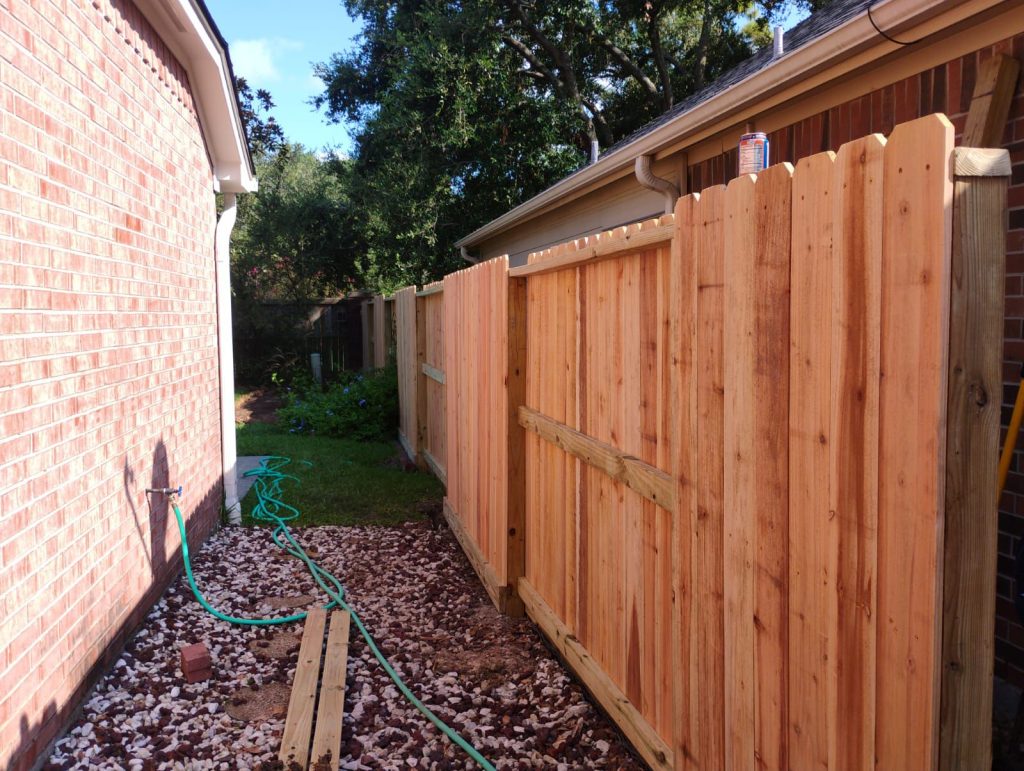
- Solid privacy: boards butted on one side of the rails. The most economical full-privacy fence. As the boards dry and shrink, small gaps can open. See privacy fences.
- Board-on-board: two overlapping layers, so no gaps open even as boards shrink. It uses more lumber (about 3 boards per foot vs 2.2 with 5½″ boards). See board-on-board.
- Shadowbox: boards alternate sides of the rail. It looks the same from both sides and lets some air through.
- Picket: spaced boards, usually 3–4 ft tall in front yards. See picket fences and picket height and spacing rules.
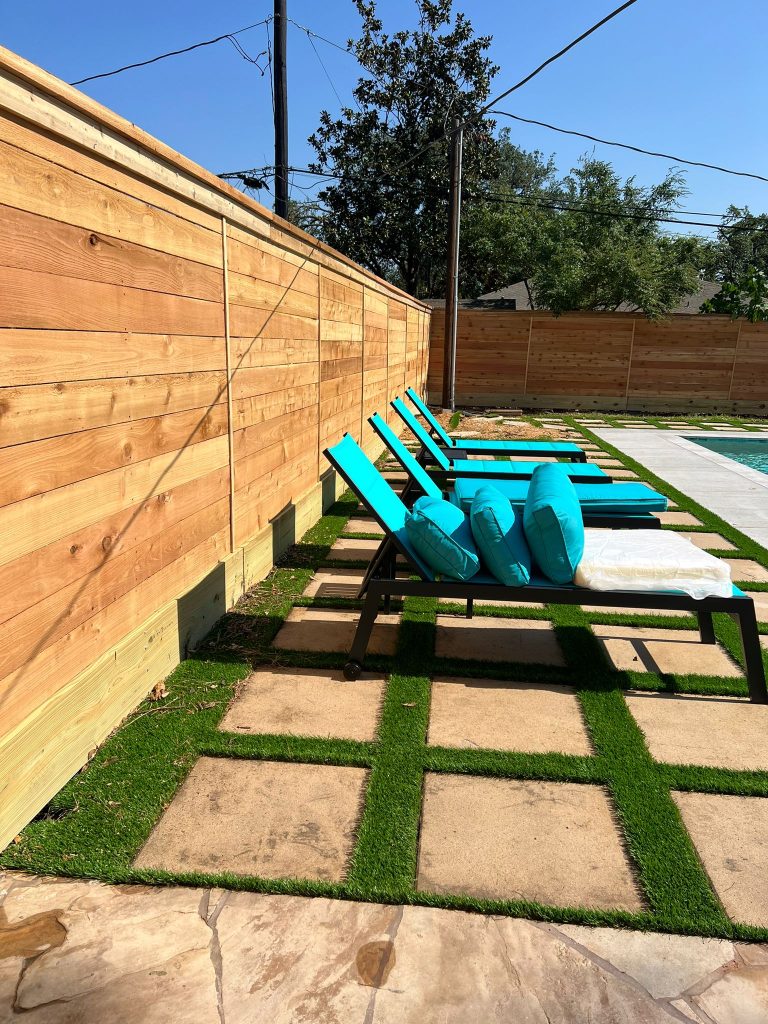
- Horizontal: boards run between the posts for a modern look. See horizontal fences.
Wind matters on the island. A solid fence catches the full force of the wind, and a spaced design lets some through. For storm-season choices, see hurricane-resistant wood fence tips and storm-ready fencing.
Wood fence layout planner
Choose a style, height and run length. You'll get a rough board and post count, and whether the City of Galveston treats the design as solid or open for front-yard height.
Arithmetic only: the run length divided by the board spacing for the style, rounded up. Board-on-board assumes two layers lapping 1½″ at each edge. Posts: the run divided into spaces no longer than the post spacing, plus one. Openness is the gap divided by (gap + board width), ignoring the rails. The City decides whether a fence is 60% transparent. Height rules: City of Galveston LDR §2.501; other cities differ. Planning aid only, not a quote.
Care on the Gulf Coast
Fasteners. Plain steel nails and screws react with the tannins in cedar and redwood and leave black iron stains. The USDA recommends stainless steel, or high-quality hot-dip galvanized fasteners (ASTM A153), which are far less likely to stain. Copper-based preservatives in treated pine also corrode ordinary steel. In USDA testing, 300-series stainless nails performed well in lumber treated with copper azole or ACQ.
Finish. Stain or sealer slows weathering and moisture cycling. It doesn't replace treatment on posts. New pressure-treated lumber usually has to dry before it takes a finish. See when to stain a new pressure-treated fence, how often to restain here, stain vs paint, and our staining and sealing service.
Water and soil. Keep sprinklers off the boards, keep soil and mulch from piling against them, and keep vines off the fence. Each one keeps the wood wet longer. See wood fence maintenance in humid climates and how long a wood fence lasts in Galveston.
From estimate to finished fence
- Free on-site estimate. We walk the line with you and measure it. We note gates, slopes, trees, drainage and any old fence that has to come out.
- Species, style and a written price. We price the wood, height, style, gates and finish you choose.
- Property line and permits. Know where your line is before posts go in. A survey is the reliable way. Check the city permit and any HOA rules.
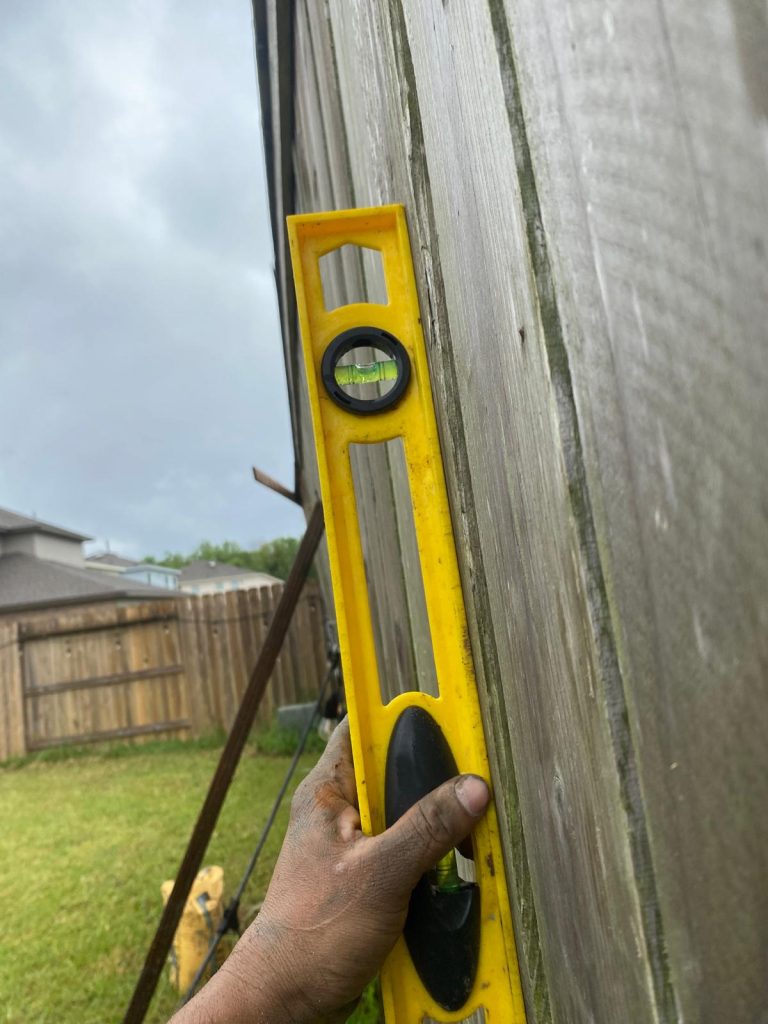
- Installation. Posts are set and checked for plumb, the rails go on, then the boards and gates.
- Walkthrough. We check that the gates swing and latch, and we go over when the new wood can take a finish.
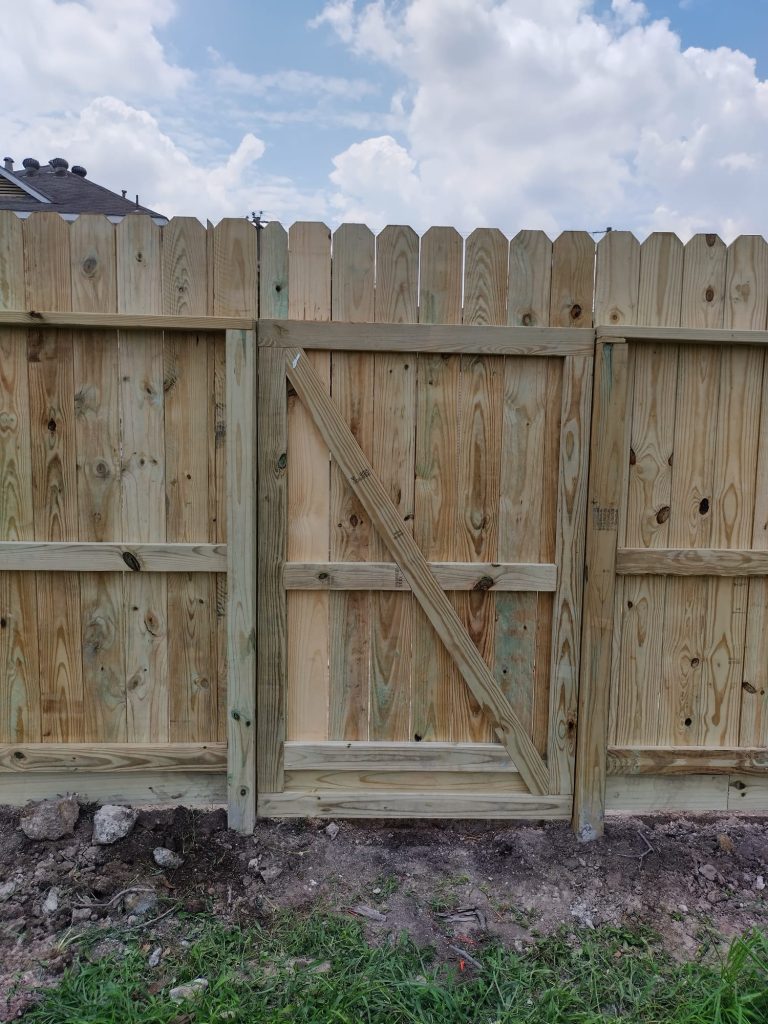
See finished jobs: a pine privacy fence in Galveston, a custom cedar gate in Galveston, and an 8 ft horizontal cedar fence.
What affects cost and timing
We give you a written price after the free on-site visit. The main things that move it:
- Species. Cedar and redwood cost more than pressure-treated pine.
- Length and height. An 8 ft fence uses longer boards and posts than a 6 ft fence.
- Style. Board-on-board and shadowbox use more boards than butted privacy or picket. Top caps and trim add more.
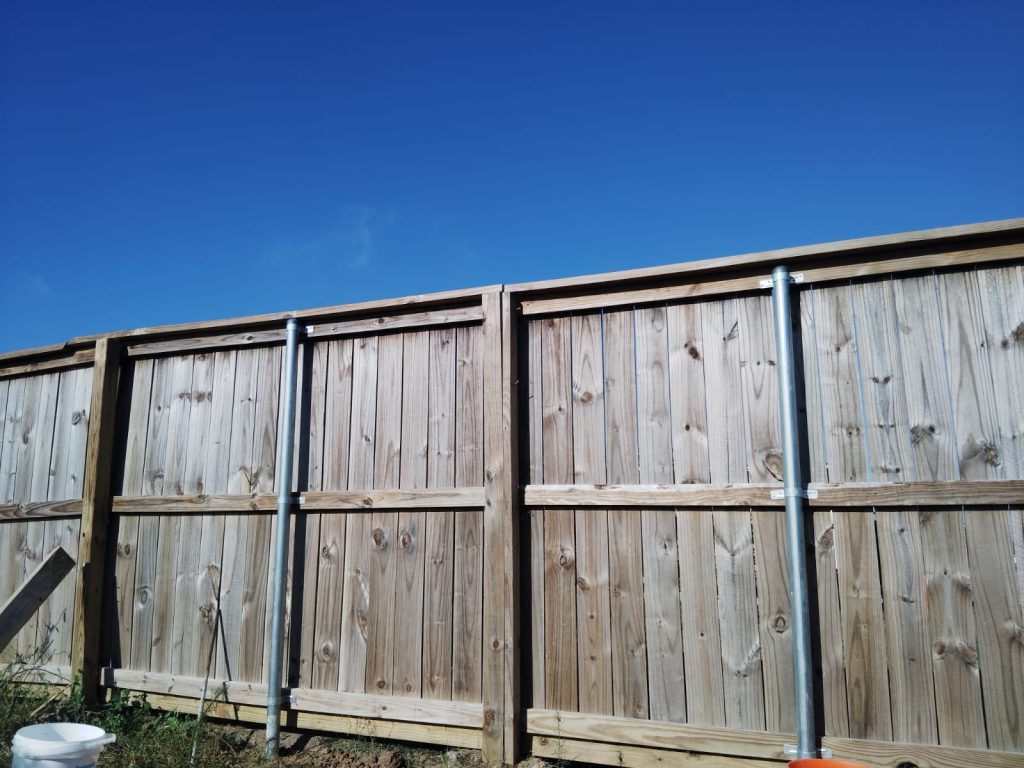
- Posts. Wood posts, or galvanized steel posts with wood panels.
- Gates, finish and site work. Each gate adds framing and hardware. Staining adds labor. Tearing out an old fence, slopes and clearing all add time.
For typical numbers, see wood fence cost per foot and how long installation takes. Financing is available through the providers on our financing page, subject to credit approval.
What Galveston customers say
5.091 Google reviews · read them all on Google
had an excellent experience with mustang fencing From the initial consultation to the final installation, the team was professional, punctual, and attentive to detail. They helped me choose the perfect fence style to match my property and ensured everything was installed with precision. The quality of materials is top-notch, and the fence has completely transformed the look and security of my home. I highly recommend mustang services to anyone looking for reliable and high-quality fencing services!
My new fence looks fantastic and has added both privacy and style to my yard. Highly recommend their services for anyone in need of fencing!
Very professional and friendly. Gotten automatic gates done and they are done to perfection! Thank you
Reviews shown word for word from the Mustang Fencing Services Google Business Profile (Galveston), captured 2026-10-12.
Questions we get about this
What is the best wood for a fence in Galveston?
Is pressure-treated pine good for fences?
Cedar or redwood: which lasts longer?
Do I need to stain or paint a pressure-treated fence?
What is the difference between board-on-board and a regular privacy fence?
How tall can a wood fence be in Galveston?
Can you match a new wood fence to an existing one?
Sources
Checked September 25, 2026. Rules change, so confirm with the City before you build.
- USDA Forest Products Laboratory, Wood Handbook: Wood as an Engineering Material, FPL-GTR-282 (2021) — Table 14-1 heartwood decay resistance; Table 15-6 AWPA use categories (UC3B fence pickets and rails, UC4A fence posts); Chapter 8 fastener corrosion; Chapter 16 iron stain on cedar and redwood.
- City of Galveston Land Development Regulations, §2.501 — residential fence heights: 8 ft; front yard 4 ft solid or 5 ft if at least 60% transparent.
- City of Galveston Fence Permit Application (Rev. 03/2023) — the historic district, Cedar Lawn and 1,000 ft mean-high-tide questions.
Where we install wood fences
We install wood fences across Galveston County and the Bay Area side of the mainland. We serve these towns directly:
Also serving La Marque, Bacliff, San Leon, Clear Lake Shores.
Planning a wood fence?
We'll walk the line, talk through cedar vs pine and the style you want, and give you a written price. Free on-site estimates across Galveston County.

