
How Long Does a Wood Fence Actually Last?
There’s no single published number for how long a wood fence lasts, because a fence is really two different products wearing two different decay ratings. The USDA’s own Wood Handbook groups species into four decay-resistance tiers for untreated heartwood — but it also rates a fence’s pickets and rails one way (above-ground exposure) and its posts another (ground contact, a higher decay hazard), before treatment or maintenance ever enters the picture. Here’s what actually determines the number, by species, by part of the fence, and by treatment category.
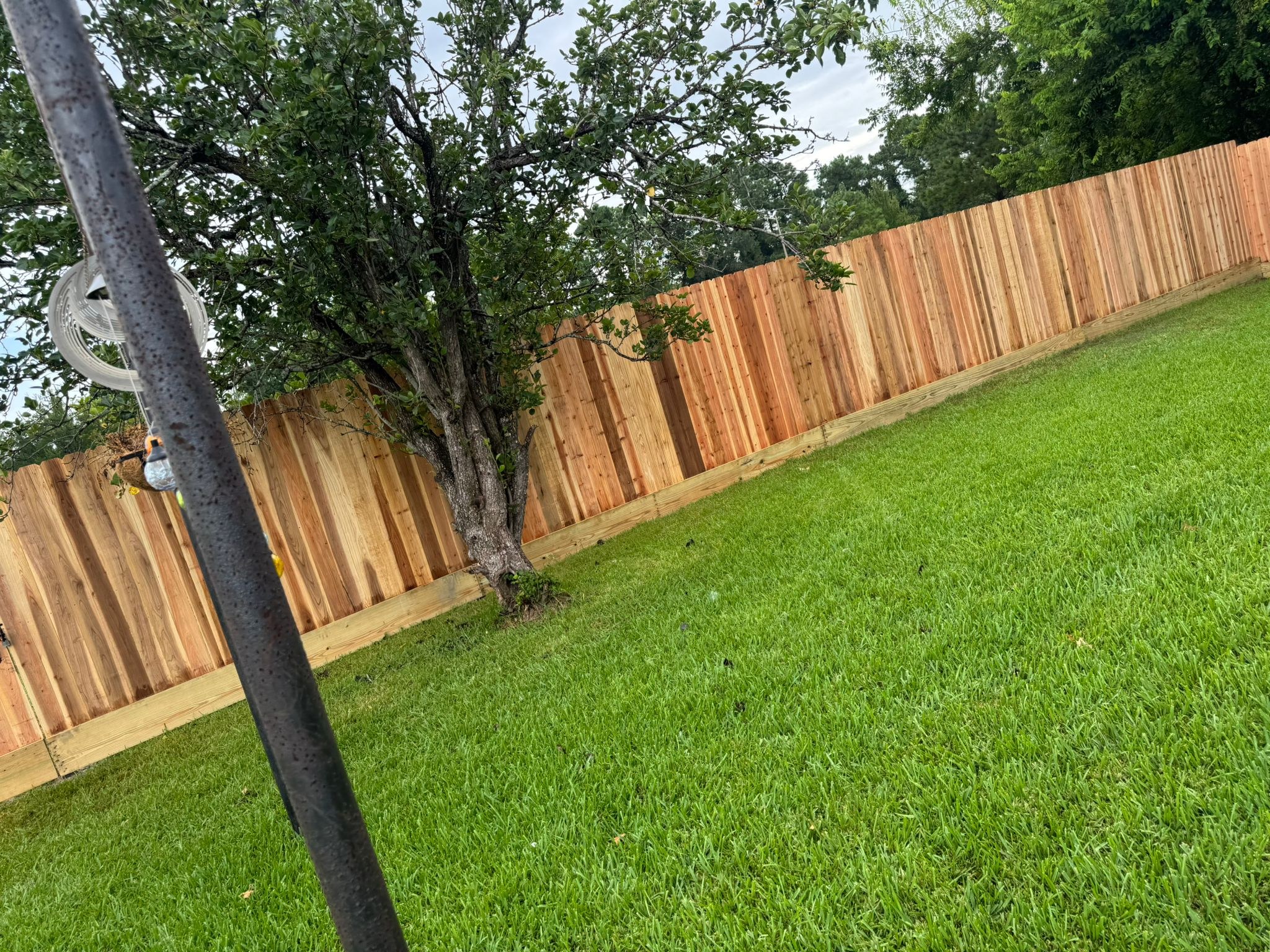
No single “years” figure applies to a whole wood fence, because a fence is rated two different ways at once. The USDA Forest Products Laboratory groups untreated heartwood into four decay-resistance tiers by species — but separately, the American Wood Protection Association’s Use Category System rates a fence’s pickets and rails for above-ground exposure (UC3B) and its posts for ground contact (UC4A), a documented higher decay hazard. Species choice, which part of the fence, and whether that part was treated to match its actual category all move the real number — more than any one of them alone.
Sources: USDA Forest Products Laboratory, Wood Handbook (FPL-GTR-282, 2021), chapters 8, 14, 15 and 16; SFPA Pressure-Treated Southern Pine (2019), Table 3-1.
A wood fence is rated two different ways at once
Ask “how long does a wood fence last” and the honest answer splits into two separate, documented systems. The first is species decay resistance: the USDA’s Wood Handbook groups the heartwood of common species into four tiers — very resistant, resistant, moderately resistant, and slightly or nonresistant — based on lab tests and service records. The second is the AWPA Use Category System, which doesn’t care about species at all; it rates a wood product by how it’s actually exposed. A fence’s pickets and rails sit in one category (above-ground, UC3B); its posts sit in another (ground contact, UC4A) — and the Handbook is explicit that ground contact carries a documented higher decay hazard, which is why posts are typically treated to a higher preservative retention than the boards around them.
Where common fence species actually land
Cedar (western and eastern redcedar) and redwood sit in the Handbook’s resistant tier — old-growth redwood climbs into very resistant — which is the published reason cedar and redwood fences have a reputation for lasting longer untreated than pine. Pine, spruce, fir and hemlock, the species most framing-grade and economy fence lumber comes from, sit in the slightly or nonresistant tier in their natural state. That’s not a knock on pine specifically — it’s why pine fencing is almost always sold pressure-treated rather than left to rely on natural resistance the species doesn’t have much of. Pressure-treated southern pine and cedar are solving the same decay problem two different ways: one through the preservative, one through the species itself.
AWPA Use Categories that actually apply to a wood fence
| Use Category | Service condition | Typical fence application |
|---|---|---|
| UC3A | Exterior, above ground, coated and rapid water runoff | Coated pickets, rails, slats or trim |
| UC3B | General above-ground use, fully exposed to weather | Uncoated fence pickets and rails |
| UC4A | General ground contact, or above-ground uses that are structurally critical or high decay hazard | Fence and deck posts |
USDA Wood Handbook, Table 15-6 (AWPA Use Category System); SFPA Pressure-Treated Southern Pine (2019), Table 3-1 Fences row. UC4B/UC4C are heavier-duty ground-contact categories not typical for residential fence posts.
One more lifespan factor: what holds it together
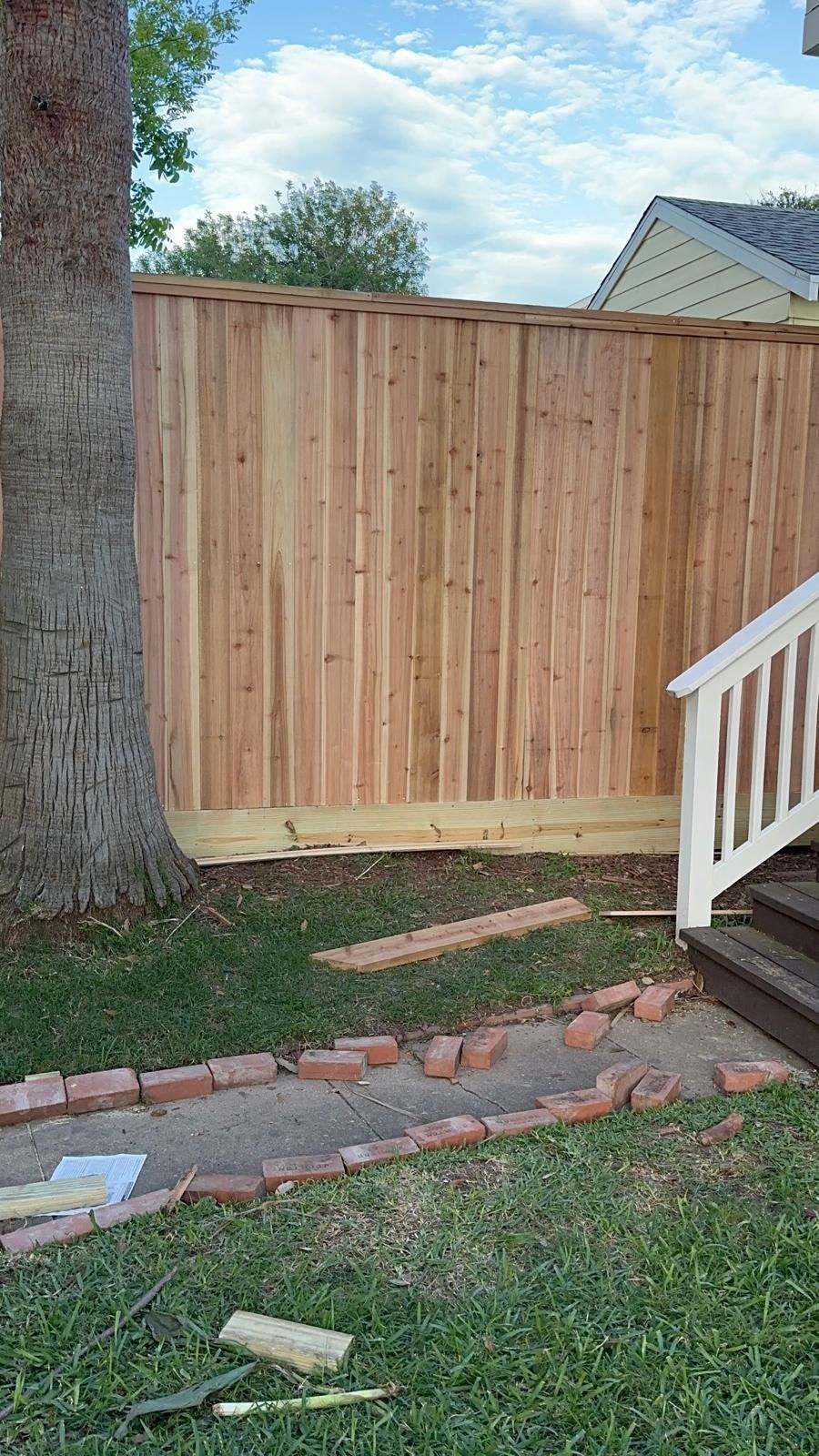
Fastener choice interacts with species in a way that’s easy to miss. Western redcedar, redwood and oak contain tannins that react with plain carbon-steel nails or screws in the presence of moisture, leaving a visible dark stain that spreads from every fastener head. Pine doesn’t have appreciable tannins, so this specific issue isn’t a pine problem — but it affects the two species most often chosen for their natural decay resistance. The fix is straightforward: stainless steel fasteners are safe from iron stain, and high-quality hot-dip galvanized fasteners meeting ASTM A153 are far less likely to cause it than plain carbon steel, per the Wood Handbook.
What’s actually shortening this wood fence’s life?
Answer for the fence in question. Points to the published decay-resistance / treatment-category mismatch most likely at work — not a substitute for an in-person look.
USDA Forest Products Laboratory, Wood Handbook (FPL-GTR-282, 2021), chapters 8, 14, 15 and 16. No universal “years” figure exists for a wood fence; this reasons from published decay-resistance tiers and AWPA Use Categories, not a guess.
What customers say
5.091 Google reviews · read them all on Google
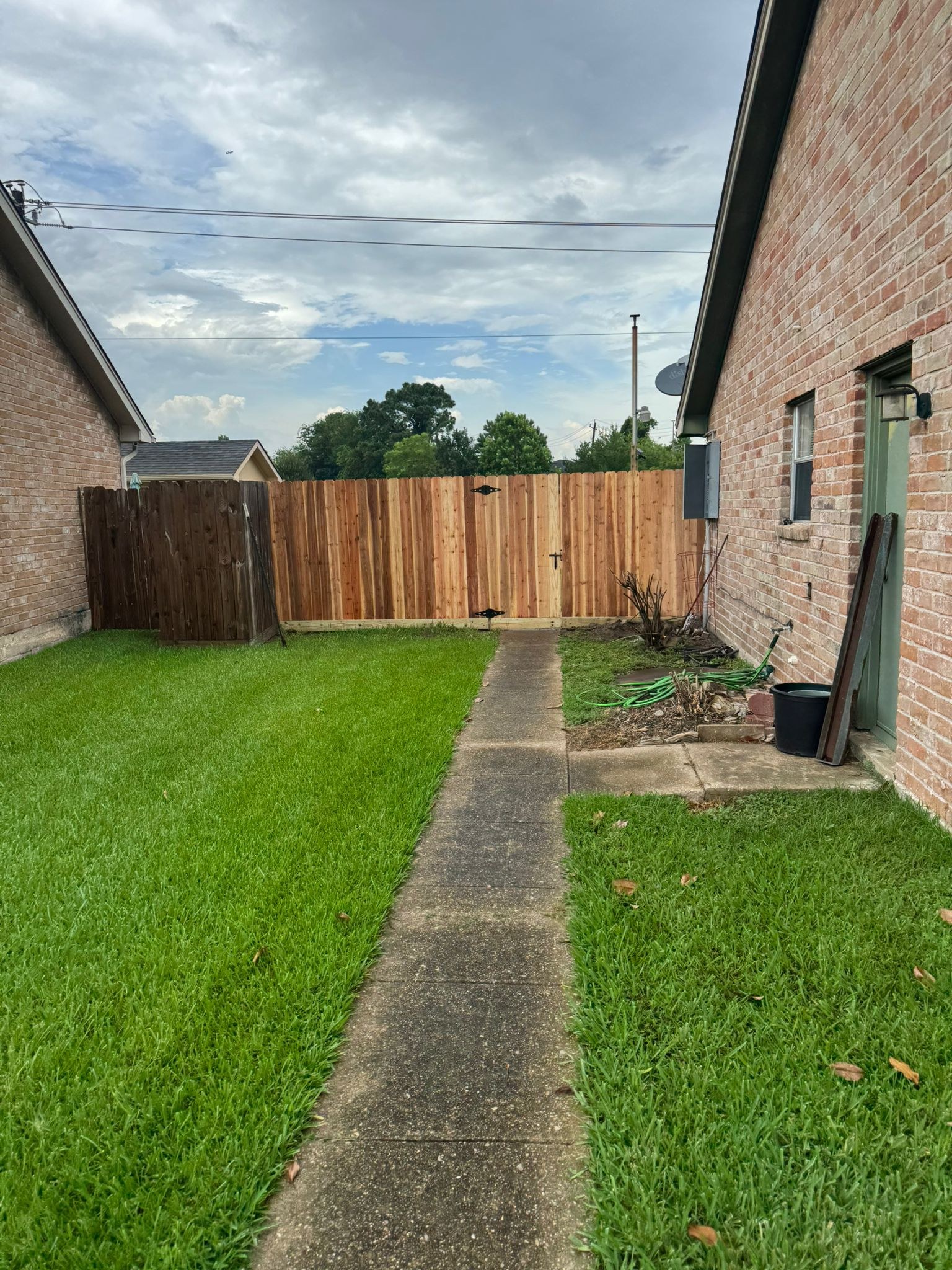
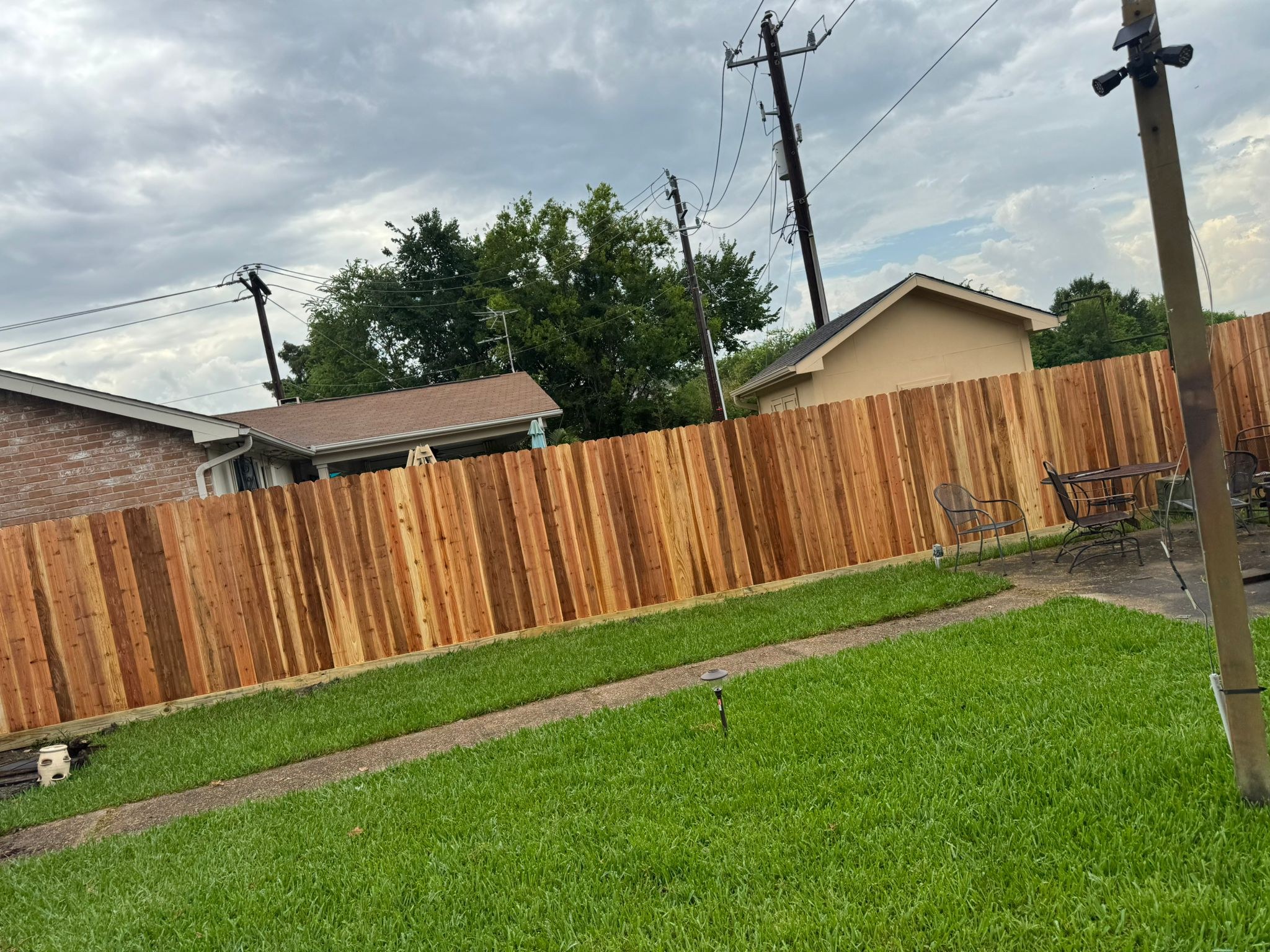
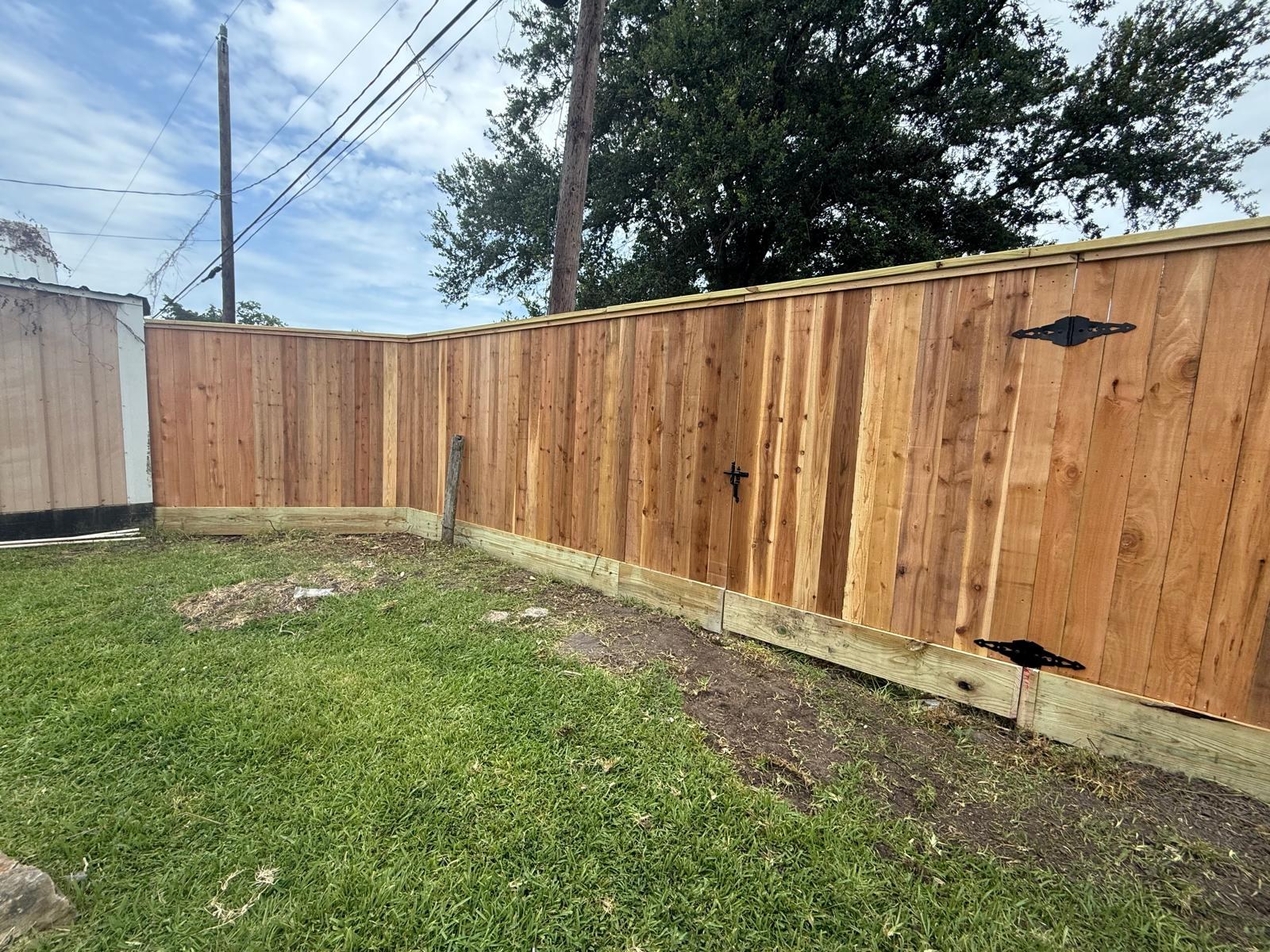
Amazing work will go ahead and recommend everyone in friends and family We installed 8ft tall double sided stained cedar wood fence in our backyard, it’s really looks great, installed perfectly nice finishing and cost effective, thanks mustang fencing.
Installed Stained cedar wood fence yesterday by mustang fencing, thanks for the beautiful work.
I have hired Mustang fencing services to fix my backyard fencing. Good wood to used. I really like theirs work. Best of luck
Reviews shown word for word from the Mustang Fencing Services Google Business Profile (Galveston), captured 2026-10-19.
Questions we get about this
How long does an untreated wood fence last?
Why do fence posts rot before the pickets or rails?
Does cedar last longer than pressure-treated pine?
Can the wrong fasteners shorten a wood fence’s life or looks?
Is there one number for how long a wood fence lasts in Galveston?
Sources
Checked October 20, 2026. Rules change, so confirm with the City before you build.
- USDA Forest Products Laboratory, Wood Handbook: Wood as an Engineering Material (FPL-GTR-282, 2021), Ch. 14 — Table 14-1, heartwood decay-resistance groupings by species, and the sapwood/ground-contact caveats.
- USDA Forest Products Laboratory, Wood Handbook, Ch. 15 Wood Preservatives — Table 15-6, AWPA Use Category System (UC3A/UC3B/UC4A definitions and typical applications).
- USDA Forest Products Laboratory, Wood Handbook, Ch. 8 (Fastenings) & Ch. 16 (Finishing) — Fastener corrosion/iron-stain mechanism with tannin-rich species; ASTM A153 hot-dip galvanized guidance.
- Southern Forest Products Association, Pressure-Treated Southern Pine (2019) — Table 3-1 (Fences row): pickets/rail/slats/trim as UC3A/UC3B, posts in ground contact as UC4A.
Not sure what category your current fence was actually built to?
A free on-site look can tell whether a post is undersized on treatment for ground contact, or whether what you’re seeing is normal wear for its species and age.