
Fence & Gate Installation in Lost Bayou, Galveston, TX
Painted wood picket, metal and cedar privacy fences, plus gates, for homes in Lost Bayou. It is a City of Galveston local historic district, so a new fence is reviewed against the Design Standards for Historic Properties before you get the building permit.
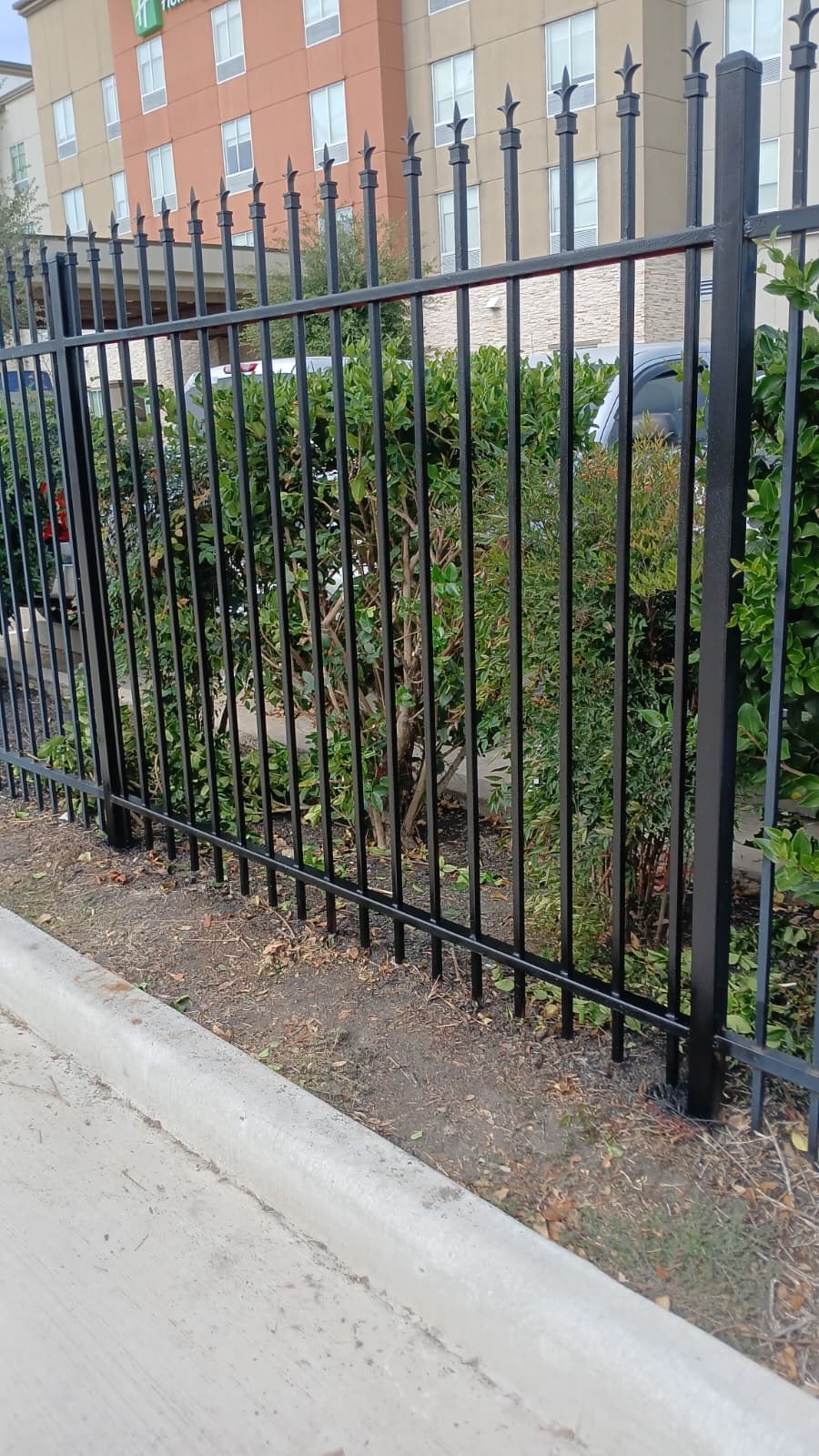
Mustang Fencing Services installs fences and gates in Lost Bayou, the City of Galveston’s most recently designated local historic district: about 23 blocks south of Broadway between 16th and 21st Streets. Because it is a local district, a new fence needs a Certificate of Appropriateness before the building permit. Many fences can get it from City staff: a painted wood picket or metal front fence up to 48 inches, a corner-yard fence that matches it at 4 feet, and at a non-corner side or the rear, solid cedar up to 6 feet with 2 feet of framed lattice or cast or wrought iron up to 8 feet. Anything else goes to the Landmark Commission. Chain link, vinyl and mixed wood-and-metal styles are listed as inappropriate.
Sources: City of Galveston, Lost Bayou Historic District page; Design Standards for Historic Properties (fence standards and Chart 1.3); City of Galveston Fence Permit Application.
What we install in Lost Bayou
Lost Bayou takes its name from Hitchcock’s Bayou, which, according to the City, was “lost” when it was filled in the 1880s. The neighborhood grew up at the same time as the East End and Silk Stocking, with smaller houses. Many of today’s homes went up in the early 1900s, after the 1900 Storm badly damaged the area. The City’s 2015 historic resources survey recorded 337 buildings and other resources in the district. The City describes the houses as generally modest in scale, on square blocks with alleys. For a fence, that usually means a low front fence and anything taller kept to the side and rear. We install:
- Wood picket fences for front yards, painted, at 48 inches or under.
- Metal front fences: ornamental iron and other metal picket styles, including loop and spear tops.
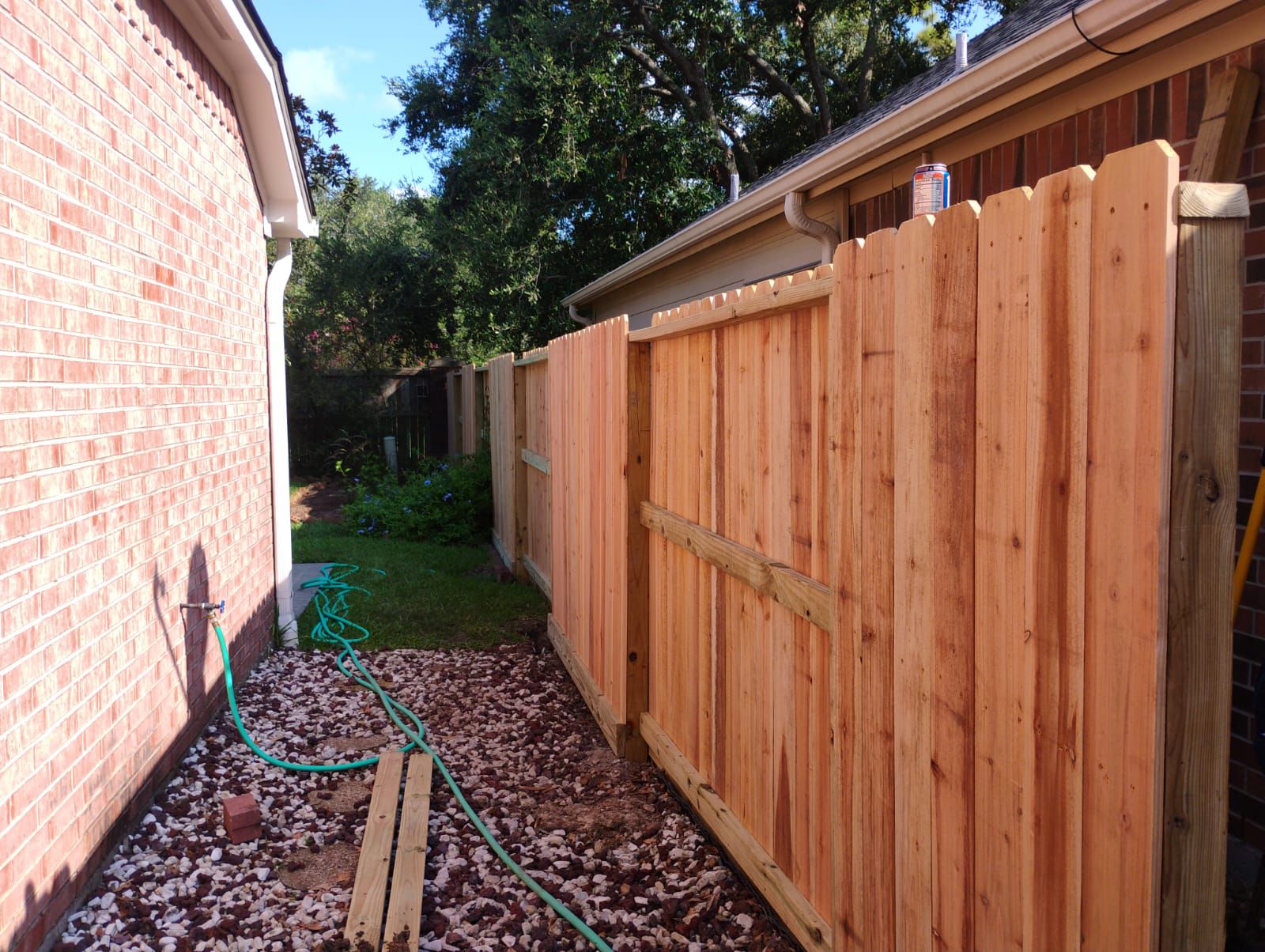
- Cedar privacy fences in side and back yards: solid cedar, with a framed lattice top if you want the extra height.
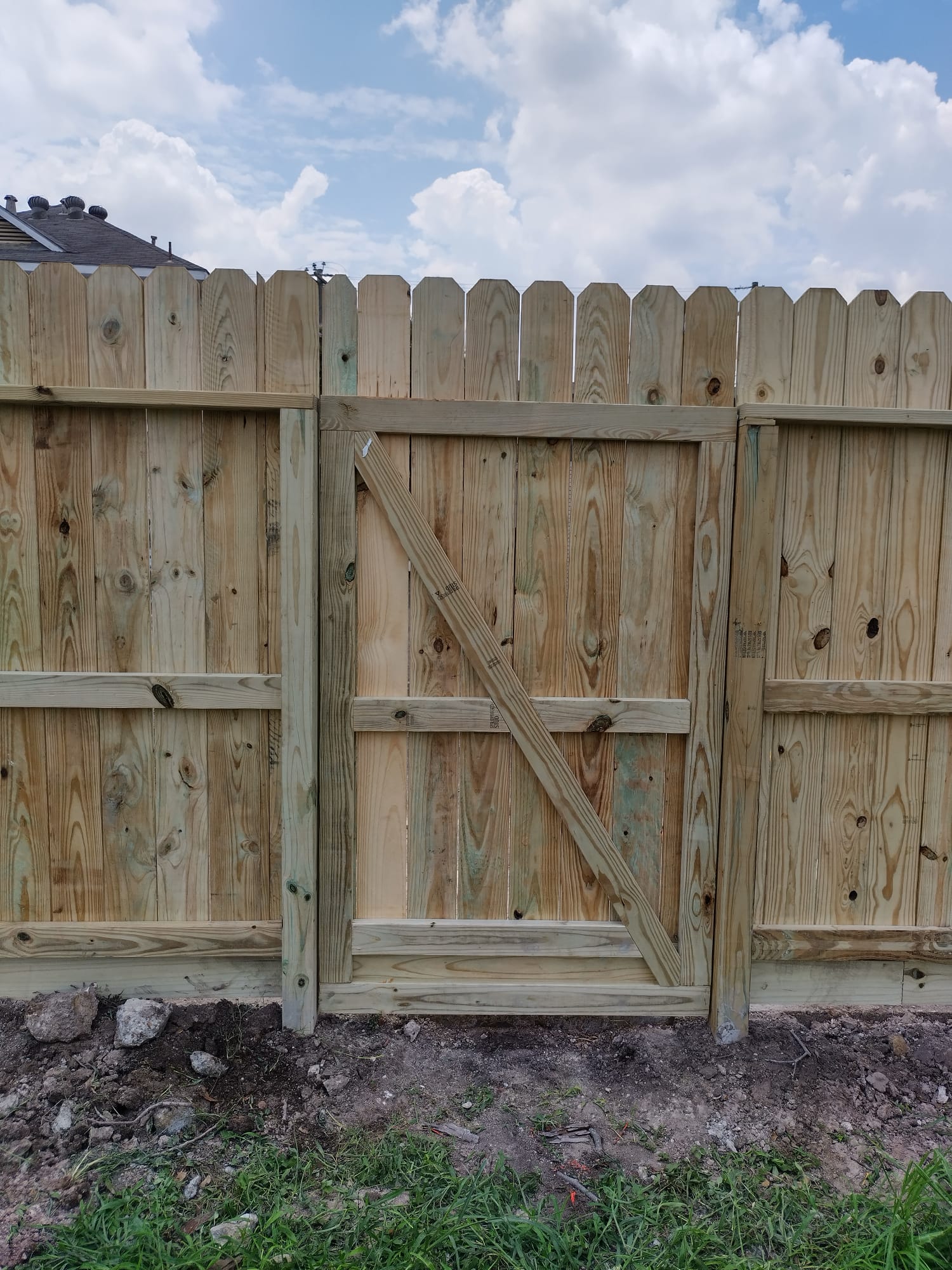
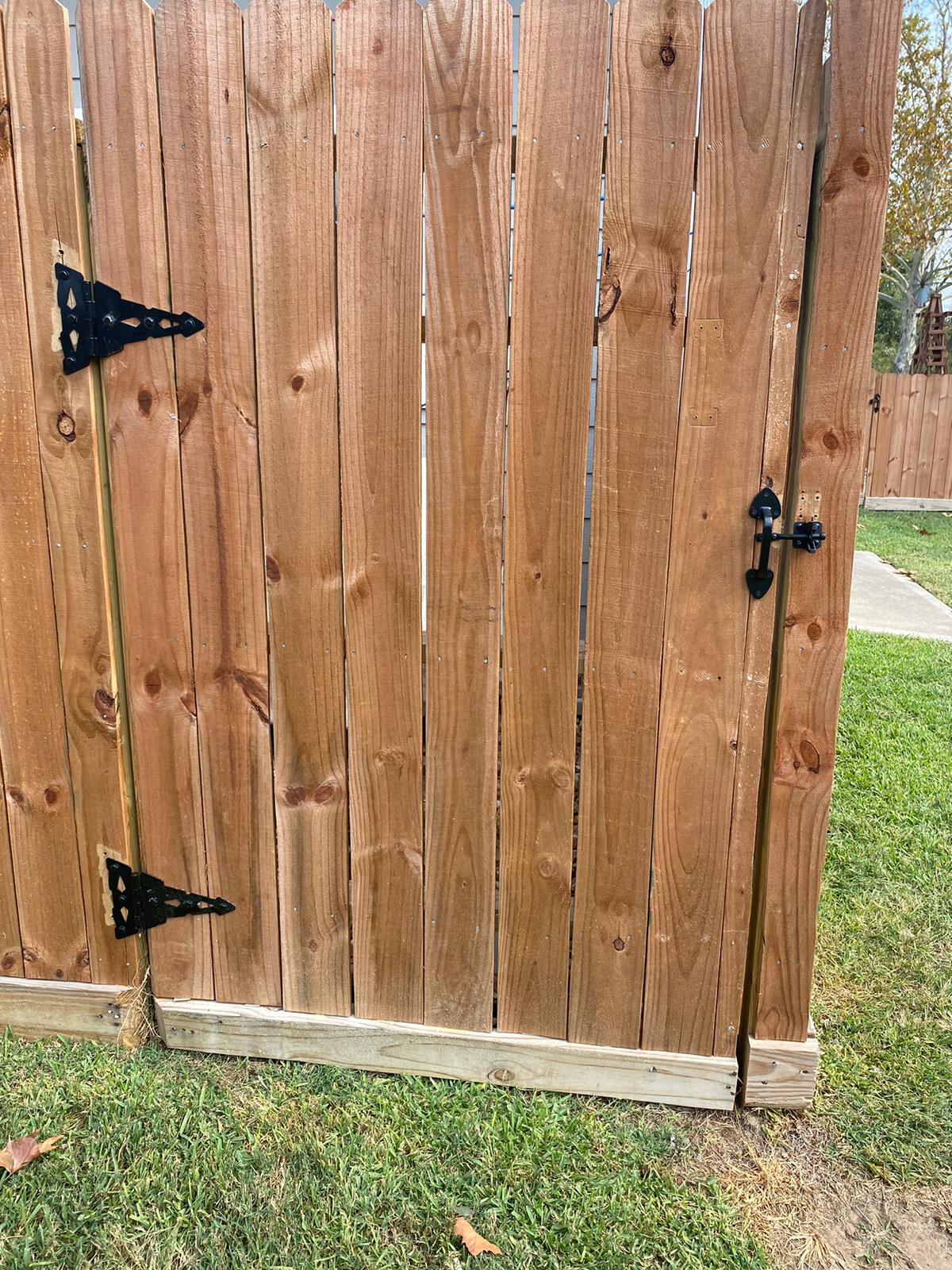
- Gates: walk gates, wood and wrought iron gates, and rear gates on the alley.
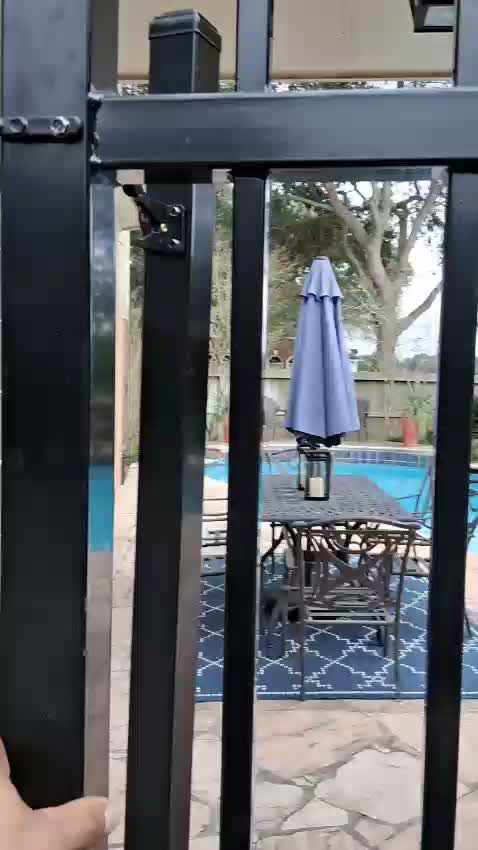
- Pool fences in back yards.
Which review will your Lost Bayou fence need?
Pick where the fence runs, what it’s made of and how tall it is. You’ll see whether it fits the City’s administrative-approval list, needs a Landmark Commission hearing, or runs into a standard.
Based on the City of Galveston Design Standards for Historic Properties (Chart 1.3; fence standards 3.5–3.6, the “Administrative Approval of Fences” list and the glossary definitions of alteration and ordinary repair), the City Fence Permit Application and LDR Sec. 2.501. A planning aid, not a permit decision: the Historic Preservation Officer and the Landmark Commission decide.
A local historic district, not a conservation district
Galveston has two kinds of protected neighborhoods, and the difference matters for a fence:
- Local historic districts (East End, Silk Stocking, Strand/Mechanic and Lost Bayou) are reviewed against the City’s Design Standards for Historic Properties. The Historic Preservation Officer approves eligible work, and the Landmark Commission hears the rest.
- Neighborhood Conservation Districts, such as Cedar Lawn, have their own shorter rules, and the design standards don’t apply there.
Lost Bayou is surrounded by the San Jacinto Neighborhood Conservation District, and its boundary is irregular, so neighbors a block apart can be on different review tracks. Check your address on the City’s district map before you plan.
Even if your house is non-contributing (newer, or changed too much to count toward the district), plan on review. The standards exempt most changes to non-contributing buildings, but a footnote keeps “site work such as fences” in.
What the design standards say about fences
The City’s standards start from history: “Wood picket and cast-iron fences were the most common historic fence materials,” and front yards “were not enclosed with high walls; these were confined to rear yard areas.” For a new fence they say:
- Appropriate: a painted wood picket fence (“the preferred option in most historic residential areas”); a simple wood-and-wire fence up to 48 inches if it suits the house; a cast-iron or other metal fence up to 48 inches in the front yard; and alternative materials that look and feel very like wood, with proven durability, a matte finish and accurate proportions.
- At a non-corner side or the rear: alternative materials with the same qualities, and wood-and-wire above 48 inches if it suits the house.
- Inappropriate: chain link; mixing wooden and metal fence styles; heavy brick fence posts, unless there is historic documentation of them; and vinyl, which the Landmark Commission added to the list in October 2014.
A fence may sit on the property line but not in the City right-of-way, such as the sidewalk strip, without a License to Use agreement, which the Commission also reviews. Keep historically significant wood picket and cast-iron fences, and stuccoed brick or concrete site walls. Fixing them in kind is ordinary maintenance.
Lost Bayou fence plans at a glance
| Plan | What the standards say | Likely review |
|---|---|---|
| 42 in painted wood picket across the front yard | Preferred option; under 48 in | City staff (HPO) |
| 4 ft metal spear-top fence out front | Metal up to 48 inches in a front yard | City staff (HPO) |
| 5 ft metal fence out front | Over 48 in is a change in height | Landmark Commission |
| Corner side yard, same picket as the front, 4 ft | Matches the front fence; 4 ft or under | City staff (HPO) |
| 6 ft solid cedar + 2 ft framed lattice, back yard | Listed for a non-corner side or rear fence | City staff (HPO); confirm the height |
| 6 ft vinyl privacy in the back yard | Vinyl is not permitted | Change the material |
| Chain link along the alley | Listed as inappropriate | Change the material |
From the City of Galveston Design Standards for Historic Properties (fence standards and Chart 1.3). A planning summary, not a permit decision. The HPO can send any application to the Commission.
From plan to permit in Lost Bayou
- Deed restrictions first. The City’s process starts by checking whether the property is deed restricted by a neighborhood association or the Galveston Historical Foundation. The City doesn’t enforce deed restrictions, so talk to whoever holds them.
- Certificate of Appropriateness. The City’s Historic Preservation Officer (Planning, 3015 Market Street) can approve fences on the administrative list. Anything else, or anything the HPO refers, goes to a Landmark Commission hearing, which you should attend. If the Commission denies it, you can submit a changed application or appeal to the Zoning Board of Adjustment.
- Fence permit. The City’s fence permit asks whether the fence is in a historic district. In Lost Bayou the answer is yes: attach photos of any existing fences on the site and the design of the proposed fence.
Gates and parking. The standards put parking at the rear or side of a lot and don’t allow new driveways or garages opening onto a primary street. On an alley block, that makes the alley the natural place for a vehicle or rear gate. Ask about an alley driveway gate at the estimate.
From estimate to finished fence: a free on-site estimate (property line, the side your house faces, corner and alley sides, existing historic fences and walls, trees), a design and drawing for the review, the approval and permit, then installation. What affects cost and timing: length and height, material (painted picket, metal or cedar with lattice), the number and width of gates, removing an old fence, and whether the fence can be approved by staff or needs a Commission hearing. Financing is available through the providers on our financing page, subject to credit approval. See a custom cedar gate we built in Galveston.
What customers say on Google
5.091 Google reviews · read them all on Google
I am so pleased with the fence!! Your solution was exactly the right one and the team did a highly professional job. Frankly, I was amazed at how clean the job site was at the completion of the project. Feel free to list me as a reference and a very happy customer. Thanks again and please let the men know That I appreciate their hard work and quality craftsmanship.
We took the services to replace our decade-old rotten fence with a modern one. The Services were Professional, completed the job on time, and the fence looked great, giving a new look to our house and they left the yard spotless. Highly recommend!
I highly recommend using these guys as they’re very professional. Their work stands out and have very high attention to detail.
Reviews shown word for word from the Mustang Fencing Services Google Business Profile (Galveston), captured 2026-09-27.
Questions we get about this
Do you install fences in the Lost Bayou Historic District?
Does a Lost Bayou fence need Landmark Commission approval?
Can I put up a vinyl or chain link fence in Lost Bayou?
How tall can a front fence be in Lost Bayou?
What does the fence permit need in a historic district?
Is Lost Bayou the same as the San Jacinto neighborhood?
Can I replace my old fence with the same thing?
Sources
Checked September 27, 2026. Rules change, so confirm with the City before you build.
- City of Galveston, The Lost Bayou Historic District — designation (1994, expanded 2004), the Hitchcock’s Bayou name, boundaries, the 1900 Storm, and the Historic Preservation Officer contact.
- City of Galveston, Design Standards for Historic Properties — review tracks and the fence footnote (Chart 1.1), application process (Chart 1.2), administrative approval (Chart 1.3), fence standards 3.5–3.6 and the administrative-approval list, parking 3.7, the Lost Bayou section of Chapter 5, and the glossary (alteration includes changing fences; ordinary repair and maintenance, including in-kind replacement, is not an alteration).
- City of Galveston Fence Permit Application (Rev. 03/2023) — the historic district question and the photos and design it requires.
- City of Galveston Land Development Regulations — Sec. 2.501 residential fence heights.
- Hardy·Heck·Moore for the City of Galveston, Historic Resources Survey of the East End, Silk Stocking and Lost Bayou Historic Districts (2015) — the 337 resources recorded in Lost Bayou.
Planning a fence in Lost Bayou?
We’ll measure the line, mark which side your house faces, and plan a front fence, side and rear privacy, and alley gates to the design standards, with the drawing and photos the review asks for. Free on-site estimates.

