
Do I need a pool fence if my backyard is already fenced?
Usually, yes — a fence around the whole yard is not automatically a pool barrier. The 2021 ISPSC, the code the City of Galveston’s pool permit requires, wants a barrier that completely surrounds the pool itself. If your fence just encloses the yard with the house inside it too, the house wall becomes part of that barrier, and that brings its own rule about doors and windows.
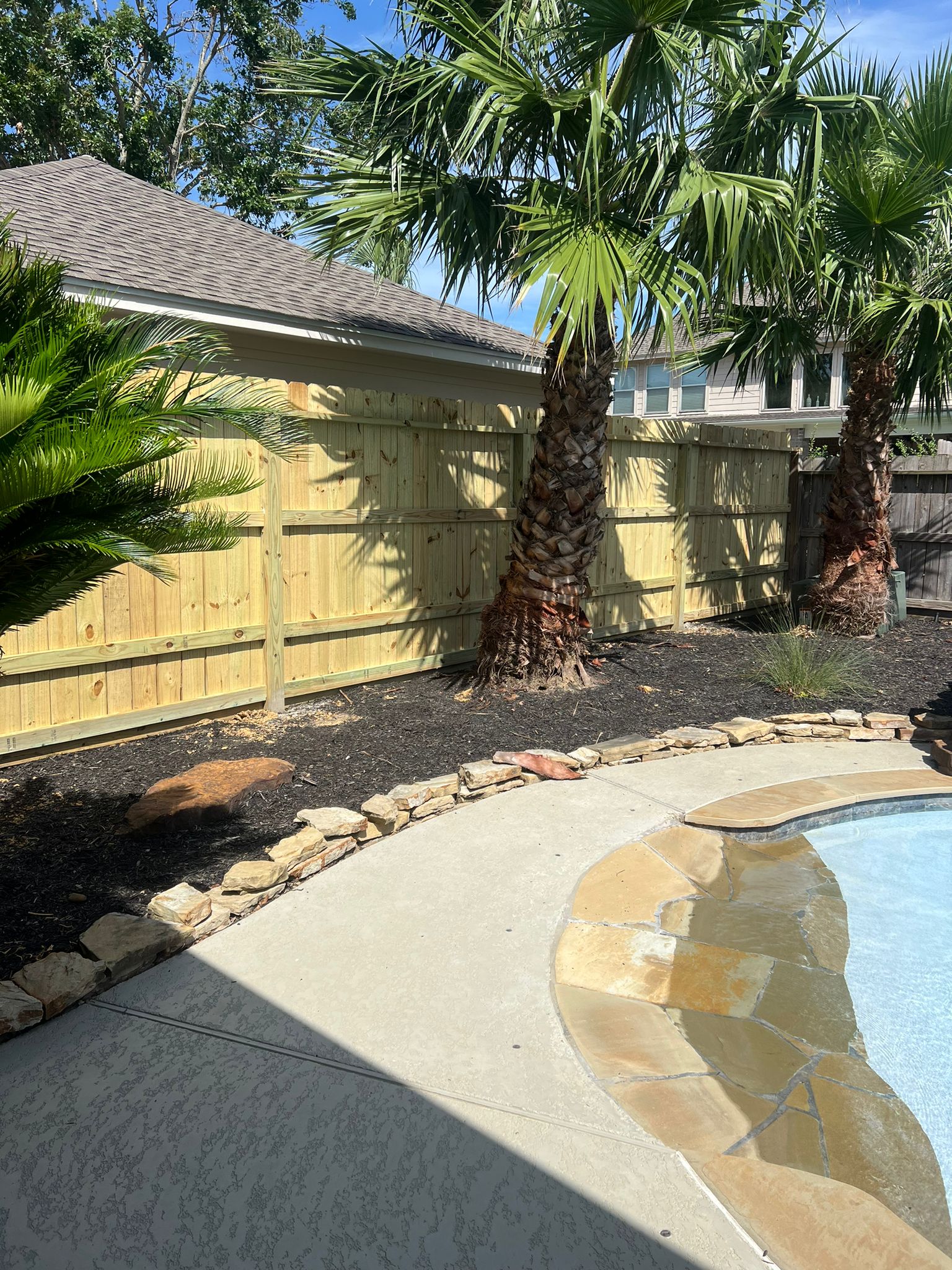
A fence around the whole backyard usually isn’t enough on its own. The 2021 ISPSC — the code Galveston’s pool permit requires for a private home — wants a barrier that completely surrounds the pool, at least 48 inches high, with a self-closing, self-latching gate. If your existing fence only encloses the property line and the house sits inside that same enclosure, the house wall itself becomes part of the barrier — and the City’s own permit form says doors and low windows then need a listed alarm.
Sources: International Swimming Pool and Spa Code 2021, section 305 (model text); City of Galveston Swimming Pool Permit Application.
Why “the yard is fenced” isn’t the same question
A privacy fence along the property line answers a different question than a pool barrier does. The ISPSC’s barrier rule (305.2.1) is written around the pool: the barrier has to run around its entire perimeter, at least 48 inches high on the side facing away from the water. A fence that simply marks where your lot ends doesn’t have to do that — it was built to enclose the yard, house and all.
That distinction matters because of what the code does when a wall of the house ends up forming part of the enclosure. Section 305.4 lists what has to happen to any door or operable window with a sill under 48 inches that opens into that pool area — starting with a UL 2017-listed water hazard entrance alarm. Galveston’s own swimming pool permit application states it plainly: “Doors and windows less than 48-inches must provide an alarm that complies with UL2017.” A yard fence that puts the house inside the same enclosure as the pool triggers that requirement on every qualifying opening — a back door, a low bedroom window, a kitchen slider.
Three things an existing fence usually gets wrong
- It doesn’t isolate the pool. If the house wall is inside the enclosure with the pool, every low door and window on that wall needs the 305.4 protection above — an alarm is the option the City’s form names, though 305.4 lists a few others.
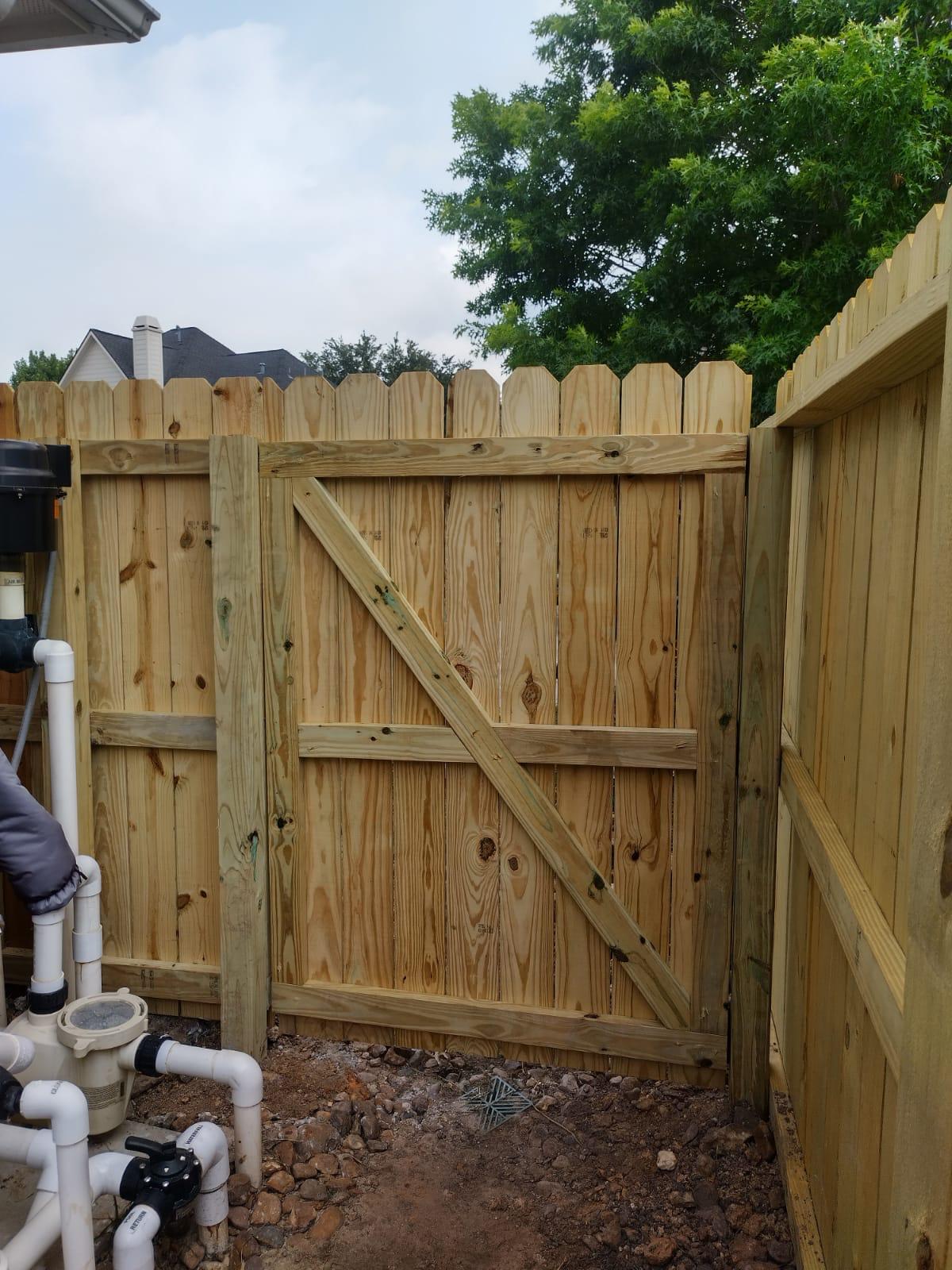
- The gate hardware is wrong for a pool. A privacy-fence gate is usually built with a simple thumb latch at a comfortable reach, not a self-closing hinge and a self-latching mechanism (305.3). Those are two separate pieces of hardware, and most yard gates have neither.
- The latch sits too low. The ISPSC puts a residential outside latch release at 54 inches or higher (305.3.3) — well above where most people mount a gate latch for everyday convenience, unless the release is on the pool side only and at least 3 inches below the top of the gate.
Height is rarely the issue — a standard 6-foot privacy fence already clears the 48-inch minimum. Hardware and house-wall coverage are what usually need to change. See also does my pool gate need to be self-closing and self-latching?
Is your existing fence already a pool barrier?
Answer for the fence or wall around your pool today. Based on the 2021 ISPSC, the code the City of Galveston’s pool permit requires for a private home. This is a planning check, not a permit review.
2021 ISPSC sections 305.2.1, 305.2.9, 305.3, 305.3.3 and 305.4 (model code); City of Galveston Swimming Pool Permit Application. Gap sizes, chain link and rail-spacing rules aren’t checked here — see the full checker on Texas pool fence code requirements.
What customers say
5.091 Google reviews · read them all on Google
"Mustang Fencing Service did an amazing job on my new fence! The team was professional, efficient, and communicative. The quality of the materials is outstanding, and they finished on time and within budget. Highly recommend them for any fencing needs!"
Excellent service and quality! Professional, on time, and great craftsmanship. Highly recommend!
Excellent work. They came in handy after the hurricane hit our backyard. Friendly people too.
Reviews shown word for word from the Mustang Fencing Services Google Business Profile (Galveston), captured 2026-10-19.
Questions we get about this
Does my existing backyard fence count as my pool fence?
What happens if the house is inside the same fence as the pool?
Is a 6-foot privacy fence tall enough for a pool?
Does adding a gate to my existing fence need a permit?
How far does pool equipment need to be from the fence?
Sources
Checked October 20, 2026. Rules change, so confirm with the City before you build.
- International Swimming Pool and Spa Code 2021, Section 305 Barrier Requirements — 305.2.1 (barrier surrounds the pool, 48 in height), 305.2.9 (36 in equipment clearance), 305.3/305.3.3 (gates, self-closing/latching, latch release height), 305.4 (building wall as part of the barrier: alarms and other options on low doors/windows).
- City of Galveston, Swimming Pool Permit Application — Must comply with the 2021 ISPSC; fence location and height, self-closing gates, UL 2017 alarms on doors/windows under 48 in, construction fence plan; separate fence permit required for new fencing.
- Texas Health and Safety Code, Chapter 757: Pool Yard Enclosures — 757.002: this chapter applies only to multiunit rental complex and property owners association pools, not a single-family home — cited here only to show why this page uses the ISPSC, not Chapter 757.
Not sure if your fence would pass?
A free on-site estimate can walk the existing fence and gate against the barrier rule, and price out what it would take to close any gaps.