
Can I Use Chain Link Fencing Around My Pool in Texas?
It depends on whose pool it is, and on the mesh. Health and Safety Code Chapter 757 bans a new chain link enclosure outright at an apartment, condo or HOA pool. At a private home, the City of Galveston’s pool permit requires the 2021 ISPSC, which allows chain link only with openings of 1¾ inches or less — smaller than the 2-inch mesh most chain link ships in.
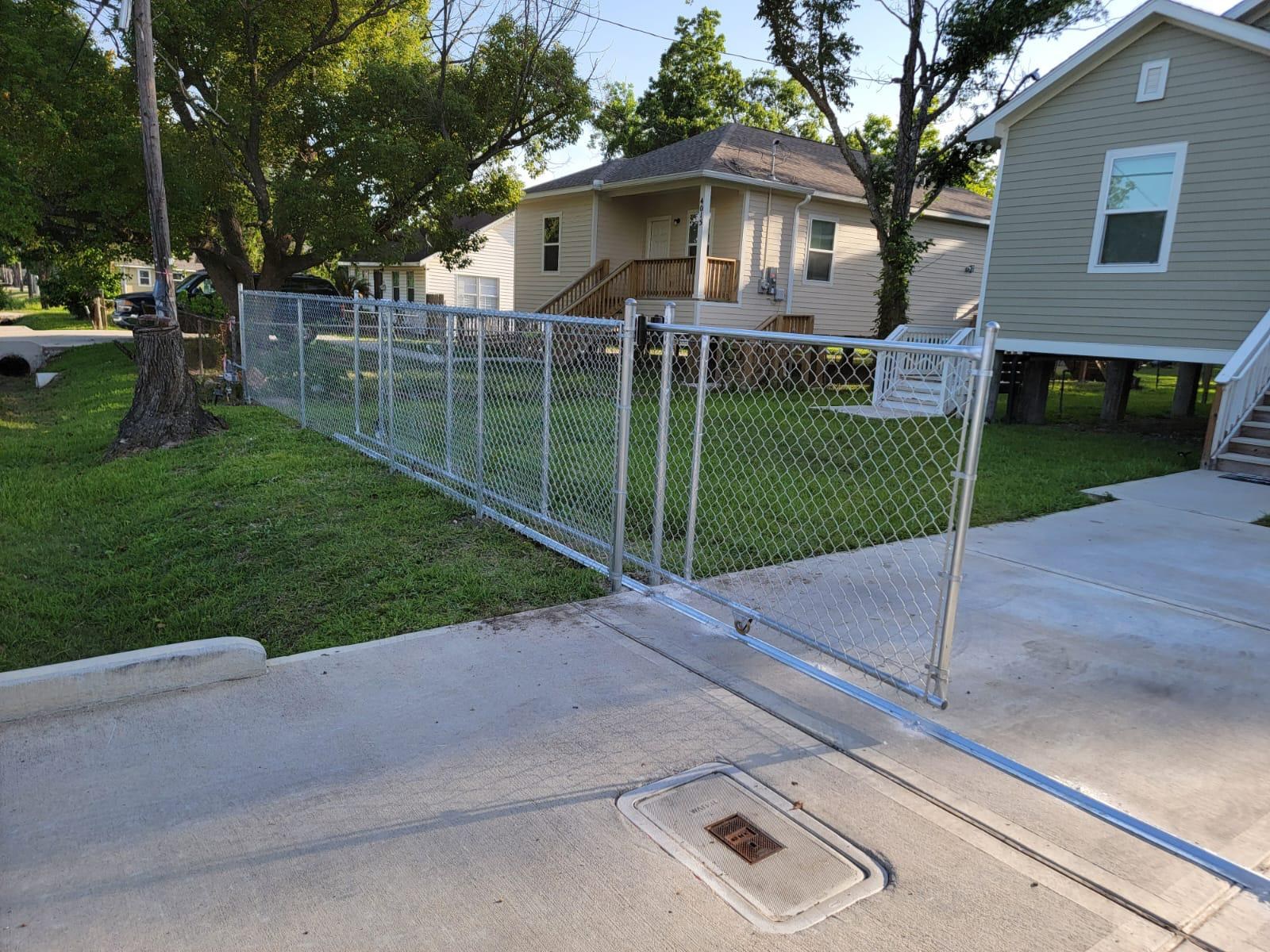
It depends on whose pool it is — and the mesh size. For an apartment, condo or HOA pool, Texas Health and Safety Code 757.003(f) bans chain link entirely on a new enclosure built after January 1, 1994. For a private home, the City of Galveston’s pool permit requires the 2021 ISPSC, which allows chain link only if its openings are 1¾ inches or less — smaller than the 2-inch mesh most chain link is sold in, so you have to ask for it by size.
Sources: Texas Health and Safety Code 757.002–757.003; 2021 ISPSC section 305.2 (ICC model text); CLFMI Guide for Specifying Commercial/Industrial Chain Link Fence (standard mesh sizes); City of Galveston swimming pool permit application.
Which rule applies to your pool
Texas has no single statewide barrier rule for every pool — start with who owns it. Health and Safety Code Chapter 757 covers pools owned or maintained by a multiunit rental complex (including a condominium project) or a property owners’ association; it specifically does not cover a single-family home (757.001, 757.002). A private pool at a Galveston house instead follows the City’s pool permit, which requires the 2021 International Swimming Pool and Spa Code (ISPSC).
Both regimes want a barrier at least 48 inches high with a self-closing, self-latching gate that opens away from the pool. They land in very different places on chain link. For the full side-by-side on every barrier material, see Texas pool fence code requirements.
The number that actually matters: mesh size, not just height
It’s a common misread that any fence tall enough automatically clears pool-barrier rules. Height is necessary but not sufficient. Under the ISPSC, a chain link barrier also needs openings of 1¾ inches or less, measured diagonally across the diamond — otherwise the mesh itself is a ladder. The CLFMI’s own guide for specifying chain link lists 2 inches as the common, default fabric size, and separately lists 1¾ inch mesh — the exact ISPSC limit — and smaller sizes as standard products with their own hardware (bar sizes, selvage), not something custom-ordered. In practice that means: if you just ask for “chain link,” you’ll likely get 2-inch mesh, and it won’t pass at a private pool on its own.
Chain link pool-barrier checker
Answer for your setup. This checks the chain-link-specific rule only, plus the barrier basics that apply either way — pair it with a full permit review, and confirm your local building department hasn’t adopted a different rule.
Texas Health and Safety Code 757.002–757.004; 2021 ISPSC 305.2.1, 305.2.7, 305.3–305.3.3 (ICC model text); CLFMI Guide for Specifying Commercial/Industrial Chain Link Fence, Sec. 32 31 13 (standard mesh sizes). Not a permit review — confirm with your local building department.
Already have chain link where the pool is going?
If a house already has chain link in the yard and a pool is going in, that existing fence counts as part of the barrier only if it meets the same rule new fencing would: at least 48 inches high, openings of 1¾ inches or less (or slats fastened top and bottom that bring it to that), a bottom gap within the ISPSC limit, and gates that open outward, self-close and self-latch. Standard 2-inch mesh without slats would need slats added or a separate compliant barrier.
For an apartment, condo or HOA pool, an enclosure built before January 1, 1994 follows a different section of the statute (757.005), not the flat ban in 757.003(f) — confirm with the local permitting office whether an existing enclosure still qualifies as pre-1994 before assuming either rule applies.
What Galveston customers say
5.091 Google reviews · read them all on Google
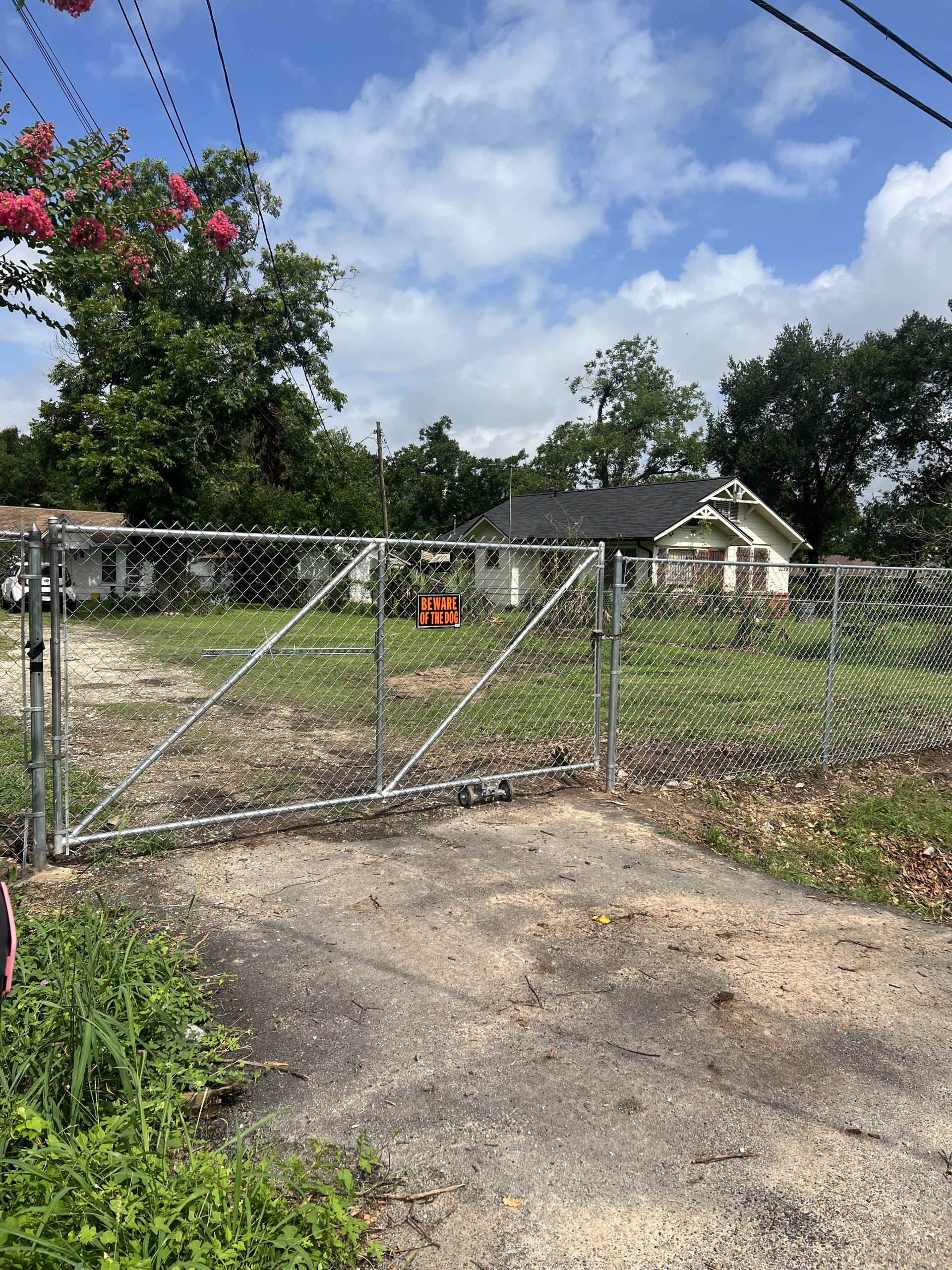
chainlink fence installation by mustang fencing, looks really great, thanks.
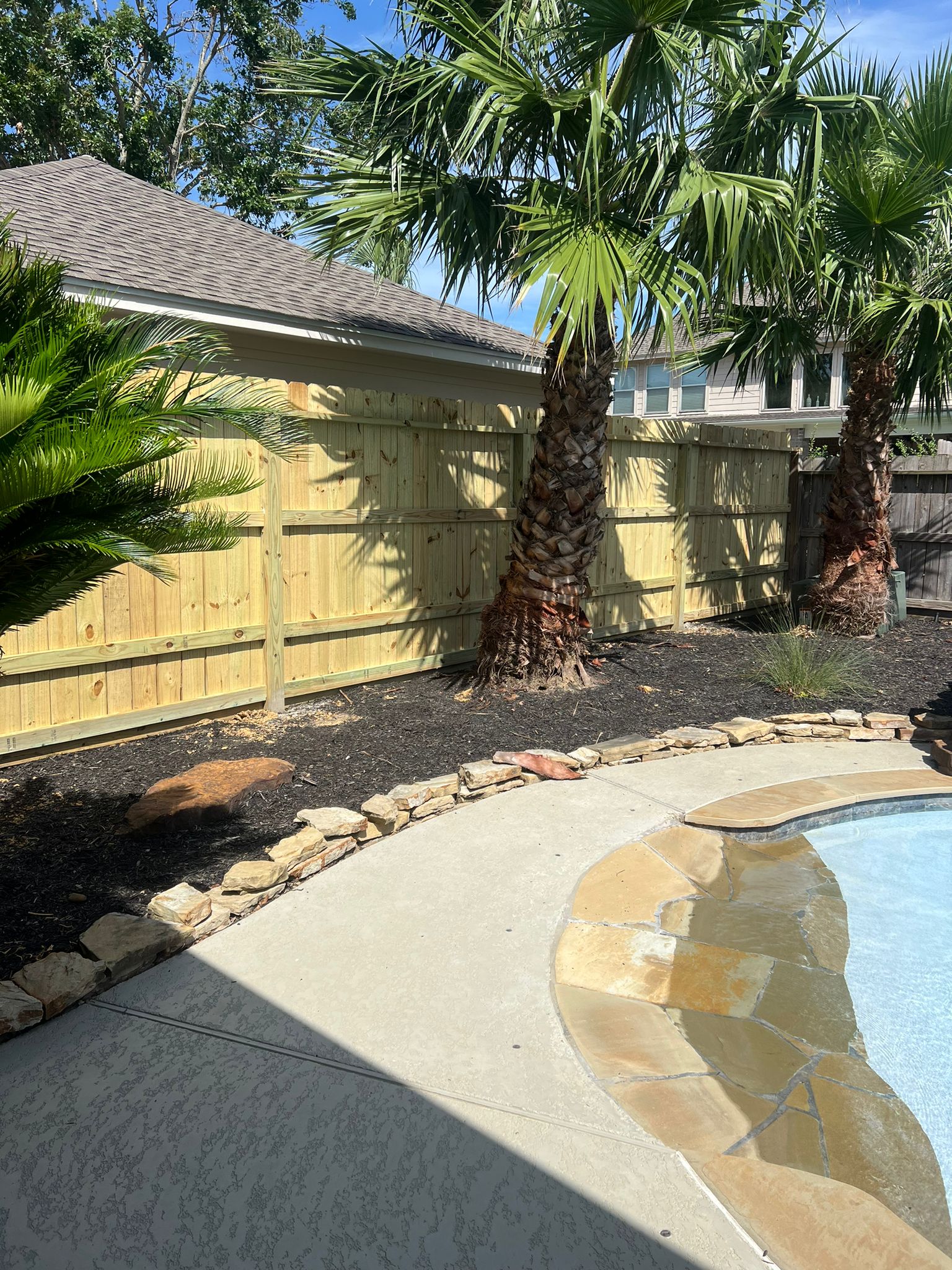
had an excellent experience with mustang fencing From the initial consultation to the final installation, the team was professional, punctual, and attentive to detail. They helped me choose the perfect fence style to match my property and ensured everything was installed with precision. The quality of materials is top-notch, and the fence has completely transformed the look and security of my home. I highly recommend mustang services to anyone looking for reliable and high-quality fencing services!
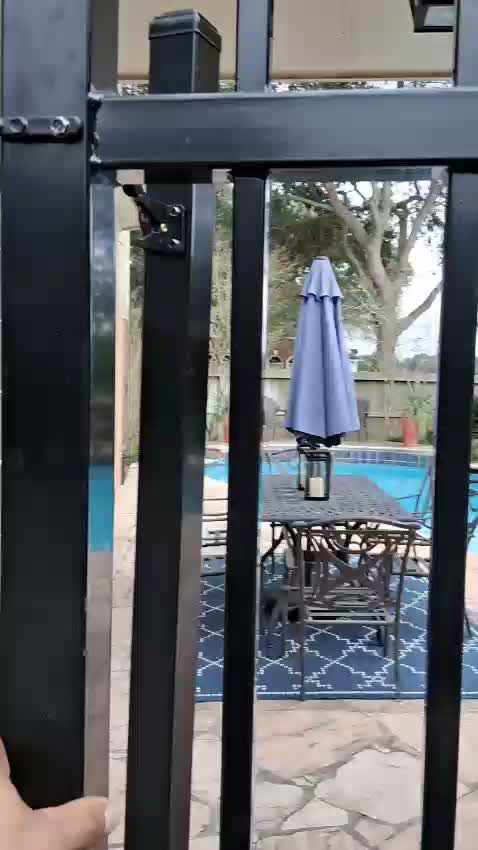
Mustang’s team installed iron fence for me and did an absolutely incredible job! I would recommend this company to anyone I know!
Reviews shown word for word from the Mustang Fencing Services Google Business Profile (Galveston), captured 2026-10-19.
Questions we get about this
Is chain link legal around a pool in Texas?
Can I use chain link as my backyard pool fence at a Galveston home?
Why can’t I use chain link at my apartment, condo or HOA pool?
What mesh size chain link do I need for a pool fence?
I already have chain link near where the pool will go. Does it count as the barrier?
What’s a code-compliant alternative if chain link doesn’t fit my situation?
Sources
Checked October 19, 2026. Rules change, so confirm with the City before you build.
- Texas Health and Safety Code, Chapter 757: Pool Yard Enclosures — 757.001 (definitions), 757.002 (applies only to multiunit rental complex and property owners association pools), 757.003(f) (chain link prohibited entirely for a new enclosure after January 1, 1994), 757.004 (gates), 757.005 (pre-1994 enclosures).
- International Swimming Pool and Spa Code 2021, Section 305 Barrier Requirements — 305.2.1 (48 in minimum height), 305.2.7 (chain link openings not more than 1¾ in, or slats reducing it to that), 305.3 and 305.3.3 (gates and latch release).
- City of Galveston, Swimming Pool Permit Application — Must comply with the 2021 ISPSC; site plan, fence location and height, self-closing gates.
- Chain Link Fence Manufacturers Institute, Guide for Specifying Commercial/Industrial Chain Link Fence, Section 32 31 13 — Table 1 fabric sizing: 2 in mesh as the common size; 1¾ in and smaller mesh sizes as standard products with their own selvage/bar hardware.
Not sure if your chain link setup would pass?
We’ll measure the pool yard, check the mesh and gate hardware against the rule that applies to your pool, and put the numbers on a written quote you can take to the City.