
What’s the Best Fence for Home Security to Deter Intruders?
There is no single “most secure” material — the real choice is a trade-off between keeping sightlines open (so neighbors and the street can see trouble) and building a solid privacy fence that hides the yard from everyone, including an intruder already inside it. Below: what three U.S. police departments’ crime-prevention guidance actually says about fences, why military and border fence specs don’t apply to a house, and a self-check you can run on your own property.
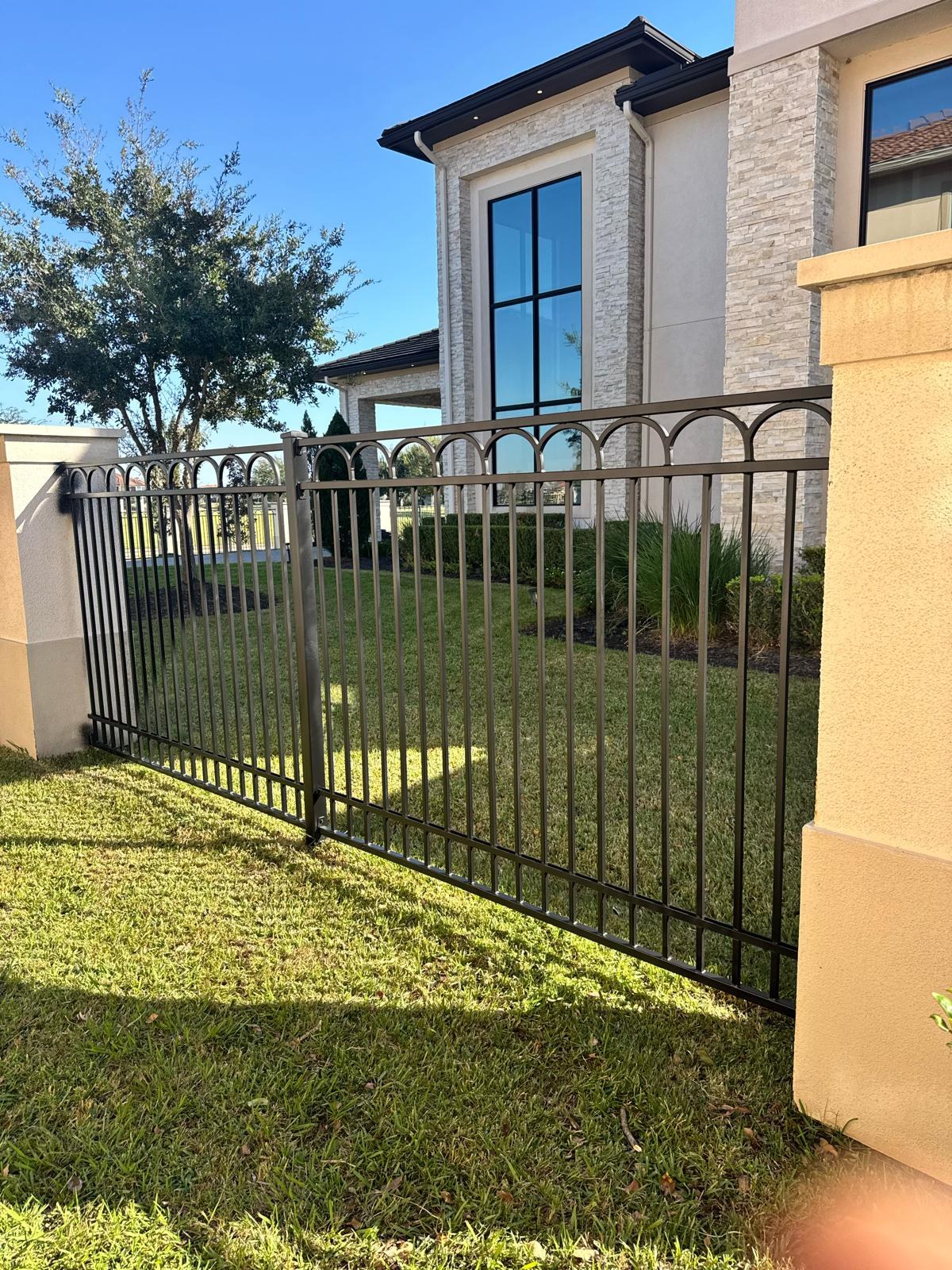
There is no single “most secure” fence material — residential security fencing comes down to a trade-off most buying guides skip past. A solid privacy fence (wood or vinyl, commonly built 6 ft tall) blocks sightlines in both directions, hiding the yard from the street as well as from passersby. An open-sightline fence (ornamental metal, chain link) instead supports what crime-prevention professionals call natural surveillance — neighbors and the street can see whether someone belongs there. U.S. police department CPTED (Crime Prevention Through Environmental Design) guidance names three residential fencing principles: natural surveillance, natural access control (one defined, gated entry point), and territorial reinforcement (a maintained, clearly bounded property reads as supervised). None of it promises a fence “stops” anyone — the U.S. Department of Defense’s own fencing criteria rate standard chain link at roughly 7 to 15 seconds of delay against a determined climber. A fence’s real job is visibility, delay, and signaling, not a guarantee. Mustang Fencing Services installs residential security fencing in Galveston County, including the closely spaced ornamental and spear-top iron styles that keep sightlines open while adding real climb resistance.
Sources: UFC 4-022-03 Security Fences and Gates (U.S. DoD, 2013, archived/cancelled edition — cited for illustration only, not a residential code); CPTED guidance published by the Everett WA, Apache Junction AZ, and Chandler AZ police departments (retrieved 2026-09-26).
What actually deters an intruder (and what doesn’t)
Nobody runs a controlled study on which backyard fence stops a break-in. What exists instead is CPTED — Crime Prevention Through Environmental Design — guidance that U.S. police departments publish for homeowners, built around three named principles. No Galveston or Houston-area department’s CPTED page could be reached while researching this guide (Houston PD’s page refused the connection), so the quotes below come from three other U.S. departments. The three principles themselves are standard nationwide, not local to any one city:
- Natural surveillance. “The ability to see into and out of areas” — fences and landscaping that keep sightlines open so the street, neighbors, or the homeowner can actually see if something is wrong. A solid wall or an overgrown hedge does the opposite: it hands an intruder a hiding spot.
- Natural access control. Routing people to one defined entrance — “the fenced backyard with a gate… sends the message that there is only one access point and users must seek permission to enter.”
- Territorial reinforcement. A fence line, kept upright and clearly marking the property, signals the place is cared for and watched. A sagging or broken fence sends the opposite signal.
The two police departments that publish specific shrub/tree numbers disagree on the exact figure: Apache Junction, AZ recommends keeping bushes at 3 ft or under and tree canopies 10 ft or higher (“3 Foot/10 Foot Rule”); Chandler, AZ’s 2025 handbook uses a “2ft/6ft Rule” instead. Both are aimed at the same goal — no vegetation tall enough to hide behind — so treat the exact number as a judgment call for your own yard, not a fixed standard.
The trade-off nobody mentions: see-through vs. solid privacy
Natural surveillance favors a fence you can see through — ornamental metal picket, chain link. A six-foot solid privacy fence does the opposite job on purpose: it keeps the yard, the pool, the grill, and anyone in the backyard out of view from the street. One U.S. police department’s own CPTED handbook photo captions make the conflict explicit: “Solid wall prevents visibility, but the see-through fence promotes Natural Surveillance.” That doesn’t make a privacy fence the wrong choice — it makes it a different choice, trading away street-level visibility for concealment of the yard itself (and whatever is visible from the street, like vehicles or equipment, if that is the actual concern).
There isn’t a version of this that keeps both benefits at once. A homeowner who wants the street to be able to see the yard is choosing an open fence and compensating with lighting and trimmed landscaping. A homeowner who wants the yard hidden from the street is choosing solid privacy and accepting that the same panels also block a passerby’s view of anything happening on the near side.

Common residential fence materials for home security
| Material | Typical height* | Sightline | CPTED principle it supports |
|---|---|---|---|
| Ornamental steel/aluminum, spear-top picket | 4–6 ft | Open | Natural surveillance + access control |
| Chain link (standard) | 4–6 ft | Open | Natural surveillance (delay is low — see 7–15 sec above) |
| Wood privacy (solid board) | 6 ft | Blocked | Territorial reinforcement; trades away surveillance |
| Vinyl privacy (solid panel) | 6 ft | Blocked | Territorial reinforcement; trades away surveillance |
*Heights shown are common residential builds, not a Galveston code limit — a city fence permit records the actual height and material for any new fence, and lot-specific setback/height rules should be confirmed before assuming a number. See our breakdown of fence height and spacing rules, linked below.
Quick CPTED self-check for your fence
Check the items that already describe your property. This tallies them against the three CPTED principles above — it’s a prompt for what to look at, not a security score or a guarantee.
Checklist items are drawn from the CPTED guidance cited above (Everett WA, Apache Junction AZ, and Chandler AZ police departments). This does not inspect your property or test your fence — it only tallies what you tell it.
What Galveston customers say
5.091 Google reviews · read them all on Google
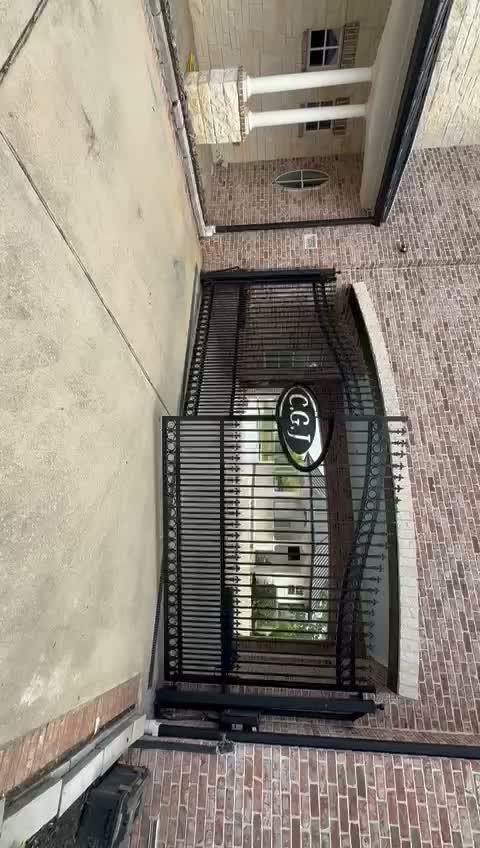
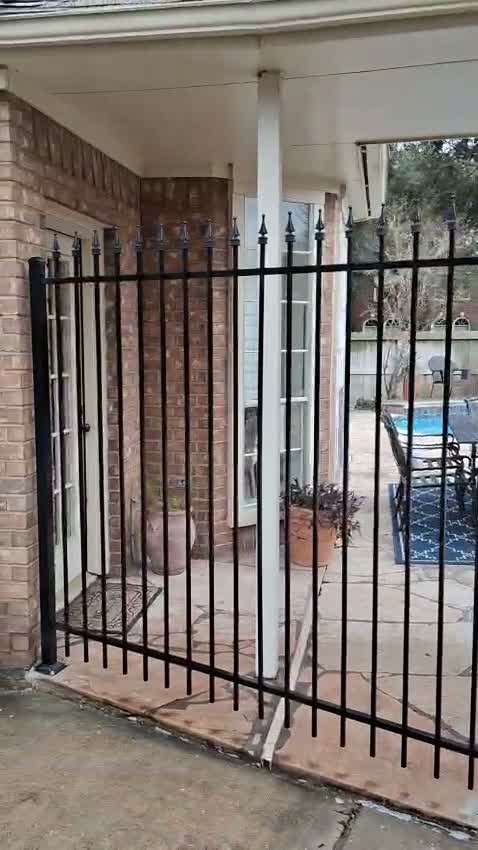
Mustang’s team installed iron fence for me and did an absolutely incredible job! I would recommend this company to anyone I know!
We just installed iron gate and it looks amazing thank you very much mustang fencing .
Amazing work will go ahead and recommend everyone in friends and family We installed 8ft tall double sided stained cedar wood fence in our backyard, it’s really looks great, installed perfectly nice finishing and cost effective, thanks mustang fencing.
Reviews shown word for word from the Mustang Fencing Services Google Business Profile (Galveston), captured 2026-10-12.
Questions we get about this
What is the single best fence material for home security?
Does a taller fence always deter intruders better?
Is a privacy fence good or bad for home security?
How much does a fence actually slow down a break-in?
Do I need a permit for a new security fence or gate in Galveston?
Does landscaping actually matter for fence security?
Sources
Checked October 14, 2026. Rules change, so confirm with the City before you build.
- City of Everett, WA Police Department — Crime Prevention Through Environmental Design — Natural Surveillance, Territorial Behavior, and Natural Access Control principles for residential fences and gates.
- City of Apache Junction, AZ Police Department — CPTED — 5 CPTED principles; “3 Foot/10 Foot Rule” for shrub and tree-canopy height; motion-detector lighting recommendation.
- Chandler, AZ Police Department — CPTED Handbook (2025) — “2ft/6ft Rule” for shrubs and tree canopies; “solid wall vs. see-through fence” natural-surveillance photo captions (pp.6-13, 30-31).
- UFC 4-022-03 Security Fences and Gates (U.S. DoD, 2013; cancelled/archived edition) — Chain-link fence delay time of approximately 7-15 seconds (Sec 1-8.1); fence security functions. Cited for illustration only — not a residential or Texas code.
- ASTM F2781-15(2021) — Forced Entry, Ballistic and Low-Impact Resistance of Security Fence Systems — Forced-entry threat levels L/M/A; .38 Special and 7.62mm ballistic test; 4,000 lb/20 mph vehicle-impact test. Commercial/border-grade testing, not applicable to typical homes.
- ASTM F2611-23 — Design and Construction of Chain Link Security Fencing — Material/design/installation guide for chain link security fencing, including anti-ram systems and barbed-tape obstacles.
- 2021 International Fire Code §501.3, adopted by Galveston Ordinance 23-013 — Construction documents, including for security gates across fire apparatus access roads, must be submitted to the fire department for review before construction.
Weighing visibility vs. privacy for your own yard?
We’ll walk the property, talk through the sightline/privacy trade-off above, and spec a fence material and gate that match what you’re actually trying to solve — in writing, before any work starts. Free on-site estimates across Galveston County.