
Straight answers from a local fence and gate contractor serving Galveston and Brazoria Counties.
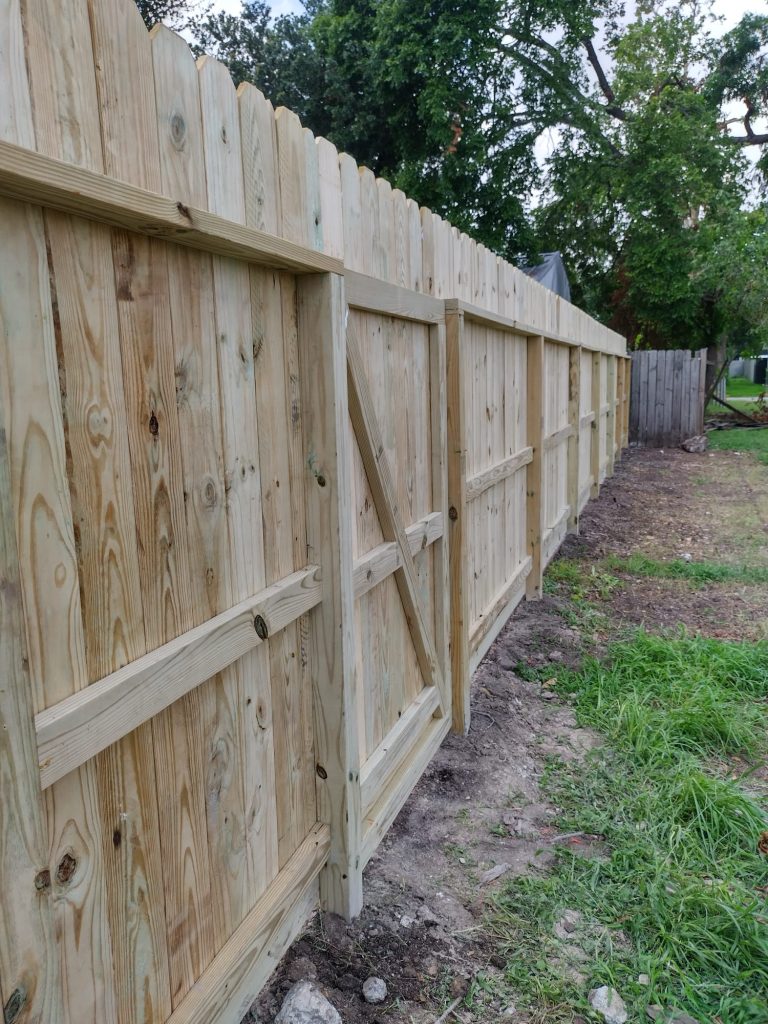
A sagging gate is one of the most common calls a fence contractor gets, and the good news is that it’s very often a repair, not a replacement — as long as the sag is coming from the gate itself and not from what it’s hanging on.
The Two Real Causes of a Sagging Gate
Nearly every sagging gate traces back to one of two root causes:
1. The hinge hardware has failed. Hinges take the full weight of the gate every time it swings, and over years of daily use (or constant coastal humidity working on the metal), hinge screws loosen, pull out of the post, or the hinge itself wears out. This is usually the first thing worth checking, because it’s the cheapest and fastest fix.
2. The gate frame lacks proper diagonal bracing, so the whole panel racks out of square under its own weight over time — especially common on wood gates that were built without a brace, or with the brace running the wrong direction.
Diagnosing which part is actually the problem
Before fixing anything, check the hinges first: look for rust, bent hardware, or screws that have backed out or stripped their holes. If the hinges look solid but the gate still sags, the post itself may be loose or leaning — grab the post and gently check for movement at ground level. If the hinges and post are both solid and the latch-side corner has still dropped, the frame itself has racked out of square.
The Fix: Diagonal Bracing, Done Correctly
The standard fix for a racked wood gate frame is a diagonal brace, but the direction it runs matters. For a wood gate, the brace should run from the bottom corner on the hinge side up to the top corner on the latch side — this puts the brace in compression, which is what wood resists best, rather than in tension, which it resists poorly. Getting this backwards is a common DIY mistake that doesn’t actually stop the sag.
Before fastening the brace, the gate needs to be propped level and square first, so the brace locks it into the correct position rather than locking in the sag. Pilot holes prevent the wood from splitting, and sealing the cut ends of the brace before installing it protects the newly exposed wood grain from moisture — a genuinely important step in a humid coastal climate, where unsealed cut ends are an easy entry point for rot.
The Other Fix: An Anti-Sag Cable Kit
An anti-sag gate kit corrects the same problem from the opposite direction — using diagonal tension to counteract the torque instead of a compression brace. A typical kit includes a metal corner bracket for the top of the hinge side and the bottom of the latch side, a turnbuckle, and a steel cable connecting the two brackets diagonally across the gate. Note the direction: a cable works in tension, so it runs from the top hinge-side corner to the bottom latch-side corner — the mirror image of a wood brace.
1. Temporarily square the gate by shimming the dropped latch-side corner back into position.
2. Attach the corner brackets — one at the top hinge-side corner, one at the bottom latch-side corner.
3. Run the cable diagonally between the two brackets.
4. Attach the turnbuckle to the top bracket.
5. Tighten the turnbuckle gradually until the cable pulls the frame back square and the sag disappears.
Larger or heavier gates need a heavier-duty version of the same idea, or a rebuilt frame with proper corner bracing from the start.
When It’s Not the Gate — It’s the Post
If a gate keeps sagging again shortly after a hinge or brace repair, the hinge post itself is often the real problem — a leaning, loosened, or rotted post can’t hold a gate square no matter how good the gate’s own hardware and bracing are. That’s the point where the repair-or-replace question shifts from the gate to the fence post supporting it, and it’s worth having that checked before investing in another round of hardware fixes.
A post that has only loosened can usually be reset — dug out, checked for rot, and reset in fresh concrete if the wood itself is still sound. A post that is rotted through should be replaced. Either way this is a localized fix at that post, not a reason to replace the surrounding fence unless the rest of it shows separate signs of failure.
Preventing Sag on a New Gate
On a new wood gate, ask for a Z-brace or diagonal brace built into the frame at construction, plus properly sized strap hinges rather than light-duty hardware — this addresses the same torque problem before it ever becomes visible sag. Heavier gates need heavier-duty hinges and more robust post reinforcement from day one. Regular hardware checks (tightening loose screws, re-seating hinges) catch the early stages of sag before the frame itself starts to rack out of square. See our wood gate and gates pages for the hardware we build new gates with.
Related Questions
Can I fix a sagging gate myself?
Can I fix a sagging gate without an anti-sag kit?
Will a heavier gate sag faster than a lighter one?
How often do gate hinges need to be replaced?
Does a sagging gate mean I need a new fence?
Ready for a real number for your property? Request a free on-site estimate from Mustang Fencing Services.