
Does Chain Link Fencing Violate HOA Rules?
Only if your recorded guidelines say so. Texas law lets an HOA regulate the type of fence, so a chain link ban is enforceable, but it can’t use one to block a perimeter fence altogether. Here is how to read the rule, what the City and pool codes add, and what to ask for instead.
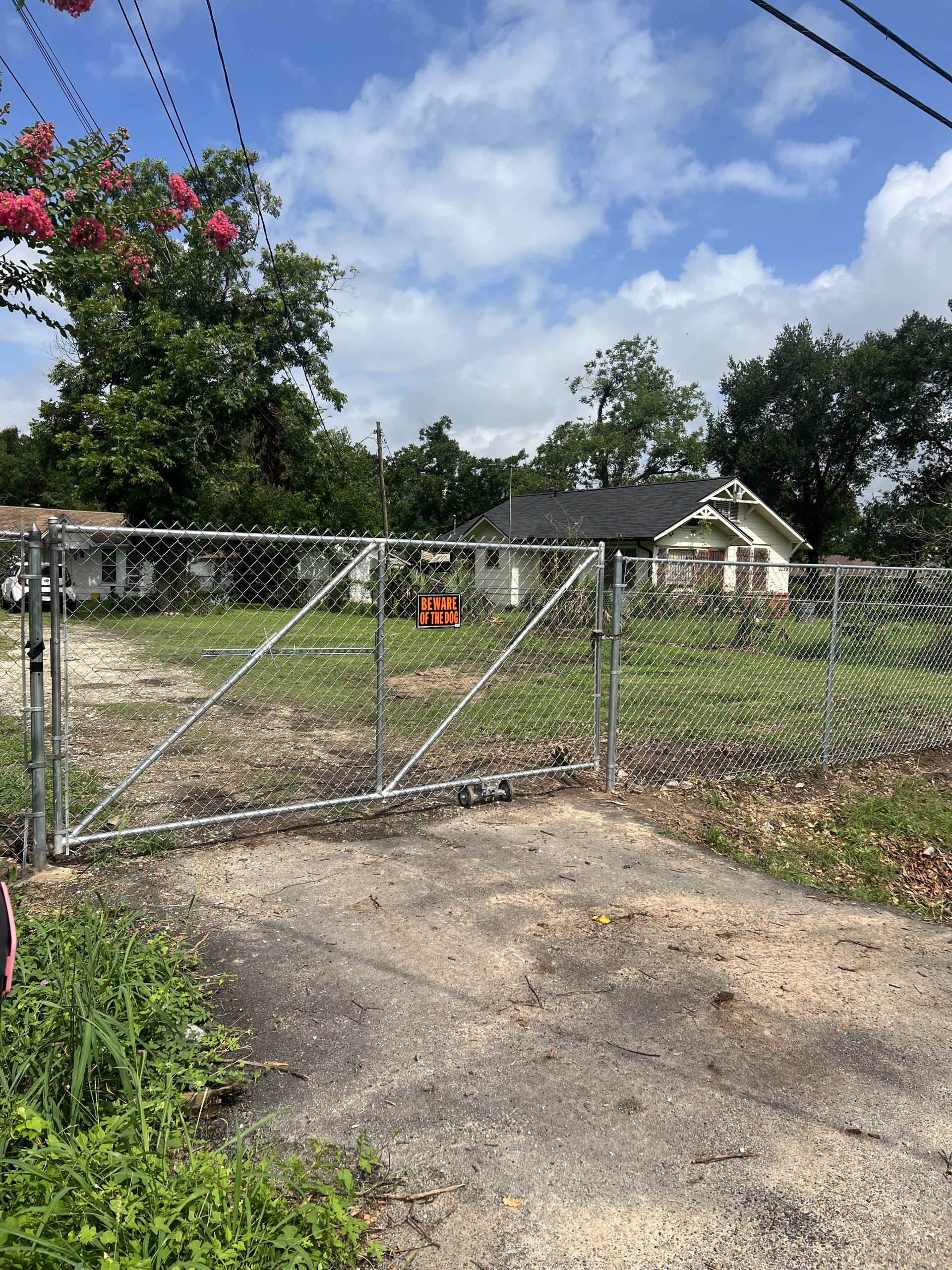
Chain link violates HOA rules only where your recorded guidelines say it does. No Texas law bans it, and the City of Galveston’s residential fence section has no material list. What Texas law does is let an HOA regulate the type of fencing (Property Code 202.023(c)(2)), so a guideline that bars chain link, or limits it to the back yard or to coated fabric, is enforceable. The HOA still may not prevent a perimeter fence altogether (202.023(b)). Read the fence section of your guidelines, check the City’s height limits, and get the answer in writing before you build.
Sources: Texas Property Code 202.023 (as amended September 1, 2025); City of Galveston LDR Sec. 2.501; CLFMI guide specification 32 31 13, Table 1; Pexco slat product data; 2021 ISPSC 305.2.7. Read September 27, 2026.
Where the chain link rule comes from
There is no statewide chain link rule for homes. Whether you can use it in a subdivision comes from your deed restrictions: the declaration and the architectural guidelines, which only count once they are filed in the county real property records (Property Code 202.006).
Texas law shapes what those documents can do. Since 2021, an HOA “may not adopt or enforce a restrictive covenant that prevents a property owner from building or installing” a perimeter fence (202.023(b)). But the same section keeps the HOA’s power to regulate “the type of fencing that a property owner may install” (202.023(c)(2)). Chain link is a type of fencing. So a guideline that bans it, or allows it only in certain places or finishes, is within the HOA’s power, as long as some perimeter fence is still allowed.
How to apply, how long review takes and your appeal rights are on our HOA fence approval guide. What HOAs regulate beyond material, from height to color, is on common HOA fence rules.
How to read the chain link line in your guidelines
| If your guidelines say… | What it means for your plan |
|---|---|
| Nothing about chain link | Not a yes. List chain link on the application and get written approval before you build. |
| Chain link is not permitted | Enforceable under 202.023(c)(2). Pick an allowed material; the HOA can’t leave you with no perimeter fence at all. |
| Only where not visible from the street | Usually behind the house line. Show the line on a site plan so the committee can see it. |
| Only vinyl-coated, in black or green | Coated fabric (ASTM F668 covers polymer-coated chain link). Ask whether posts and rails must match. |
| A maximum height or “open” fencing in front | Check the number against the City’s: in Galveston, 4 ft solid or 5 ft if 60% transparent in a front yard. |
| Fences must be “maintained” or “kept in good repair” | Applies to chain link like any other fence. Rust and sagging fabric are what get noticed. |
Texas Property Code 202.023(b), (c)(2); ASTM F668 scope; City of Galveston LDR Sec. 2.501(B).
What the City and village codes add
The HOA rule is only one layer. The code applies too, HOA or not.
- City of Galveston. Residential fences may be up to 8 ft. In a front yard, 4 ft if solid or 5 ft if at least 60 percent transparent (LDR 2.501(B)). Bare chain link works out to about 86% open on paper, but the regulations don’t say how the City measures it, so confirm before you plan a 5 ft front fence. The residential section has no list of barred materials; the one in Section 2.601 is for nonresidential and mixed-use sites.
- Village of Tiki Island. Chain link must be hot-dipped galvanized steel, coated after fabrication, with galvanized fasteners, and cut or damaged coating painted after installation (Sec. 6-301(b)). Fences may not exceed 6 ft and must be a see-through type, except as the ordinance otherwise provides (6-302(b), (e)). See our Tiki Island page.
- Pools. Galveston’s pool permit requires the 2021 ISPSC, which allows chain link in a barrier only with openings of not more than 1¾ in (305.2.7). A standard 2 in mesh doesn’t qualify unless slats fastened at the top and bottom reduce the openings to that size. More in is a chain link pool fence legal in Texas?
Galvanized, coated or slatted: what changes
If your guidelines leave room for chain link, the version you propose matters.
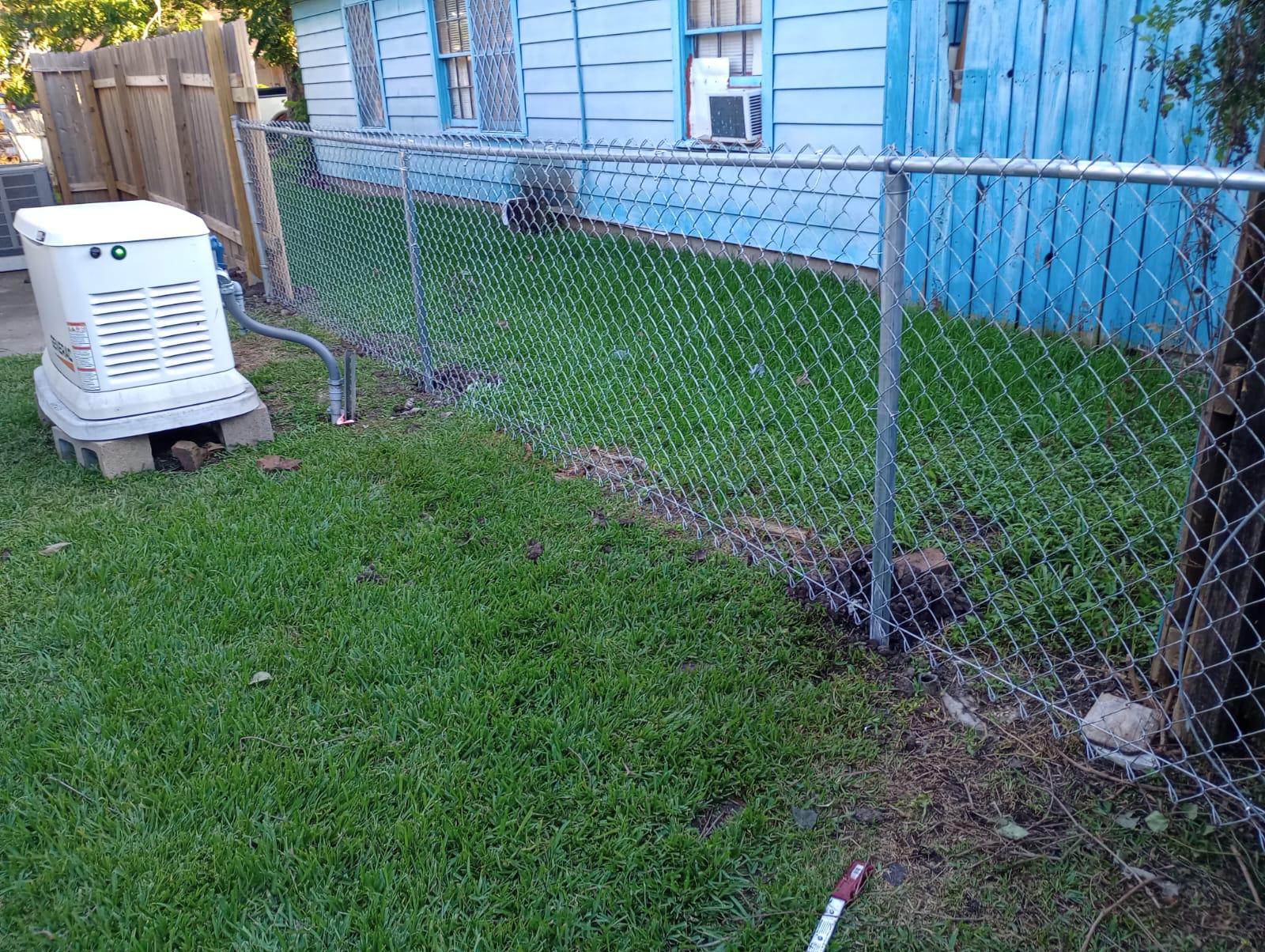
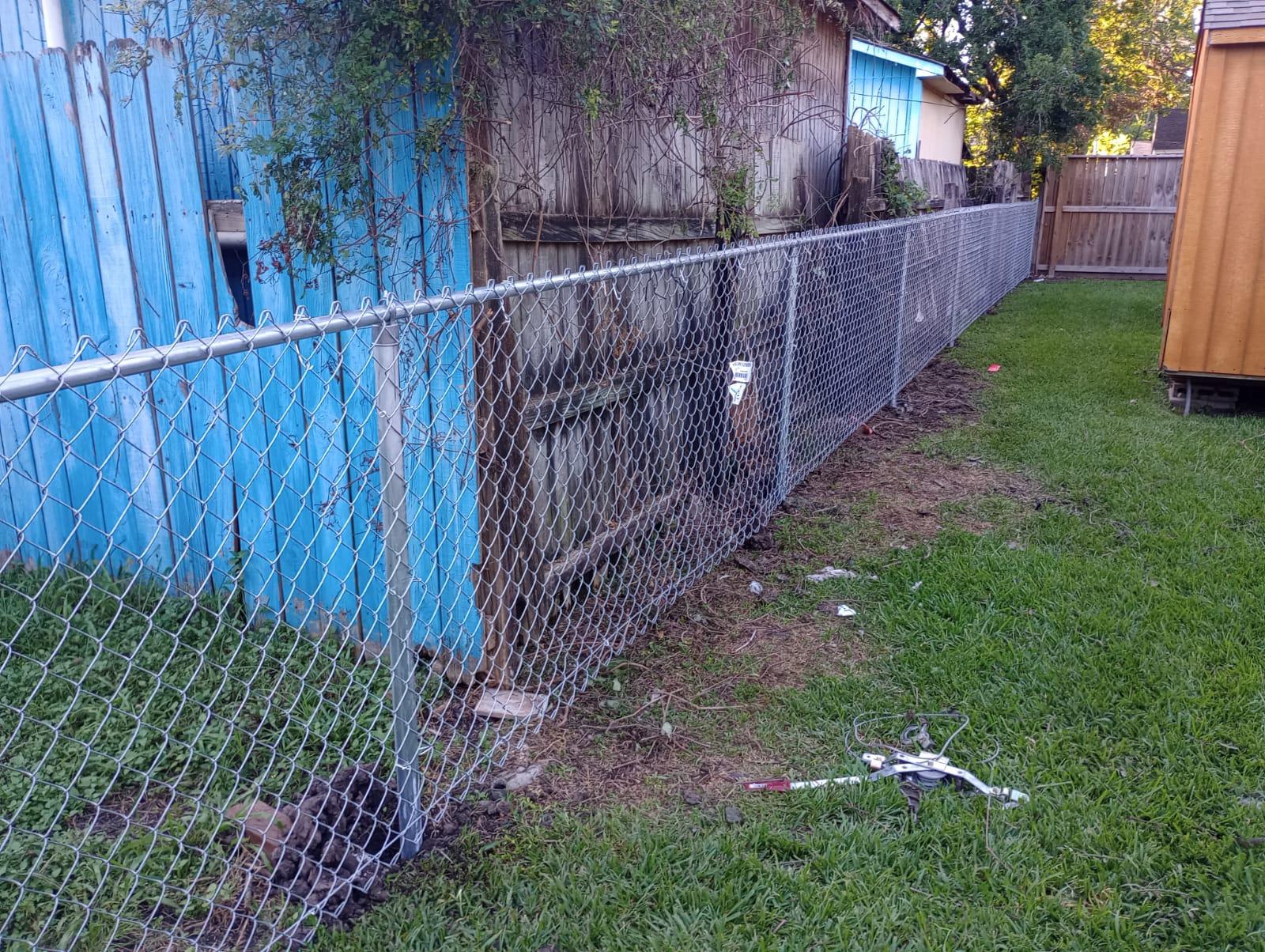
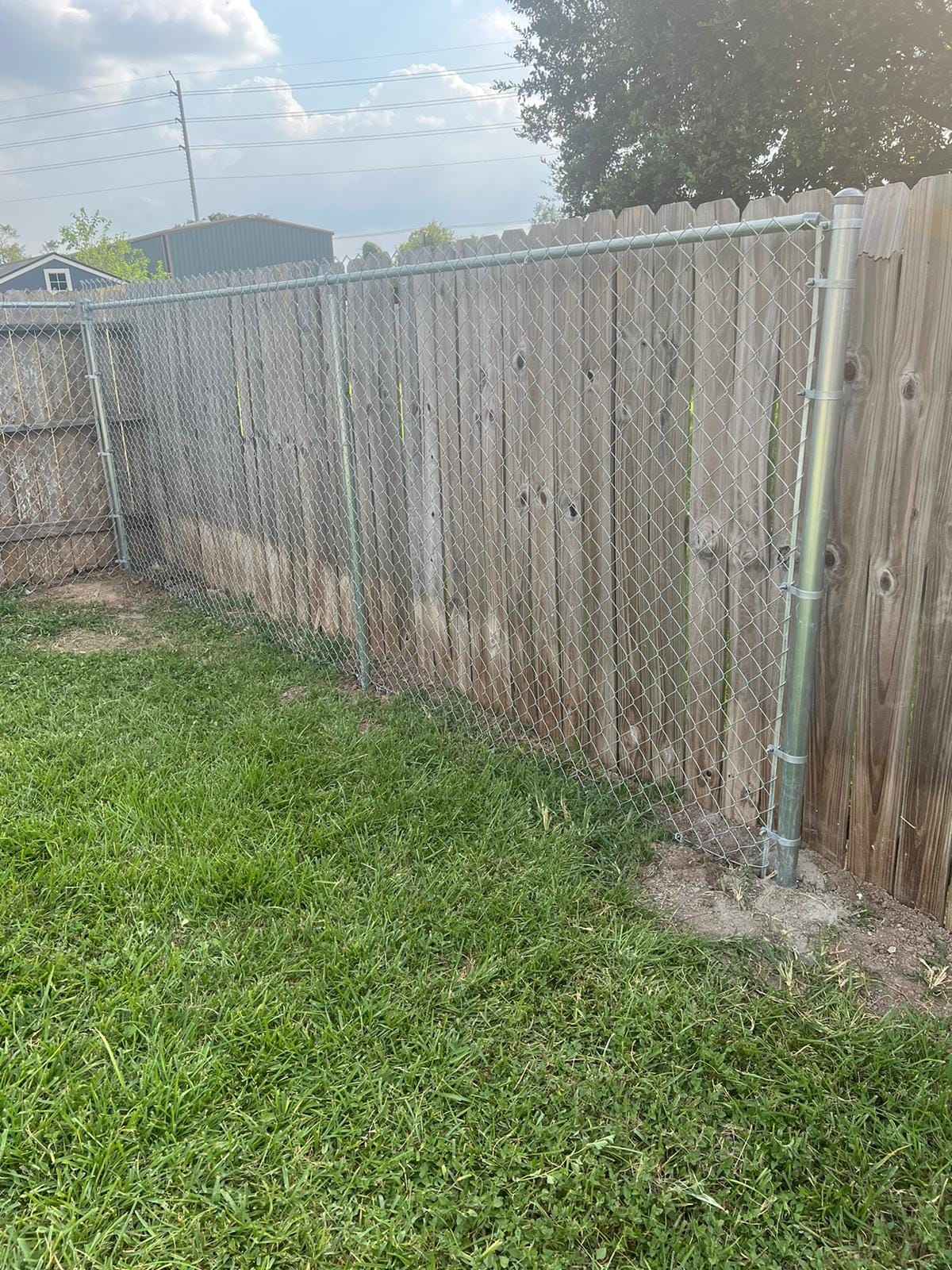
- Galvanized. Bare zinc-coated steel, the silver look. It is the look most people mean when they say “chain link”.
- Vinyl-coated. ASTM F668 covers chain link fabric with a polymer coating, such as PVC, over zinc- or aluminum-coated wire, in black, green and other colors. It is just as open; it reads darker from the street. If your guidelines allow only coated fabric, ask whether the posts and rails must be coated too. See black chain link vs galvanized.
- With privacy slats. Slat makers rate their products by a “wind load and privacy factor”: Pexco lists about 75% for its lock-style slats, 90% for winged and finned slats, and 95% for hedge-style inserts. That much coverage makes the fence effectively solid for the City’s front-yard rule, adds wind load, and is a separate item for the HOA to approve. See chain link privacy slats.
Put the exact product on the application. “Black chain link” and “galvanized chain link with green slats” are different fences to a committee.
How open is it? Share of the fence you can see through
Chain link, 2 in mesh, compared with the City’s 60% transparent mark for a 5 ft front-yard fence
Chain link HOA and code checker
Tell the checker what your guidelines say about chain link and where you want it. It shows whether the HOA rule allows your plan, the height limit from the City or village code, and what to put in the application. You still need your own recorded guidelines: the checker can’t read them.
HOA logic follows the guideline wording you pick. Code limits: City of Galveston LDR Sec. 2.501(B) (front yard 4 ft solid, 5 ft if at least 60% transparent; 8 ft elsewhere); Village of Tiki Island Code 6-301(b), 6-302(b), (e); pool barriers: 2021 ISPSC 305.2.7, which Galveston’s pool permit requires. Slatted chain link is treated as solid here because the slats’ rated privacy is 75–95%; the City decides how it measures transparency. Texas Property Code 202.023 as amended September 1, 2025. A guide, not legal advice.
If chain link isn’t allowed
A ban on one material still leaves you a fence. The HOA can’t use its type rules to prevent a perimeter fence altogether (202.023(b)), so the question becomes which allowed material fits the job.
- For an open look and low upkeep: ornamental aluminum, which is also open enough for the City’s 5 ft front-yard option.
- For privacy: wood or vinyl, within the height limits for each spot.
- For pets: ask whether a chain link dog run is allowed out of street view; guidelines can treat parts of the lot differently. See chain link or wood for pets.
An existing chain link fence installed before September 1, 2025 may be maintained under 202.023(d). Replacing it outright is new work: apply first. And if the HOA does object to a fence you built, it has to send written notice and, for a curable violation, give you a reasonable time to fix it before fines (209.006). More in can my HOA make me remove my fence?
What Galveston customers say
5.091 Google reviews · read them all on Google
chainlink fence installation by mustang fencing, looks really great, thanks.
The services were highly professional, punctual, courteous, and offered at a fair price. They did an excellent job installing the fence at my house. I highly recommend their services!
I highly recommend using these guys as they’re very professional. Their work stands out and have very high attention to detail.
Reviews shown word for word from the Mustang Fencing Services Google Business Profile (Galveston), captured 2026-09-27.
Questions we get about this
Does chain link violate HOA rules?
Can my HOA ban chain link fences in Texas?
Is black vinyl-coated chain link more likely to be approved?
How tall can a chain link fence be in Galveston?
Can I use chain link for a pool fence?
Can my HOA make me remove an existing chain link fence?
Sources
Checked September 27, 2026. Rules change, so confirm with the City before you build.
- Texas Property Code, Chapter 202 — 202.006 (filing of dedicatory instruments), 202.023(b), (c)(2), (d) (perimeter fences; type of fencing; pre-September 1, 2025 fencing; amended by S.B. 711).
- Texas Property Code, Chapter 209 — 209.00505 (architectural denial notice), 209.006 (notice and cure period before fines).
- City of Galveston Land Development Regulations, Sec. 2.501 and 2.601 — Residential fence heights: 8 ft; front yard 4 ft solid or 5 ft if at least 60 percent transparent. Material list in 2.601 applies to nonresidential and mixed-use sites.
- Village of Tiki Island, Fence Ordinance (Code Ch. 6, Div. 6) — 6-301(b) hot-dipped galvanized chain link and fasteners; 6-302(b), (e) see-through type fences, 6 ft maximum.
- Chain Link Fence Manufacturers Institute, guide specification 32 31 13 — Table 1: 9 gauge wire 0.148 in, 11 gauge 0.120 in; 2 in mesh.
- ASTM F668-25, Polymer-Coated Steel Chain-Link Fence Fabric (scope) — PVC and other polymer coatings over zinc- or aluminum-coated steel wire.
- Pexco, Chain Link Fence Slats — Wind load and privacy factor: about 75% (Top Lock, Bottom Lock, LiteLink), 90% (Winged Slat, FinLink), 95% (HedgeLink, Fin2000).
- 2021 International Swimming Pool and Spa Code, Sec. 305.2.7 — Chain link openings in a pool barrier not more than 1¾ in, including with slats fastened top and bottom.
Want chain link your HOA will sign off on?
Send us the fence section of your guidelines. We’ll measure, mark the line, and put the fabric, finish, height and any slats on a written quote you can attach to your HOA application. Free on-site estimates across Galveston County.