
Do I Need HOA Approval Before Installing a Fence, and How Long Does It Take?
Usually yes, if your deed restrictions say so. But since 2021, and again since September 1, 2025, Texas law limits what an HOA can refuse. Here is what it can and can’t decide, what to send, and the deadlines if you are turned down.
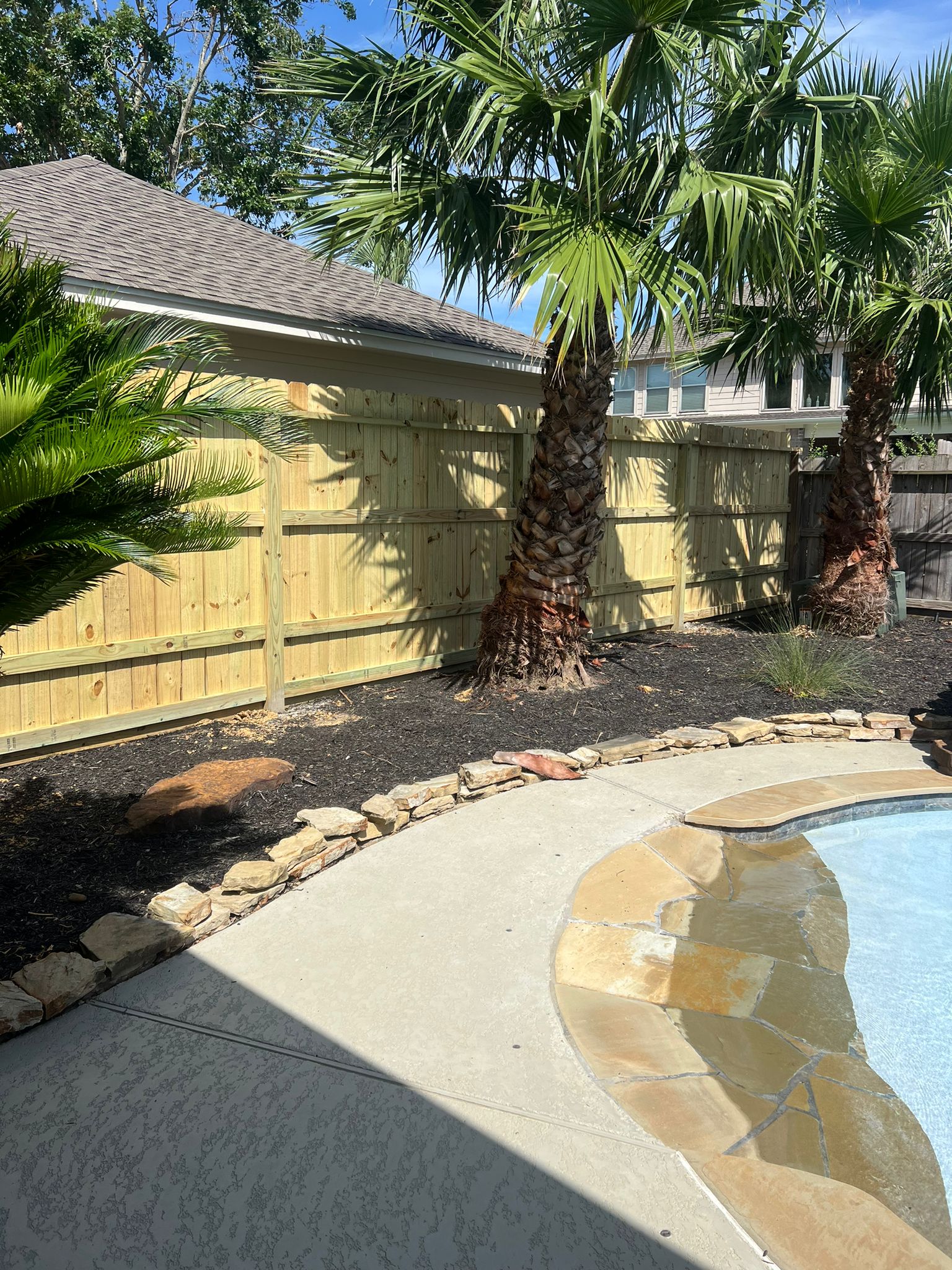
If your lot is under deed restrictions that require architectural approval, yes: apply and get approval in writing before the fence goes in. What the HOA may say no to is now limited by the Texas Property Code. It may not prevent a perimeter fence, but it may regulate the type (202.023). It may not ban a compliant mesh pool enclosure (202.022). It may require a driveway gate on a laned road to sit 10 ft back from the right-of-way, and bar fencing in front of the house if a covenant says so. How long approval takes is set by your guidelines, not the statute. If you are denied, you have 30 days to ask for a board hearing. Mustang Fencing Services also builds shared HOA and community fence projects — perimeter, amenity and pool fencing — across Galveston County.
Sources: Texas Property Code 202.022, 202.023 (amended by S.B. 711, effective September 1, 2025) and 209.00505; text retrieved from the Texas Legislature, September 27, 2026.
When you need HOA approval, and when you don’t
The duty to ask comes from your deed restrictions, not from the city. Texas law calls them dedicatory instruments: the declaration, bylaws and “properly adopted rules and regulations” of the property owners’ association (Property Code 202.001). If they say improvements need architectural approval, a new fence is an improvement, and you apply before you build.
Three checks before you start:
- Is anything recorded? A dedicatory instrument “has no effect until the instrument is filed” in the county real property records (202.006). Ask the management company for the recorded declaration and the current architectural guidelines. Owners are entitled to copies of association records (209.005).
- Who reviews it? Usually an architectural review committee. In a new subdivision the developer (the “declarant”) often still controls it, which matters for your appeal rights below.
- What else applies? The HOA and the City are separate. The City of Galveston’s fence permit application asks about historic districts, the Cedar Lawn conservation district and distance from mean high tide, and has you sign that “the fence does not violate any applicable deed restrictions or other restrictions on the premises.” So in practice, HOA approval comes before the City permit. See fence and gate permits on Galveston Island.
If there is no HOA and nothing recorded, there is no HOA step. You still sign that deed-restriction statement on the City form, so it is worth confirming.
What Texas law lets an HOA decide, and what it doesn’t
For years, what an HOA could require of a fence came almost entirely from its own documents. That changed in 2021. Property Code 202.023, “Security measures,” says an association “may not adopt or enforce a restrictive covenant that prevents a property owner from building or installing security measures, including but not limited to a security camera, motion detector, or perimeter fence.” Senate Bill 711 rewrote parts of it from September 1, 2025. Section 202.022 did the same for mesh pool enclosures. Both apply regardless of when your covenants were written (202.002).
That is not a free pass. The same section lists what the HOA keeps. The table sums it up; the drawing shows where each rule sits on a lot.
Fence questions under Texas Property Code 202.022 and 202.023
| Your fence | What the HOA may do | Section |
|---|---|---|
| Perimeter fence (side and back) | May not prevent it. May regulate the type of fencing. | 202.023(b), (c)(2) |
| Fence in front of the house | May prohibit fencing in front of the front-most building line, if a restrictive covenant provides for it | 202.023(c)(5) |
| Driveway gate on a laned road | May require it to be set back at least 10 ft from the right-of-way | 202.023(c)(4) |
| Fence across a sidewalk, drainage easement or license area | May prohibit fencing that obstructs them | 202.023(c)(3) |
| Mesh or clear-panel pool enclosure, metal frames, up to 6 ft | May not prohibit or restrict one that meets safety rules. May limit colors, but not ban black mesh in metal frames | 202.022(b) |
| Fence installed before Sept 1, 2025 | Owner may maintain perimeter or front fencing, notwithstanding the limits above | 202.023(d) |
| Confidential address or law-enforcement letter | May not prohibit perimeter or front fencing | 202.023(e) |
| Condominium | Section 202.023 does not apply | 202.023(a) |
Texas Property Code 202.022 and 202.023 (as amended effective September 1, 2025), quoted from the official text.
Front-yard fences and the “front-most building line”
The biggest change in 2025 is about fences in front of the house. An HOA may prohibit “the installation of fencing in front of the front-most building line of a dwelling,” but only “if provided by a restrictive covenant” (202.023(c)(5)). So the answer depends on what your recorded covenants say, not on a guideline someone wrote in an email.
Two exceptions override that power. The HOA may not prohibit perimeter or front fencing if your residential address is exempt from public disclosure under state or federal law, or if you give the association documentation from a law enforcement agency of your need for enhanced security measures (202.023(e)). And fencing of either kind installed before September 1, 2025 may be maintained (202.023(d)).
Notice the words. The statute says “front-most building line of a dwelling,” which follows the house, not the lot’s setback. It says “maintain,” which covers keeping an existing fence; it doesn’t say whether a full replacement counts. If you are tearing out and rebuilding a front fence, apply first.
For typical height, material and color rules, see common HOA fence rules, which also covers the material, style and finished-side rules boards tend to look at. Chain link has its own page: does chain link violate HOA rules?
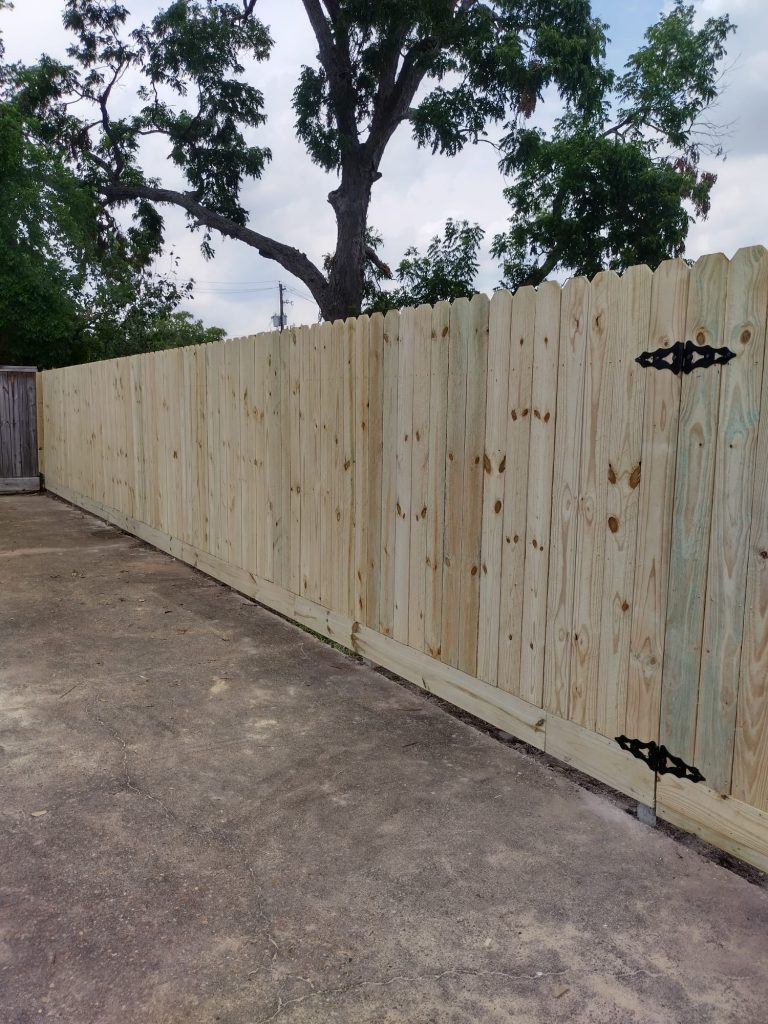
Driveway gates: the 10-foot setback
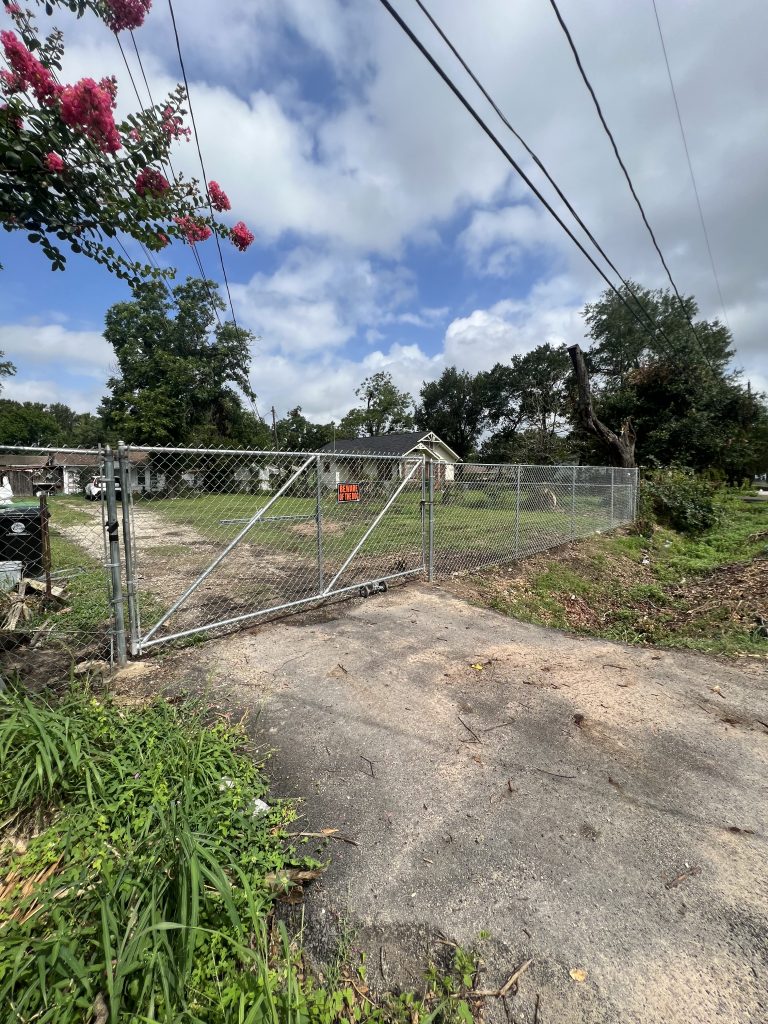
Section 202.023(c)(4) lets an HOA require “a driveway gate to be set back at least 10 feet from the right-of-way if the driveway intersects with a laned roadway.” The Transportation Code defines a laned roadway as “a roadway that is divided into at least two clearly marked lanes for vehicular travel” (541.302(7)).
Two practical points. The 10 ft runs from the right-of-way line, which is often behind the sidewalk, not from the curb. And the power is limited to laned roadways: on an unmarked neighborhood street, this section neither grants nor bars a setback, so your guidelines and City rules decide. The drawing shows the layout. For what boards ask to see on a gate application, see HOA approval for a driveway gate, and for gate styles, our driveway gate page.
Pool enclosures: what an HOA can’t ban
Section 202.022 protects a specific kind of pool fence: one that surrounds a pool, spa or other water feature, “consists of transparent mesh or clear panels set in metal frames,” is “not more than six feet in height,” and is “designed to not be climbable.” An HOA may not prohibit or restrict one that conforms to applicable state or local safety requirements.
It may still control appearance, including colors, but it may not prohibit an enclosure that is black and consists of transparent mesh set in metal frames. A wood, vinyl or iron pool fence is not covered by 202.022, so it is reviewed like any other fence. Either way, the barrier has to meet pool rules: the City of Galveston’s pool permit application requires the 2021 ISPSC, including self-closing gates. See pool fencing in Galveston and pool gate latch rules.
HOA fence approval checker
Answer a few questions about your lot and the fence you want. The checker shows what Texas law lets your HOA decide, what to put in the application, and, if you were turned down, your hearing deadline. It is a guide to the statute, not legal advice, and it can’t read your deed restrictions.
Based on Texas Property Code 202.006, 202.022, 202.023 (as amended September 1, 2025), 209.00505 and Transportation Code 541.302(7), text retrieved September 27, 2026. Section 202.023 does not apply to condominiums or to master mixed-use associations under Chapter 215; Section 209.00505 does not apply to condominiums. Deadlines count calendar days from the date the notice was mailed. Your own declaration and guidelines can add steps; read them, and talk to a Texas real estate attorney about a live dispute.
What to put in your application
The statute leaves the HOA room to regulate the type of fence, so the committee will want to see exactly what you plan to build. Send enough that nobody has to guess:
- A site plan or survey with the fence line drawn on it, every gate, and any easements, sidewalks or license areas from the plat. The same sketch helps with the City permit.
- Height of the fence and of any posts or caps.
- Material and style: wood species or vinyl, board style, cap and trim, post type. A product sheet or photo helps.
- Color or finish, including whether wood will be stained.
- For a driveway gate: the distance from the right-of-way line to the gate and which way it swings.
- For a pool: the enclosure or barrier type, its height and the self-closing, self-latching gate.
- For a front fence under 202.023(e): the law-enforcement documentation, if you are relying on it.
Then put the same details on your fence quote, so what the HOA approves is exactly what gets built. For privacy fence options, see privacy fence installation; for security-driven designs, residential security fencing.
How long approval takes
There is no statewide clock for the first decision. Section 209.00505 sets deadlines only after a denial. The review time, and what happens if the committee doesn’t answer, is whatever your declaration and guidelines say. Read that part before you plan anything. Ask the management company how often the committee meets, and whether applications go by email or on a form.
Build the schedule in this order: HOA approval in writing, then the City permit, then materials and installation. The City form asks you to certify the fence doesn’t violate deed restrictions, and ordering materials before approval risks buying the wrong ones. If you are working to a deadline, such as a new pool or a dog arriving, submit early.
The clocks after a denial, in days
Texas Property Code 209.00505, for HOAs with more than 40 lots outside developer control
If you are denied, or if you built first
Denied. In an HOA with more than 40 lots, once the developer no longer controls or can veto the architectural committee, Section 209.00505 gives you an appeal to the board. The denial must be sent by certified mail, hand delivery or electronic delivery; must describe the basis for the denial in reasonable detail and any changes that would get approval; and must tell you that you may request a hearing on or before the 30th day after the notice was mailed. The board must hold the hearing within 30 days of receiving your request, with at least 10 days’ notice. Either side may ask for one postponement of up to 10 days, either side may record it, and the board may affirm, modify or reverse the decision. The checker above works out your deadline.
Built first. Before an HOA can fine you, it must send written notice by certified mail describing the violation and, for a curable violation, give you a reasonable period to cure and tell you that you may request a hearing within 30 days (209.006). A court can award up to $200 a day for a covenant violation (202.004), and the HOA’s exercise of discretion is presumed reasonable unless shown to be arbitrary, capricious or discriminatory. That is the expensive way to find out the rules. More on it in can my HOA make me remove my fence?
What Galveston customers say
5.091 Google reviews · read them all on Google
I recently hired Mustang Fencing Services for a fence installation, and I couldn’t be happier with the results. The team was professional, punctual, and very knowledgeable. They provided a detailed estimate and completed the job on time and within budget. Overall highly recommended Mustang fencing services
I am so pleased with the fence!! Your solution was exactly the right one and the team did a highly professional job. Frankly, I was amazed at how clean the job site was at the completion of the project. Feel free to list me as a reference and a very happy customer. Thanks again and please let the men know That I appreciate their hard work and quality craftsmanship.
We took the services to replace our decade-old rotten fence with a modern one. The Services were Professional, completed the job on time, and the fence looked great, giving a new look to our house and they left the yard spotless. Highly recommend!
Reviews shown word for word from the Mustang Fencing Services Google Business Profile (Galveston), captured 2026-10-05.
Questions we get about this
Do I need HOA approval to put up a fence in Texas?
Can my HOA stop me from building a fence?
How long does HOA fence approval take?
What happens if my HOA denies my fence?
Can an HOA ban a front-yard fence in Texas?
Can my HOA ban a pool fence?
Sources
Checked September 27, 2026. Rules change, so confirm with the City before you build.
- Texas Property Code, Chapter 202: Construction and Enforcement of Restrictive Covenants — 202.001 (definitions), 202.002 (applies regardless of date), 202.004 (discretion presumed reasonable; damages up to $200 a day), 202.006 (instruments must be filed in county real property records), 202.022 (swimming pool enclosures), 202.023 (security measures, including perimeter fences; amended by S.B. 711, effective September 1, 2025).
- Texas Property Code, Chapter 209: Texas Residential Property Owners Protection Act — 209.003 (applicability), 209.005 (owner access to records), 209.00505 (architectural review authority: more than 40 lots, denial notice, hearing request by the 30th day, hearing within 30 days), 209.006 and 209.007 (notice, cure period and hearing before enforcement).
- Texas Transportation Code, Section 541.302 — 541.302(7): a laned roadway is divided into at least two clearly marked lanes for vehicular travel.
- City of Galveston, Fence Permit Application (Rev. 03/2023) — Historic district, Cedar Lawn and mean-high-tide questions; applicant certifies the fence does not violate any applicable deed restrictions.
- City of Galveston, Swimming Pool Permit Application — Barriers must comply with the 2021 ISPSC, including self-closing gates.
Planning a fence in an HOA?
We’ll measure the lot, mark the fence line against the plat and the house, and put the height, material, color and gate details on a written quote you can attach to your HOA application. Free on-site estimates across Galveston County.