
HOA & Community Fencing and Gate Installation in Galveston County, TX
Perimeter fencing, gated entries and pool or amenity-area fencing for homeowners associations and shared communities, plus the access control and the board approval and budgeting process that goes with a shared project. For an individual owner’s own fence, see our HOA fence-rules guides below.
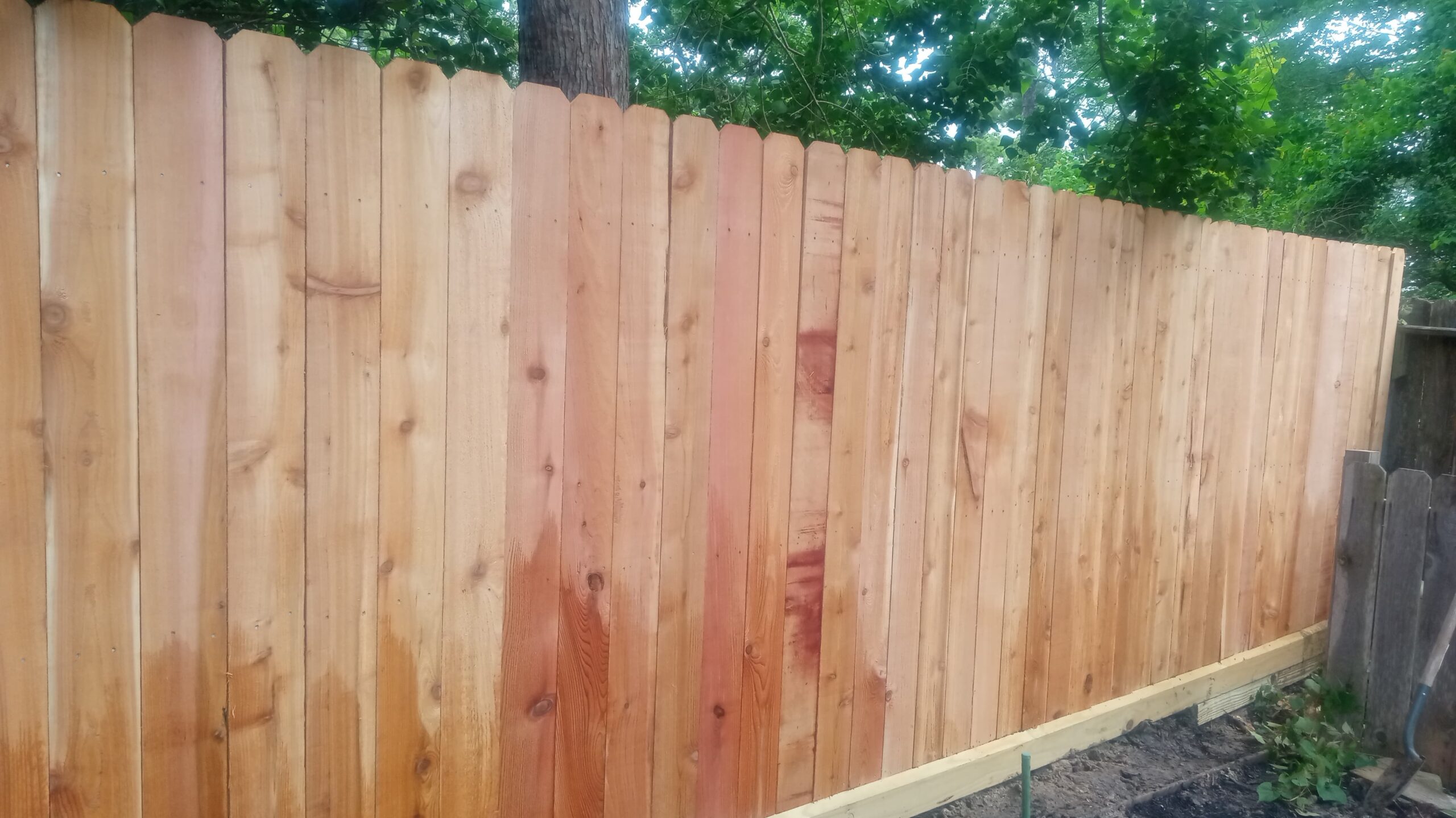
HOA and community fencing covers the perimeter, entry gates and amenity-area fencing an association owns and maintains — not an individual owner’s yard fence. The City of Galveston caps a common-area or multifamily fence at 8 feet (LDR §2.601), an automated entry gate has to meet ASTM F2200 and be listed to UL 325, and a pool or clubhouse gate has to open away from the water and be self-closing and self-latching under the 2021 ISPSC. Paying for it runs through the board: bids, a reserve-fund line item or a special assessment, a recorded vote, and proper paperwork if the project changes what owners are assessed, since a dedicatory instrument has no effect until it is filed (Property Code §202.006). For an individual owner’s own fence, see our HOA fence rules and HOA approval guides.
Sources: City of Galveston Land Development Regulations §2.601; ASTM F2200 and UL 325 as adopted by City of Galveston Ordinance No. 23-012/23-013; 2021 International Fire Code Appendix D; 2021 International Swimming Pool and Spa Code §305; Texas Property Code §§202.001, 202.004, 202.006, 209.005. Checked October 11, 2026.
Who this page is for
This page is about the fencing and gates an association itself owns and builds: the community perimeter, entry gates, and fencing around a shared pool, clubhouse or other amenity. If you manage, govern or develop a Galveston-area community, this is the decision set:
- HOA boards and architectural committees planning or replacing a perimeter wall, entry gate or amenity fencing.
- Property managers collecting bids and bringing a recommendation to the board.
- Developers building a new gated community or amenity center from scratch.
If instead you are a single homeowner inside an HOA asking what you can build on your own lot, or how to get your own fence approved, see common HOA fence rules and do I need HOA approval? For other nonresidential and shared-property fencing, see commercial fencing and our gates overview.
What a shared community project usually covers
Four things come up on nearly every HOA or community fencing job, whether it is a new gated entry or a repair to an existing perimeter wall.
Who typically owns and pays for each kind of fence or gate
| Item | Who owns it | What governs it |
|---|---|---|
| Backyard or side fence on a single lot | The individual homeowner | HOA architectural approval plus a City permit — see our HOA approval guide |
| Perimeter fence or wall around the development | The association | Board decision; City common-area/multifamily height and material rules (LDR §2.601) |
| Main entry gate(s) | The association | ASTM F2200 / UL 325, access control, and possibly fire-marshal review of the access road |
| Pool, clubhouse or amenity-area fencing | The association | 2021 ISPSC barrier rules for self-closing, self-latching gates |
| Driveway gate at a single home inside an HOA | The individual homeowner | May have to sit back 10 ft from the right-of-way if the HOA requires it on a laned road (Property Code §202.023(c)(4)) |
City of Galveston LDR §2.601; ASTM F2200 / UL 325 as adopted by City of Galveston Ordinance No. 23-012/23-013; 2021 ISPSC §305; Texas Property Code §202.023(c)(4). Checked October 11, 2026.
Access control: who gets in, and how
An entry gate is only half the system. The other half is how residents, guests and vendors get a credential: a shared or individual keypad code, a proximity card or fob, a phone-entry or Bluetooth app, or a call box that lets a resident buzz a visitor in remotely. Most communities mix at least two of these — a card or app for residents, a call box or temporary code for guests and vendors.
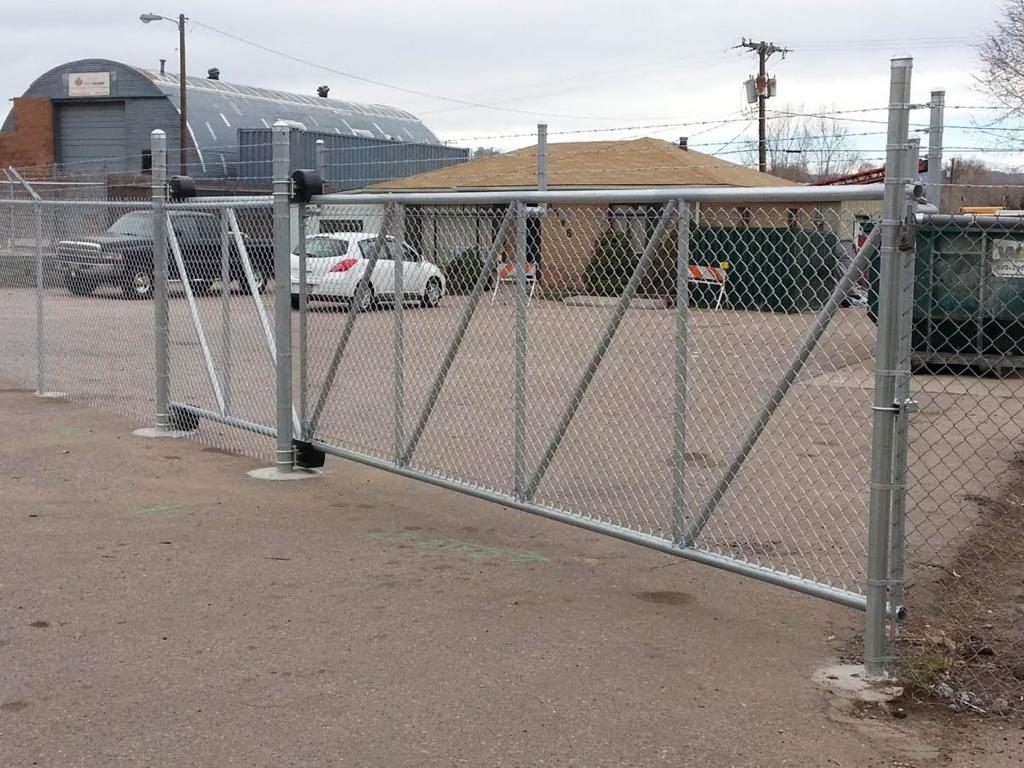
Whatever the credential, the gate hardware underneath it still has to meet ASTM F2200 and UL 325: an entrapment-protection system, controls at least 6 ft from the gate, two warning signs, and a separate pedestrian gate so people on foot aren’t using the vehicle gate. Our access control page covers the credential hardware itself — remotes, keypads, telephone entry and vehicle-detection loops — in more depth. If the board is specifically replacing a worn keypad or deciding between RFID cards and a cloud call box, see our guide to upgrading an HOA gate's access control for how those options and their maintenance contracts compare.
Perimeter and pool fencing: the two most common association jobs
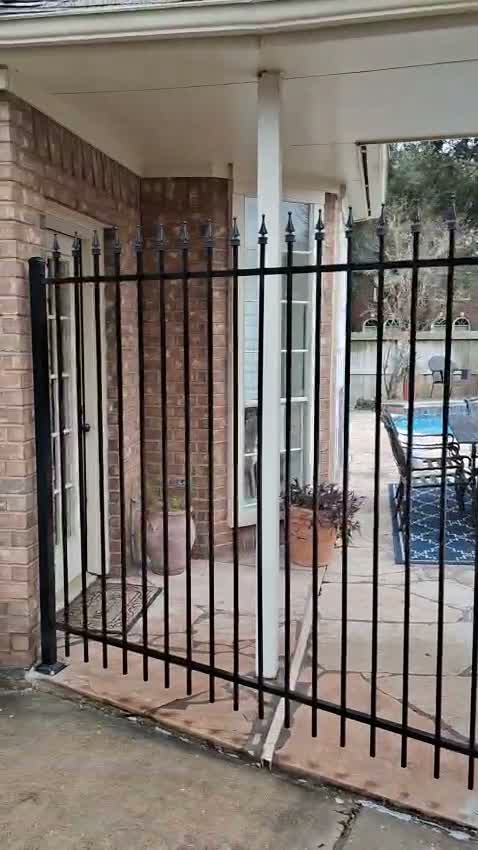
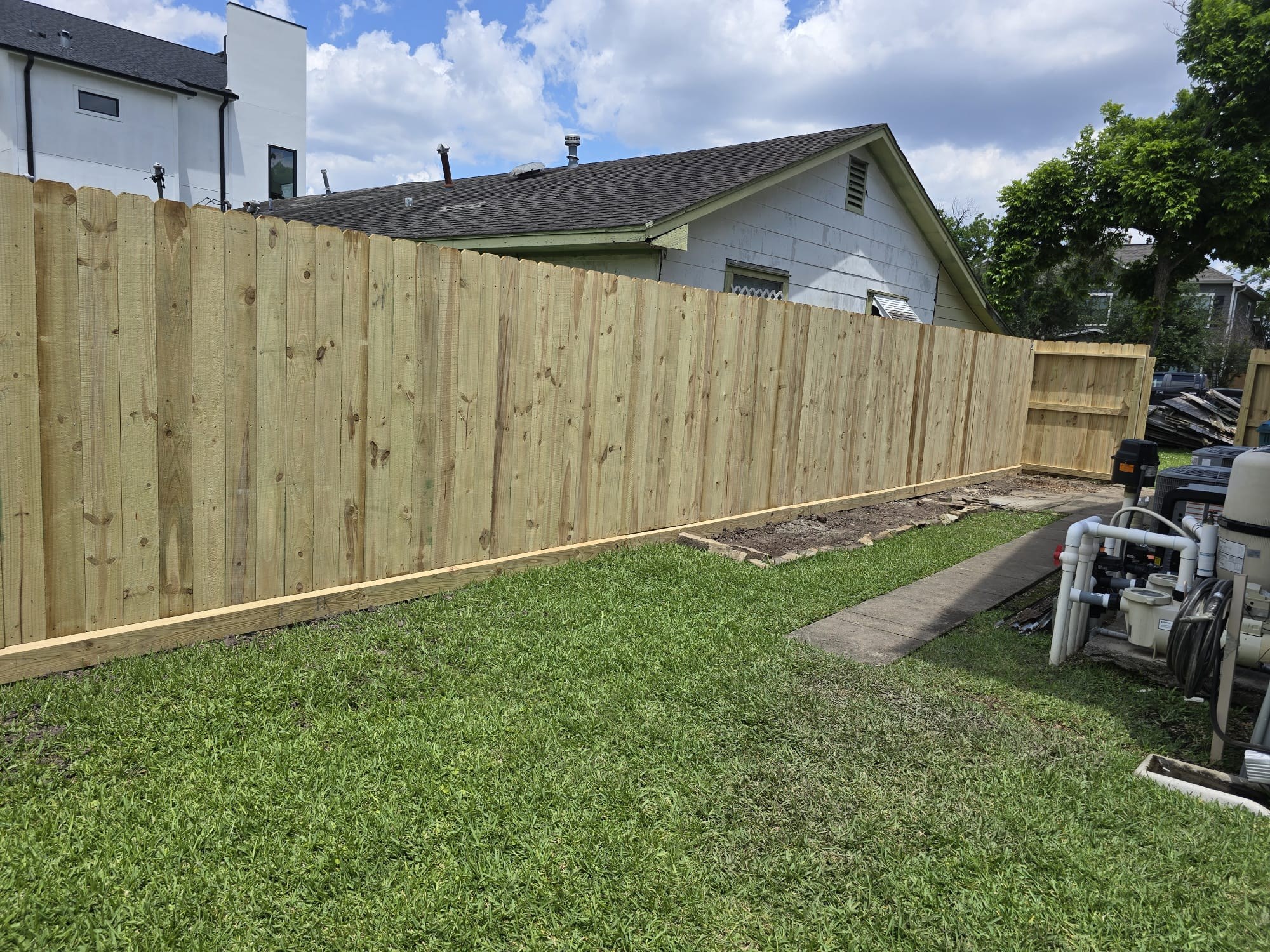
The perimeter is usually the biggest single line item: a wall or fence running the full boundary of the development, built to the same material and security-grade choices as any nonresidential or shared property — ornamental metal for a street-facing look, chain link with privacy slats for a service yard, or a solid screen where the HOA wants a continuous, uniform appearance.
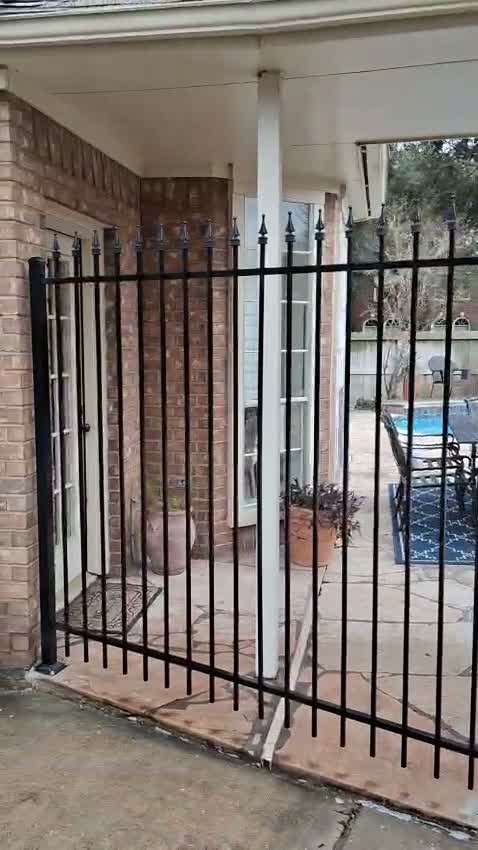
A shared pool or amenity-center enclosure is a separate, code-driven decision: it has to meet the City’s pool-permit barrier rules (2021 ISPSC §305), with gates that open away from the water and are self-closing and self-latching. A mesh or clear-panel enclosure in metal frames, up to 6 ft, follows the same definition Property Code §202.022 uses for an individual owner’s pool fence — a common, code-friendly reference design for a shared amenity pool too. See our full Texas pool fence code guide for the barrier rules themselves.
Board approval & budgeting, step by step
There is no statewide timeline for a board’s own capital project the way there is for denying an individual owner’s fence application. What does apply:
- Get competing written bids. Put the same scope in front of every bidder: linear footage, gate count, material, and whether the project includes access control or a pool enclosure.
- Decide how it’s funded. Compare the total to the reserve-fund line item for this component, or determine whether it needs a special assessment. Texas law sets no statewide threshold for a special assessment; your declaration sets the notice and vote it requires.
- Vote, and record it. The board’s exercise of discretionary authority on a restrictive covenant is presumed reasonable unless an owner shows it was arbitrary, capricious or discriminatory (Property Code §202.004) — a recorded vote with the bids attached is the paper trail that presumption rests on.
- File the paperwork if it changes what owners owe. A dedicatory instrument — including new or amended assessment authority — has no effect until it is filed in the county real property records (§202.006).
- Permit, then install. The City permit and the installation come after approval and funding are settled, not before.
Throughout the process, any owner can ask to see the bids, the contract and the budget: association books and records are open to owner inspection on request (§209.005).
HOA & community project scope checker
Enter the perimeter or entry fencing involved and how many gates. You'll get a minimum post count, the height limit that applies to a common area, and what to check before you take it to the board for a vote. This is a planning aid, not a price -- a free on-site estimate gives you a written number for the bid file.
Post count: the straight runs (total footage minus gate openings, assumed 14 ft per vehicle gate and 4 ft per walk gate) divided into spaces of no more than 10 ft, plus one terminal post at each corner and each gate jamb. Height: City of Galveston LDR §2.601.B.1 (common-area/multifamily use). Gate: ASTM F2200 / UL 325; 2021 IFC Appendix D if it is the sole fire-apparatus access. Pool/amenity gate: 2021 ISPSC §305. Budgeting: Texas Property Code §§202.004, 202.006, 209.005. Planning aid only, not an engineering review, a permit, or legal or financial advice.
What Galveston customers say
5.091 Google reviews · read them all on Google
Very professional and friendly. Gotten automatic gates done and they are done to perfection! Thank you
had an excellent experience with mustang fencing From the initial consultation to the final installation, the team was professional, punctual, and attentive to detail. They helped me choose the perfect fence style to match my property and ensured everything was installed with precision. The quality of materials is top-notch, and the fence has completely transformed the look and security of my home. I highly recommend mustang services to anyone looking for reliable and high-quality fencing services!
My new fence looks fantastic and has added both privacy and style to my yard. Highly recommend their services for anyone in need of fencing!
Reviews shown word for word from the Mustang Fencing Services Google Business Profile (Galveston), captured 2026-10-19.
Questions we get about this
What does "HOA and community fencing" cover?
What does an automated entry gate at a gated community have to meet?
Does Texas Property Code Chapter 202 apply to the HOA’s own perimeter and amenity fencing?
Does a shared pool or clubhouse gate need to be self-closing?
How should a board budget for a shared fence or gate project?
How is this different from your other HOA fence pages?
Sources
Checked October 11, 2026. Rules change, so confirm with the City before you build.
- Texas Property Code, Chapter 202: Construction and Enforcement of Restrictive Covenants — 202.001 (dedicatory instrument / property owners’ association definitions), 202.004 (board’s discretionary authority presumed reasonable), 202.006 (instruments must be filed in county real property records), 202.022 (pool enclosure definition), 202.023(c)(4) (driveway gate setback on a laned road).
- Texas Property Code, Chapter 209: Texas Residential Property Owners Protection Act — 209.005: owners may request copies of association books and records, including financial records.
- City of Galveston Land Development Regulations, §2.601 (Supplemental Nonresidential and Mixed-Use Standards: Fences and Walls) — common-area / multifamily fence height and approved materials.
- 2021 IBC §3110, Automatic Vehicular Gates (as adopted by City of Galveston Ordinance No. 23-011) — requires automated gates to comply with ASTM F2200 and operators to be listed to UL 325.
- 2021 International Fire Code, Appendix D (adopted by Galveston, Ord. 23-013) — gates across a fire apparatus access road: clear width, approval, manual opening by one person.
- International Swimming Pool and Spa Code 2021, Section 305 — pool/amenity gates open outward, self-closing and self-latching.
Where we install HOA and community fencing
We install HOA and community fencing across Galveston County and the Bay Area side of the mainland. We serve these towns directly:
Planning a shared community fence or gate project?
Send us the scope — linear footage, gate count, access control and whether a pool or amenity enclosure is included — and we’ll walk the property and put a written bid in front of your board. Free on-site estimates across Galveston County.

