
Wood Fence vs. Vinyl Fence: Which Fits Your Yard?
Wood is an organic material whose species decides what it needs; vinyl is rigid PVC that needs steel and aluminum reinforcement instead. That one difference decides how each looks, what it reacts to on a coastal lot, and how it wants to be maintained. Here is what the primary sources say, side by side.
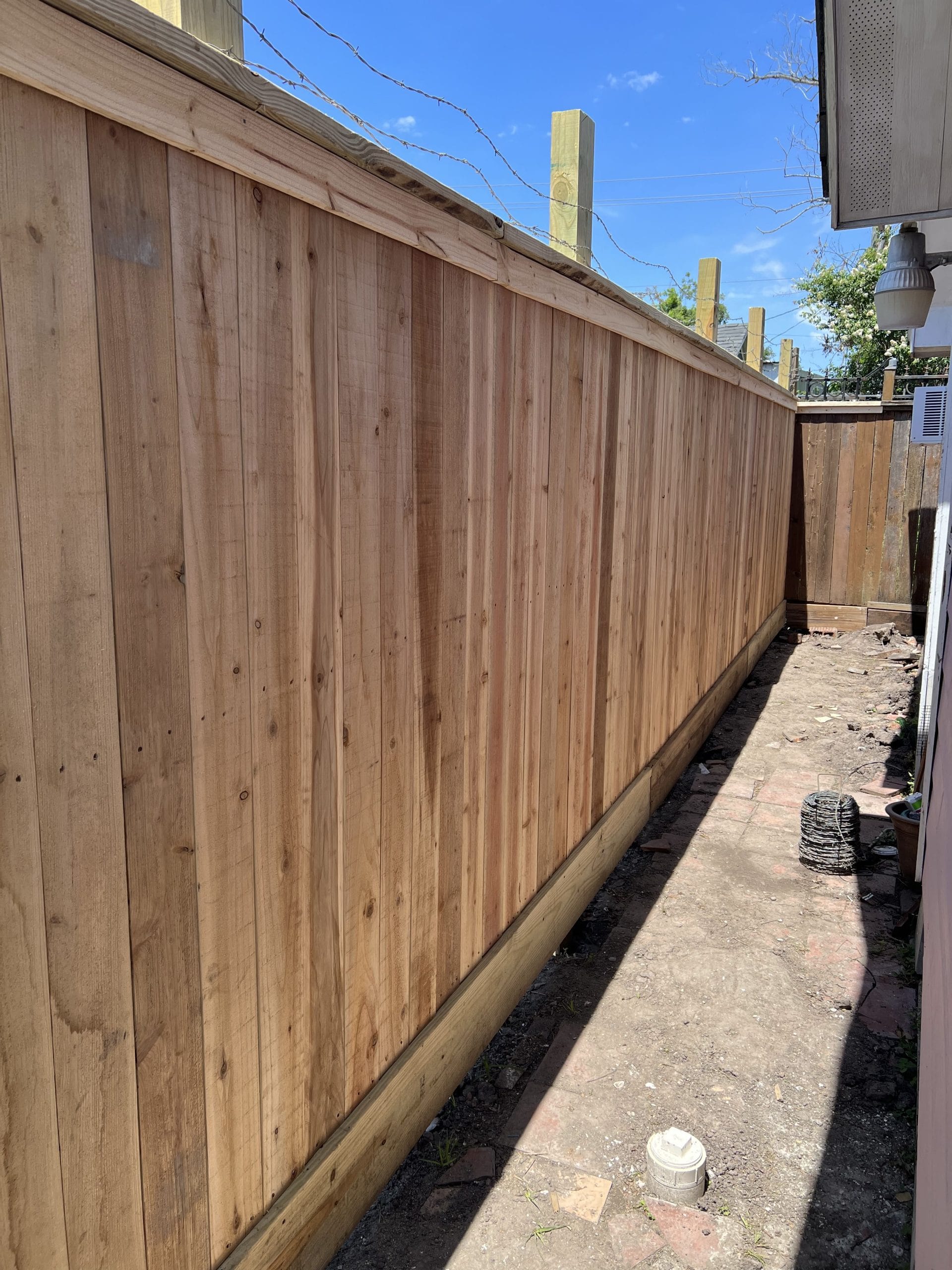
Choose wood if you want real grain and the option to change the stain colour later; choose vinyl if you want a clean solid colour that never needs a brush. Wood’s needs depend on species: cedar and old-growth redwood heartwood resist decay on their own, while most pine is pressure-treated instead, and either way the posts need a tougher, ground-contact treatment than the pickets and rails above them. Vinyl needs no species choice or treatment class — Bufftech instead reinforces its rigid PVC panels with a galvanized steel channel in the rails and aluminum stiffeners in the gate posts. The differences that actually show up on a coastal lot: wood can iron-stain from the wrong fastener and needs prompt finishing after installation; vinyl can distort where sunlight reflects onto it from nearby glass. Neither is the automatic “Gulf Coast” choice. The yard and your tolerance for upkeep decide.
Sources: USDA Forest Products Laboratory, Wood Handbook (2021), Tables 14-1/15-6, Ch. 8 and Ch. 16; SFPA Pressure-Treated Southern Pine (2019); ASTM F964; Bufftech installation guideline.
What each one actually is
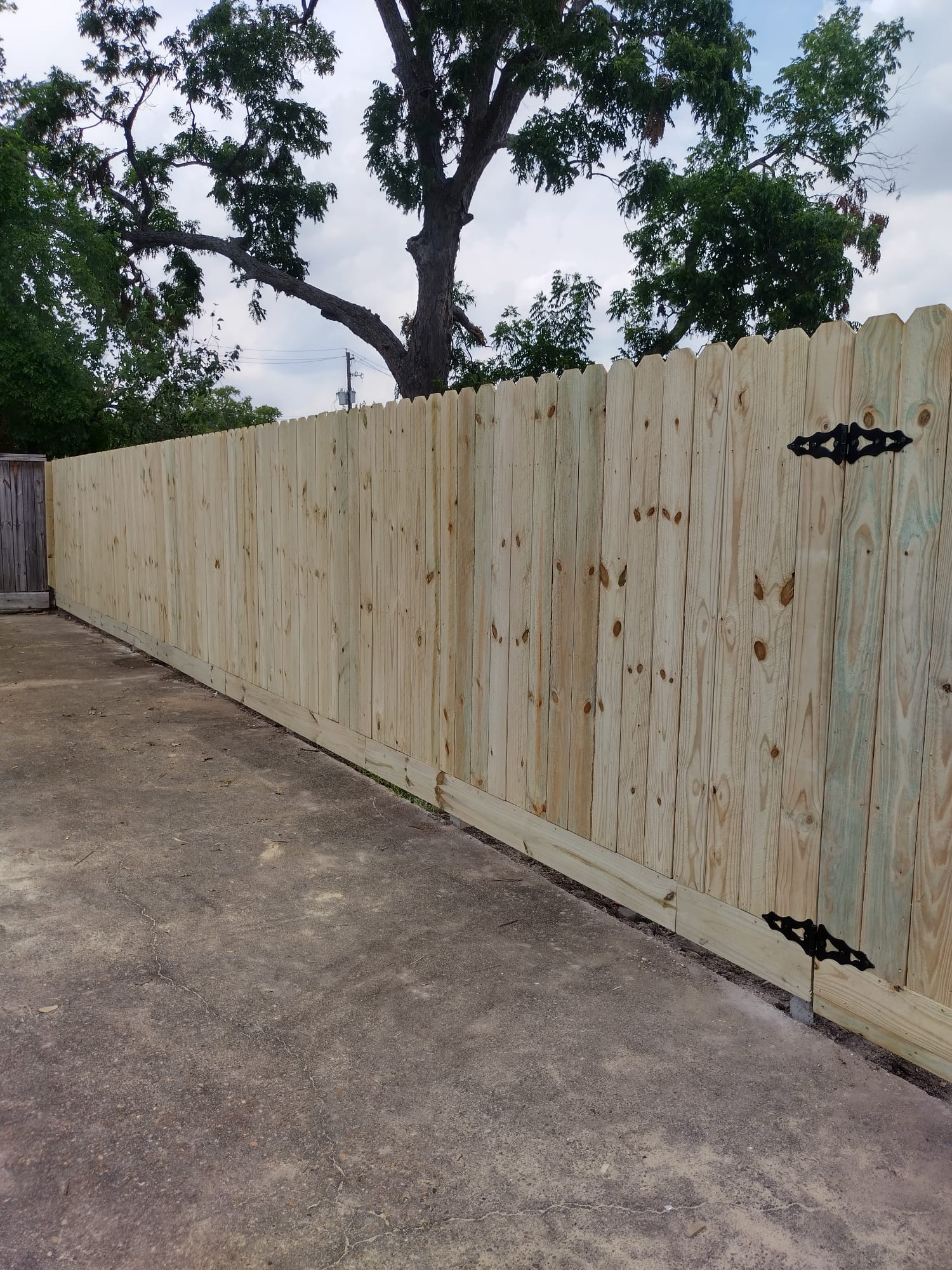
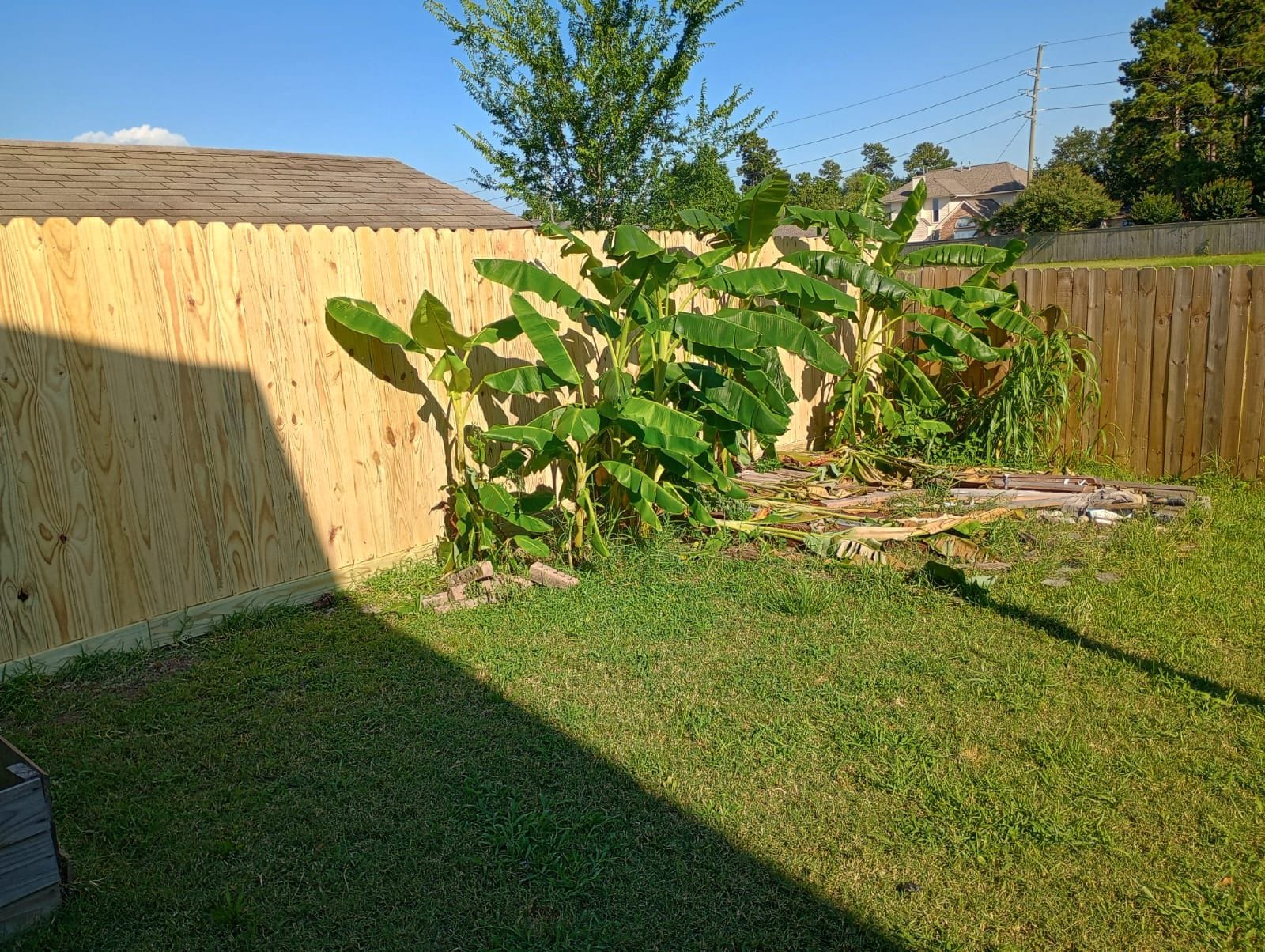
Wood fence material and upkeep both trace back to species. The USDA Forest Products Laboratory’s Wood Handbook rates cedar and old-growth redwood heartwood as resistant to decay on their own; most pine is rated slightly or nonresistant, which is why fence-grade pine is pressure-treated instead. Whichever species, the posts sit in the ground and are held to a tougher American Wood Protection Association use category (UC4A, ground contact) than the pickets and rails above them (UC3A/UC3B, above ground).
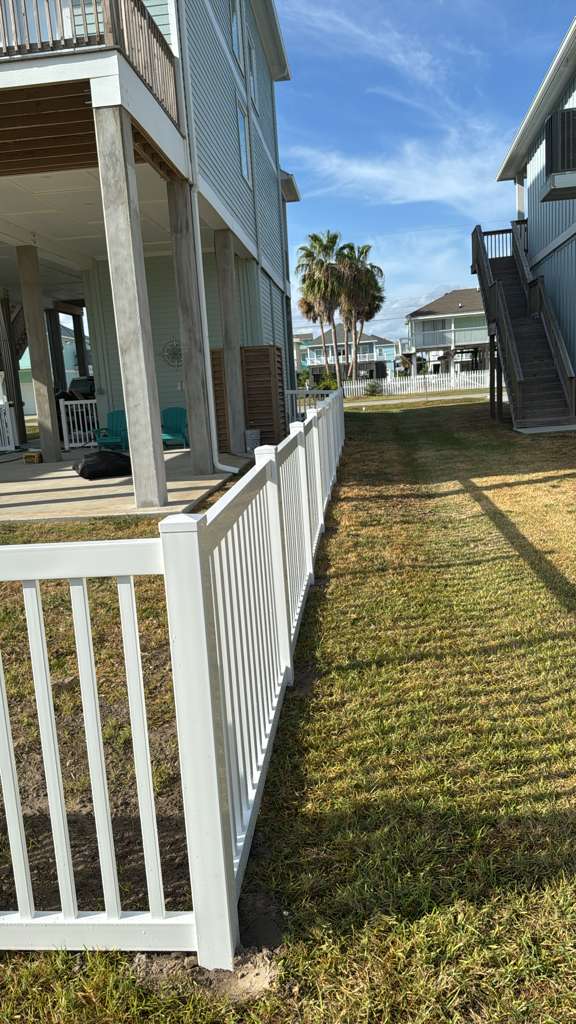
Vinyl fence is rigid PVC, standardized by ASTM F964. There’s no species or treatment decision — PVC on its own is flexible over a long span, so Bufftech ships its privacy panels with a galvanized steel channel inside the top and bottom rails, and aluminum stiffeners inside gate hinge and latch posts. That reinforcement, not a species choice, is what a vinyl quote is pricing on the structural side.
Finishing and upkeep
Wood needs a finish to perform long-term, and timing matters: the USDA Wood Handbook found that surface degradation starts within about a week of sun exposure, and a cedar test panel primed after just 1 week of exposure held its paint for 13 years, versus only 3 years after 16 weeks unprimed. A 3-coat paint system should last about 20 years once applied, and paint on a shaded face often lasts twice as long as on a fully exposed sunny one. Semi-transparent stain wears away rather than cracking, but needs recoating every several years. Finish promptly after installation, or before, and expect to recoat on a schedule.
Vinyl skips all of that. Bufftech’s own care guidance is mild detergent and a plastic scouring pad; there’s no wood fiber, so there’s nothing to stain or paint, ever.
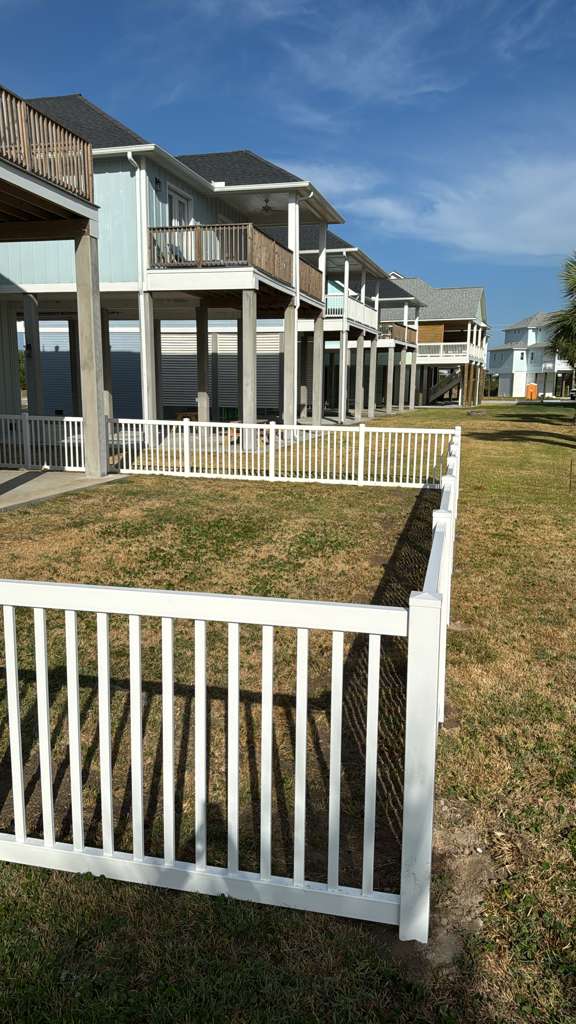
Side by side
| Wood | Vinyl (PVC) | |
|---|---|---|
| What it is | Natural material; species decides decay resistance (USDA Table 14-1) | Rigid PVC profiles (ASTM F964) |
| Decay/rot handling | Cedar/old-growth redwood: naturally resistant. Most pine: pressure treated | Not applicable — PVC does not rot |
| Post treatment | UC4A, ground contact — higher retention than the boards above (AWPA) | Steel/aluminum reinforcement instead of a treatment class (Bufftech) |
| Fasteners | Stainless or hot-dip galvanized (ASTM A153) near tannin-rich species | Standard hardware; no tannin-staining risk |
| Finishing | Stain (4–8 yr) or paint (~20 yr); finish promptly after install | Never — mild detergent cleaning only |
| Coastal watch-out | Iron stain from the wrong fastener; checking/warp from moisture movement | Reflected sunlight from glass can distort it (Bufftech) |
| Wind rating path | Engineered per site; no single universal product rating | Up to 75 mph at 8 ft only with heavy-duty posts + wind kit (Illusions) |
| Height limit | Same City of Galveston rule for both: 8 ft general; front yard 4–5 ft (LDR §2.501) | Same rule |
Wood or vinyl: what does your yard say?
Answer five questions about the fence line. The checker says which points on this page apply to your yard and which material they lean toward. No prices; we quote both on site.
Based on the USDA Wood Handbook (decay resistance, fastener staining, movement, paint/finish life), the SFPA Pressure-Treated Southern Pine guide, the Bufftech installation guideline, and the Illusions 75 MPH Wind Kit instructions. Read October 24, 2026.
What drives the price of each
We don’t publish prices on guide pages, and the cost gap between wood and vinyl depends more on the species or product line chosen than on the category. For wood, species, treatment class, board style and fasteners each move the per-foot price — see what drives wood fence cost per foot. For vinyl, panel style, reinforcement and wind-kit hardware do the same — see what drives vinyl fence cost. What moves a quote either way: height and style, post size and embedment the maker or treater requires, any reinforcement or wind kit, the number of gates, slope, and how much old fence comes out first. We price both on the same site visit so you can compare the same fence line. Financing is available through the providers on our financing page, subject to credit approval.
What Galveston customers say
5.091 Google reviews · read them all on Google
I chose Mustang Fencing for my backyard due to their reputation for quality and security. Their wood fencing exceeded my expectations, durable and visually appealing. The customer service was top-notch, and the installation was quick and efficient.
We just installed iron gate and it looks amazing thank you very much mustang fencing .
Mustang Fencing exceeded my expectations! Durable and attractive fencing options available. Excellent customer service. Highly recommended for quality fencing solutions.
Reviews shown word for word from the Mustang Fencing Services Google Business Profile (Galveston), captured 2026-10-19.
Questions we get about this
Is wood or vinyl better for a Galveston-area yard?
Does a wood fence rot faster than vinyl in Galveston’s humidity?
Can vinyl fencing be stained or painted like wood?
How often does a wood fence need to be refinished?
Does vinyl fencing get brittle or distort in the heat?
Do wood and vinyl fences follow the same height rules in Galveston?
Sources
Checked October 24, 2026. Rules change, so confirm with the City before you build.
- USDA Forest Products Laboratory, Wood Handbook: Wood as an Engineering Material (FPL-GTR-282, 2021) — Table 14-1 (decay resistance), Table 15-6 (AWPA use categories), Ch. 8 (fastener corrosion/staining), Ch. 4 (shrinkage/movement), Ch. 16 (finishing, paint/stain life, UV exposure before priming).
- Southern Forest Products Association, Pressure-Treated Southern Pine (2019 edition) — Table 3-1 (pickets/rails/trim vs. posts by use category); fastener/connector compatibility by preservative system.
- ASTM F964, Rigid PVC Exterior Profiles Used for Fencing and Railing — The product standard for vinyl fence profiles.
- Bufftech (CertainTeed), Molded and Extruded Fence Installation Guideline — Hole depth/size, concrete, steel channel and aluminum stiffeners, 1/4 in expansion cut, reflected-sunlight notice, care.
- Illusions Vinyl Fence, 75 MPH Wind Kit installation instructions — Privacy fences certified to 75 mph up to 8 ft with heavy-duty posts and the kit.
- City of Galveston, Land Development Regulations, Sec. 2.501 — Residential fence height limits, same for both materials.
Comparing wood and vinyl for your yard?
We’ll walk the fence line with you, look at species, sun, glass and wind exposure, and price both materials for the same run on one written estimate. Free on-site estimates across Galveston County.