
What’s the Best Fence Material for Hurricane-Prone Galveston?
There’s no single “best” material — the fence’s STYLE (how solid or open it is) changes its wind load as much as the material does, and each material handles salt-air exposure differently. This page compares across materials at a decision level: which styles cut wind load regardless of material, and which materials need the least salt-air maintenance. For engineering depth on one material, the linked guides below go deeper than this page does.
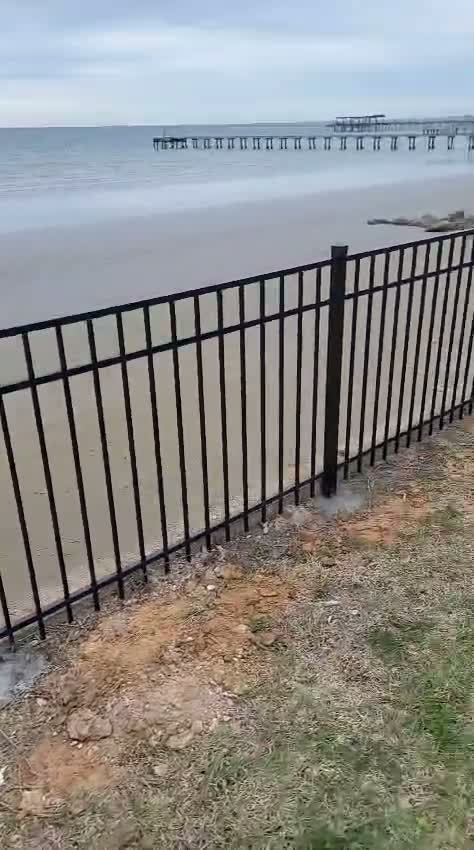
No single material is “best” for hurricane-prone Galveston — the fence’s style (solid vs. open) drives wind load as much as the material choice, and each material has a different salt-air maintenance profile. Open styles (picket, semi-privacy, louvered, chain link) let wind pass through and load the structure less than a solid panel of the same material. Separately, aluminum and vinyl-coated chain link resist salt-air corrosion better than bare galvanized steel, and vinyl/PVC has no metal to corrode at all. No material or style is rated “hurricane-proof” — that claim doesn’t exist for residential fencing.
Source: Chain Link Fence Manufacturers Institute, Wind Load Guide WLG 2445.
Design matters as much as material
For a property on Galveston Island or anywhere along the upper Texas Gulf Coast, the practical question isn’t just “which material” — it’s how solid the fence is. The Chain Link Fence Manufacturers Institute’s own wind load guide explains that a wind-load calculation is based on the fence panel’s net surface area — essentially, how much solid surface the wind actually pushes against — and that a solid panel transfers that full load to the line posts and then into the footing. A picket, louvered, or open-mesh style with the same footprint presents far less surface area, regardless of what it’s built from. This is one of the lowest-cost decisions a coastal homeowner can make: choosing a more open style is inherently more wind-resilient than a fully solid one, independent of material.
Material-by-material for salt-air exposure
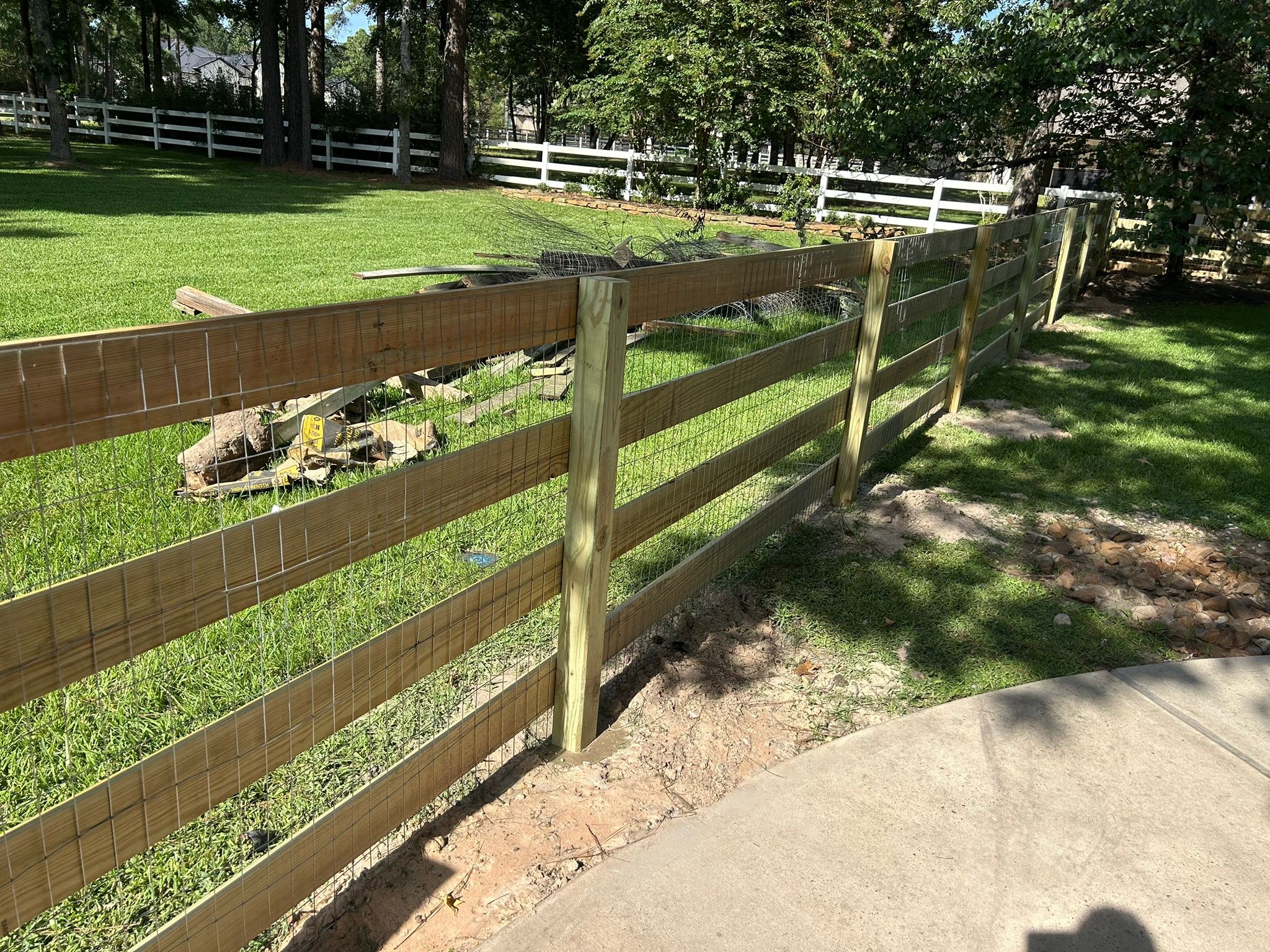
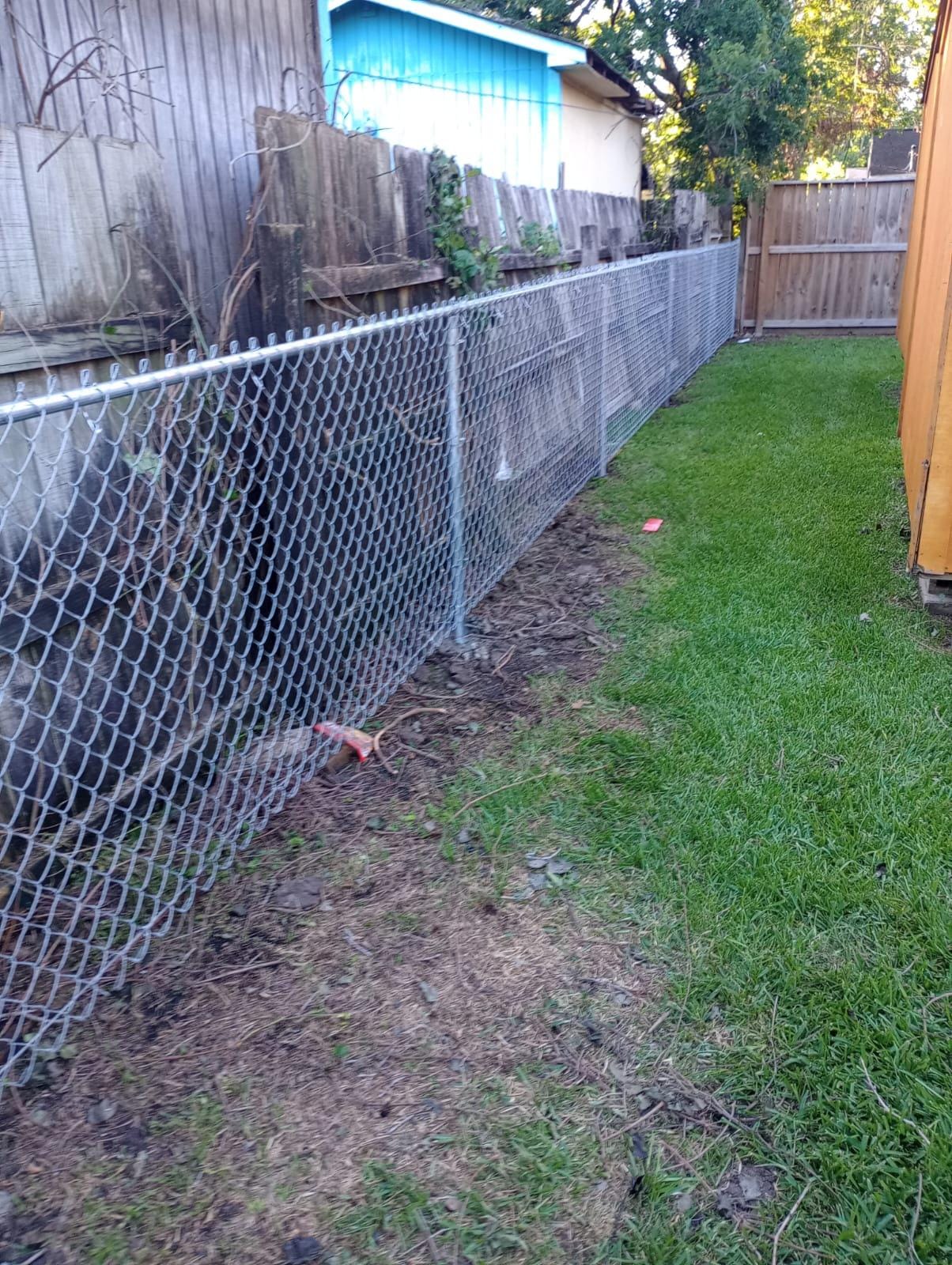
Separate from wind load, each material handles coastal salt air differently. Aluminum is naturally corrosion-resistant — it won’t rust the way steel or wrought iron can — because of its own oxide layer; the American Galvanizers Association’s electrode-potential data in sea water shows aluminum sits closer to zinc than carbon steel does, which is part of why fence hardware is specified in a particular metal rather than left to field substitution. Vinyl-coated chain link holds up well because the polymer jacket covers the metallic-coated wire underneath, shielding it from direct salt-air contact (ASTM F668 covers that coated-before-weaving construction). Vinyl/PVC fencing has no metal in it at all, so corrosion isn’t a factor — though ASTM F964, the standard that governs vinyl fence profiles, explicitly states it does not address windload; see our vinyl wind-resistance guide for that half of the picture. Wood can be used in hurricane-prone areas, but the fasteners matter more than the wood itself — standard fasteners corrode in salt air and weaken the connection points well before the wood fails. Bare galvanized chain link or steel needs the most attention: its zinc coating is a sacrificial layer that wears down over time, faster the closer it sits to open salt water (full numbers on our chain link lifespan page).
Where to go deeper on each material
| Material | Wind-load note | Salt-air note | Full engineering detail |
|---|---|---|---|
| Wood | Solid privacy panels carry the highest load of the styles above; open rail styles carry the least | Fasteners corrode before the wood does | Coastal durability guide |
| Vinyl / PVC | ASTM F964 explicitly excludes windload from its own scope | No metal, nothing to corrode | Vinyl wind-resistance guide |
| Aluminum | Depends on style (solid vs. picket), same as any material | Naturally corrosion-resistant; fastener metal still specified | Aluminum salt-air guide |
| Chain link (galvanized) | Open mesh carries very little wind load by design | Sacrificial zinc coating wears down fastest near open water | Chain link lifespan guide |
| Any material, general | Footing depth and embedment matter as much as the panel | Post/footing failure modes explained | Will my fence survive a hurricane? |
Which priority matters most to you?
Pick the one factor that matters most for your property, and see which material styles fit it best based on the sourced facts above. This doesn’t rank materials by price or assign a score — it points you to the right section.
What customers say
5.091 Google reviews · read them all on Google
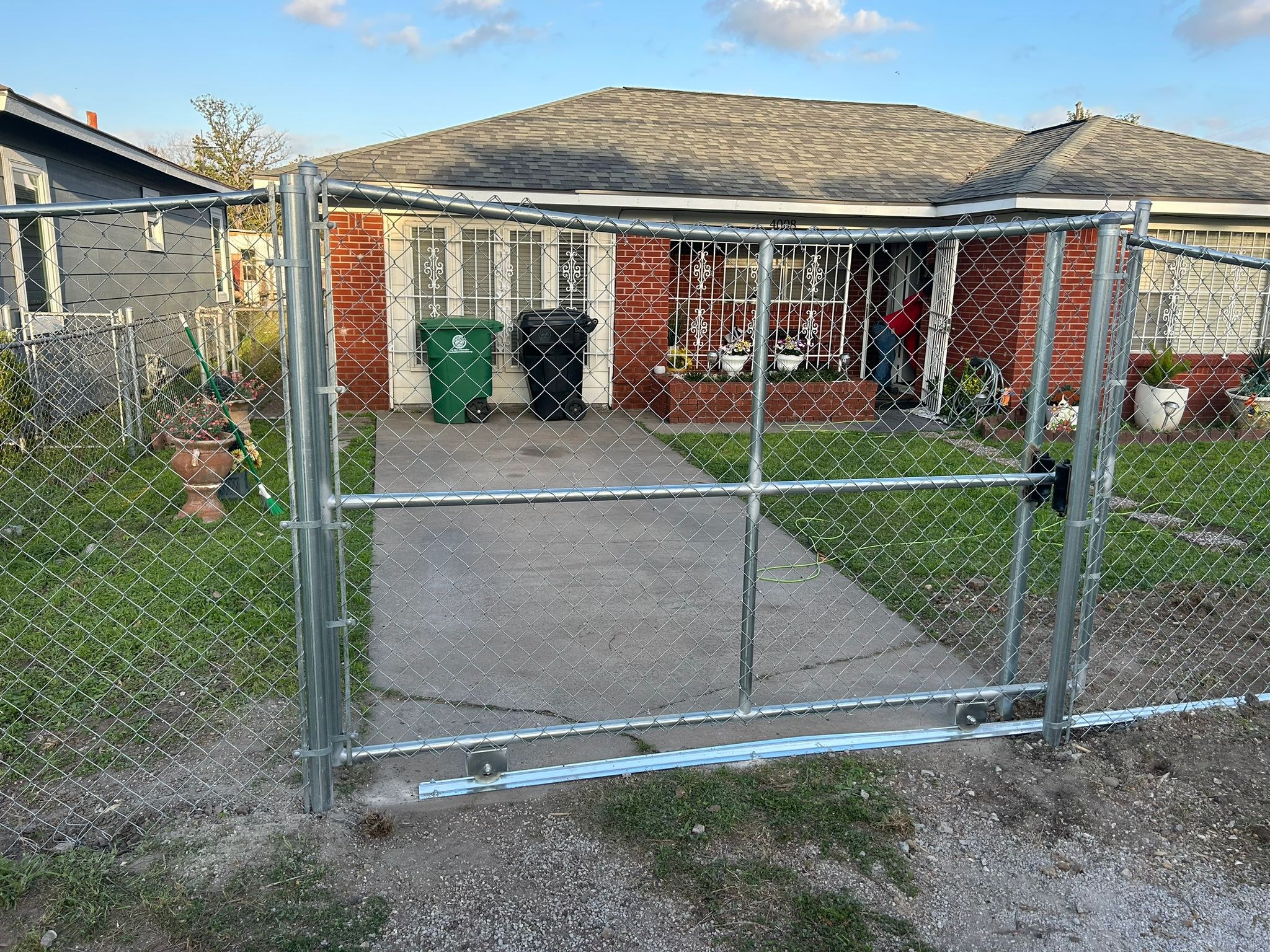
Seems to have helped out a after hurricane beryl we all appreciate it thank you!
Excellent work. They came in handy after the hurricane hit our backyard. Friendly people too.
had an excellent experience with mustang fencing From the initial consultation to the final installation, the team was professional, punctual, and attentive to detail. They helped me choose the perfect fence style to match my property and ensured everything was installed with precision. The quality of materials is top-notch, and the fence has completely transformed the look and security of my home. I highly recommend mustang services to anyone looking for reliable and high-quality fencing services!
Reviews shown word for word from the Mustang Fencing Services Google Business Profile (Galveston), captured 2026-10-19.
Questions we get about this
What’s the best fence material for a hurricane-prone area?
Does an open fence style really survive storms better than a solid one?
Is vinyl fencing good for hurricanes?
Does aluminum fencing rust near the coast?
Do I need an engineer to sign off on a fence in a wind zone?
Sources
Checked October 21, 2026. Rules change, so confirm with the City before you build.
- Chain Link Fence Manufacturers Institute, Wind Load Guide WLG 2445 — Net surface area and solid-panel load-transfer concept used for the style/porosity comparison.
- ASTM F964, Standard Specification for Rigid Poly (Vinyl Chloride) (PVC) Exterior Profiles — Scope statement excluding windload/loadbearing characteristics from the standard.
- ASTM F668, Standard Specification for Polymer-Coated Steel Chain-Link Fence Fabric — Scope: polymer coating applied over metallic-coated core wire.
- American Galvanizers Association, “Galvanized Steel with Aluminum Parts” — Electrode-potential table in sea water, cited for aluminum’s relative corrosion resistance.
Want a recommendation for your property?
Tell us your priority — wind, maintenance, privacy, or budget — and we’ll recommend a style and material combination for your lot and exposure.