
Will My Fence Survive a Hurricane?
No residential fence — regardless of price or material — comes with a guarantee against a direct hit from a major hurricane. But whether a given fence holds up in the much more common range of tropical storms and lower-category hurricanes comes down to a short list of checkable, sourced factors: how deep the posts are set, whether the panel is solid or open, and whether the hardware has corroded. Below is each factor, plus what the City and TDI actually require (and don’t) when you repair storm damage.
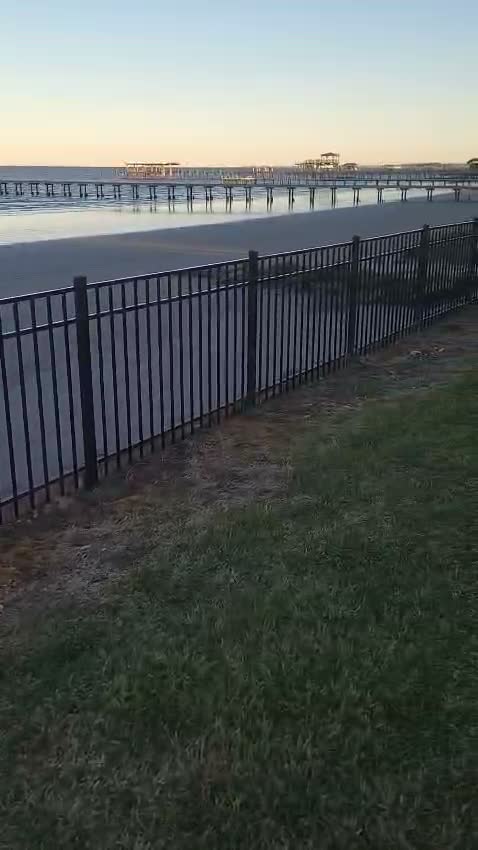
“Hurricane-proof” isn’t a real claim any residential fence can make, but “hurricane-resistant” comes down to three sourced, checkable factors: post/footing embedment depth (the post is a vertical cantilever fixed at the footing, per CLFMI’s own wind-load guide), whether the panel is solid or open (a solid panel catches far more total wind force than an open-mesh or picket design of the same height), and fastener/hardware condition. A fourth factor — wind-borne debris — isn’t governed by your fence’s design at all, and can damage even a well-anchored, well-built fence. Separately, if you’re repairing storm damage rather than planning ahead: the City exempts fences 7 ft and under from a building permit, and TDI explicitly does not require a windstorm inspection for fence repairs or replacement — two practical answers the usual “will it survive” question skips.
Sources: CLFMI Wind Load Guide WLG 2445; City of Galveston Ordinance 23-012 and Fence Permit Application; Texas Department of Insurance, “What you need to know about windstorm inspections.”
Why fences actually fail in a storm
“Will my fence survive a hurricane” usually gets answered with a vague reassurance or a vague warning, neither of which is checkable. The more useful question is narrower: of the ways a fence can actually fail in high wind, which ones apply to yours? CLFMI’s own wind-load guide treats a fence post as what it physically is — a vertical cantilever, fixed at its base to the footing and the ground around it — which means the failure that matters most is usually at the bottom, not the top. The sheet below separates that footing failure from the second mode (the panel and its fasteners being overloaded) and the third (debris, which isn’t a design question at all).

How fence style affects wind exposure in a storm
| Fence style | Wind exposure in a storm | What actually governs survival |
|---|---|---|
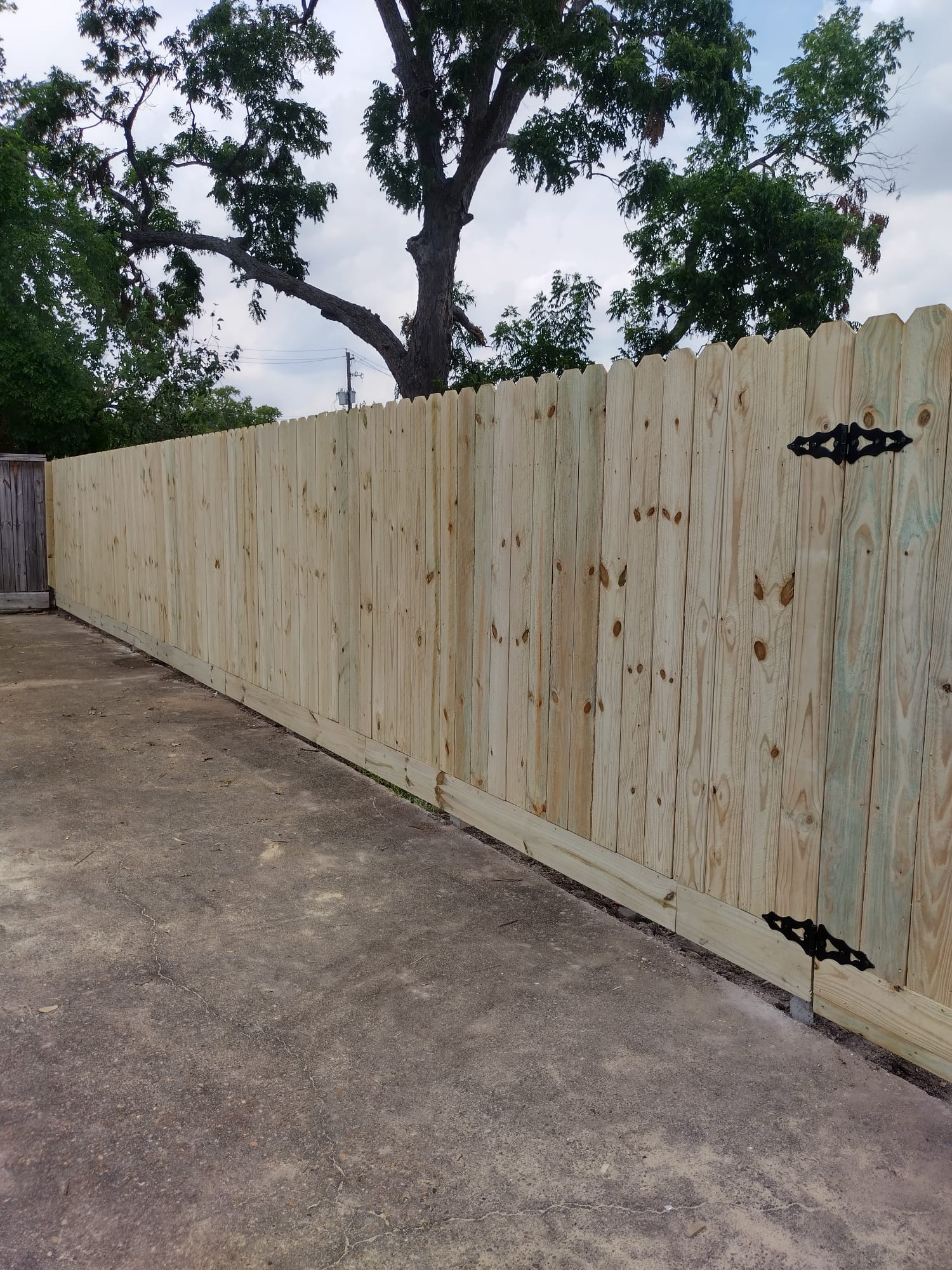
| Solid wood or vinyl privacy panel | Highest — a solid panel catches the full wind pressure across its face (CLFMI). | Post embedment depth and fastener condition matter more here than on open styles. |
| Picket or semi-privacy (gapped boards) | Lower than a solid panel — gaps let some wind pass through, reducing total face-on force. | Same embedment-depth logic, with less total force to resist. |
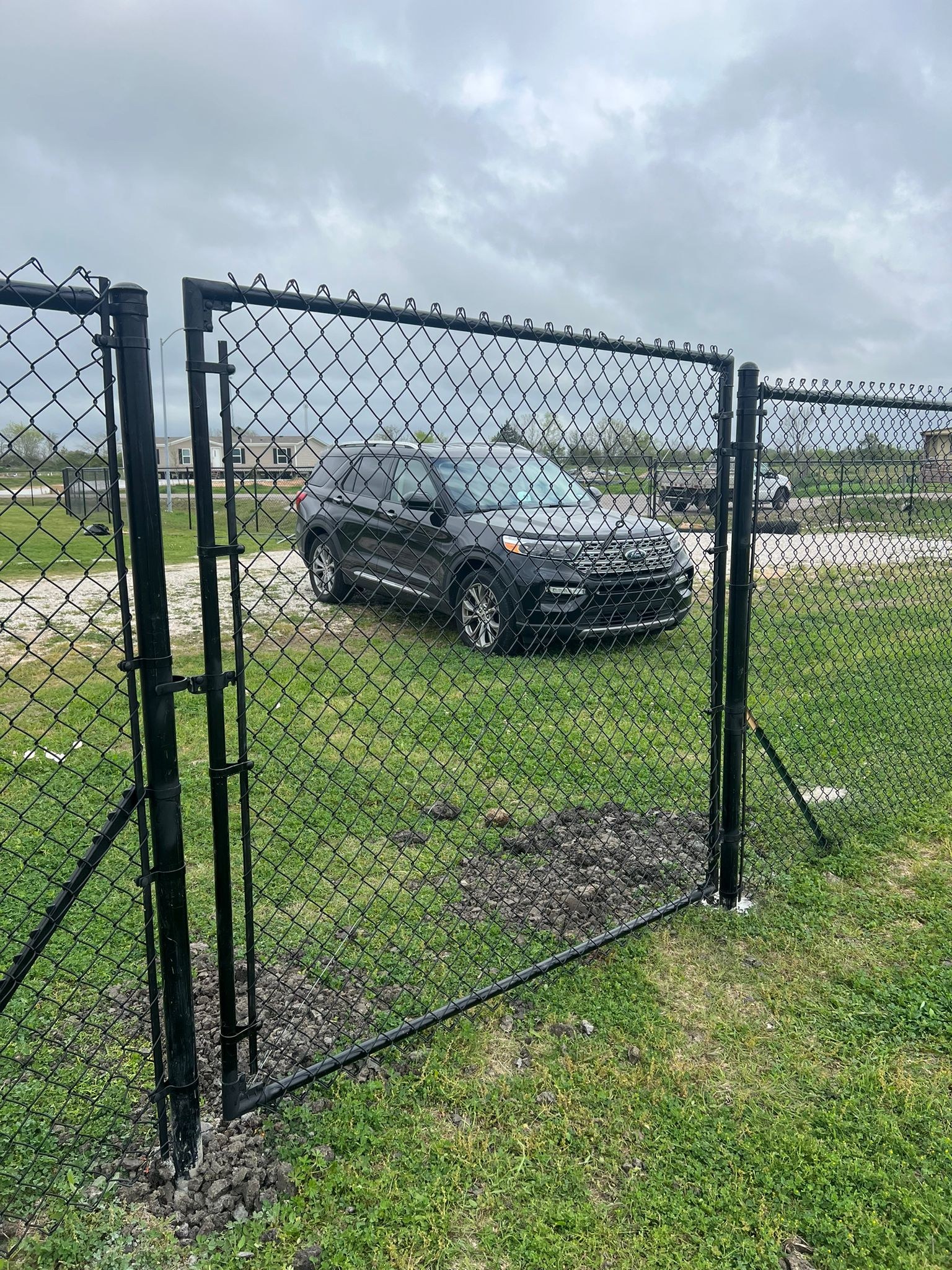
| Chain link (open mesh) | Low — CLFMI’s own worked examples show open mesh catches a small fraction of the force a solid panel of the same height does. | Footing and post size still matter, just at a smaller scale than a solid panel. |
| Ornamental metal / wrought iron (open pickets) | Low — similar open-design logic to chain link. | Fastener and hinge corrosion is the main upkeep item on metal styles near the Gulf. |
Source: CLFMI Wind Load Guide WLG 2445. The detailed worked numbers behind “highest” vs. “low” are on /hurricane-ready-fencing-galveston/ and /vinyl-fence-wind-hurricane-resistance/ — this table only summarizes the comparison across styles.
Storm-readiness quick check
Answer four questions about your own fence to see which of the sourced factors above actually apply to you. This does not estimate wind speed or issue a rating — it only points you to the right permit/inspection path and the right failure mode to ask your installer about.
Sources: City of Galveston Ordinance 23-012 (R105.2); City of Galveston Fence Permit Application; Texas Department of Insurance, “What you need to know about windstorm inspections”; CLFMI Wind Load Guide WLG 2445.
What Galveston customers say
5.091 Google reviews · read them all on Google
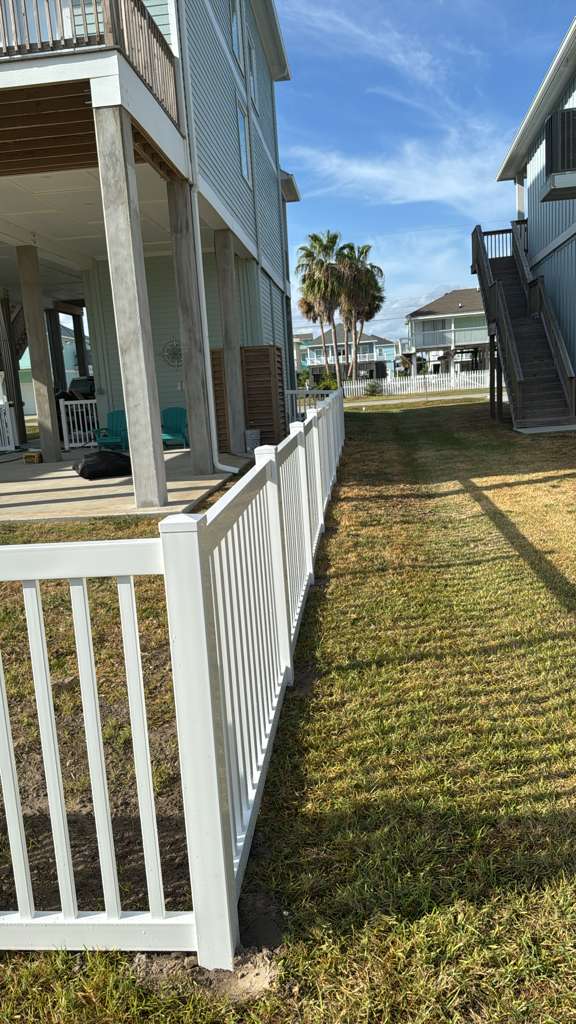
True professionalism is very rare in this day and age, these guys live upto their word and deliver on their service! Our fence was down in the July storm and these guys came and gave a reasonable quote, after confirming I received a time line and they delivered! Will recommend them to everyone I know who needs fencing done.
Excellent work. They came in handy after the hurricane hit our backyard. Friendly people too.
chainlink fence installation by mustang fencing, looks really great, thanks.
Reviews shown word for word from the Mustang Fencing Services Google Business Profile (Galveston), captured 2026-10-12.
Questions we get about this
Does homeowners insurance cover fence damage from a hurricane?
Do I need a permit to repair storm damage to my fence?
Does repairing a fence after a storm require a TDI windstorm inspection?
What actually determines whether a fence survives high wind?
Sources
Checked October 18, 2026. Rules change, so confirm with the City before you build.
- Chain Link Fence Manufacturers Institute, Wind Load Guide for the Selection of Line Post Spacing and Size (WLG 2445, 2018) — Post-as-cantilever overturn analysis; ASTM F567-referenced 24 in. minimum footing embedment depth.
- City of Galveston, Ordinance No. 23-012 (2021 IRC adoption) — R105.2 Work Exempt from Permit: fences not over 7 ft high exempt from a building permit.
- City of Galveston, Fence Permit Application (Development Services, Rev. 03/2023) — Mean High Tide / Coastal Division site-plan question; Land Development Regulations Art.2 §2.501/2.601 compliance requirement.
- Texas Department of Insurance, “What you need to know about windstorm inspections” — Exempt-work list naming “repairs or replacement of fences” as not requiring a WPI inspection.
Want a straight answer for your property?
Tell us your fence’s height, age, and style, and we’ll walk you through which of these factors actually apply — no guarantee language, no invented ratings.