
Does my commercial dumpster enclosure need to be fenced or screened?
In the City of Galveston, yes. City Code §15-4 requires a permit for every commercial dumpster and a solid fence around it, at least 5 feet tall and as tall as the container. Here is what the code says, how big and how tall to build, where the enclosure can go, and a checker for your site.
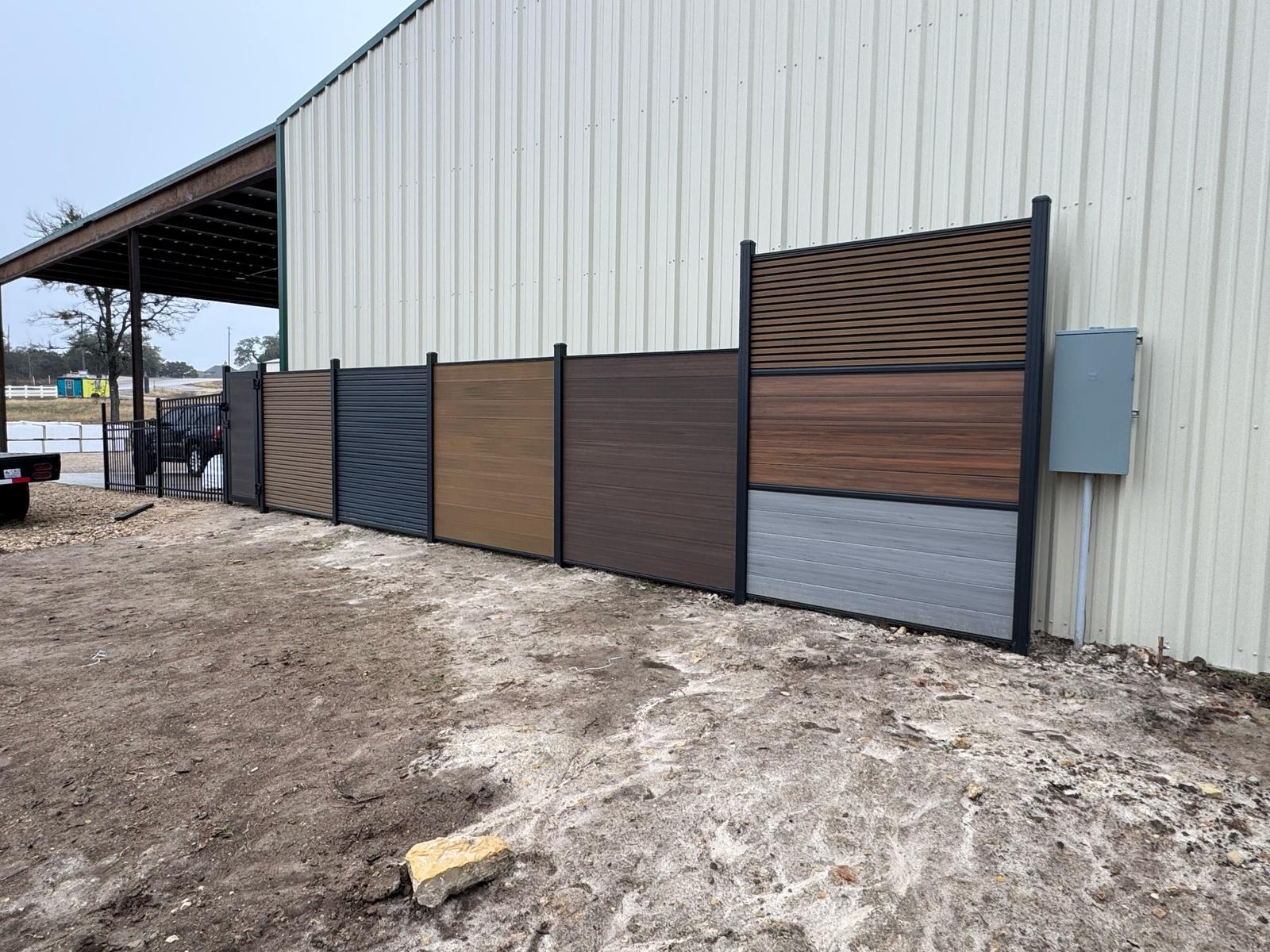
Yes, inside Galveston city limits. City Code §15-4 says every commercial dumpster or compactor needs a Public Works permit, and the City won’t issue one unless the container is screened. The screen is a solid fence at least 5 feet tall on all sides, and “the entire height of the container shall be screened”, so anything taller than 5 feet needs a taller fence. The enclosure gates stay closed except when trash goes in or the hauler services it. Placement rules keep containers 5 feet from combustible walls and 20 feet from small homes and bus stops, and out of the front yard.
Sources: City of Galveston Code of Ordinances, Chapter 15, Sec. 15-4 (municode, version of Aug 17, 2026); Wastequip front-load container drawings.
What Galveston’s code actually requires
Most articles about dumpster enclosures say “check your local code.” In Galveston the local code is short and specific. It is Chapter 15, Section 15-4 of the City Code, “Dumpsters, compactors and screening.” It covers four things: the permit, the screen, where the container can sit, and upkeep.
- A permit for every container. “It shall be unlawful for any person to use any commercial refuse container service, including but not limited to, dumpsters or compactors, within the city limits without first obtaining a city permit from the department of public works.” The application includes site plans, drawings and descriptive data.
- No screen, no permit, no pickup. Since September 1, 2000, franchise haulers “shall not service commercial refuse containers that do not display valid city permits,” and the City “shall not issue permits for display if the commercial refuse container is not screened.” The fence is what keeps the trash service running.
- Owner sign-off. The property owner and the applicant confirm, under oath or affirmation, that the owner authorizes the enclosure. The owner, the applicant and the hauler also confirm it doesn’t violate any deed restrictions. On a leased building, that means the landlord is part of the paperwork.
- Every year. Permits run from October 1 to September 30 and must be renewed. The code text sets the fee at $25 per container per year. The container carries the hauler’s name and its numbered permit.
- Upkeep. Lids and sliding doors stay closed, “all enclosure gates shall be kept closed at all times except when refuse is being deposited or serviced,” and no overflow around the enclosure. Violations can bring a fine of up to $500 a day and loss of the permit.
This is the rule inside Galveston city limits. If your business is in another city, that city’s code applies. The questions to ask are the same, but the answers may differ. For the fence work itself, see our dumpster and equipment enclosure service.
How tall: 5 feet is the floor, the container sets the real height
The code has two height rules in one sentence, and the second one decides most jobs. The fence has to be at least 5 feet tall, and “the entire height of the container shall be screened.” So the right height is whichever is taller: 5 feet, or your container.
Front-load containers get taller as they get bigger. From Wastequip’s drawings for its flat-top containers, a 2, 3 or 4 cu yd container sits under 5 feet. A 6 cu yd container is 62¼ inches, just over. An 8 cu yd is 82¾ inches and a 10 cu yd is 93½ inches, which is why the City’s sample plans are 8 feet high. Other makers’ containers differ by a few inches, so measure the one your hauler brings, or ask them for the spec sheet.
Plan for growth. The City says so directly: “because of the permanent nature of the screening, the City recommends the screening be built to accommodate a refuse container suitable for future capacity needs.” A restaurant that starts with a 4 cu yd bin and moves to an 8 later would need a taller fence, and possibly a bigger footprint. Building for the 10 cu yd size up front avoids rebuilding the enclosure later.
Front-load container height vs the 5 ft minimum
Overall height in inches, Wastequip flat-top front-load containers. The dashed line is the 5 ft (60 in) code minimum.
Check a dumpster enclosure against Galveston’s code
Pick the container and describe the spot. The checker applies City Code §15-4 and shows the minimum screen height, how the City’s sample plan fits, and any placement problems. It does not price anything.
Rules: City of Galveston Code of Ordinances Ch. 15, §15-4 (version of Aug 17, 2026); Land Development Regulations Art. 3 (Broadway design standards) and §10.404 A. Container sizes: Wastequip flat-top front-load drawings; your hauler’s container may differ, so measure it. This is a checklist, not a permit decision. The Department of Public Works decides.
Materials: what “solid fence” means on the ground
The code says “a solid fence.” It doesn’t list materials, so the test is simple: can you see the container through it? The common choices look like this:
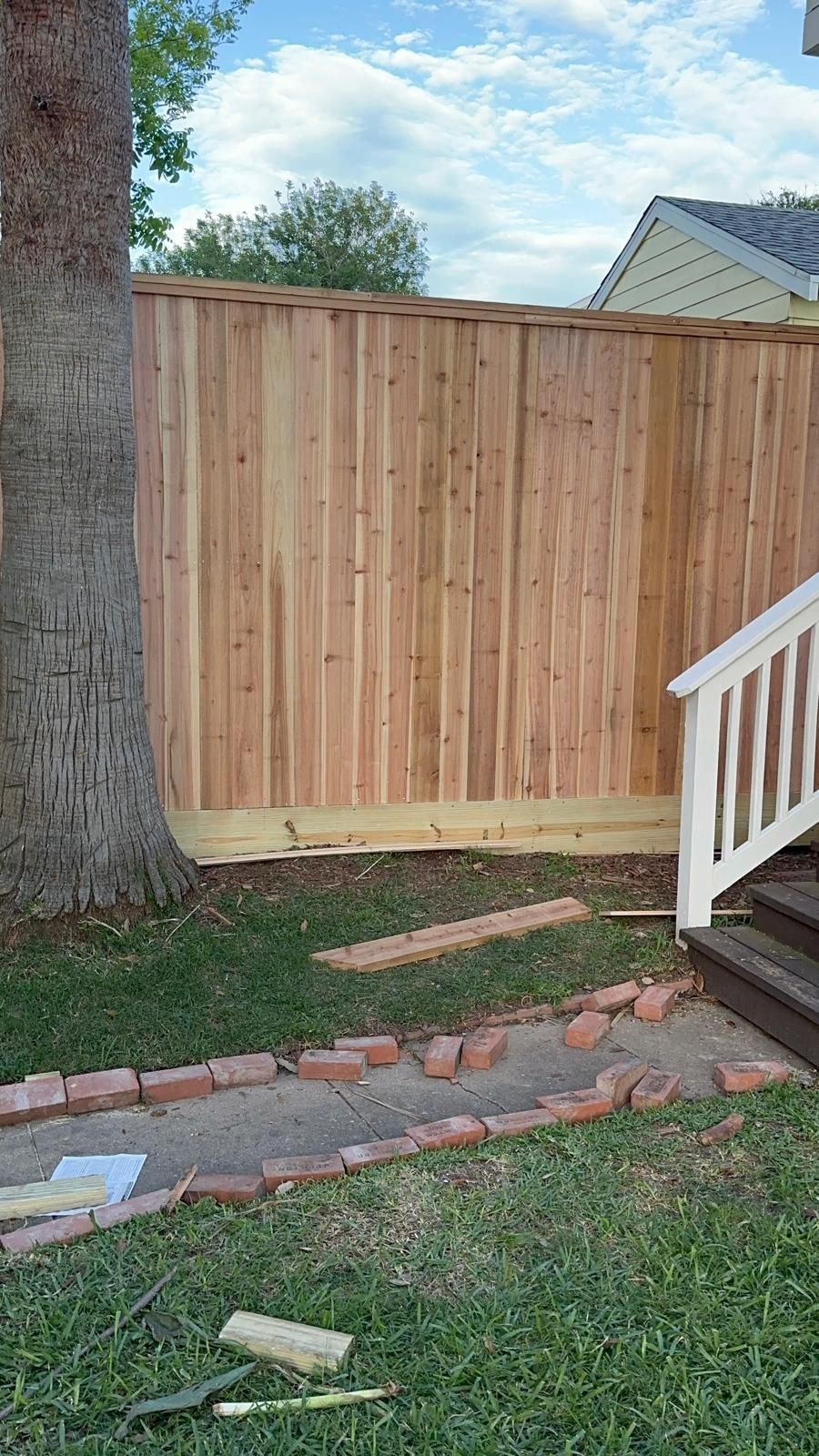
- Board-on-board wood. The boards overlap, so there are no gaps even after the wood dries and shrinks. Compare it with shadowbox in board-on-board vs shadowbox.
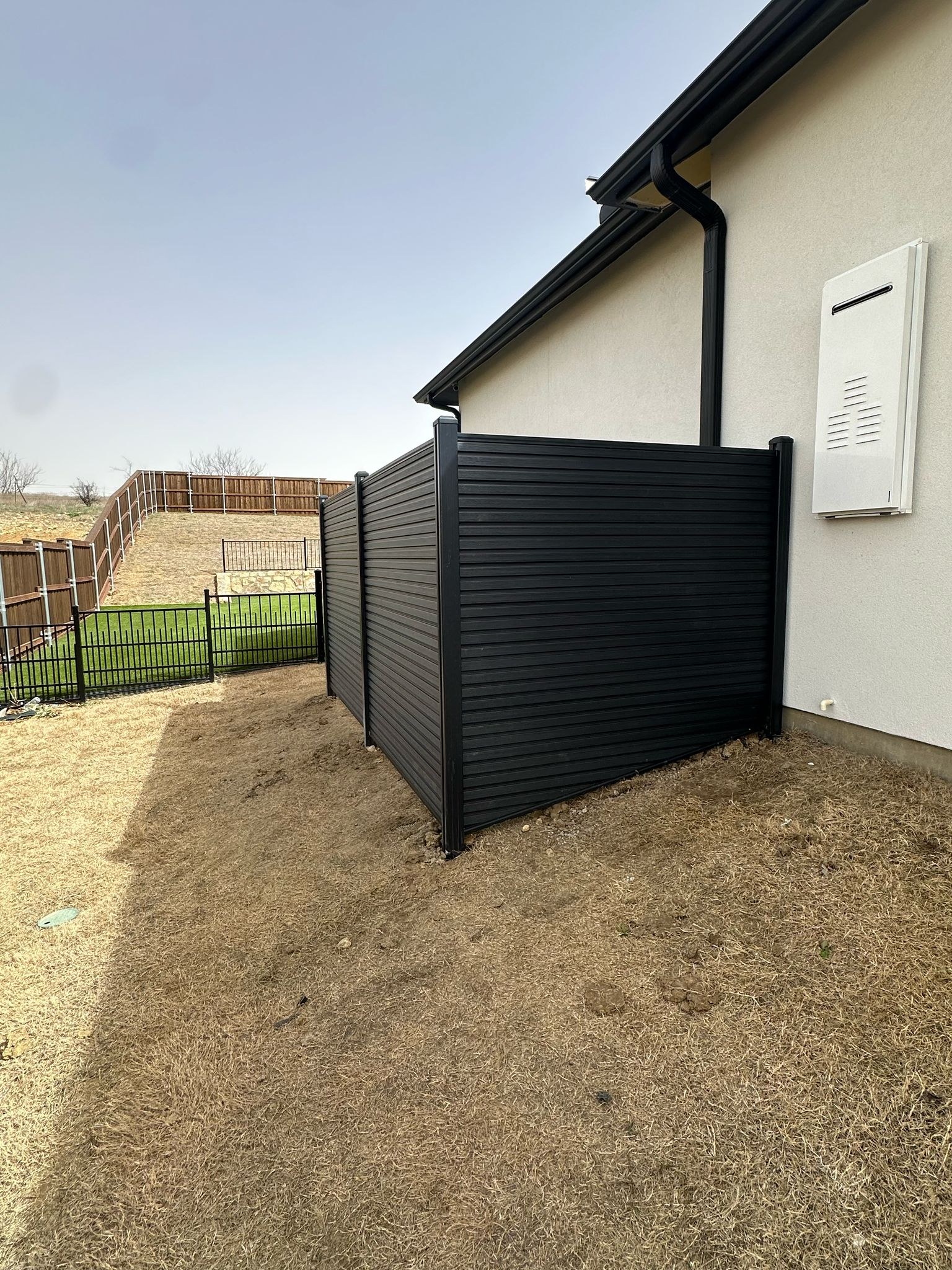
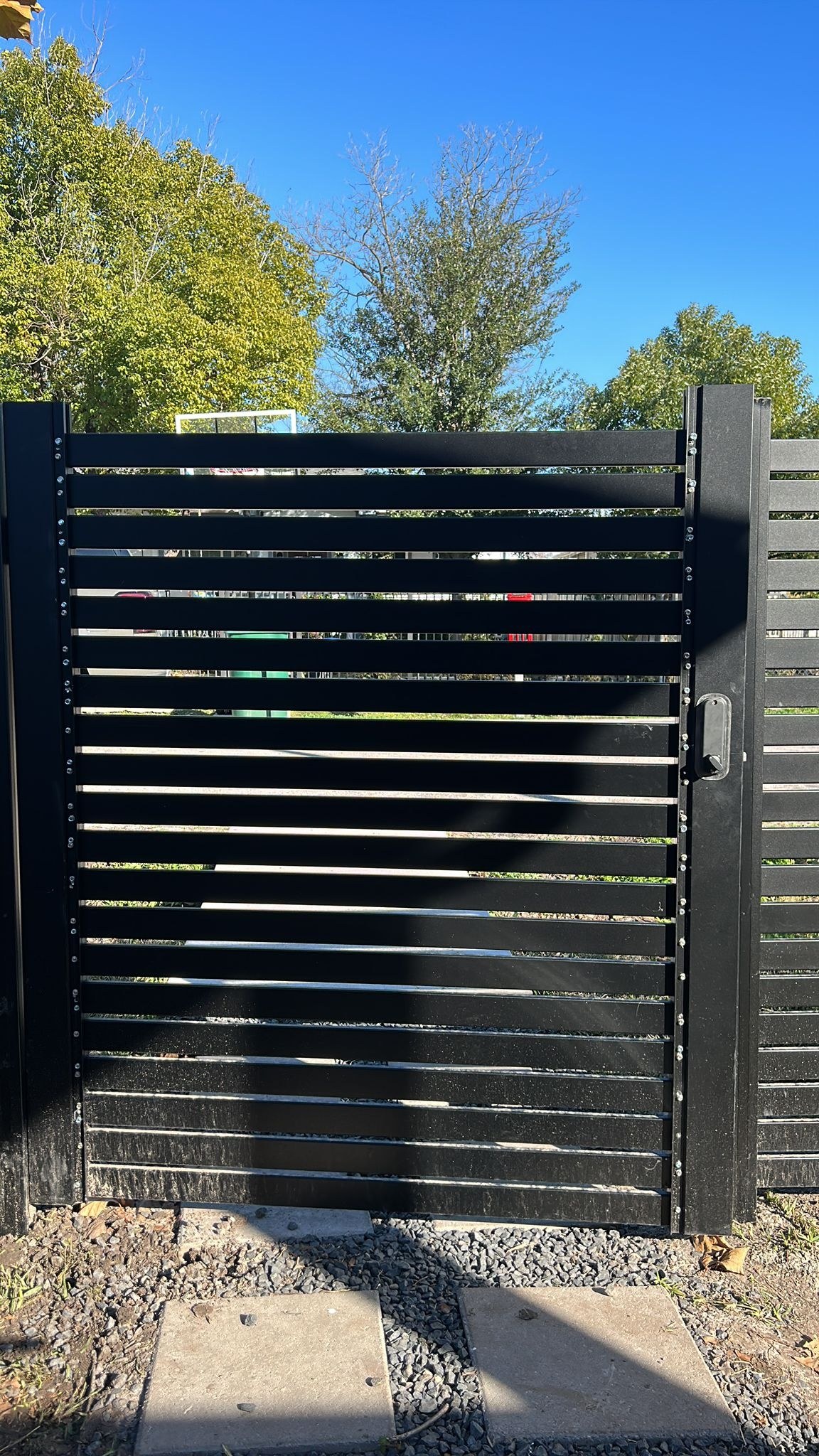
- Solid metal or composite panels. Check the panel itself: some horizontal-slat designs leave a gap between each slat. Ask what finish it has for salt air.
- Masonry on three sides with a gate on the fourth. The most permanent option. The service side still needs a gate, and the gates must stay closed except during use or pickup.
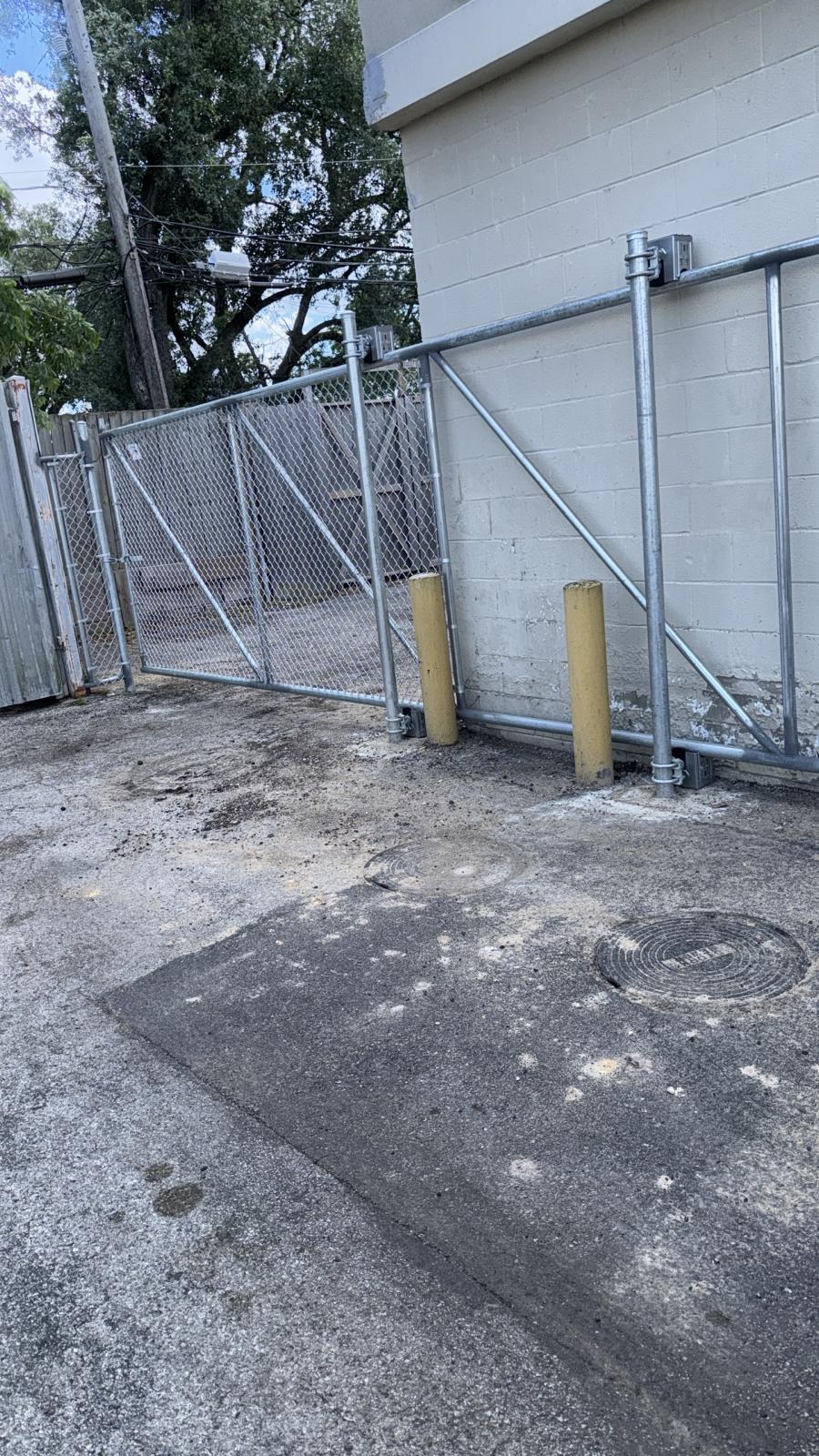
- Chain link with privacy slats. Slats close most of the mesh, not all of it. Ask Public Works whether slatted chain link counts as solid before you build. See chain link privacy slats.
- Open chain link. It doesn’t screen anything, so on its own it doesn’t meet the rule.
Height and material also decide the posts. The Chain Link Fence Manufacturers Institute’s wind load guide explains that “the fence height times the line post spacing sets the total force acting on a solid panel of the fence which is transferred to the line posts and then into the footing.” An 8 foot solid screen on the island catches far more wind than a 5 foot open fence. Ask how the posts and footings are sized for it. See hurricane-ready fencing.
Need a code-compliant enclosure built?
We’ll check the container size, the site’s keep-out zones and the code, and quote the screen and gate together. Free on-site estimates for businesses across Galveston County.
Screen materials against the §15-4 wording
| Material | Solid, as the code says? | What to ask before you build |
|---|---|---|
| Board-on-board wood | Yes: overlapping boards leave no gaps | Post size and footing depth for the height |
| Solid metal or composite panels | Yes, if the panel has no gaps between slats | The gap between slats; salt-air finish |
| Masonry walls plus gate | Yes (the walls); the gate must be solid too | Gate hardware, hold-backs and a center stop |
| Chain link with privacy slats | Not fully; some light passes through | Whether Public Works accepts it |
| Open chain link | No | Not a screen on its own |
Galveston City Code §15-4(g)(2) (“a solid fence … the entire height of the container shall be screened”).
Where the enclosure can go
Section 15-4 also controls where a commercial container can sit. These rules often decide the enclosure’s location before anyone picks a material:
- 20 feet from a home of four units or fewer. That covers the house, duplex or fourplex next to many Galveston businesses.
- 20 feet from the property line of a public park, recreation area, bus stop, trolley stop or transit stop.
- 5 feet from a combustible wall, opening or combustible roof eave line for any container of 40.5 cubic feet or more. That is 1.5 cubic yards (40.5 ÷ 27), so every standard front-load size is covered.
- Not in the required front setback or front yard.
- In an alley only with a license to use, inside a marked or painted area the City approves. The container can’t move outside that area.
- Not into the city right-of-way. The screen can’t project into the right-of-way either, unless the owner gets a variance or a license to use.
There are a few exceptions to the screening rule. They cover a container in the alley directly behind the building it serves, at least 36 feet from the curb line of the nearest intersection (with a license). They also cover a container inside a structure or solid fenced area that can’t be seen from the lot lines or the street, temporary containers, and containers on state or federal property. Recycling containers and temporary containers don’t need the permit.
The gate is where most enclosures wear out
The service gate is opened every pickup, swung wide, and often hit. §15-4 requires the gates to stay closed except when trash is going in or the hauler is servicing the container. So the gate has to be easy to open, latch properly every time, and stay open safely while the truck works.
- Width. A front-load container is emptied by the truck’s forks, and the City’s sample plan puts the gate across the whole 11 foot front. That usually means a double gate, two leaves of about 5½ feet.
- Drop rod and center stop. With two leaves and no post in the middle, one leaf has to be pinned to the ground so the other can latch to it. See drop rods and center stops for double gates.
- Hold-backs. A leaf that swings shut in the wind while the truck is working will get hit. Hold-backs keep each leaf open.
- Frame. A solid-clad leaf is heavy and catches wind. A steel frame, heavy hinges and a support wheel on wide leaves keep it from sagging.
- A people door. Consider a small walk gate on the side, so staff can drop bags without opening the big gates. That also makes “keep the gates closed” easier to follow.
Commercial gates are covered on our commercial gate page, and whole-site work on our commercial fencing page. Restaurants and shops often combine the enclosure with other screening, covered on retail and restaurant fencing.
Before you ask for quotes
- Confirm the container. Ask your hauler which size and model you have now and which you may need later. Build for the larger one.
- Pick the spot. Check it against the keep-out distances above and the hauler’s truck approach. A spot the truck can’t reach easily will cause damage to the gate.
- Get the City’s sample plan. Public Works provides sample enclosure plans for containers on request (11 by 11 by 8 feet for a 10 cu yd).
- Line up the permit paperwork. Site plan, drawings, owner and hauler affirmations, and deed restriction check. On leased property, bring the landlord in early.
- Specify the screen. Material, height (5 feet or the full container height, whichever is more), gate type, drop rod, hold-backs, and any walk gate, all in writing.
Cost depends on size, height, material and the gate. Our guide to commercial fence cost explains what moves the price. For apartment and multifamily sites, see multifamily fencing.
What Galveston customers say
5.091 Google reviews · read them all on Google
chainlink fence installation by mustang fencing, looks really great, thanks.
My new fence looks fantastic and has added both privacy and style to my yard. Highly recommend their services for anyone in need of fencing!
We just installed iron gate and it looks amazing thank you very much mustang fencing .
Reviews shown word for word from the Mustang Fencing Services Google Business Profile (Galveston), captured 2026-10-05.
Questions we get about this
Does Galveston require a fence around a commercial dumpster?
How tall does a dumpster enclosure have to be in Galveston?
Can a dumpster enclosure be chain link?
How big should a dumpster enclosure be?
How far does a dumpster have to be from a building?
Do dumpster enclosure gates have to stay closed?
How much is a dumpster permit in Galveston?
Sources
Checked September 27, 2026. Rules change, so confirm with the City before you build.
- City of Galveston Code of Ordinances, Chapter 15 (Garbage and Trash), Sec. 15-4 Dumpsters, compactors and screening — Permit, application and affirmations; Oct 1 to Sep 30 term; $25 fee; gates kept closed; solid fence at least 5 ft on all sides screening the entire container; 11 x 11 x 8 ft sample plans for 10 cu yd; placement distances; exceptions; penalties. Version of Aug 17, 2026.
- City of Galveston Land Development Regulations — Art. 3, Broadway Boulevard Design Standards, 19th to 59th Street (Ord. 19-043), “Service Elements”; Sec. 10.404 A, Traditional Neighborhood waste screening per §15-4; Sec. 10.106, certificate of appropriateness in historic overlay districts.
- Wastequip, Front End Load Containers brochure — Flat-top front-load container drawings: heights, widths and depths for 2, 3, 4, 6, 8 and 10 cu yd sizes.
- Chain Link Fence Manufacturers Institute, Wind Load Guide for the Selection of Line Post and Line Post Spacing (WLG 2445, 2018) — Fence height times line post spacing sets the wind force on a solid panel, carried by the posts into the footings.
Need a dumpster enclosure that passes?
We’ll look at the container, the spot and the hauler’s approach, and put the screen height, material, gate, drop rod and hold-backs on a written quote. Free on-site estimates for businesses across Galveston County.