
Board-on-Board vs. Shadowbox Fence: Which Privacy Style Is Right for You?
Both styles alternate boards across the same center rail — the real difference is whether the boards fully overlap (board-on-board, no sightline gap at all) or leave a deliberate reveal gap (shadowbox, for airflow and a basket-weave look that’s identical from both sides). Neither is simply “better”; which one fits depends on how much airflow, lumber use and a shared-sightline appearance matter to you.
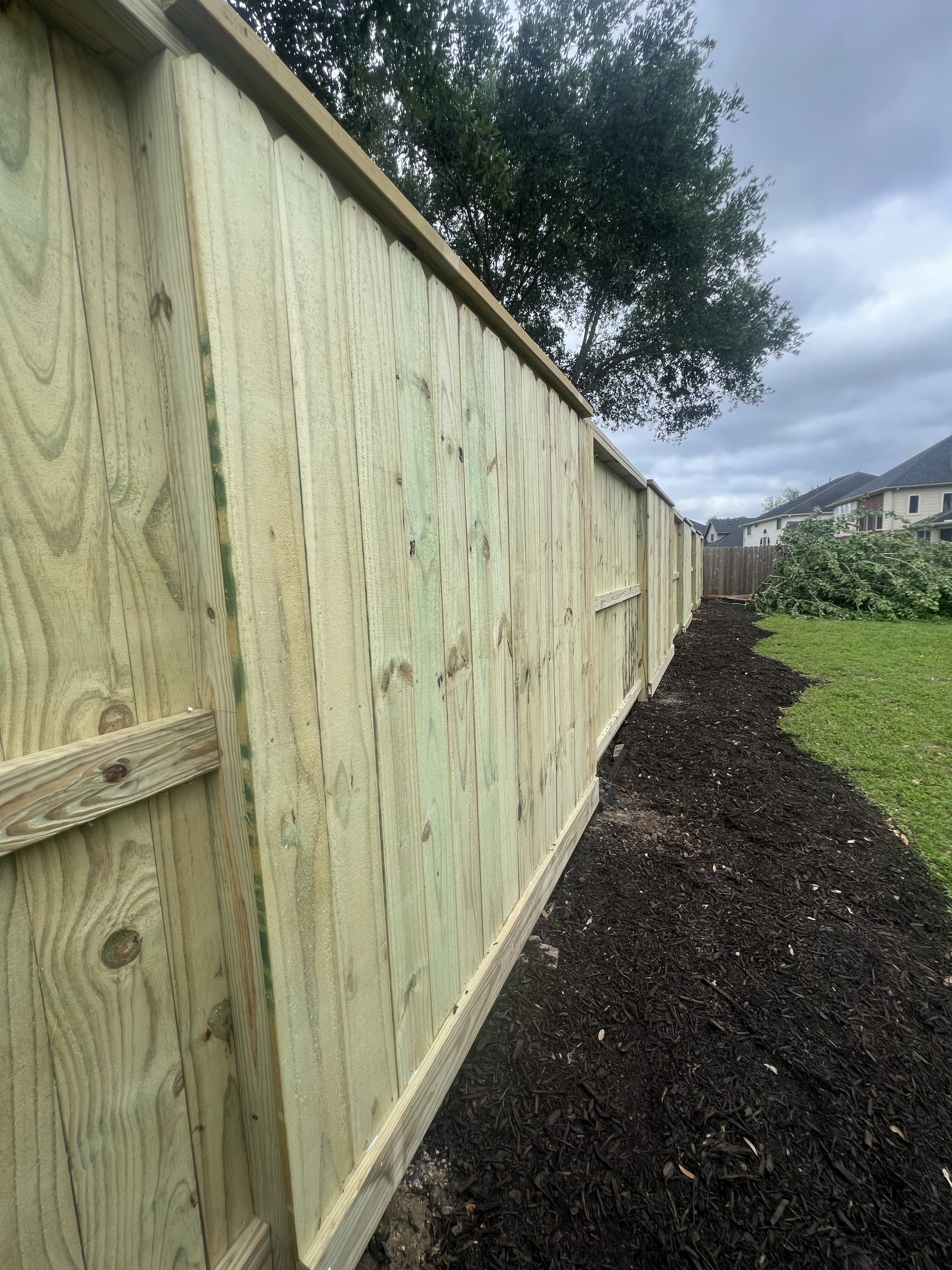
Board-on-board and shadowbox fences both alternate boards across the same center rail — board-on-board overlaps them completely for zero sightline gap, while shadowbox leaves a deliberate reveal gap for airflow and a basket-weave look that reads identical from both sides (sometimes called a “good neighbor” fence). Neither style changes what the posts or boards themselves need structurally: USDA wood-movement data and SFPA’s treatment-category table both apply the same regardless of which pattern you pick.
Sources: USDA Forest Products Laboratory, Wood Handbook (2021 ed.), Table 4-3; Southern Forest Products Association, Pressure-Treated Southern Pine (2019 ed.), Table 3-1.
What “board-on-board” and “shadowbox” actually describe
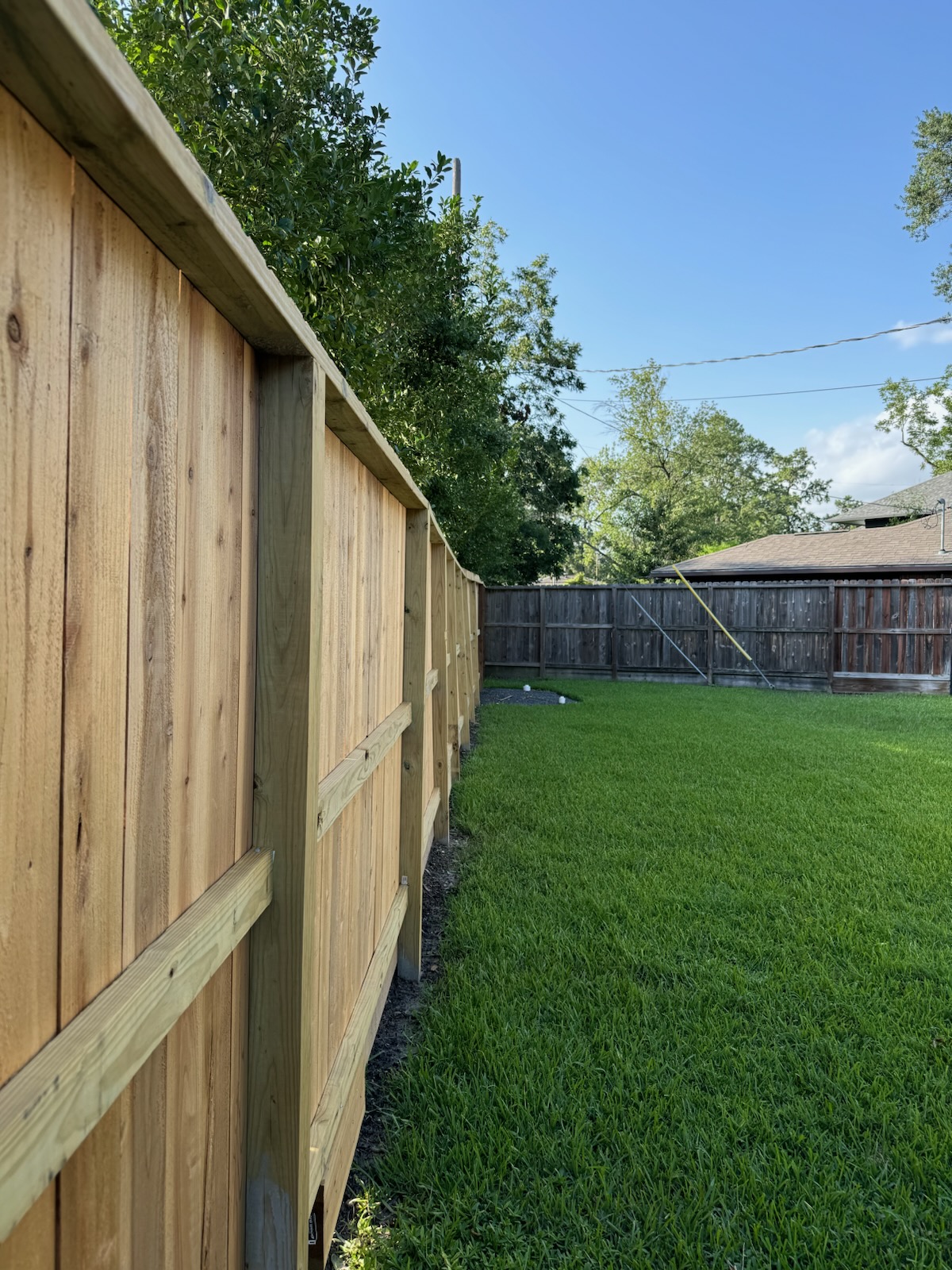
Both are wood privacy-fence patterns built the same basic way: vertical boards nailed to horizontal rails, alternating which face of the rail each board is on. A board-on-board fence overlaps those alternating boards enough that no gap lines up front-to-back at any point along the fence — full privacy, from any angle. A shadowbox fence (sometimes called a “good neighbor” fence) alternates the same way but leaves a narrow reveal gap between boards on purpose, so a sliver of light or air can pass straight through while the offset boards on the opposite face still block a direct view at an angle. Because both faces get the same alternating pattern, a shadowbox fence looks the same from either side — which is where the “good neighbor” name comes from.
Privacy, light and the “good neighbor” look
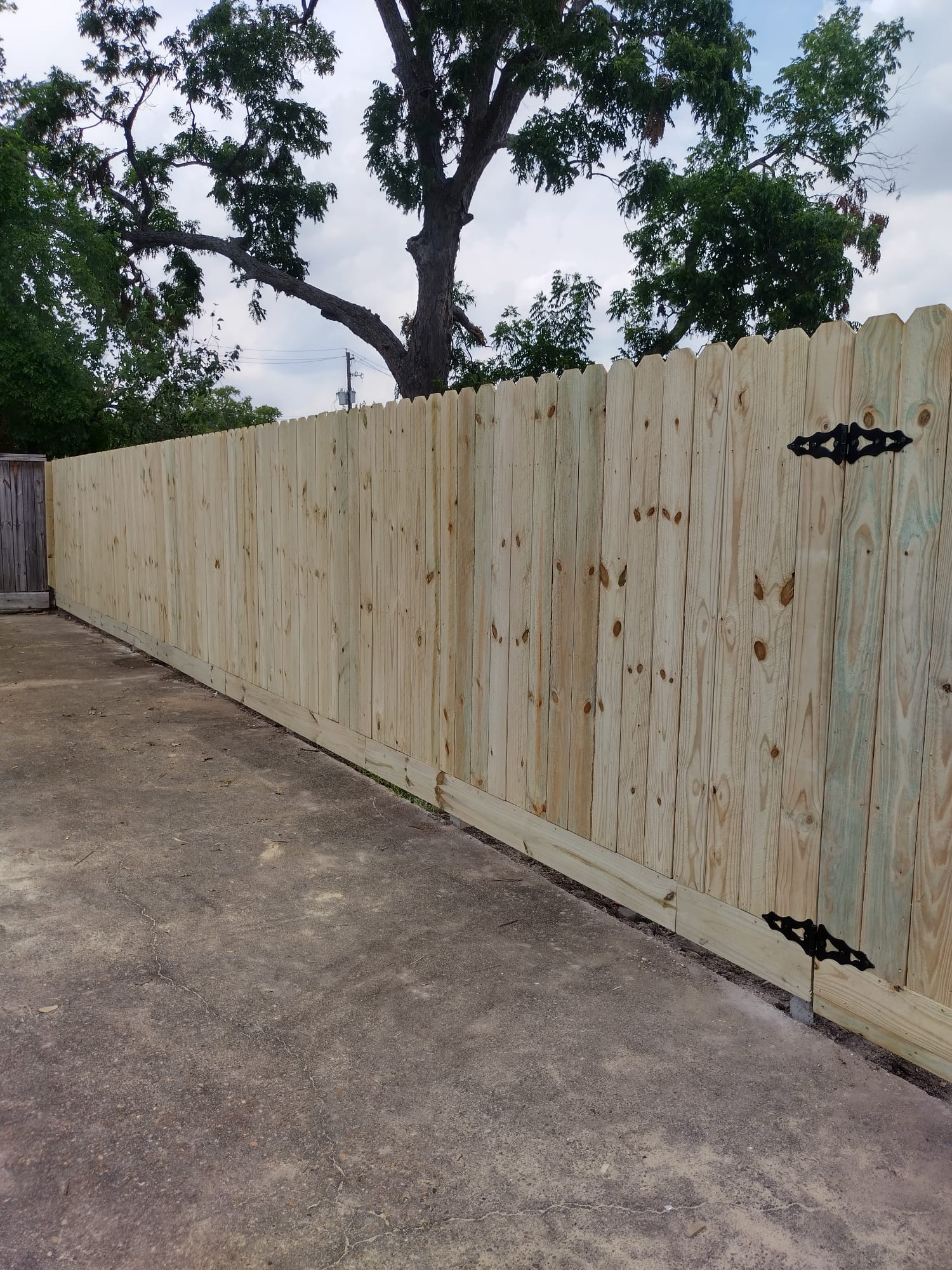
Looking straight at a board-on-board fence, there’s no gap to see through at all — that’s the point of full overlap. A shadowbox fence’s reveal gap does let a narrow sliver of light or a sightline through when you’re looking directly at it, but from an angle, the alternating boards on the far face cover that gap, so a casual glance from the side still doesn’t see through. The tradeoff some people miss: because a board-on-board fence’s overlap only needs to work from one direction, it’s easy to build so one side shows a “finished,” flush face and the other shows the rails and overlaps — unless it’s specifically built symmetrically. A shadowbox fence’s alternating pattern is symmetric by nature, which is why it’s the more common choice when a fence line is shared with a neighbor and both faces need to look presentable.

Board-on-board vs. shadowbox at a glance
| Item | Board-on-board | Shadowbox |
|---|---|---|
| View looking straight on | Fully blocked — no gap by design | A narrow reveal gap can let slivers of light through |
| View from an angle | Fully blocked | Still blocked — offset boards on the far face cover the gap |
| Look from both sides | Can be flush on one side, overlapped on the other, unless built symmetrically | Identical from both sides by design — the “good neighbor” fence |
| Airflow | Lower — a solid face (general guidance) | Higher — the built-in gap lets air pass (general guidance) |
| Lumber per linear foot | More — overlap means some width is doubled up | Less — boards don’t double up |
| Board treatment rating needed | UC3A (coated) / UC3B (uncoated), above-ground exposed | Same — UC3A / UC3B, above-ground exposed |
| What actually holds it up | Posts, set in ground contact (UC4A) — see our fence-post guide | Same — posts, not the board pattern, carry the fence |
Sources: Southern Forest Products Association, Pressure-Treated Southern Pine (2019 ed.), Table 3-1 (treatment-rating rows). Airflow and lumber-use rows are general construction guidance, not independently measured here.
Which privacy style usually fits your yard?
General guidance based on your top priority — confirming it against your actual fence line and neighbor situation is still worth a quick conversation.
General construction guidance on style fit, plus the sourced fact that boards on either style need the same above-ground treatment rating (SFPA Table 3-1) — the style choice doesn’t change that.
What Galveston customers say
5.091 Google reviews · read them all on Google
Very professional and friendly. Gotten automatic gates done and they are done to perfection! Thank you
We just installed iron gate and it looks amazing thank you very much mustang fencing .
Mustang’s team installed iron fence for me and did an absolutely incredible job! I would recommend this company to anyone I know!
Reviews shown word for word from the Mustang Fencing Services Google Business Profile (Galveston), captured 2026-10-12.
Questions we get about this
What’s the actual difference between board-on-board and shadowbox?
Does a shadowbox fence give less privacy?
Which style uses more lumber?
Will the gap in a shadowbox fence get bigger as the wood dries out?
Do the two styles need different posts or post spacing?
Sources
Checked October 18, 2026. Rules change, so confirm with the City before you build.
- USDA Forest Products Laboratory, Wood Handbook: Wood as an Engineering Material (2021 ed.) — Table 4-3, shrinkage values of domestic wood species (green to ovendry, radial/tangential/volumetric).
- Southern Forest Products Association, Pressure-Treated Southern Pine (2019 ed.) — Table 3-1, AWPA use categories for fence pickets/rails/slats (UC3A/UC3B) vs. posts in ground contact (UC4A).
Deciding between board-on-board and shadowbox for your yard?
We’ll walk your fence line, confirm what each style looks like on your lot and from your neighbor’s side, and talk through privacy, airflow and lumber use before you decide.