
Horizontal Fence Pros and Cons: Is It Worth the Extra Cost?
A horizontal board fence usually costs more than a vertical one of the same material — and manufacturer specs show why: several horizontal systems allow a shorter span between posts, which means more holes and more concrete over the same fence line.
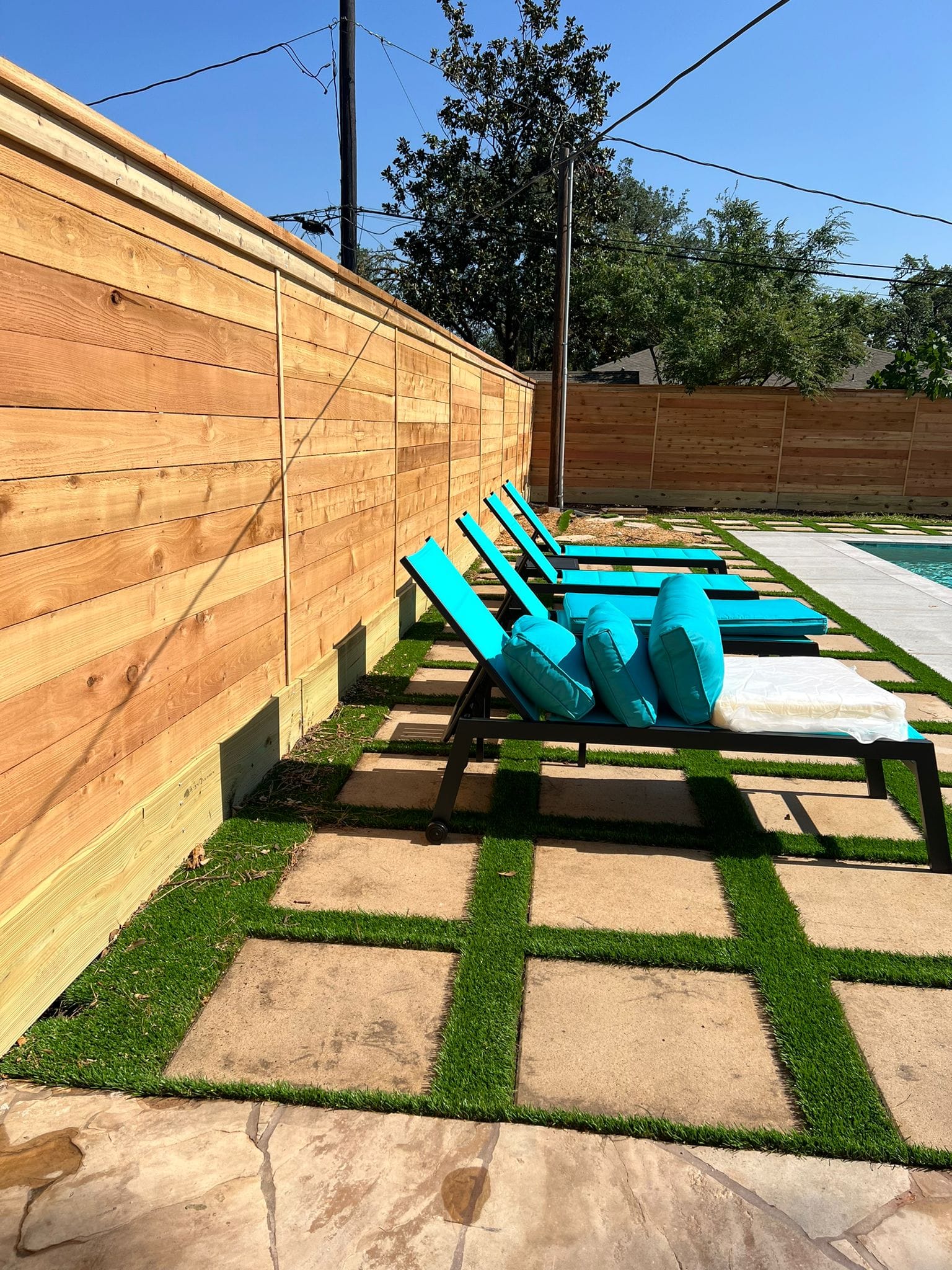
Horizontal fencing usually costs more to install than a vertical fence of the same material — mainly because some horizontal systems allow a shorter unsupported span between posts than the standard 8 ft vertical panel, which means more post holes and more concrete over the same fence line. Vinyl horizontal privacy panels, for example, are sold at 6 ft wide rather than the 8 ft width Barrette uses for its vertical panels. Composite and aluminum horizontal systems keep the usual 8 ft spacing, but composite adds hardware (an aluminum top-rail insert, an aluminum bottom rail, and L-channel retainers at every post) that a vertical picket panel doesn’t need.
Sources: Barrette Outdoor Living, horizontal privacy vinyl fence kit + 2024 catalog; Slipfence horizontal installation instructions; Trex Fencing, Seclusions Horizontal Fencing Installation Guide.
What counts as a ‘horizontal fence,’ and why it usually costs more
A horizontal fence runs the boards side to side instead of up and down. It’s available in the same materials as a standard privacy fence — wood, vinyl, composite and aluminum — so it’s a style choice layered on top of a material choice, not a separate product category.
The extra cost homeowners usually hear about isn’t really about which direction the boards run. It’s that several horizontal board systems can’t span as far between posts as a standard vertical panel can, per the manufacturer installation guides below. Fewer feet between posts on the same fence line means more holes, more bags of concrete, and more labor — regardless of how the boards are oriented.
The real cost driver: post count, not board direction
Barrette’s own vinyl fence catalog makes the contrast explicit: its vertical solid-privacy panels are sold in 8 ft widths, but the horizontal privacy panel — same material, same company — is only offered in a 6 ft width. The catalog states the dimensions without explaining the reason, but the practical effect is the same either way: a 6 ft-span material needs more line posts to cover the same fence length than an 8 ft-span material does.
Slipfence’s wood-in-aluminum-channel system is similar: it specifies a 72.5 in clear span between posts (half of a standard 12 ft deck board), just over 6 ft and well short of the 8 ft spacing a standard vertical wood panel typically uses.
Composite and aluminum horizontal systems don’t have this problem. Trex’s horizontal composite fencing is designed for the same 8 ft on-center post spacing as most vertical fences, and Stratco’s aluminum slat screens use 8 ft post centers as well — with the maker stating in its own FAQ that “aluminum achieves greater spans without bracing” compared with other materials (a manufacturer marketing claim, not an independent test, but consistent with the 8 ft spacing stated elsewhere in its installation guide).
Horizontal fence extra-cost checklist
Which of the real cost drivers above apply to your project.
Based on the manufacturer specs above — not a quote. A site visit confirms which materials and spans actually fit your fence line.


Other real tradeoffs, not just cost
Sloped lots: Slipfence documents a specific method for stepping horizontal panels down a slope — shortening the gap between level sections and adjusting post spacing — rather than leaving it to guesswork. That’s a genuine practical advantage for a lot that isn’t flat.
Warp risk in heat and humidity: Trex’s installation guide includes a direct tip: “If installing fence in an area of high heat and humidity, consider using a back bracing rail to reduce the risk of warping boards.” That’s an extra part and an extra labor step a standard vertical picket panel doesn’t need, since its boards are short, face-nailed pickets rather than long horizontal spans.
Installation time: Trex recommends a minimum two-person crew for horizontal composite fencing, and its boards must be pre-drilled at the quarter points through the aluminum top-rail insert — one more precise step than nailing a picket to a rail.
What Galveston customers say
5.091 Google reviews · read them all on Google
Amazing work will go ahead and recommend everyone in friends and family We installed 8ft tall double sided stained cedar wood fence in our backyard, it’s really looks great, installed perfectly nice finishing and cost effective, thanks mustang fencing.
I have hired Mustang fencing services to fix my backyard fencing. Good wood to used. I really like theirs work. Best of luck
I am so pleased with the fence!! Your solution was exactly the right one and the team did a highly professional job. Frankly, I was amazed at how clean the job site was at the completion of the project. Feel free to list me as a reference and a very happy customer. Thanks again and please let the men know That I appreciate their hard work and quality craftsmanship.
Reviews shown word for word from the Mustang Fencing Services Google Business Profile (Galveston), captured 2026-10-12.
Questions we get about this
Does a horizontal fence really cost more than a vertical one?
Why do some horizontal fences need more posts than others?
Does a horizontal wood or composite fence need a center brace?
Can a horizontal fence handle a sloped yard?
Does the height limit change for a horizontal fence?
Sources
Checked October 17, 2026. Rules change, so confirm with the City before you build.
- Barrette Outdoor Living, Horizontal Privacy Vinyl Fence Kit installation instructions + 2024 vinyl fence catalog — 6 ft horizontal privacy panel width vs. 8 ft vertical panel width; mixed aluminum-post horizontal infill board count; no stated mid-span support for the full-privacy horizontal panel.
- Trex Fencing, Seclusions Horizontal Fencing Installation Guide — 8 ft on-center post spacing, 30 in embedment, parts list (top/bottom rail, aluminum inserts, L-channels), 2-person minimum crew, back-bracing-rail tip for high heat/humidity.
- Slipfence Horizontal Installation Instructions — 72.5 in clear board span between posts; documented method for stepping panels down a sloped lot.
- Stratco Quickscreen Plus Design/Installation Guide — 8 ft post centers for aluminum slat screens, center midrail shipped per panel, manufacturer FAQ claims about span and comparison to composite.
- City of Galveston Land Development Regulations, Sec. 2.501 — Residential fence height rules, unaffected by board orientation.
Weighing horizontal vs. vertical for your fence line?
We’ll walk your fence line, confirm the real post count for the material you’re considering, and give you a written price. Free on-site estimates across Galveston County.