
Is a Wood or Vinyl Fence Better for Galveston’s Salt Air?
Salt air gets blamed for a lot that it does not actually do to either material: PVC vinyl is chemically inert to salt, and plain humidity is not what rots wood either. What genuinely changes near the Gulf is narrower — fastener corrosion, moisture cycling, and a wind-load question vinyl’s own material spec does not answer — and each of those is backed by a primary source below, plus a checker for your own fastener pairing.
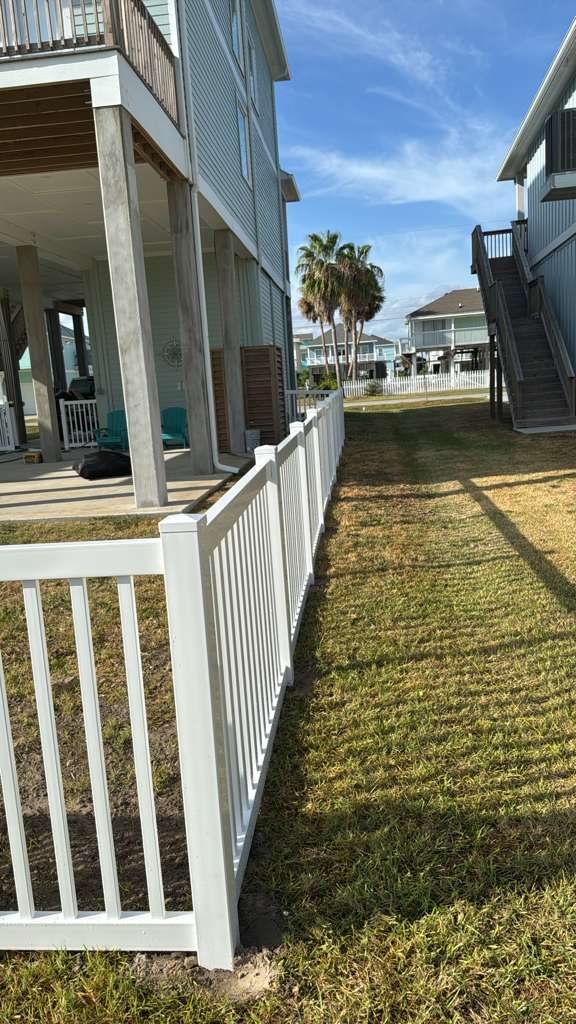
Salt air does not attack either material the way people assume: PVC vinyl is chemically inert to salt, and wood’s cellulose is not corroded by it either — what actually changes near the Gulf is fastener corrosion and the wet/dry cycling that weakens a nail’s grip on wood over time, not the base materials themselves. USDA’s own moisture-content guidance for exterior lumber in a “damp, warm coastal” climate (Galveston’s own category) is 12% average, the same number as most of the U.S., not a special drier target. The real coastal-specific risks are narrower: a smooth nail’s withdrawal resistance can fall to as low as 25% after repeated wetting and drying, a mismatched fastener-and-hardware metal pairing can set up galvanic corrosion, and a vinyl privacy panel’s wind performance is a manufacturer-level question — ASTM F964, vinyl fencing’s own material standard, explicitly does not test or rate windload. None of that makes one material wrong for the island; it changes which details are worth asking about before you sign.
Sources: USDA Forest Products Laboratory Wood Handbook FPL-GTR-282 (Ch.8, 13, 16); American Galvanizers Association (bimetallic couples; HDG time-to-first-maintenance); ASTM F964-13 (PVC fencing material specification).
What salt air actually changes — and what it does not
“Salt air” gets treated as a single force that makes everything near the Gulf degrade faster. In fact wood and vinyl respond to it through completely different mechanisms, and in both cases the mechanism is narrower than the generic warning suggests. Vinyl is PVC, and PVC does not corrode, rust, or chemically react with salt — its open question on the coast is wind load on a large solid panel, which its own material standard does not cover. Wood is not chemically vulnerable to salt either; decay fungi need the wood above roughly 30% moisture content to do serious damage, and humid air alone does not reach that. What does change here is the hardware: fasteners corrode, and repeated wetting and drying cycles reduce how tightly a nail grips the wood around it. The two sheets below are both about that fastener-and-moisture layer, not the lumber or the PVC itself.
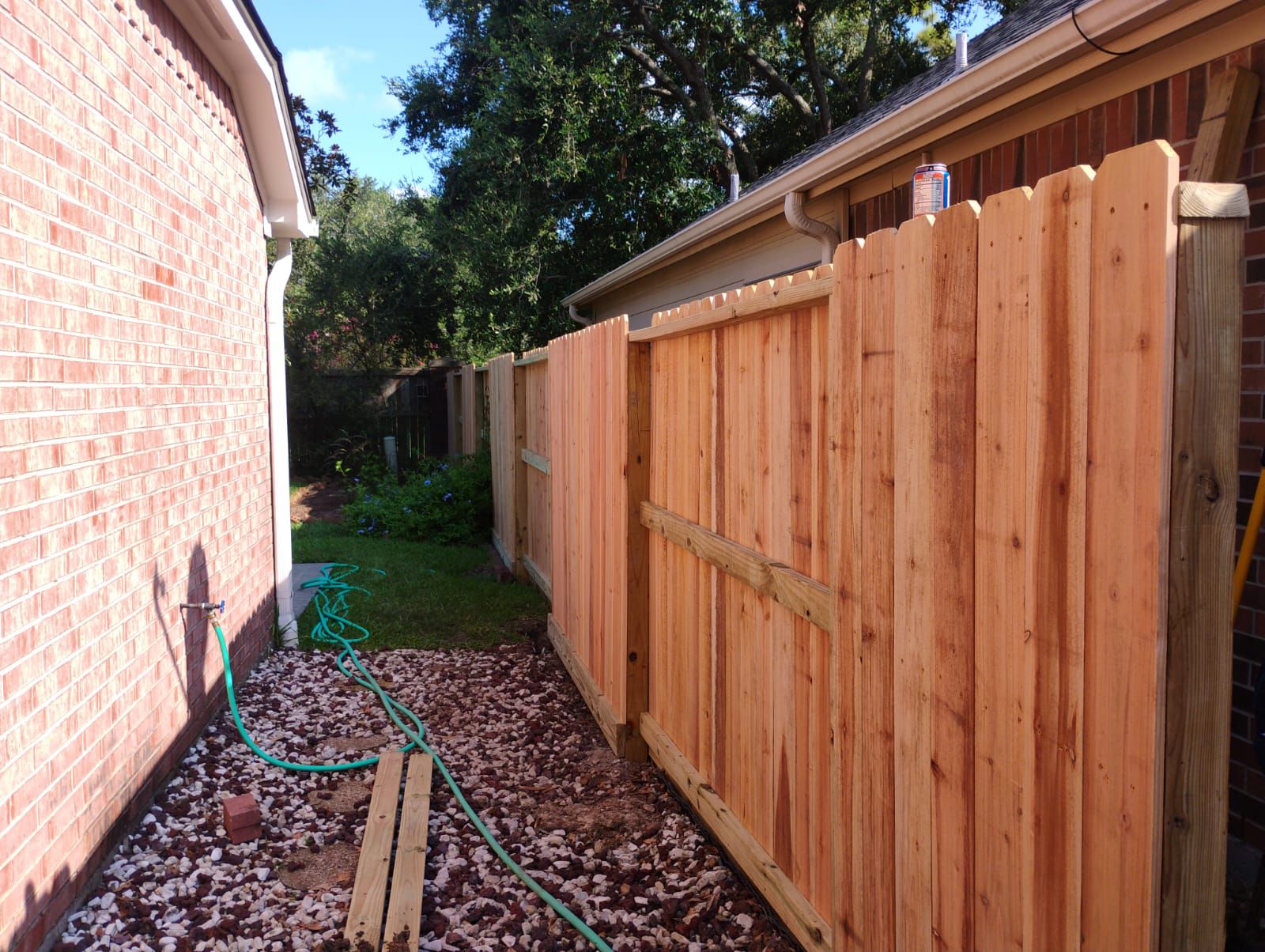
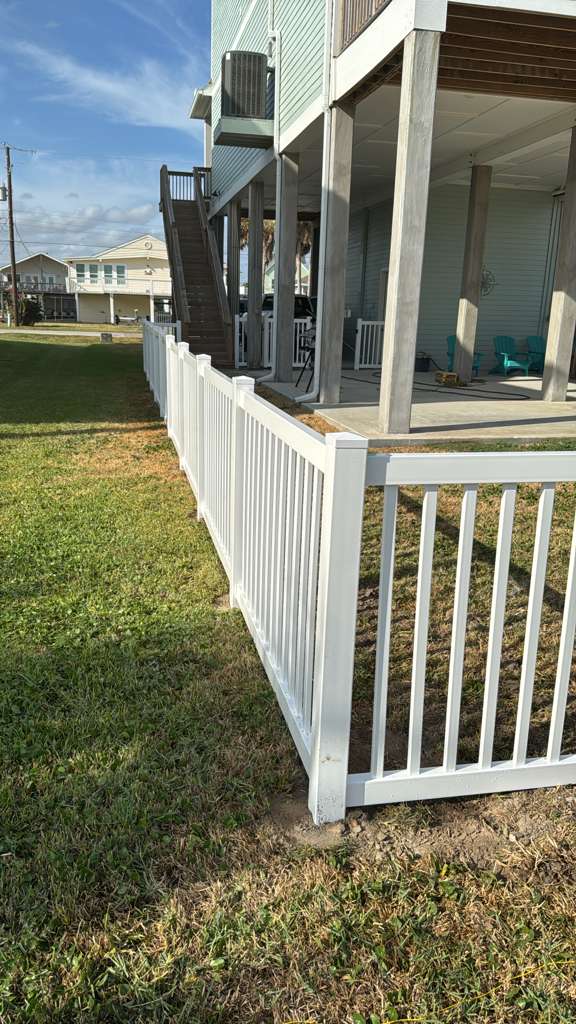
Wood vs. vinyl in Galveston’s salt air: what actually changes
| Question | Wood | Vinyl |
|---|---|---|
| Does the base material corrode or rot from salt itself? | No — wood is not inherently more vulnerable to salt than ordinary moisture; decay fungi need the wood above roughly 30% moisture content (USDA). | No — PVC is chemically inert to salt exposure (ASTM F964 material scope). |
| What actually degrades in salt air | Fasteners — withdrawal resistance can drop to as low as 25% after wet/dry cycling, and a mismatched fastener-metal pairing can set up galvanic corrosion (USDA; AGA). | Nothing corrodes chemically; the open question is the finished panel’s wind performance. |
| Wind load on a tall privacy run | Governed by post spacing, embedment depth, and framing, the same wind-exposure principles as any fence. | Not addressed by ASTM F964 itself — ask the manufacturer or installer for that specific assembly’s own wind rating. |
| Ongoing maintenance | Finish needs renewing on a schedule — solid-color stain on cedar/redwood siding-grade lumber: 6-10 year expected service life (USDA Table 16-2). | No finish to renew; cleaning only. |
Sources: USDA Wood Handbook Ch.8, 13, 16; American Galvanizers Association; ASTM F964-13.
Check a fastener/hardware metal pairing for salt-air corrosion risk
Based on the American Galvanizers Association’s own bimetallic-couple rule: two different metals in direct contact, with salt air or rain acting as the electrolyte, favor fast corrosion of whichever piece is physically smaller. This applies that published rule to the two parts you describe — it does not look up a product or a price.
Source: American Galvanizers Association, “Stainless Steel in Contact with Galvanized Steel.” For a saltwater-exposed assembly, a non-conductive isolator between dissimilar metals (AGA notes rubber for saltwater immersion, most plastics generally) removes this corrosion mechanism entirely.
What Galveston customers say
5.091 Google reviews · read them all on Google
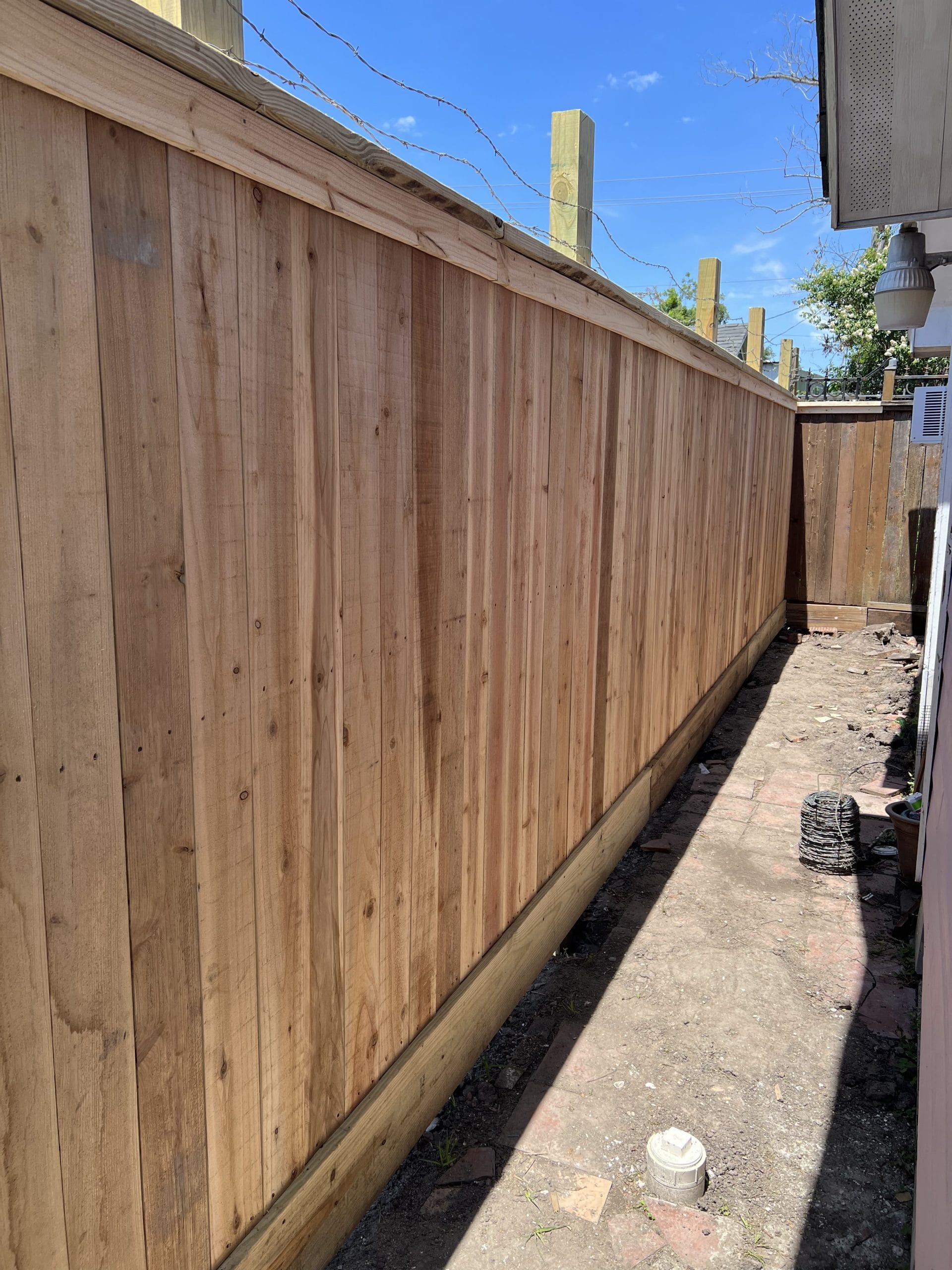
Amazing work will go ahead and recommend everyone in friends and family We installed 8ft tall double sided stained cedar wood fence in our backyard, it’s really looks great, installed perfectly nice finishing and cost effective, thanks mustang fencing.
Installed Stained cedar wood fence yesterday by mustang fencing, thanks for the beautiful work.
I have hired Mustang fencing services to fix my backyard fencing. Good wood to used. I really like theirs work. Best of luck
Reviews shown word for word from the Mustang Fencing Services Google Business Profile (Galveston), captured 2026-10-12.
Questions we get about this
Does salt air corrode vinyl fencing?
Does Galveston’s humidity mean wood fence lumber needs to be installed drier here?
What fasteners hold up best on a wood fence near the Gulf?
Is composite fencing worth considering instead of wood or vinyl here?
Sources
Checked October 17, 2026. Rules change, so confirm with the City before you build.
- USDA Forest Products Laboratory, Wood Handbook: Wood as an Engineering Material (FPL-GTR-282, 2021) — Ch.8 fastener withdrawal resistance and moisture cycling; Ch.13 Table 13-2 recommended installation moisture content by climate; Ch.16 Table 16-2 finish service life; Ch.12 wood-plastic composite decay resistance.
- American Galvanizers Association, “Stainless Steel in Contact with Galvanized Steel” — Bimetallic-couple corrosion rule used for the fastener-pairing sheet and checker tool above.
- American Galvanizers Association, Time to First Maintenance (TFM) chart and ISO 9223 corrosion-rate data — ISO C3 zinc corrosion rate range and the 47-143 year time-to-first-maintenance figure for a standard hot-dip-galvanized coating.
- ASTM F964-13, Standard Specification for Rigid PVC Exterior Profiles Used for Fencing and Railing — Scope/Note 2: windload and other loadbearing characteristics of finished fence assemblies are not addressed by this material specification.
Want a straight answer for your property?
Tell us your lot, your priorities, and we will walk you through the wood vs. vinyl tradeoffs that actually apply here — no generic coastal scare language, no invented claims.