
What’s the Difference Between a Farm Gate and a Ranch Gate?
There is no official definition. In practice, a ranch gate is the entrance at the road and a farm gate is a working gate inside the property. They are built differently for good reasons. Here is how to tell which you need, how wide to make it, and what the NRCS and extension guides say about posts and bracing.
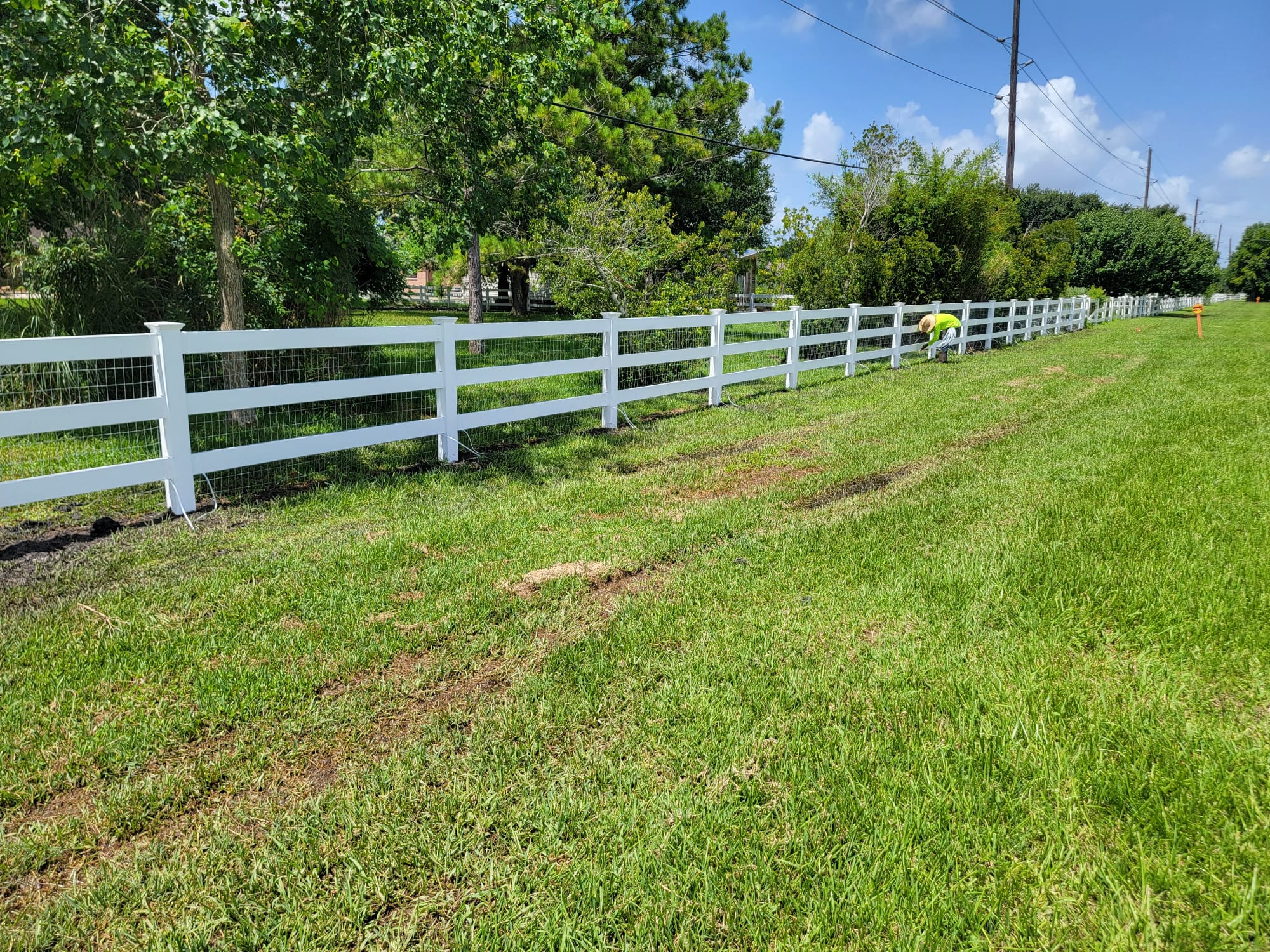
A ranch gate is usually the entrance gate at the road: wide, often a double gate, sometimes under an arch, and often automated. A farm gate is a working gate inside the property, between pastures, pens and yards, built to the same standard as the fence it hangs in. Neither term has an official definition. The build rules are the same for both: extension guides say a pasture gate needs 14 to 16 feet for equipment, and the NRCS Texas fence specification requires a brace assembly on both sides of every gate opening.
Sources: University of Georgia Extension Bulletin 1192; NRCS Texas Practice Specification Fence (Code 382), 2021; Texas Agriculture Code ch. 143.
Farm gate vs ranch gate: what people mean
You won’t find “farm gate” or “ranch gate” defined in a code book or an industry standard. The words overlap, and people use them loosely. In practice they point to two different jobs on the same property:
- Ranch gate usually means the entrance: the gate across the drive where it meets the road. People also call it a ranch entrance or an entry gate. When there is a beam overhead with the ranch name, it’s an entrance arch. It is the first thing a visitor sees, and it has to pass the biggest vehicle that will ever come in.
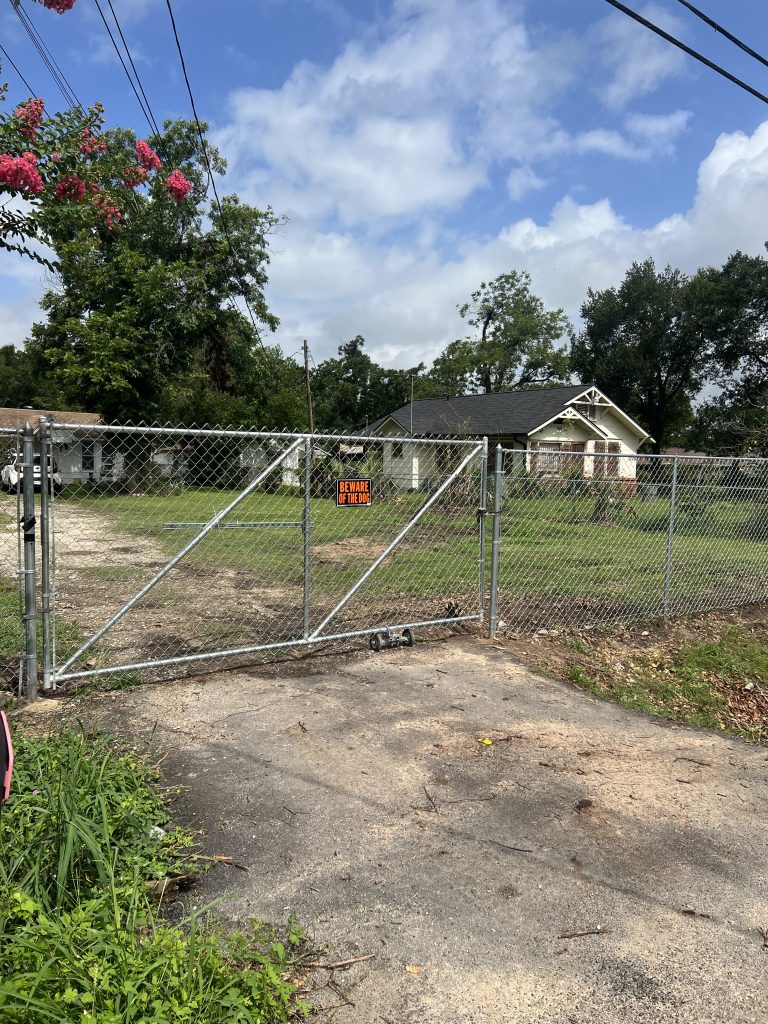
- Farm gate usually means a working gate inside the property: between pastures, into pens and traps, or at the hay and equipment yard. It is opened by hand, often many times a day, and animals lean on it.
One more meaning shows up in searches. In farm economics, a farm-gate price is the price a product sells for at the farm, before transport and processing. That is a figure of speech, not a gate.
Most rural properties need both kinds. On the mainland side of Galveston County, around Santa Fe and Hitchcock, and across Brazoria County, a typical small acreage has one entrance gate at the road and several working gates behind it. For the fences themselves, plus tube, bump and ranch entry gates, see farm and ranch fencing and gates.
Ranch gate vs farm gate at a glance
| Ranch gate (entrance) | Farm gate (working) | |
|---|---|---|
| Where | Across the drive at the road | Between pastures, pens, traps and yards |
| Main job | Let in every vehicle; keep stock in and people out | Move animals and equipment; hold a fence line |
| Width | Sized for the widest equipment that will ever enter; often a double gate | At least 14–16 ft where equipment passes; 4 ft minimum for horses only (UGA) |
| Build | Often steel or iron with a finished look; may carry an arch and a sign | Same standard as the fence: wire gates use the fence wire with stays ≤ 4 ft (NRCS) |
| Hanging | Heavy leaves on large posts; drop rod and center stop if it’s a double gate | Galvanized or painted hinges on a brace assembly post (NRCS) |
| Opening | By hand, or automatic (often solar where power is far away) | By hand, or a bump gate for drive-through use |
UGA Extension Bulletin 1192; NRCS Texas Practice Specification Fence (Code 382), 2021. Descriptions of typical use are general, not definitions.
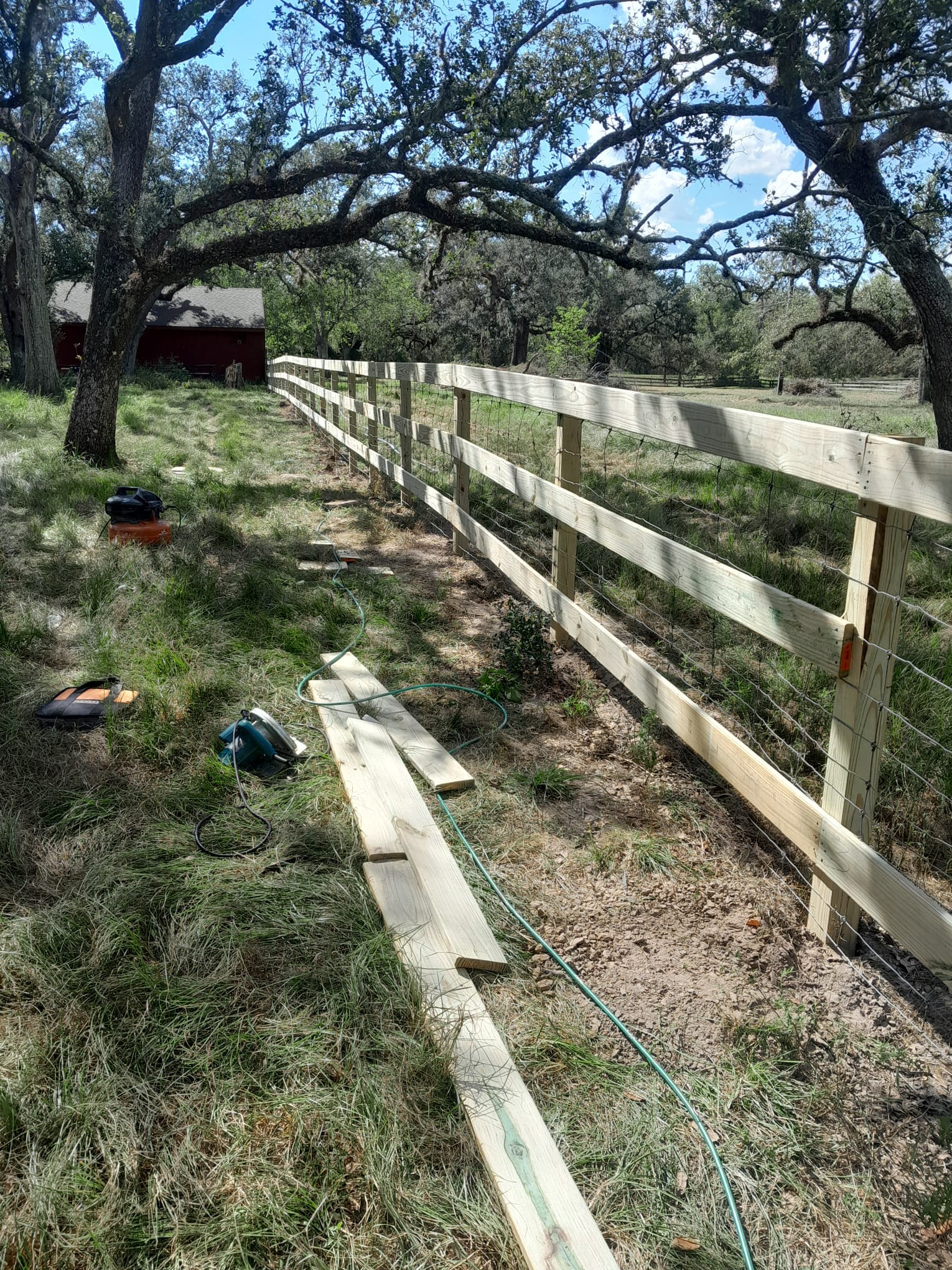
How a working farm gate should be built
A working gate is only as good as the posts it hangs on. The NRCS Texas fence specification, which NRCS uses for cost-shared fencing, is the most specific public standard for this part of Texas. On gates it says:
- “End/Gate brace assemblies are required where fence ends and on both sides of gate openings.” A gate opening is a break in the fence, and both sides have to hold the wire tension on their own.
- Gates made of wood, panels, aluminum or steel “will have galvanized or painted hinges and be attached directly to a brace assembly post.”
- Wire gates use the same wire as the fence, with stays no more than 4 feet apart.
- Posts are buried at least 3 feet, and “sandy soils and consistently wet soils require additional depth.” That’s a common condition near the coast.
For barbed wire fences, the spec’s table sets gate posts at a minimum of 2⅜-inch steel (3 ft deep if backfilled, 5 ft if driven) or 6-inch wood (3 ft deep). The University of Georgia’s horse fencing bulletin goes further for horses: corner and gate posts at least 8 inches in top diameter.
Width is the other decision. UGA says gates into a pasture should let tractors, mowers, fertilizer trucks and wagons through, “a minimum of 14 to 16 feet wide.” A gate only horses use can be 4 feet, but make it at least 8 feet if equipment may ever need to pass. Gates should sit level with the top of the fence. Horses tend to gather at gates, so they need to be sturdy and safe.
Plan a farm or ranch gate
Pick what the gate is for and what will go through it. The planner applies the published extension and NRCS guidance to give a minimum width, post and brace checklist you can hold a quote against. No prices.
Widths and horse guidance: University of Georgia Extension Bulletin 1192, Fences for Horses. Gates, bracing and post minimums: NRCS Texas Practice Specification Fence (Code 382), March 2021, whose post table is written for barbed wire fences. Cattle heights: University of Tennessee PB1541. Brace arithmetic: member height = 2/3 × top wire (NRCS); horizontal length = 2 to 2½ × fence height (UGA). A checklist for comparing quotes, not an engineered design.
Minimum gate widths in the sources
Feet. Each bar is a minimum from a different rule; pick the one that matches your use.
How a ranch entrance gate is different
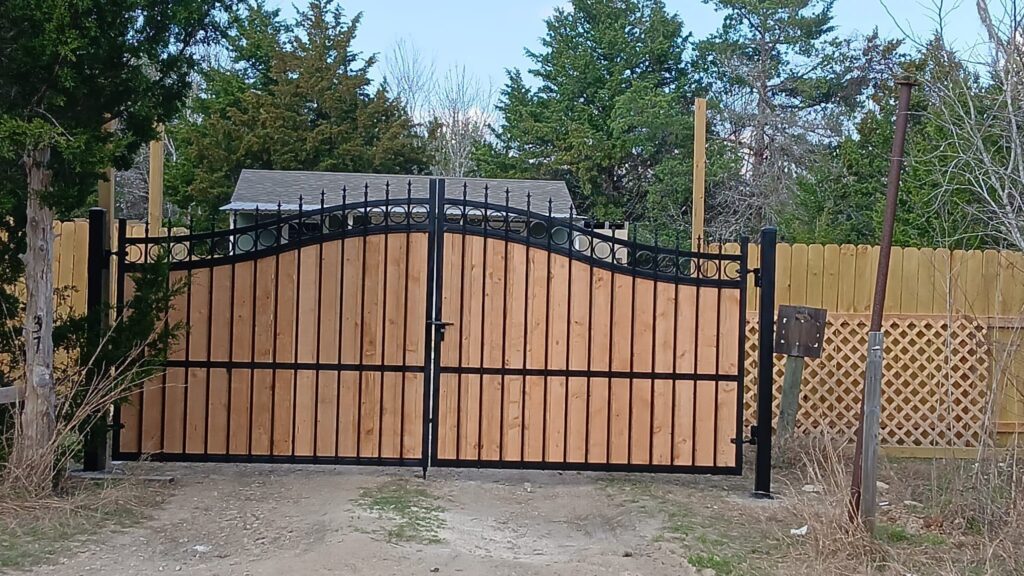
The entrance gate has a different job. It doesn’t get opened by a person on foot twenty times a day. It has to let every vehicle in: the feed truck, the hay trailer, the horse trailer, an RV. Four decisions shape it:
- Width and swing. Size the clear opening for the widest thing that will ever come through, then check that the leaves have room to swing fully open. Wide entrances are usually split into a double gate. If it’s opened by hand, the two leaves need a drop rod and center stop.
- Setback. Set the gate far enough back from the road that a truck and trailer can pull completely off the road while someone opens it.
- The arch. Why do ranches have arches? Mostly identity: a place for the ranch name or brand. Practically, an arch sets a height limit on everything that comes in, so measure your tallest load before designing one. The posts then carry the arch as well as the gates.
- Automation. Rural entrances are often far from grid power, which is why solar operators are common. See how solar gate openers work. Any automatic gate needs a UL 325 listed operator. In low-lying areas, see gate openers in flood-prone areas.
Two alternatives to a gate you open every time: a cattle guard, which Texas law recognizes as part of the fencing where a county road separates two tracts under common ownership or lease (Agriculture Code §143.003), and a bump gate, which you push open with the vehicle.
What Galveston customers say
5.091 Google reviews · read them all on Google
We just installed iron gate and it looks amazing thank you very much mustang fencing .
Mustang’s team installed iron fence for me and did an absolutely incredible job! I would recommend this company to anyone I know!
Great work. Fast service. Very friendly. I recommend using this company to replace your fence.
Reviews shown word for word from the Mustang Fencing Services Google Business Profile (Galveston), captured 2026-09-27.
Questions we get about this
What is the difference between a farm gate and a ranch gate?
How wide should a farm gate be?
What is a ranch entrance called?
Why do ranches have arches over the gate?
Does a farm gate need a brace?
What does farm gate mean?
Sources
Checked September 27, 2026. Rules change, so confirm with the City before you build.
- USDA NRCS Texas, Practice Specification Fence (Code 382), March 2021 — Gate rules (wire gates, hinges, attachment to a brace post); brace assemblies on both sides of gate openings; brace member height, diagonal wire and wrap points; post depth and soil note; barbed wire fence post minimums.
- University of Georgia Cooperative Extension Bulletin 1192, Fences for Horses — Gate widths (14–16 ft for equipment; 4 ft and 8 ft for horses); gates level with the fence; corner and gate posts 8 in; H-brace horizontal length and brace wire.
- University of Tennessee Extension PB1541, Planning & Building Fences on the Farm — Perimeter cattle fence 54 in minimum; handling facilities 60 in minimum.
- Texas A&M AgriLife Extension, A Landowner’s Guide to Fence Law in Texas (AGEC-PU-114, 2nd ed.) — Stock laws by county or precinct; who to ask; sufficient-fence standards apply only in open range areas.
- Texas Agriculture Code, Chapter 143, Fences; Range Restrictions — §143.002 unlocked 10 ft gate; §143.003 cattle guard on a county road.
Planning a farm or ranch gate?
We’ll look at what needs to get through, the fence it hangs in and the ground it sits on, and put the gate, posts and bracing on a written quote. Free on-site estimates across Galveston County.