
What’s the Best Fence for Warehouse Security?
Chain link, welded wire mesh and ornamental steel each trade off cost, climb resistance and visibility differently — and Galveston’s own code sets a real 8 ft height cap and limits barbed wire to specific property types. Here’s how to match the fence to the property, grounded in the City’s rules and the fence industry’s own security-fencing references.
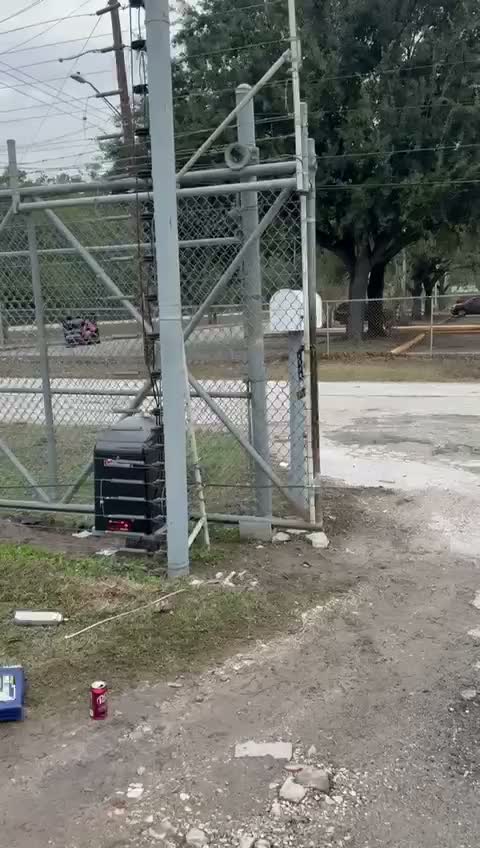
For most warehouse perimeters, galvanized chain link built to a recognized security-fence design guide is the lowest-cost baseline; welded wire mesh adds real climb and cut resistance without needing barbed wire; and ornamental steel trades some of that resistance for a more finished look while still keeping sightlines open. None of them is a one-size answer — the right pick depends on what you’re actually defending against and what Galveston’s own code allows on that lot. The City caps any nonresidential fence at 8 ft, and only allows a barbed-wire top guard on fences enclosing specific property types, including industrial properties, not on every commercial lot. The fence industry’s own security-fencing references (UFC 4-022-03, ASTM F2611) describe a 7 ft fabric height plus a 1 ft top guard as a common high-security configuration — which lands right at or above that 8 ft cap, so the math matters before you order materials.
Sources: City of Galveston LDR §2.601; UFC 4-022-03 (US DoD); ASTM F2611-23; ASTM F2781-15(2021).
Three materials, three different jobs
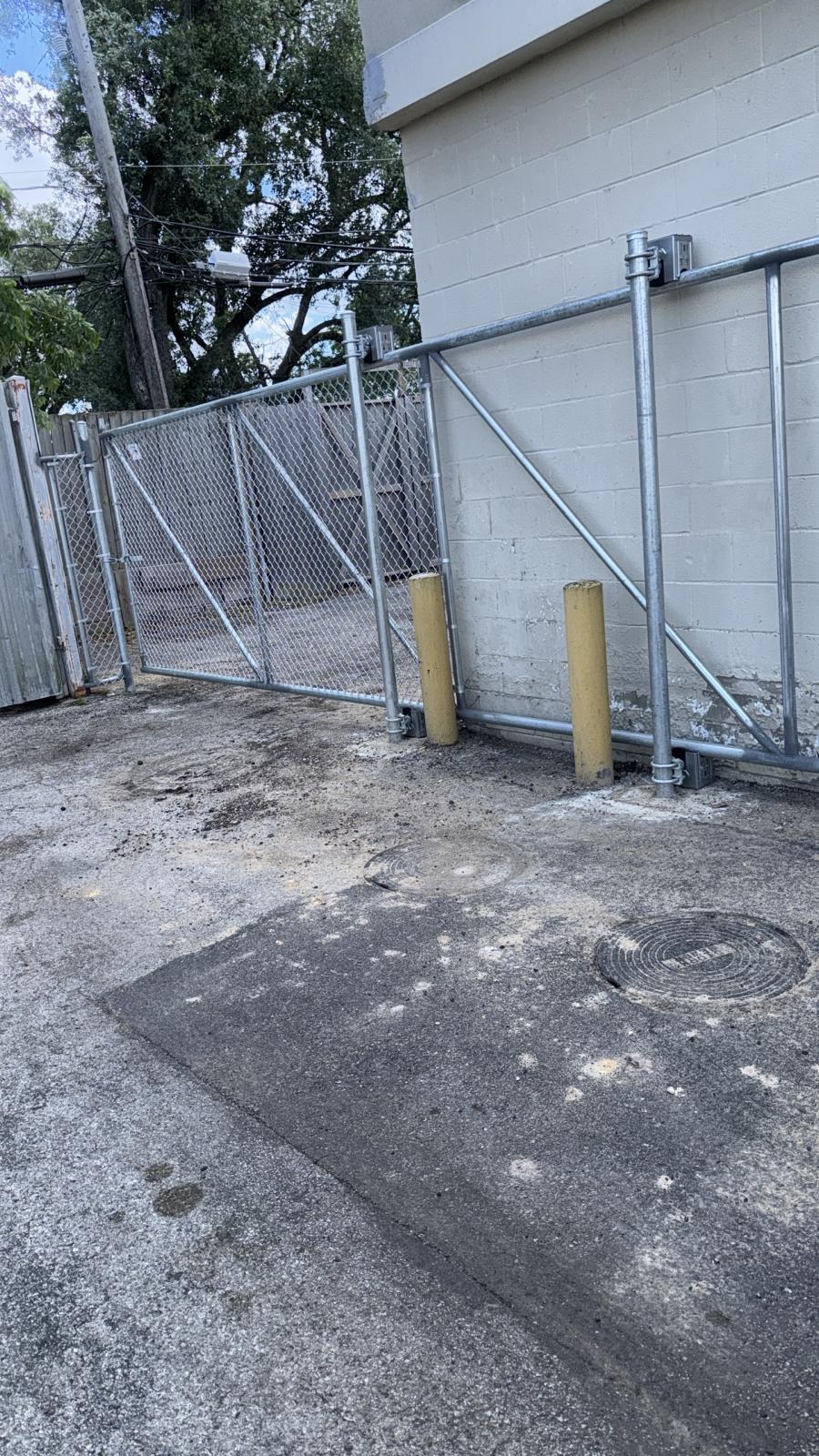
Chain link, welded wire mesh and ornamental steel aren’t really competing on the same axis. Chain link is the lowest-cost way to put a tall, durable boundary around a lot and is the material our chain link fence crews install most often for commercial sites. Welded wire mesh costs more but closes off the toe- and finger-holds an open diamond mesh leaves for someone trying to climb it. Ornamental steel — see our security fencing page — costs the most but reads as a finished, intentional boundary rather than an industrial one, while still letting people see through it.
Before picking one, it’s worth knowing what Galveston’s own code actually allows on a nonresidential lot, and how that measures up against the industry’s own security-fence engineering references.
What the industry’s own security-fence references actually specify
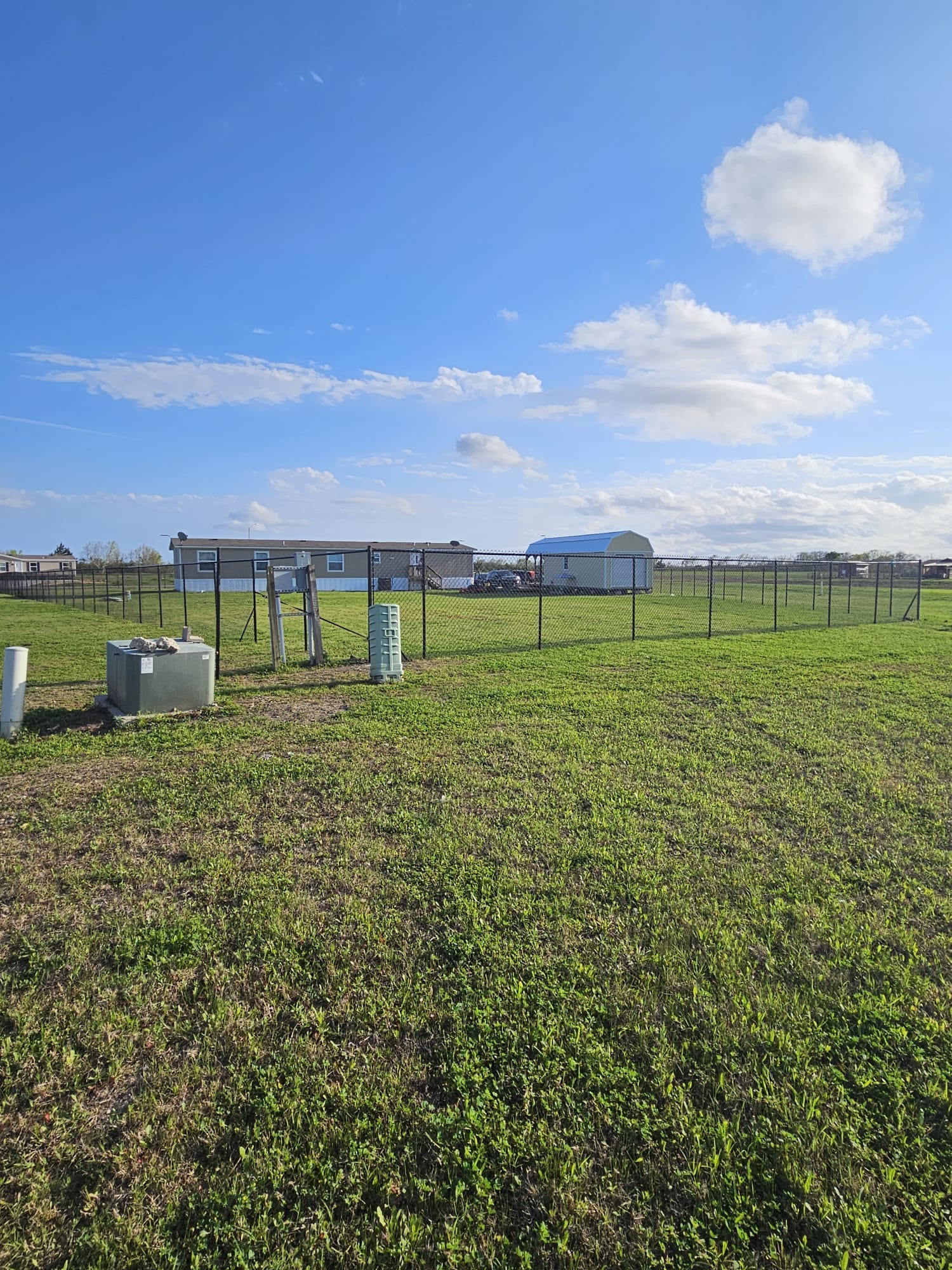
UFC 4-022-03 (a U.S. Department of Defense design standard) and ASTM F2611 (the fence industry’s own chain link security-fence design guide) are not Galveston or Texas requirements — they’re the most commonly cited engineering references for what “high-security chain link” actually means on a spec sheet. Between them: fabric at least 9-gauge thick, mesh openings no larger than 2 in per side, the fabric run to within 2 in of the ground and anchored so it can’t be lifted more than 5 in by hand, and posts, rails and bracing kept on the protected side of the fence, not the attack side.
Welded wire mesh is described in the same reference as a step up from chain link on climb and cut resistance specifically because its smaller, welded openings remove the toe- and finger-holds an open diamond mesh leaves. Ornamental (tubular) steel fencing is described as more climb-resistant than chain link as well, installed with a 2-6 in ground clearance, with its own ASTM reference (F2408) for additional guidance.
Don’t fence out your own visibility
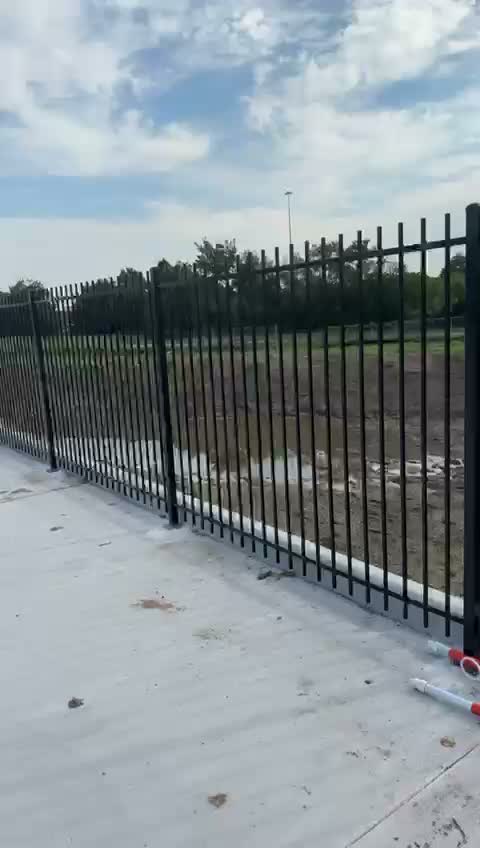
Crime Prevention Through Environmental Design (CPTED) guidance from U.S. police departments makes a point that’s easy to miss when choosing a “stronger-looking” fence: a solid screen can also hide an intruder once they’re at the fence line, while an open fence supports what CPTED calls natural surveillance. One municipal CPTED page puts it directly: “Access control devices should not overshadow the importance of surveillance… Wrought iron or chain link fences are good examples” of a fence that controls access without blocking the view. For a warehouse perimeter watched by cameras or regular foot patrols, that’s a real factor alongside raw climb resistance — it’s part of why chain link and ornamental steel remain common choices even where welded wire mesh would resist climbing better.
Side by side
| Chain link (galvanized) | Welded wire mesh | Ornamental steel | |
|---|---|---|---|
| Typical cost | Lowest | Higher than chain link | Highest |
| Climb/cut resistance | Baseline (9-gauge, 2 in mesh per industry ref.) | Higher — smaller welded openings remove toe/finger holds | Higher — no mesh to climb, but pickets can be gapped |
| Sightlines (CPTED) | Open — supports natural surveillance | Open, though mesh is denser | Open — vertical pickets, clear view through |
| Galveston height cap | 8 ft, nonresidential (LDR §2.601.B.1) | 8 ft, nonresidential (same section) | 8 ft, nonresidential (same section) |
| Barbed wire topper | Allowed only on qualifying property types (§2.601.C.2) | Same restriction applies | Same restriction applies |
Sources: City of Galveston LDR §2.601; UFC 4-022-03; ASTM F2611-23.
Which fence type fits your warehouse perimeter?
Answer two questions about the property and the priority. This compares galvanized chain link, welded wire mesh, and ornamental steel on the factors below — it isn’t a substitute for checking your lot’s zoning classification with the City.
Based on UFC 4-022-03 (industry fabric/top-guard reference), ASTM F2611 (chain link security fence design guide) and City of Galveston LDR §2.601 (height and barbed-wire rules). Not a zoning determination.
What Galveston customers say
5.091 Google reviews · read them all on Google
Excellent work and great customer service. They were very professional and did an amazing job.
True professionalism is very rare in this day and age, these guys live upto their word and deliver on their service! Our fence was down in the July storm and these guys came and gave a reasonable quote, after confirming I received a time line and they delivered! Will recommend them to everyone I know who needs fencing done.
"Mustang Fencing Service did an amazing job on my new fence! The team was professional, efficient, and communicative. The quality of the materials is outstanding, and they finished on time and within budget. Highly recommend them for any fencing needs!"
Reviews shown word for word from the Mustang Fencing Services Google Business Profile (Galveston), captured 2026-10-12.
Questions we get about this
Can I put barbed wire on my warehouse fence in Galveston?
What gauge chain link should I use for a warehouse perimeter?
Is chain link less secure than a solid fence for a warehouse?
How tall can a warehouse fence be in Galveston?
What’s the forced-entry rating system for security fencing?
Sources
Checked October 14, 2026. Rules change, so confirm with the City before you build.
- City of Galveston, Land Development Regulations, §2.601 — Nonresidential/mixed-use fence height (8 ft) and barbed/razor-wire restrictions and exceptions.
- UFC 4-022-03, Security Fences and Gates (US DoD, 2013 ed.) — Chain link fabric gauge/mesh, welded wire mesh and ornamental fencing comparisons, fence height and top-guard specifications. Cited as an industry engineering reference, not a Galveston requirement.
- ASTM F2611-23, Standard Guide for Design and Construction of Chain Link Security Fencing — Scope: material selection, system design and layout for chain link security fencing.
- ASTM F2781-15(2021), Testing Forced Entry, Ballistic and Low Impact Resistance of Security Fence Systems — Defines the Low/Medium/Aggressive forced-entry threat-level test-tool inventories.
- City of Everett, WA Police Department, Crime Prevention Through Environmental Design — Natural surveillance / natural access control principles; open fencing as compatible with sightlines.
Securing a warehouse or commercial lot in Galveston?
We’ll walk the property, check what the City’s fence and barbed-wire rules actually allow for that use, and quote chain link, welded wire mesh or ornamental steel so you can compare them on your own perimeter.