
Can a Vinyl Fence Handle Gulf Coast Wind and Hurricane Season?
No fence, vinyl included, is hurricane-proof. What actually changes the outcome is panel style, post size and whether the installation matches a manufacturer’s own wind-tested specification — not the PVC material standard itself, which explicitly doesn’t cover wind load.
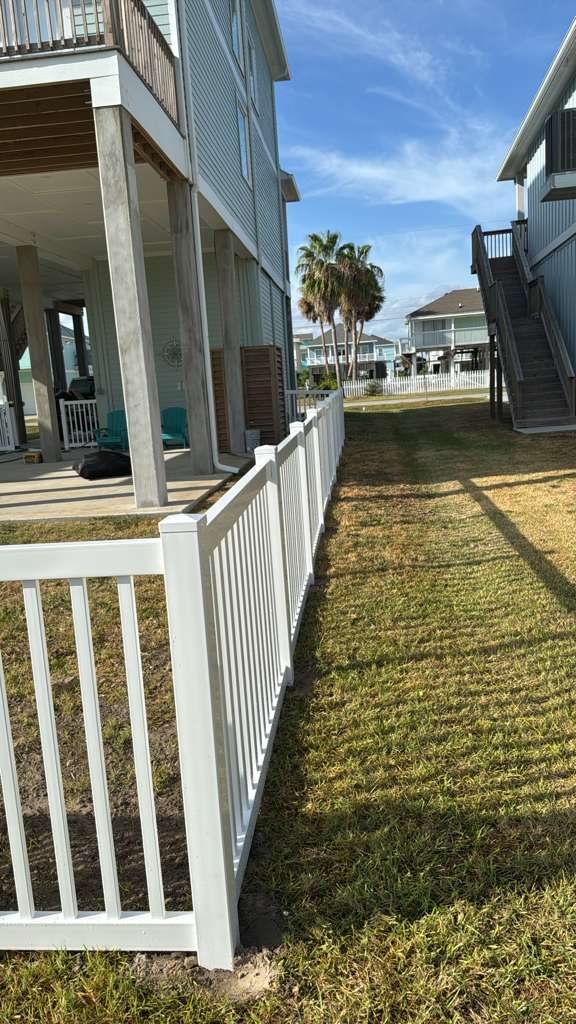
The PVC material standard itself, ASTM F964, says plainly that it does not address “loadbearing characteristics for fence and railing assemblies,” wind load included. So a vinyl fence’s wind performance comes down to panel style (a solid privacy panel catches all the wind; a spaced picket or ranch-rail style lets most of it through), post size, and whether the installation matches a manufacturer’s own tested wind-kit specification. One maker certifies its privacy line to 75 mph — but only with its own heavy-duty posts and matching hardware, not a standard post of the same visible size.
Sources: ASTM F964 (scope note); Illusions Vinyl Fence 75 MPH Wind Kit Installation Instructions; CertainTeed Bufftech installation guideline (wind-exposure footing table).
Vinyl itself isn’t wind-rated — the installed system is
It’s easy to assume a “vinyl fence” has a wind rating the way a window or a roof shingle does. It doesn’t, by the material standard. ASTM F964, the specification covering rigid PVC fence and railing profiles, says directly: “Loadbearing characteristics for fence and railing assemblies are not addressed within this specification (for example, windload…).” That leaves wind performance entirely up to how a specific manufacturer builds and tests a specific product line — post wall thickness, footing depth, and the fasteners holding it together.
That’s why the only real number on the market belongs to the installed system, not the plastic: Illusions Vinyl Fence certifies its privacy series to 75 mph, but only when built with its own heavy-duty posts and a matching wind-kit adaptor — see below.
What the 75 mph certification actually requires
Illusions’ own instructions are specific: the certification covers its privacy series (V300, V3215, V3700) up to 8 ft and its spaced-picket series (V400, V352, V700) up to 4 ft — and only when installed with VH-series heavy-duty posts (5×5 in., about .250 in. average wall thickness, up to 6 ft of fence height; 8×8 in. at the same wall thickness for 7-8 ft) and the matching 75 MPH Wind Kit adaptor hardware. The installer then returns a form (owner, location, style, contract and invoice copies) to receive the certification.
The instructions also specify the footing: holes no less than 30 in. deep for 5×5 posts, 42 in. for 8×8 posts, diameters of 12 in. and 15 in. respectively, filled with concrete rated 3,000 psi minimum. A standard post of the same outward size that doesn’t carry the “VH” product code is explicitly not the certified part — the instructions tell installers to call back and verify if it doesn’t.
How much wind does your vinyl fence style catch?
Pick a style, height and how exposed the lot is. You’ll see roughly how open the face is, and whether the style and height could even be eligible for one manufacturer’s 75 mph wind-kit certification.
Open-face fraction: 100% for a solid privacy panel; about 1/4.75 for 1 in. pickets with 3¾ in. gaps (CLFMI arithmetic, pickets only). 75 mph certification: Illusions Vinyl Fence, privacy up to 8 ft or spaced picket up to 4 ft, only with matching VH-series heavy-duty posts and the wind-kit hardware — a standard post of the same size is not certified. Footing guide: CertainTeed Bufftech Imperial semi-privacy table, 30 in. footing row, non-HVHZ. A planning aid, not an engineering design or a universal number for every brand.
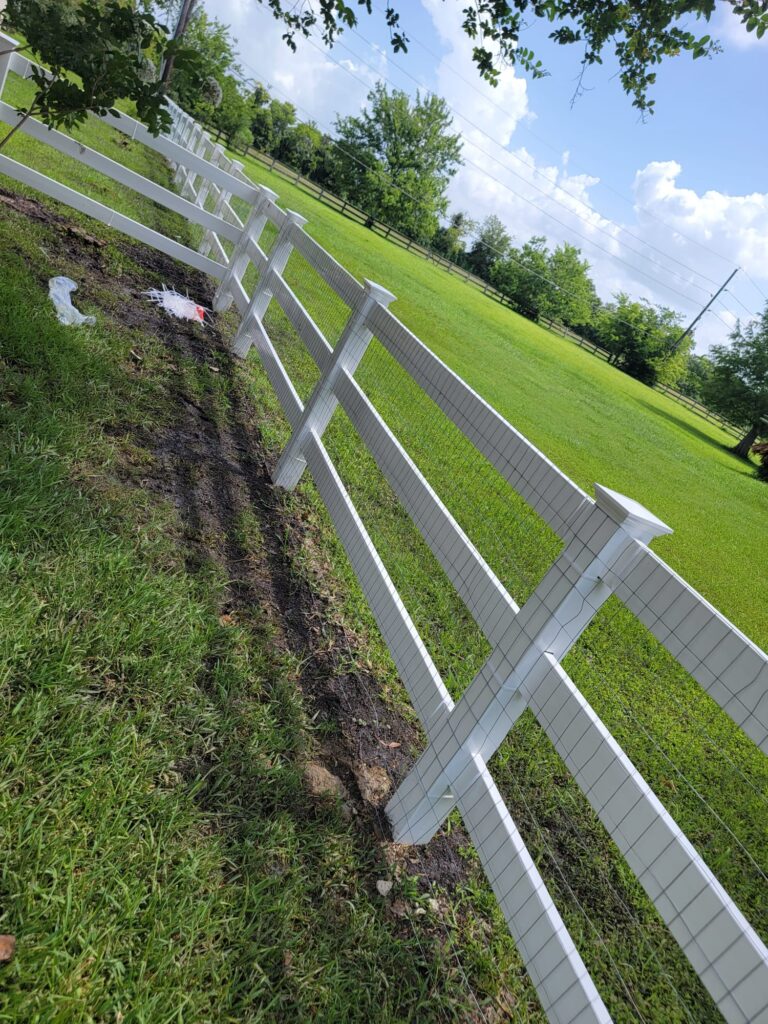
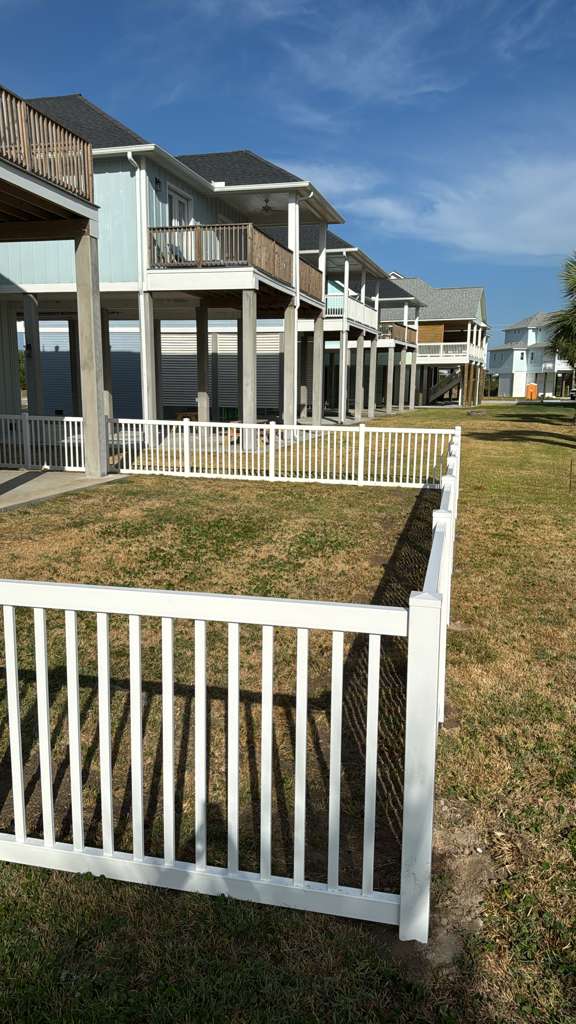
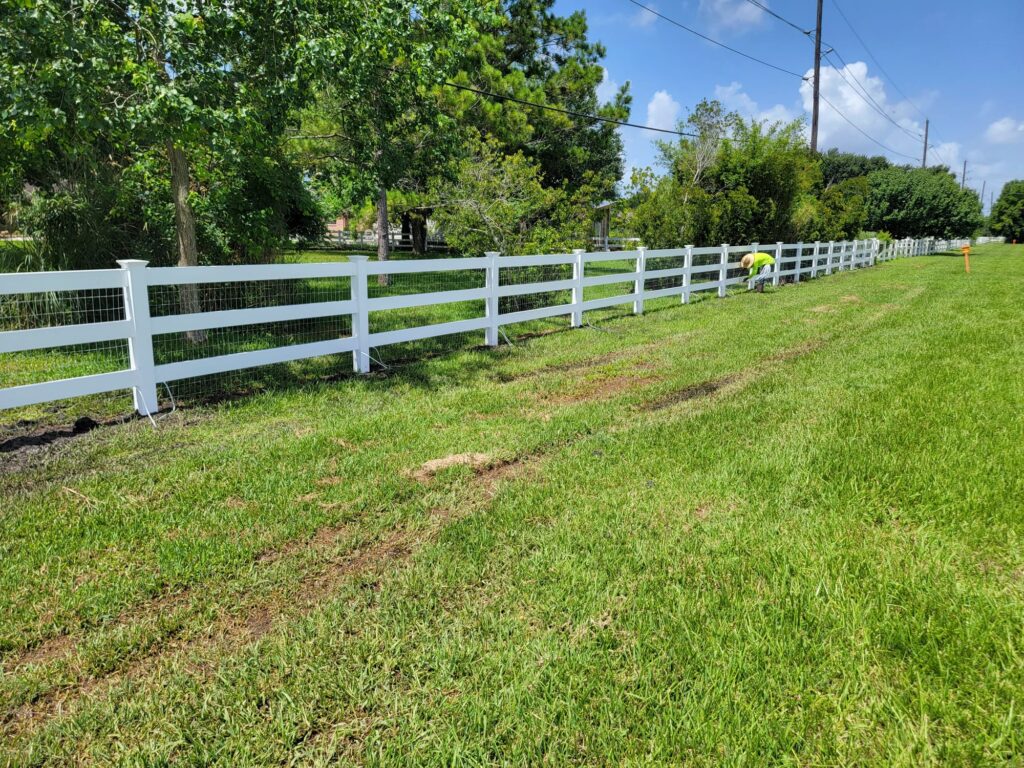
What Galveston customers say
5.091 Google reviews · read them all on Google
White PVC fence. Beautifully done! Thanks Mustang it’s really looks perfect.
Fenomenal job, really nice guy. Contacted them after hurricane knocked down my fence facing the street and got it done really quickly.
Seems to have helped out a after hurricane beryl we all appreciate it thank you!
Reviews shown word for word from the Mustang Fencing Services Google Business Profile (Galveston), captured 2026-10-12.
Questions we get about this
Is vinyl fencing rated for wind?
What wind speed can a vinyl fence handle?
Is an open vinyl style better than a solid privacy panel in high wind?
Does post spacing need to change based on how exposed my lot is?
Can I add a wind kit to an existing vinyl fence?
Sources
Checked October 17, 2026. Rules change, so confirm with the City before you build.
- ASTM F964, Standard Specification for Rigid Poly(Vinyl Chloride) (PVC) Exterior Profiles Used for Fencing — Scope note: loadbearing characteristics, including windload, are not addressed by this material specification.
- Illusions Vinyl Fence, 75 MPH Wind Kit Installation Instructions — Certified styles/heights, VH-series heavy-duty post requirement, hole depth/diameter, 3,000 psi concrete minimum.
- CertainTeed Bufftech installation guideline, Imperial semi-privacy wind-exposure footing table — Maximum post spacing and footing depth by Exposure B/C/D, non-HVHZ.
- Chain Link Fence Manufacturers Institute, Wind Load Guide (WLG 2445) — Open-fraction arithmetic for 1 in. pickets with 3¾ in. gaps (1/4.75), reused for the open-style comparison.
Planning a vinyl fence for hurricane season?
We’ll look at your lot’s exposure, recommend a style and post spec, and tell you plainly whether a wind-kit certification applies. Free on-site estimates across Galveston County.