
How Long Does a Chain Link Fence Last? Lifespan by Coating and Coastal Exposure
A chain link fence does not have one lifespan number. Galvanized fabric is protected by a zinc coating that is slowly used up by corrosion; once it is gone, the wire starts to rust. How long that takes depends on the zinc class and how close the fence sits to salt water — and posts and footings can fail on an entirely separate schedule. Here is what the warranty numbers actually cover, and roughly how long the coating itself holds up.
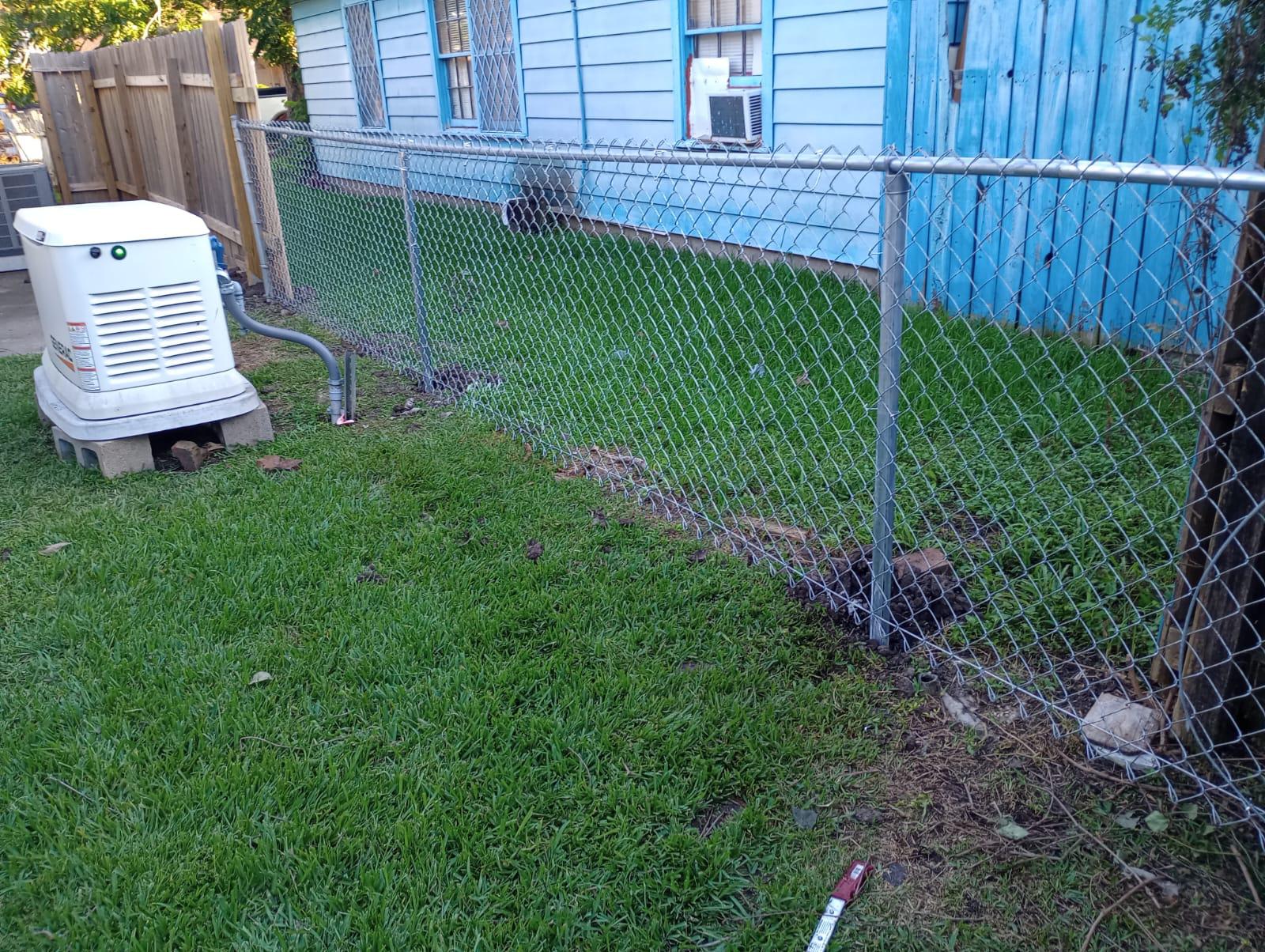
There is no single number for how long a chain link fence lasts — it depends on the coating, the distance to salt water, and whether the posts were set right. Galvanized fabric is protected by a zinc coating that corrodes away slowly; once enough of it is gone, the wire starts to show surface rust, which the American Galvanizers Association defines as “time to first maintenance” (5% rusting of the steel surface). How long that takes ranges from roughly 6 years (heavier Class 2 zinc, right on open water) to decades (lighter coatings, well inland) — see the exact ranges below. Warranty terms are a useful reference point, but they are not the same thing as the coating’s real working life.
Sources: Merchants Metals, Zinc Coated Steel Chain Link Fence Fabric data sheet; Master Halco, 12 Year Limited Warranty, Galvanized Chain-Link Fence System; American Galvanizers Association, HDG Corrosion Rates for ISO Categories and Time to First Maintenance Chart.
What actually ends a chain link fence’s life
A chain link fence fails in one of two unrelated ways, and they run on different clocks. The first is the fabric’s coating wearing out: galvanized wire is steel protected by a layer of zinc, and that zinc is consumed gradually by atmospheric corrosion. Once it is thin enough, the exposed steel starts to rust — a slow process, not a sudden one. The second is the posts or footings failing, which is a mechanical and installation question (depth, concrete drainage, wind load) that has nothing to do with how long the zinc lasts. A fence with years of zinc left can still fail at the post; a fence with rusting fabric can still be standing on solid posts. Treat them as two separate questions, not one lifespan number.
Warranty terms vs. real lifespan
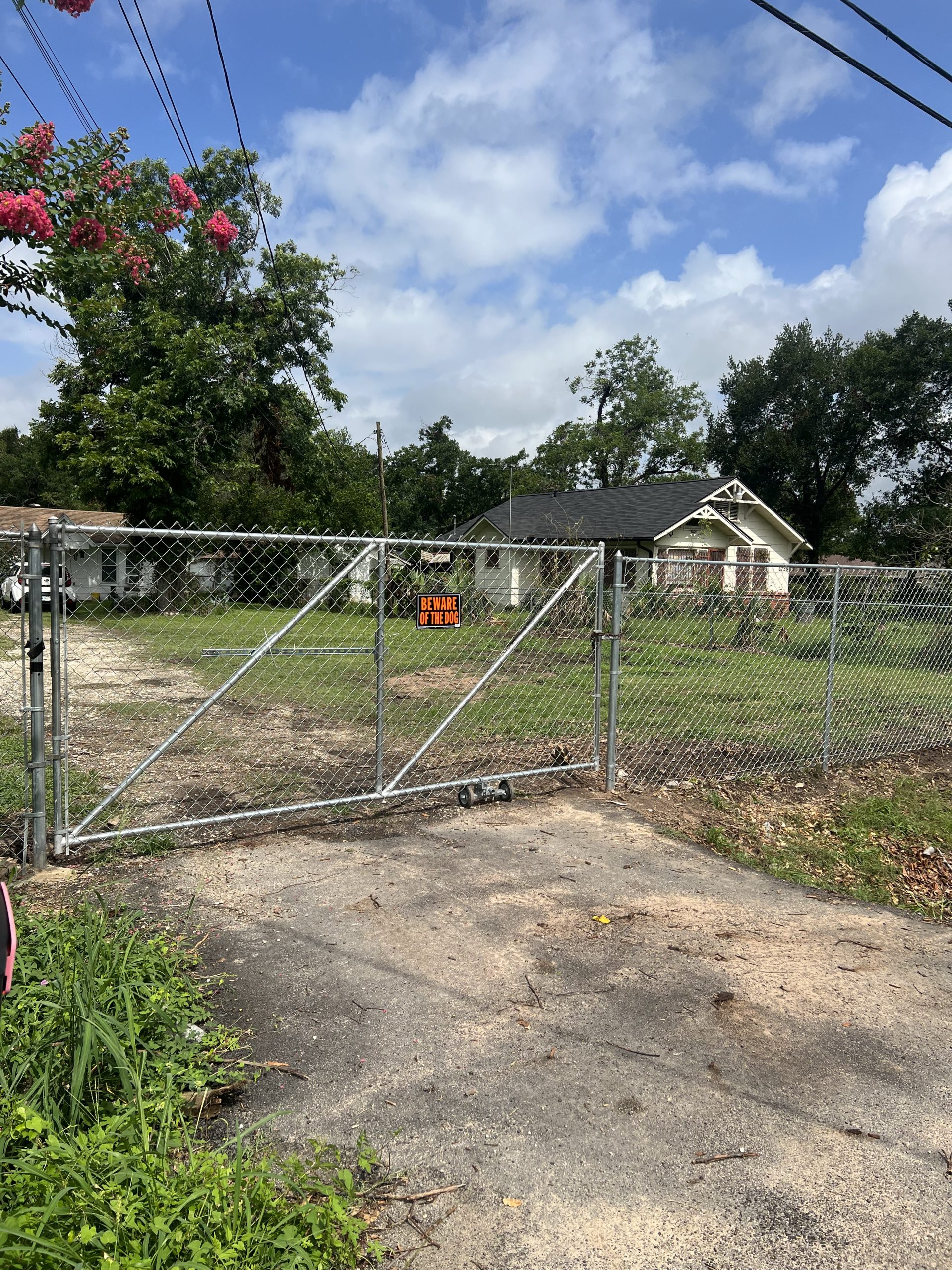
Two warranty numbers come up often, and they are not measuring the same thing. Master Halco’s galvanized chain-link system warranty runs 12 years from purchase, covering the complete system (fabric at least 11-1/2 gauge per ASTM A392, posts at least 16 gauge, top rail at least 17 gauge per ASTM F761, installed per ASTM F567) against defects and against red rust over 5% of the surface. It explicitly states: “Use in harsh industrial, coastal or marine environments is not warranted.” Merchants Metals warrants its Class 2 galvanized fabric alone for 25 years against failure from rust or corrosion — a longer number, but it covers the fabric only, not the posts, rail or installation, and our source extract does not show the same explicit coastal exclusion Master Halco states for its system warranty.
Neither number is a lifespan ceiling or a floor. A 12-year warranty does not mean the fence stops working at year 12 — it means that is how long the manufacturer stands behind it in writing, and coastal properties are told up front that the galvanized system warranty does not apply to them at all. The real-world clock on the zinc itself is a separate calculation, covered next.
Zinc life to first rust, calculated
| Distance band | Zinc loss rate | Class 1 zinc (~2.1 mil) | Class 2 zinc (~3.6 mil) |
|---|---|---|---|
| C3 — 1-30 km from the ocean | 0.028-0.083 mils/yr | ~25-75 yrs | ~43-129 yrs |
| C4 — under 1 km, or a sheltered shore | 0.082-0.165 mils/yr | ~13-26 yrs | ~22-44 yrs |
| C5 — within a few hundred meters of open water | 0.165-0.331 mils/yr | ~6-13 yrs | ~11-22 yrs |
Corrosion rates: American Galvanizers Association, HDG Corrosion Rates for ISO Categories (ISO 9223). Years calculated as zinc coating weight (Merchants Metals Class 1 = 1.2 oz/ft2 = ~2.1 mil, Class 2 = 2.0 oz/ft2 = ~3.6 mil) divided by the corrosion rate, using AGA’s 1 mil = 0.56 oz/ft2 conversion. Marks AGA’s “time to first maintenance” (5% rusting), not structural failure.

Posts and footings: the other way a chain link fence fails
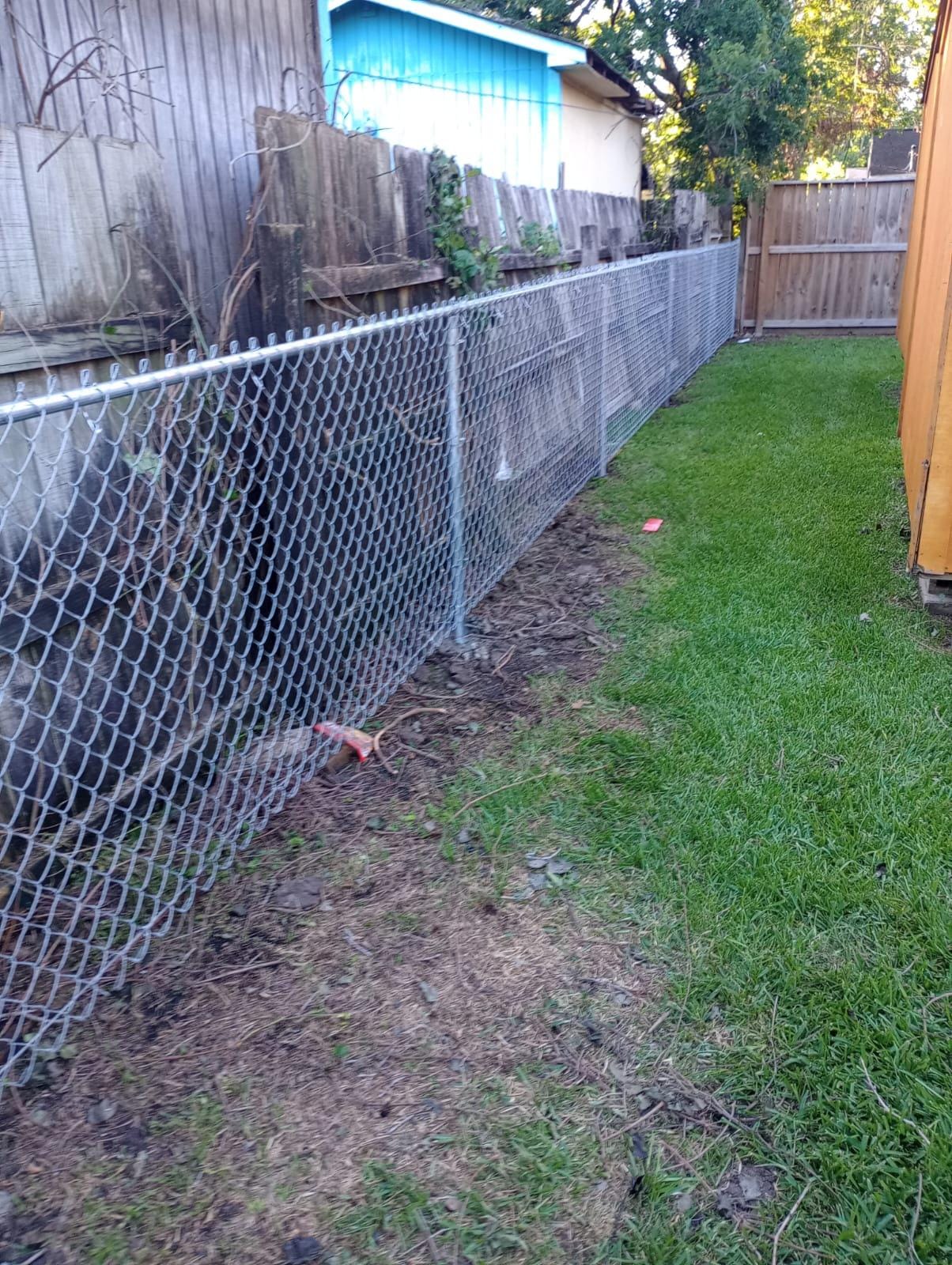
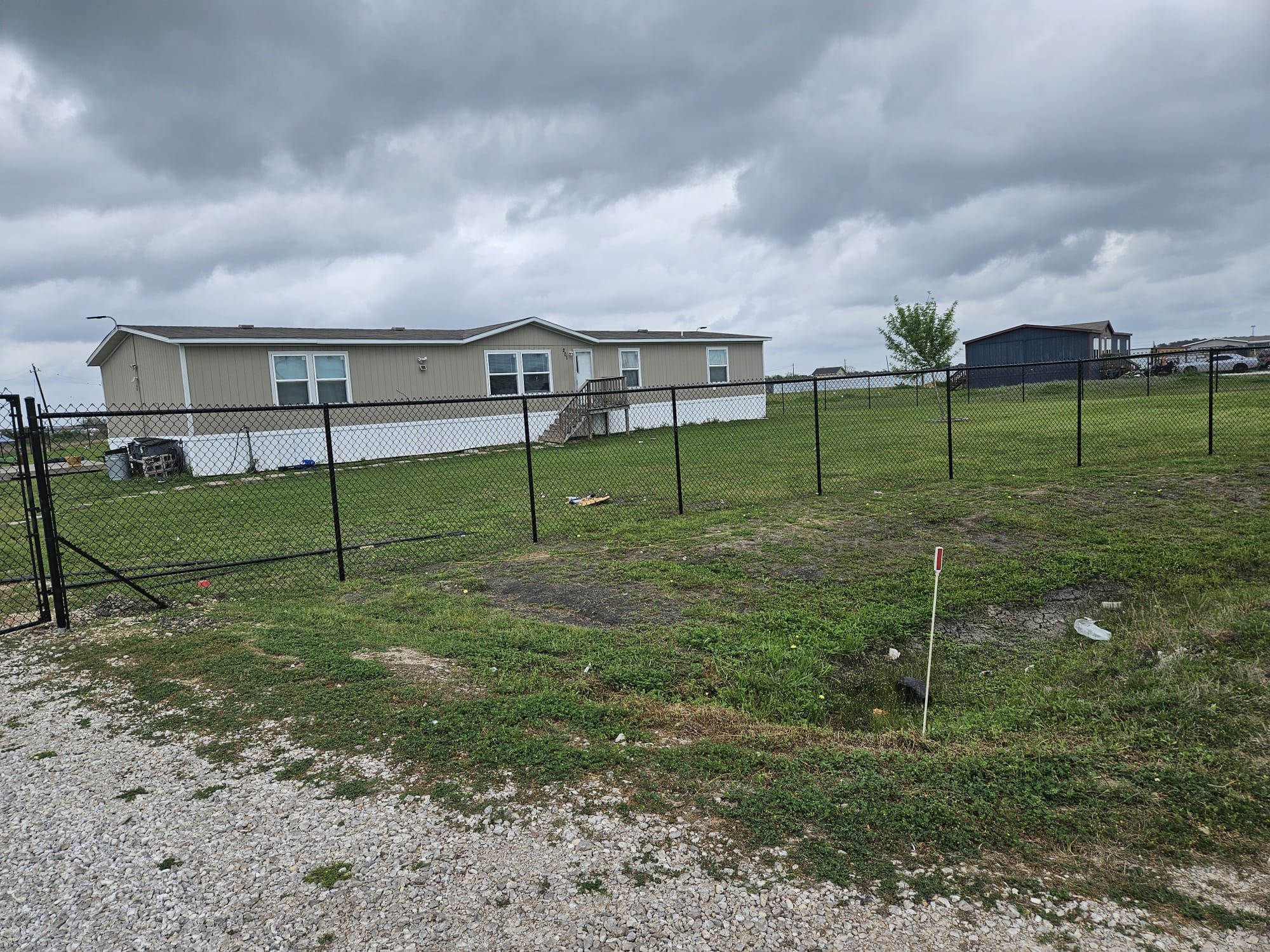
A fence line can rust very slowly and still look bad early if the posts move. Master Halco’s residential warranty minimums — 16-gauge terminal and line posts, 17-gauge top rail, meeting ASTM F761 — exist because undersized framework flexes and loosens the whole system well before the fabric’s own zinc runs out. On larger or commercial runs, CLFMI’s post-sizing table scales minimum post diameter with fence height and calls for a wind-load check on taller runs or anything carrying slats or a windscreen, because wind load on the panel transfers straight into the post and footing. None of that is about corrosion — it is about whether the posts were sized and set for the job in the first place, which is a one-time installation decision rather than a slow clock like the zinc. This is general industry framing from the sizing standards, not a measured statistic on how often posts versus fabric fail first.
Does vinyl-coated chain link last longer near the coast?
Polymer (vinyl) coated fabric, built to ASTM F668, wraps the metallic-coated core wire in an extruded or fused polymer jacket, in one of three coating-structure classes. That jacket covers the zinc (or aluminum, or zinc-aluminum alloy) coating entirely, so the direct weather exposure that drives the zinc-loss arithmetic above does not apply to it the same way — the jacket, not the metal underneath, is what has to hold up. Neither Master Halco’s galvanized warranty nor Merchants Metals’ fabric warranty, in the documents we checked, offers a comparable number of years for a polymer-coated system, and our sources do not supply one either. What is reasonably certain: a sound polymer jacket means there is no bare or lightly-coated steel directly facing salt air, which is why coastal buyers often lean toward it over plain galvanized — but that is a reasoned inference from the coating’s design, not a sourced lifespan figure, and it is worth saying so plainly rather than inventing a number.
Estimate how much life is left in your chain link fence
Pick the coating, how close the fence sits to open salt water, and roughly how old it is. The estimate applies the zinc coating weights and ISO 9223 corrosion rates cited below to a typical chain link coating — it is a planning range, not a measurement of your specific fence.
Zinc life: coating weight / 0.56 oz/ft2 per mil (American Galvanizers Association), divided by the ISO 9223 zinc corrosion rate for the distance band (AGA, “HDG Corrosion Rates for ISO Categories”). Warranty terms: Master Halco 12 Year Limited Warranty, Galvanized Chain-Link Fence System (excludes coastal/marine use); Merchants Metals Class 2 fabric warranty (25 years against rust/corrosion failure, fabric only). Polymer-coated fabric has no life-in-years figure in our sources. Planning estimate, not an inspection or a guarantee.
What Galveston customers say
5.091 Google reviews · read them all on Google
Amazing work will go ahead and recommend everyone in friends and family We installed 8ft tall double sided stained cedar wood fence in our backyard, it’s really looks great, installed perfectly nice finishing and cost effective, thanks mustang fencing.
I recently hired Mustang Fencing Services for a fence installation, and I couldn’t be happier with the results. The team was professional, punctual, and very knowledgeable. They provided a detailed estimate and completed the job on time and within budget. Overall highly recommended Mustang fencing services
Mustang Fencing Services provides great quality and craftsmanship. Their workforce is competent and efficient, guaranteeing that every project meets the greatest requirements. The materials utilized are strong, and the attention to detail is excellent. Highly suggest to anyone in need of dependable fencing solutions!
Reviews shown word for word from the Mustang Fencing Services Google Business Profile (Galveston), captured 2026-10-12.
Questions we get about this
How long does a chain link fence actually last?
Does a 12-year warranty mean the fence only lasts 12 years?
Does vinyl-coated chain link last longer than galvanized near the coast?
What usually fails first, the fabric or the posts?
Does salt air really shorten chain link fence life that much?
Sources
Checked October 18, 2026. Rules change, so confirm with the City before you build.
- Merchants Metals, Zinc Coated (Galvanized) Steel Chain Link Fence Fabric, technical data sheet (rev. April 2014) — Class 1/Class 2 zinc coating weights; 25-year Class 2 warranty against rust or corrosion failure.
- Master Halco, 12 Year Limited Warranty, Galvanized Chain-Link Fence System — 12-year system warranty terms, fabric/post/rail minimums, and the coastal/marine exclusion.
- American Galvanizers Association, HDG Corrosion Rates for ISO Categories C1-C5/X (2021) — ISO 9223 zinc corrosion rates and distance-from-ocean descriptors used for the C3/C4/C5 bands.
- American Galvanizers Association, Time to First Maintenance Chart for Hot-Dip Galvanized Coatings — Defines time to first maintenance as 5% rusting of the steel surface; 1 mil = 0.56 oz/ft2 conversion.
- ASTM F668-25, Standard Specification for Polymer-Coated Steel Chain-Link Fence Fabric — Scope: the three polymer coating-structure classes over a metallic-coated core wire.
- Chain Link Fence Manufacturers Institute, Guide for Specifying Commercial/Industrial Chain Link Fence, Section 32 31 13 — Post sizing by height and wind-load caution, cited in the posts-and-footings section.
Not sure how much life is left in your fence?
We’ll look at the coating, the posts and the footings on site and give you a straight answer — repair, partial replacement, or a full rebuild.