
Stain or Paint a New Wood Fence? What Lasts on the Gulf Coast
Paint lasts longest when it sticks. Stain is easier to live with because it can’t peel. On a new fence the biggest factor is timing: bare wood left in the sun for a few weeks can cut the life of a paint job by years.
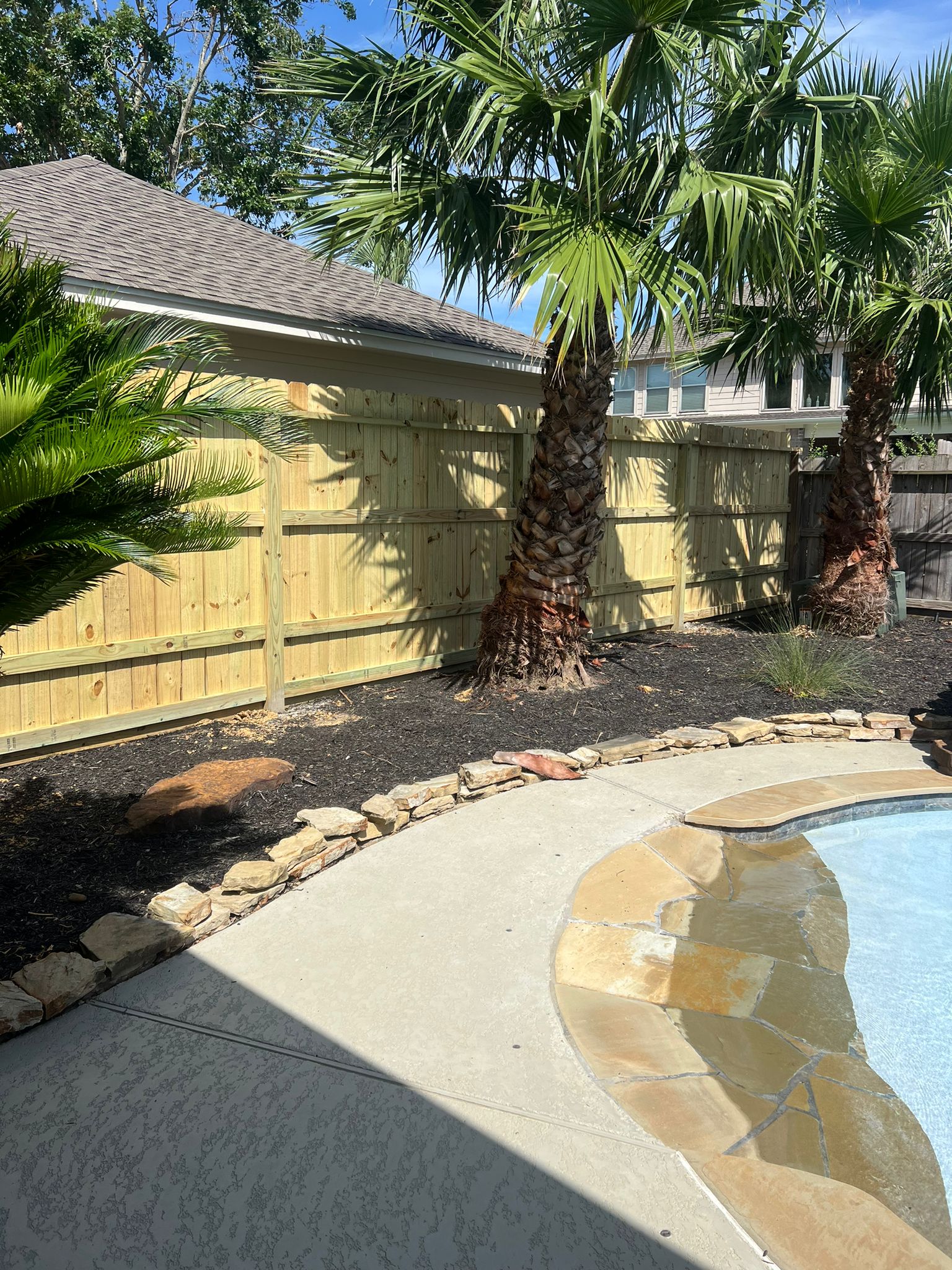
By the USDA Wood Handbook’s finish table, paint lasts longest on fence-type boards: 15–20 years on rough-sawn cedar or redwood, against 4–8 years for a semitransparent stain. But paint and solid-color stain form a film that can peel, especially over wood the sun has already damaged. A penetrating stain can’t crack or flake. It wears away and is simply reapplied. For a new fence, pick the finish before it goes up, and finish it soon.
Source: USDA Forest Products Laboratory, Wood Handbook FPL-GTR-282 (2021), Chapter 16 and Table 16-2 (expected life for an average U.S. location).
The three finishes, side by side
| Semitransparent stain | Solid-color stain | Paint | |
|---|---|---|---|
| Forms a film? | No. It soaks into the pores | Yes, like paint | Yes |
| How it fails | Wears away and fades. It can’t crack or flake | Erodes faster than paint, by design | Erodes slowly, or peels if it loses adhesion |
| Shows the grain? | Yes | No | No |
| On rough-sawn cedar or redwood | 4–8 years | 10–15 years | 15–20 years |
| On smooth, flat-grain pine | 2–3 years (low suitability) | 6–8 years | 6–10 years |
| Over sun-weathered wood | Lasts longer than on fresh wood | Prone to peeling | Prone to peeling |
USDA Wood Handbook FPL-GTR-282 (2021): Table 16-2 (siding; expected life at an average contiguous-U.S. location) and Chapter 16 (penetrating finishes, solid-color stains, paint, sunburn).
How each one works, and how it fails
Semitransparent (penetrating) stain. The Handbook puts semitransparent stains with water-repellent preservatives and oils: finishes that flow into the pores of the wood and don’t form a film. Because there is no film, they can’t crack or flake. They wear away and fade, and you recoat. They perform best on rough-sawn (saw-textured) wood. On smooth boards, the Handbook says to expect about half the service life, simply because less finish soaks in. If a high-solids stain still looks shiny an hour after it goes on, it hasn’t soaked in. Wipe off the excess, or it can form a thin film that cracks and peels within a year or two.
Solid-color stain. Despite the name, it behaves like paint. The Handbook says solid-color stains form a film, hide the grain, and are designed to erode more quickly than paint so the film never gets too thick. The trade-off is recoating more often. Solid-color stain can usually go over old paint.
Paint. Paint is the longest-lived finish when it holds. The Handbook says a three-coat system (primer plus two topcoats, about 0.10–0.13 mm thick) should last 20 years. When the topcoats wear thin, one or two new topcoats are enough, after washing off mildew, dirt and chalk. Paint erodes at different rates on different sides. The Handbook says paint on a shaded side often lasts twice as long as on a fully exposed, sunny side, so not every run of fence needs repainting on the same schedule. And don’t paint too often: if paint is sound but mildewed, wash it instead.
Sun before paint: what a few weeks of bare wood costs
Years until the paint needed attention, western redcedar left in the sun before priming and painting
The new-fence rule: finish it soon
The Handbook calls sun exposure before a film finish “a major cause of coating failures.” The damage is chemical and fast, even when the wood looks unchanged. In its test, western redcedar left facing south for 1 week before painting began peeling after 13 years. After 16 weeks of sun, the paint peeled and needed refinishing within 3 years. Boards painted with no exposure were still in good condition after 20 years. Its advice for low-density woods such as cedar is to finish as soon as possible after installation. It also notes that the old advice to let new wood weather before painting is now “the source of much pain.”
Two exceptions to “right away”:
- Pressure-treated pine is often wet from treatment. The Handbook says waterborne-treated wood dries and shrinks after installation unless it was kiln-dried after treatment (KDAT). Finishes go on better over dry wood. See when to stain a new pressure-treated fence, and cedar vs pressure-treated pine for how much it shrinks.
- If the wood has already weathered (silvery or gray), the Handbook calls it severely sunburned. A film finish will need sanding to fresh wood first. A penetrating stain is the easier choice, because it lasts longer on weathered wood than on fresh.
The Handbook’s test for sunburned wood: press a strong tape firmly onto the board and snap it off. If wood fibers come away on the tape, paint will pull them off too.
How long will each finish last on your boards?
Choose the wood and the board surface. The planner shows the USDA Wood Handbook’s expected service life for each finish, and roughly how many times you would refinish over 20 years.
Data: USDA Forest Products Laboratory, Wood Handbook FPL-GTR-282 (2021), Table 16-2, “Suitability and expected service life of finishes for exterior wood surfaces” (siding, the closest match to vertical fence boards). The Handbook says these lives are for an average location in the contiguous U.S. and depend on climate and exposure. Full Gulf Coast sun on south and west runs will be at the short end. Refinish counts are 20 years divided by the life range, rounded.
Cedar, redwood and pine take finishes differently
- Cedar and redwood are low-density woods with thin latewood bands. The Handbook says they give excellent paint performance. Their extractives can bleed through paint as reddish-brown stains, so use a stain-blocking primer under paint or solid-color stain. They also take a semitransparent stain well. See redwood vs cedar and does cedar need sealing here?
- Southern pine has wide, dense latewood bands. The Handbook says that makes good paint performance more difficult, and its table rates semitransparent stain on smooth pine as low suitability (2–3 years). Rough-sawn pine takes stain well (4–7 years). See southern pine fences.
Whatever you choose, keep sprinklers off the boards and soil off the bottom edge. See wood fence maintenance in a humid climate and how often to restain here.
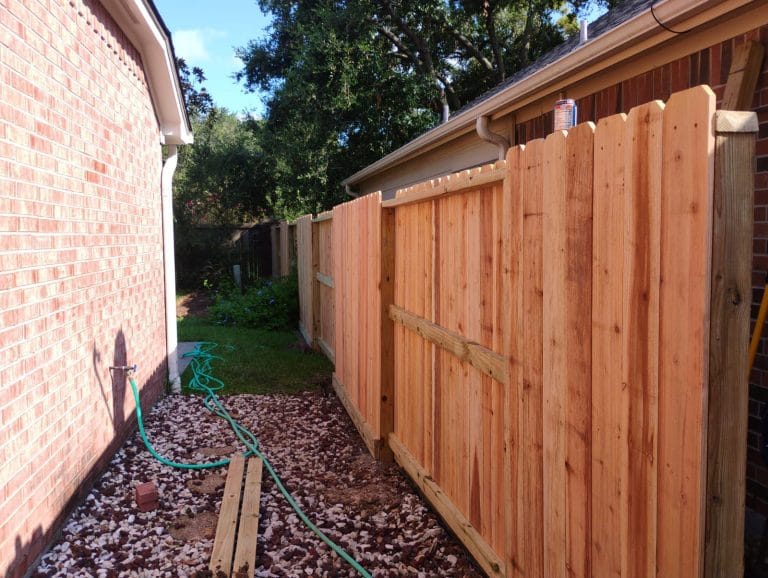
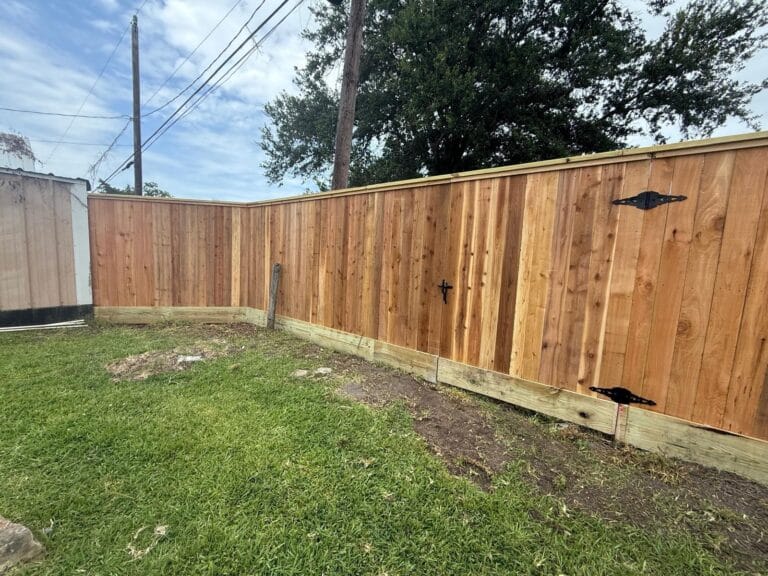
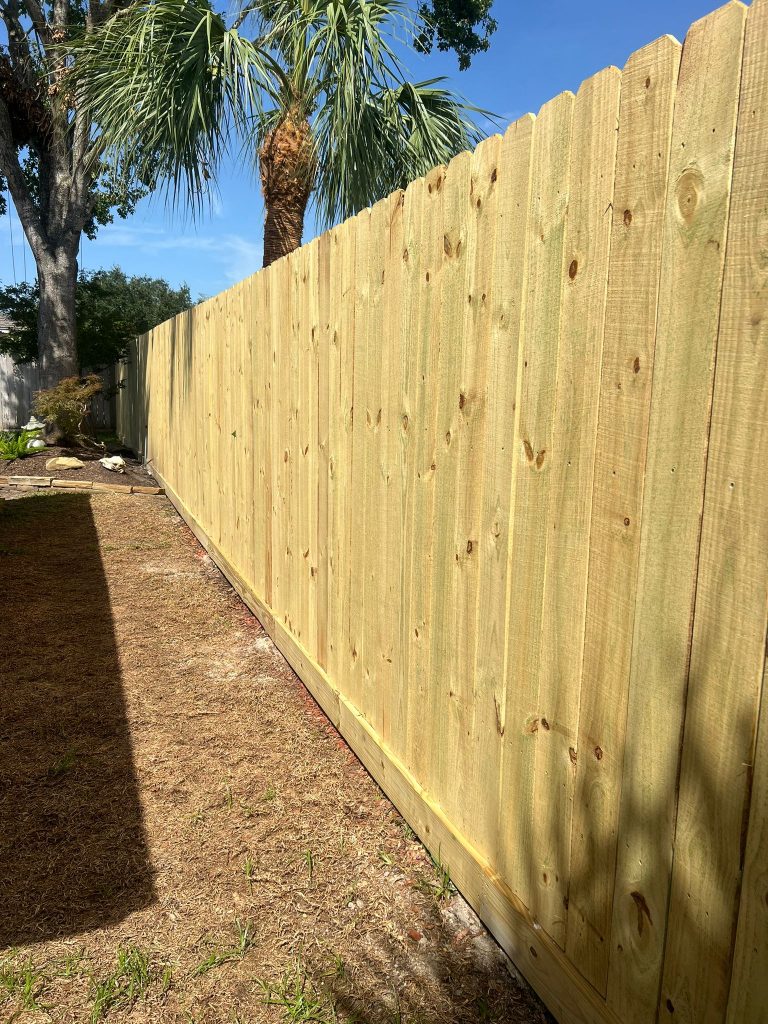
So which should you choose?
- You want to see the wood grain and keep upkeep simple: semitransparent stain, ideally on rough-sawn boards. Expect to recoat every few years, but never to scrape.
- You want a solid color, like a white picket fence or a match to the house: paint over a primer (stain-blocking on cedar or redwood), applied soon after installation. It lasts longest, and the sunny runs need checking first.
- You want solid color with less build-up: solid-color stain. Expect to recoat more often than paint.
We talk finishes through at the free on-site estimate, including when a new fence can take one. See wood fences, cedar fences and our staining and sealing service.
What Galveston customers say
5.091 Google reviews · read them all on Google
Installed Stained cedar wood fence yesterday by mustang fencing, thanks for the beautiful work.
I chose Mustang Fencing for my backyard due to their reputation for quality and security. Their wood fencing exceeded my expectations, durable and visually appealing. The customer service was top-notch, and the installation was quick and efficient.
had an excellent experience with mustang fencing From the initial consultation to the final installation, the team was professional, punctual, and attentive to detail. They helped me choose the perfect fence style to match my property and ensured everything was installed with precision. The quality of materials is top-notch, and the fence has completely transformed the look and security of my home. I highly recommend mustang services to anyone looking for reliable and high-quality fencing services!
Reviews shown word for word from the Mustang Fencing Services Google Business Profile (Galveston), captured 2026-09-27.
Questions we get about this
Is it better to stain or paint a fence?
How long does stain last compared with paint on a fence?
Does solid stain soak in like regular stain?
How soon should a new fence be stained or painted?
Can I switch from paint to stain on an older fence?
Which is better for a new cedar fence?
Sources
Checked September 26, 2026. Rules change, so confirm with the City before you build.
- USDA Forest Products Laboratory, Wood Handbook: Wood as an Engineering Material, FPL-GTR-282 (2021) — Chapter 16: penetrating finishes, semitransparent and solid-color stains, paint systems and refinishing, sunburn (UV exposure and paint adhesion), paintability of cedar, redwood and southern pine, extractive bleed and stain-blocking primers, oily-rag fire caution; Table 16-2 expected service life of exterior finishes; Chapter 15 waterborne preservatives and KDAT.
Planning a new wood fence?
We’ll walk the line, talk through cedar or pine and the finish you want, and give you a written price. Free on-site estimates across Galveston County.