Fence repair decisions · Galveston, TX

Repair or Replace Your Fence? Start With Where the Damage Is

A loose picket and a rotten post aren’t the same problem. The U.S. Forest Products Laboratory’s own wood-protection standard splits a fence into two different decay-hazard zones — and which zone is damaged is most of the answer.
  • Reviewed Nov 7, 2026
  • Source: USDA Wood Handbook FPL-GTR-282 + TDI
  • Interactive repair triage
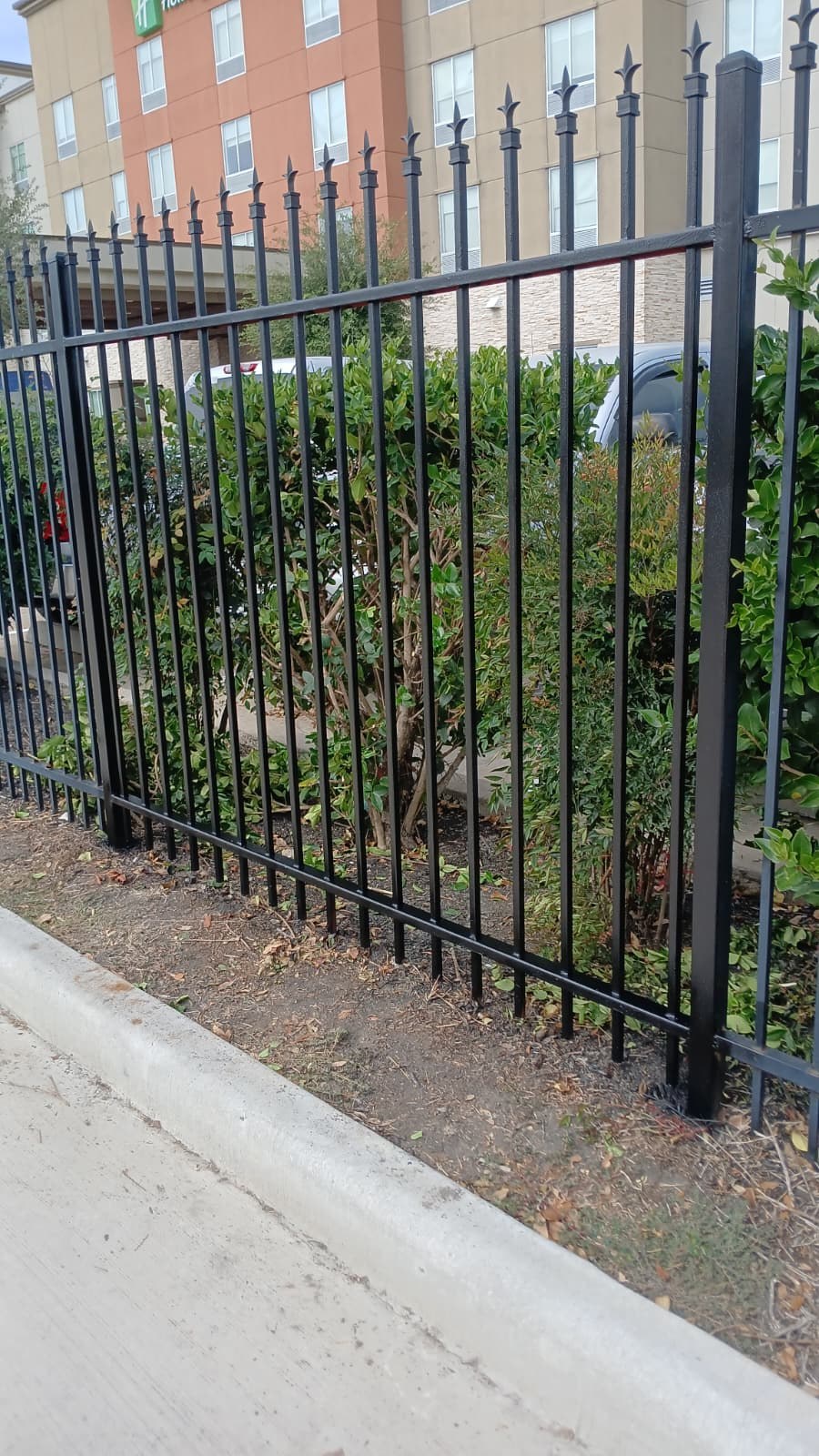
Black ornamental iron fence along a pavement beside shrubs
Ornamental iron fencing along a walkway — recent work.
The short answer

Where the damage is tells you more than how bad it looks. The AWPA Use Category System (published in the USDA Wood Handbook) puts fence pickets and rails in a lower decay-hazard category than fence posts — so a damaged picket and a damaged post are genuinely different repair decisions, not just different amounts of the same problem.

UC3BAWPA category for fence pickets & rails — general above-ground use, fully exposed to weather
UC4AAWPA category for fence & deck posts — ground contact, the highest decay-hazard zone on the fence
≈ 4×Greater withdrawal resistance of specially threaded nails vs. common wire nails after wetting/drying — part of why some fasteners hold and others don’t
NoTexas windstorm certificate (WPI-8) required to repair or replace a fence, per TDI — unlike most roof repairs

Source: USDA Forest Products Laboratory, Wood Handbook FPL-GTR-282 (2021), Chapters 8, 14, 15 & 16; Texas Department of Insurance, “What you need to know about windstorm inspections.”

A fence has two different decay-hazard zones

It’s tempting to judge a fence by how rough it looks from the street. The Wood Handbook’s own classification system judges it by where the wood sits instead: pickets and rails are “general above-ground use, fully exposed to weather” (UC3B); posts are “ground contact … structurally critical or have high decay hazard” (UC4A). Ground-contact wood simply fails faster and more seriously than wood that only gets rained on — which is the whole reason a damaged picket and a damaged post deserve different decisions.
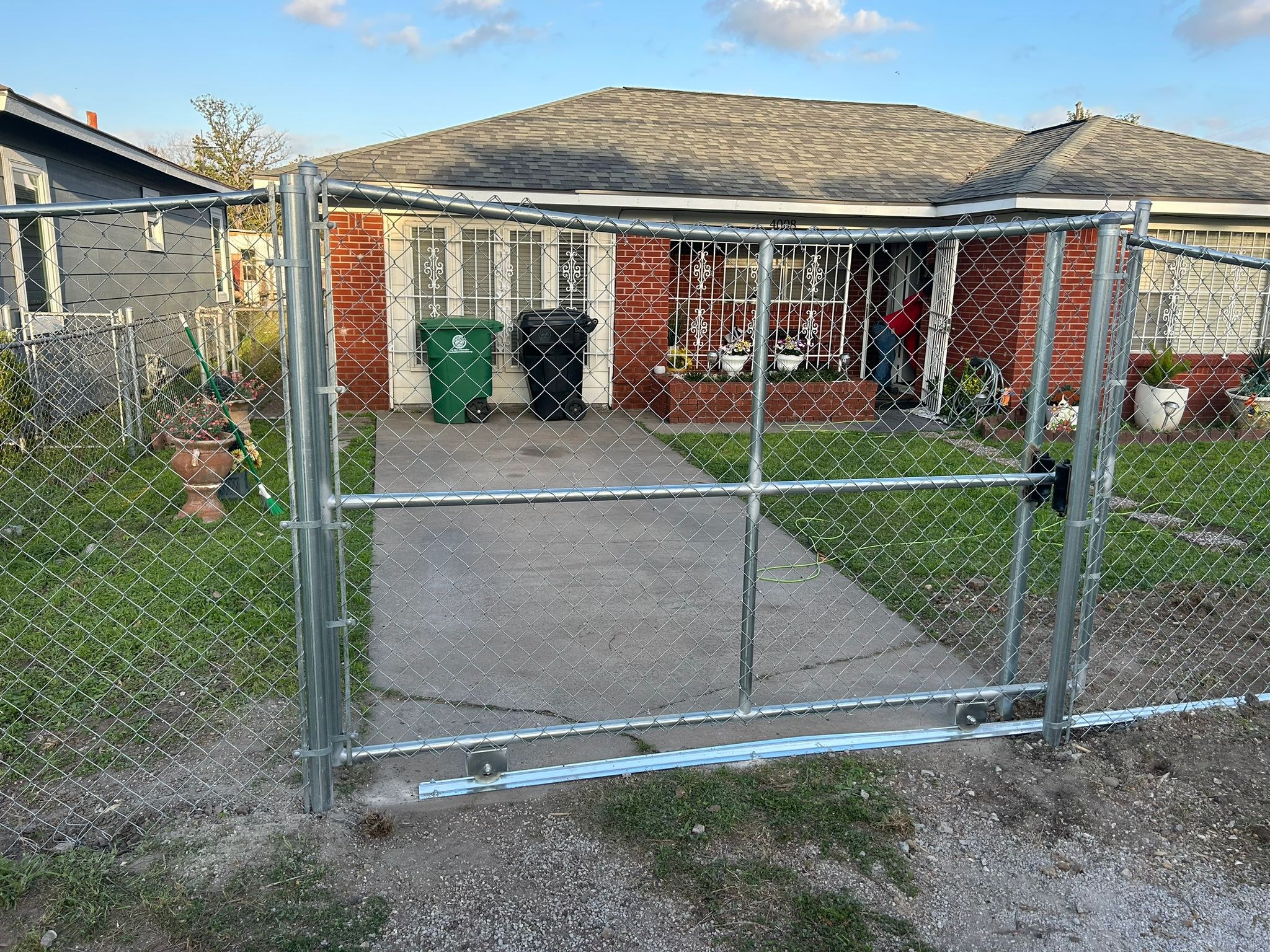
Diagram of a wood fence cross-section: pickets and rails above ground are labeled AWPA Use Category 3B, general above-ground exposure; the post, running from above ground into the soil, is labeled Use Category 4A, ground contact, the highest decay hazard. Two different decay hazards on the same fence (AWPA Use Category System) 1PICKETS & RAILS AWPA UC3B — general above-ground use, fully exposed to weather 2POST, GROUND CONTACT AWPA UC4A — ground contact, “high decay hazard”; structurally critical Posts sit in the higher-hazard category — that is why post-level damage is weighed differently from a damaged picket or rail.
RR-1
DrawingTwo different decay hazards on the same fence
BasisUSDA Wood Handbook FPL-GTR-282, Chapter 15, Table 15-6 (AWPA Use Category System). Not to scale
ScaleNot to scale
Posts sit in the higher-hazard category — that is why post-level damage is weighed differently from a damaged picket or rail.
Galvanized chain link gate panel riding low on a ground track across a driveway
A gate panel riding low on its ground track — worth a closer look before assuming the worst.

Repair-or-replace triage

Pick what’s actually damaged. This points to which AWPA use-category zone is affected — it isn’t a diagnosis of your specific fence, and some calls (how far decay has spread, whether a footing is still sound) need a look in person.

Based on AWPA’s Use Category System (USDA Wood Handbook FPL-GTR-282, Table 15-6) and the Wood Handbook’s fastener-corrosion chapters.

Decision diagram: if damage is limited to a few pickets, rails, or one panel, in the above-ground use category, it is usually a repair. If damage reaches a post at or below the ground line, the highest decay-hazard zone, that post and its panel usually need replacing. If several posts along the same run show the same ground-line damage, replacing the whole run is usually more practical. Repair or replace: start with where the damage is Damage limited to a few pickets,rails, or one panel (UC3B zone)? YES — usually a repair: swap thedamaged boards/rails; posts can still be sound. NO — damage reaches a post at orbelow the ground line (UC4A, thehighest-decay-hazard zone) That post (and its attached panel) usuallyneeds replacing — even if the rest of therun looks fine. Several posts along the SAME run show the same ground-line damage, or the fence leans overall?Replacing the whole run is usually more practical than repairing posts one at a time.
RR-2
DrawingRepair or replace: start with where the damage is
BasisUSDA Wood Handbook FPL-GTR-282, Table 15-6 (UC3B vs. UC4A). Not to scale
ScaleNot to scale
Several posts along the same run with the same ground-line damage usually point to replacing the run, not patching post by post.

Rust streaks can be a hardware problem, not a wood problem

A dark streak bleeding down from a nail or screw head looks alarming, but it’s often the fastener talking, not the fence. Plain steel fasteners react with tannins in high-tannin woods — cedar, redwood, oak — producing an iron-stain streak; in low-tannin woods like pine, the same plain steel just rusts without the streak. Either way, it’s a sign to look at the hardware before assuming the board itself is failing.

Side-by-side comparison: a cedar board with a dark iron-stain streak bleeding from a nail head, versus a pine board with only a plain rust spot and no streak. A hardware clue, not always a wood problem Cedar / redwood board Iron-stain streak below the nail head Pine board Plain rust spot, no dark streak (low tannin) Plain steel fasteners react with tannins in cedar/redwood (iron stain) or simply rust in low-tannin woods like pine. Wetting/drying cycles also cut a common nail’s withdrawal resistance to as little as 25% of new — why boards loosen over time.
RR-3
DrawingA hardware clue, not always a wood problem
BasisUSDA Wood Handbook FPL-GTR-282, Chapter 16 (“iron stain,” Fig. 16-27B) and Chapter 8 (fastener withdrawal resistance). Not to scale
ScaleNot to scale
Plain steel fasteners react with tannins in cedar/redwood (iron stain) or simply rust in low-tannin woods like pine — a hardware clue, not proof the wood itself failed.

The wood itself matters too

Species affects how fast any of this shows up. Cedar and redwood heartwood are naturally more decay-resistant than pine, spruce, or fir, per the Wood Handbook’s own species groupings. That doesn’t make a cedar post immune to ground-contact decay — it just tends to buy more time before the UC4A zone catches up with it.

Heartwood decay resistance, common fence woods

GroupExamples
Resistant / very resistantCedar, redwood (old growth), black locust
Moderately resistantDouglas-fir, cypress (young growth)
Slightly or nonresistantPine, spruce, true firs (without preservative treatment)

USDA Wood Handbook FPL-GTR-282, Table 14-1 (grouping by average heartwood decay resistance).

Free on-site estimate

Not sure which side of the line your fence is on?

We’ll look at where the damage actually is — pickets and rails, or the posts — and give you a straight answer on repair vs. replace before any work starts.

★★★★★
I have hired Mustang fencing services to fix my backyard fencing. Good wood to used. I really like theirs work. Best of luck
Zaidbin Saif · Google review · a year ago
★★★★★
Fenomenal job, really nice guy. Contacted them after hurricane knocked down my fence facing the street and got it done really quickly.
Patricia Rios · Google review · a year ago
★★★★★
Excellent work. They came in handy after the hurricane hit our backyard. Friendly people too.
Donez · Google review · a year ago

Reviews shown word for word from the Mustang Fencing Services Google Business Profile (Galveston), captured 2026-11-07.

Questions we get about this

How do I know if my wood fence needs repair or full replacement?
Start with where the damage is. Pickets and rails sit in a lower decay-hazard category (AWPA UC3B) and are often a straightforward board swap. Posts are ground-contact (UC4A), the highest decay-hazard zone, so post-level damage more often means replacing that section.
Does one damaged fence post always mean I need a whole new fence?
No. Usually just that post and its attached panel need replacing — unless several posts along the same run show the same ground-line damage, in which case replacing the whole run is usually more practical.
What do rust-colored streaks on my fence boards mean?
Often a hardware issue, not a wood failure. Plain steel fasteners can react with tannins in cedar or redwood (iron stain) or simply rust in low-tannin woods like pine, per the USDA Wood Handbook.
Do I need a permit or inspection to repair or replace a fence in Galveston?
According to the Texas Department of Insurance, repairs or replacement of fences are specifically listed as not requiring the WPI-8 windstorm certificate of compliance inspection required for many other repairs in the coastal catastrophe area. Check with the City separately for any local permit question.
Does the type of wood affect whether repair makes sense?
Yes. Heartwood decay resistance varies by species — cedar and redwood are naturally more decay-resistant than pine, spruce, or fir, per the USDA Wood Handbook’s species groupings — which affects how much life is likely left in the rest of an older fence.

Sources

Checked November 7, 2026. Rules change, so confirm with the City before you build.

  1. USDA Forest Products Laboratory, Wood Handbook: Wood as an Engineering Material, FPL-GTR-282 (2021) — Chapter 15 Table 15-6 (AWPA Use Category System, UC3B/UC4A); Chapter 14 Table 14-1 (decay resistance groupings); Chapters 8 & 16 (fastener withdrawal resistance and iron staining).
  2. Texas Department of Insurance, “What you need to know about windstorm inspections” — Lists “repairs or replacement of fences” among items that do not require a WPI-8/WPI-8-E windstorm certificate of compliance inspection.
Page reviewed November 7, 2026 by Mustang Fencing Services, Galveston. Next review due May 2027.