
Who Pays for a Fence When It Needs to Be Replaced Between Neighbors in Texas?
Whoever agrees to — replacing a shared fence doesn’t change the rule. Texas’s fence statutes don’t split the cost of a residential boundary fence, whether it’s brand new or being replaced after a storm or years of wear. Here’s how the location of the old fence decides who’s responsible, and what to settle before any new boards go up.
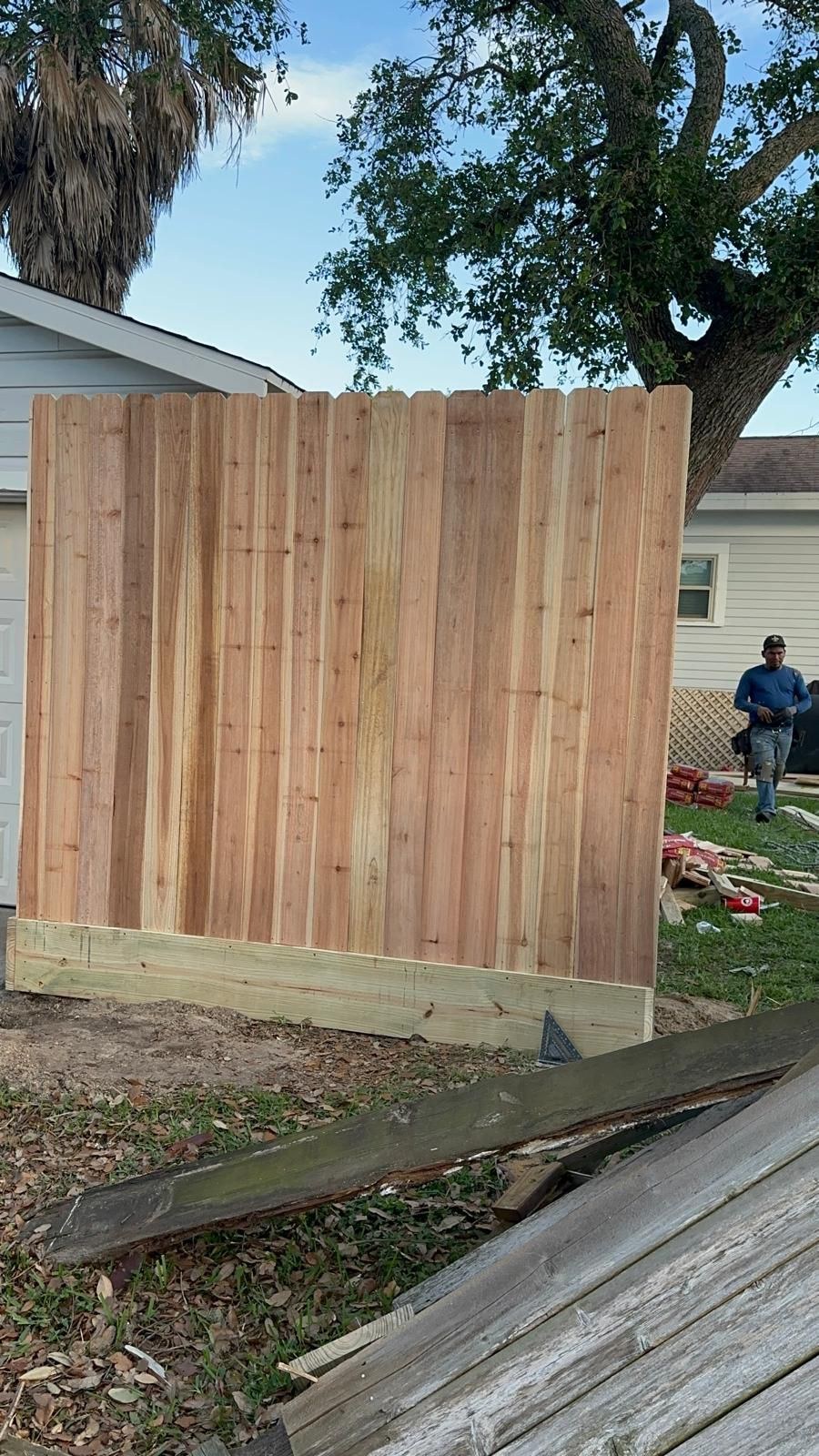
In Texas, whoever agrees to pay does — replacing an old fence doesn’t change that. There’s no state statute requiring neighbors to split the cost of replacing a residential boundary fence. Where the old fence sits still decides who can act: a fence entirely on your land is yours to replace at your cost; a fence on the shared line needs both owners’ written agreement, whether it’s failing from a storm, age, or you just want an upgrade.
Sources: Texas Agriculture Code Ch. 143; Texas Civil Practice and Remedies Code 16.021–16.030; City of Galveston Fence Permit Application (Rev. 03/2023). Checked November 4, 2026.
Replacing it doesn’t change who’s responsible
Texas’s fence statutes are in Agriculture Code Chapter 143, “Fences; Range Restrictions,” and they’re about farm and ranch land — a “sufficient fence” around cultivated land, local-option stock laws, livestock at large. None of them says anything about splitting the cost of replacing a residential boundary fence, whether it’s being replaced because a storm took it down, it finally rotted through, or someone just wants a different style.
So the rule that applies to a brand-new shared fence is the same rule that applies to replacing an old one: there’s no automatic cost-sharing. A landowner generally has no legal obligation to pay toward a fence built (or rebuilt) by a neighbor on the dividing line unless they’ve separately agreed to.
Why it still comes down to where the fence sits
If the old fence sits entirely on one property, even by a small margin, it generally belongs to whoever owns that land — regardless of who’s used it or benefited from it. If it sits directly on the boundary line, it’s commonly treated as held by both neighbors in practice: neither one can unilaterally remove or substantially replace it without the other’s agreement, even with no formal cost-sharing arrangement in place.
That’s true whether the fence is new or being replaced. A fence that’s stood on the line for years doesn’t automatically become one owner’s sole responsibility just because it’s old — and if nobody is sure exactly where the line is, that’s worth settling with a survey before ordering material. See do I need a survey before installing a fence?
Who decides and pays, by where the old fence stood
| Where the old fence stood | Who can decide to replace it | Who pays, absent a written agreement |
|---|---|---|
| Entirely on your land | You, any time | You — it’s your fence |
| On the shared property line | Neither owner alone | Whatever you and your neighbor agree, in writing |
| Entirely on the neighbor’s land | Your neighbor, not you | Your neighbor — it’s their fence |
Texas Agriculture Code Ch. 143 sets no residential replacement-cost rule; a fence standing on the line is commonly treated as held by both owners, consistent with the City of Galveston Fence Permit Application (Rev. 03/2023) requiring the owner’s permission be on file. Checked November 4, 2026.
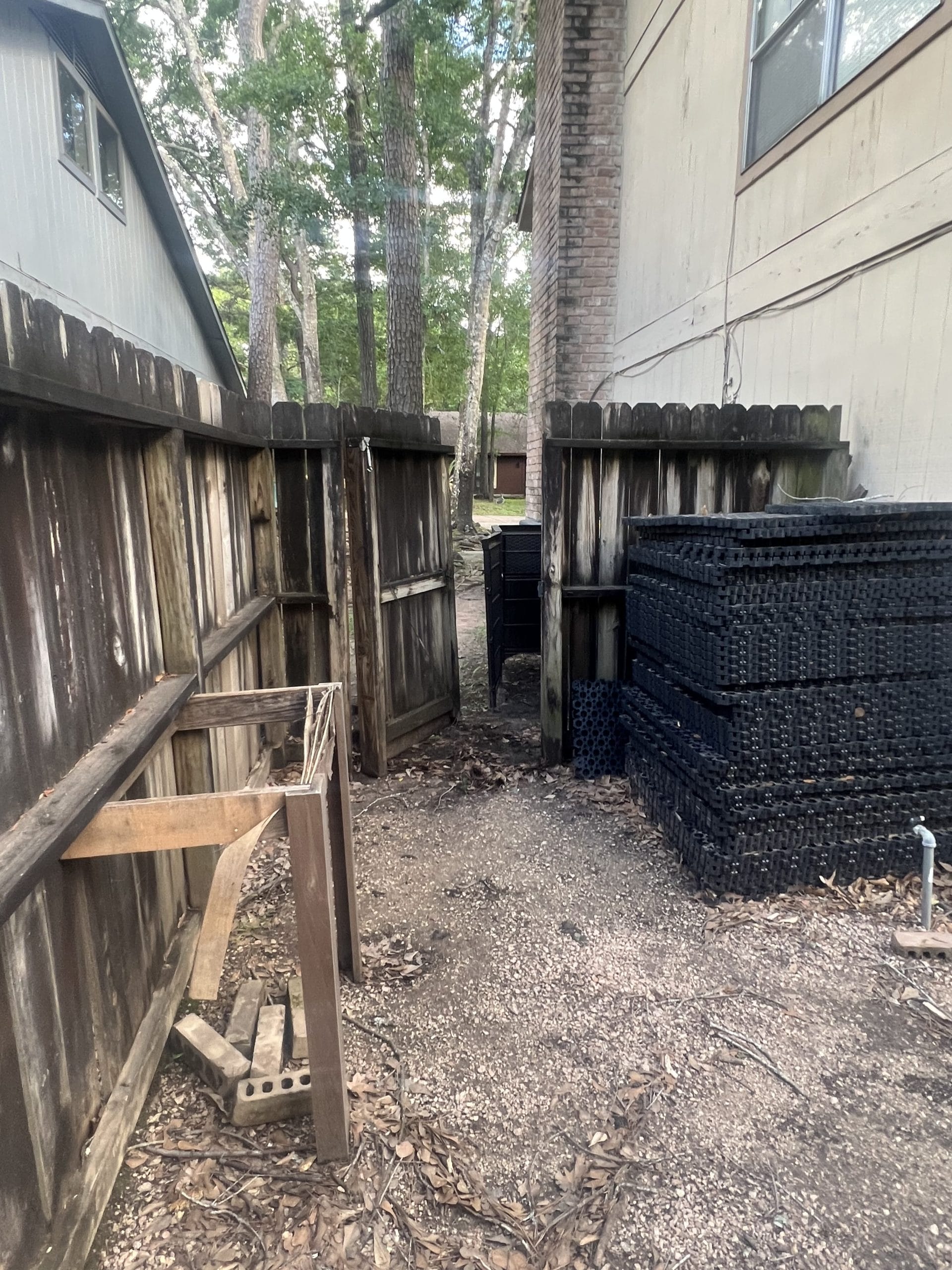
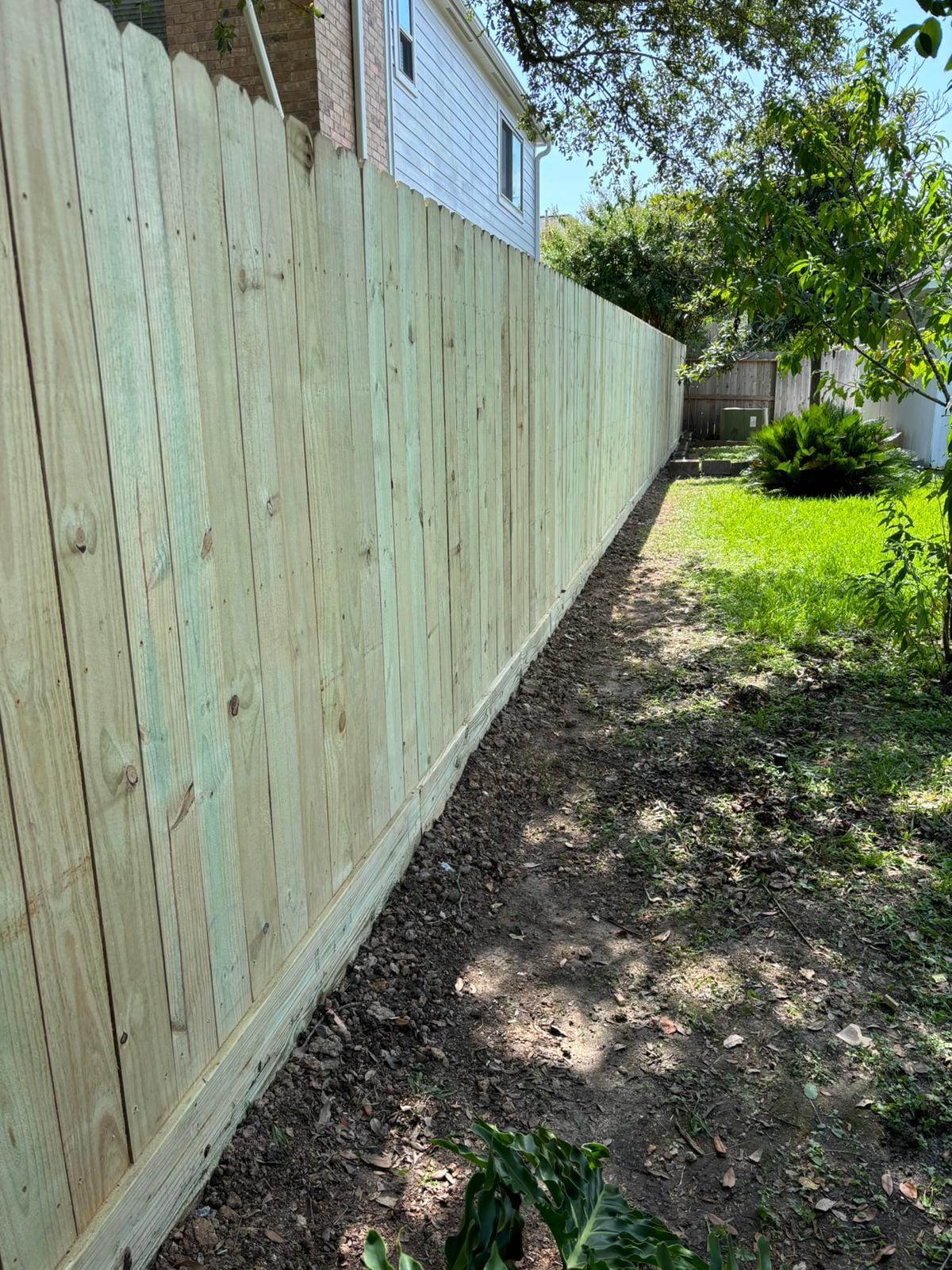
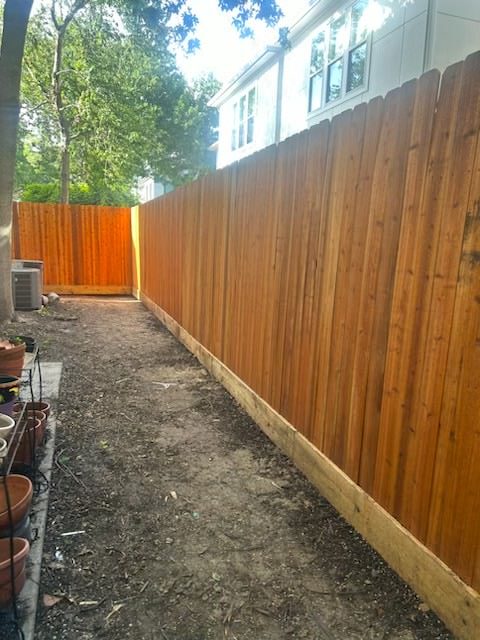
Fence replacement responsibility checklist
Answer a few questions about the fence that needs replacing. This gives you a starting read on who typically decides and pays — it isn’t legal advice, and it doesn’t price the job.
Based on Texas Agriculture Code Ch. 143 (no residential replacement-cost rule), Texas Property Code 202.023(c)(2) (HOA may regulate the type of fencing) and the City of Galveston Fence Permit Application (Rev. 03/2023), read November 4, 2026. Talk to a Texas real estate attorney about a genuine dispute.
Replacing a fence on a shared line?
We’ll measure the run, point out what’s actually failing, and put the height, material and cost on one written quote both neighbors can reference. Free on-site estimates across Galveston County.
If a neighbor already replaced it and wants you to pay
If a neighbor has replaced a shared fence and is now asking you to pay a share without a prior agreement, Texas law generally doesn’t obligate you to pay absent that agreement — though every situation has its own facts, and a real estate attorney is the right resource for anything beyond general guidance.
Going forward, a short written agreement before work starts — covering each owner’s share, who selects the contractor and material, and who’s responsible for future maintenance — prevents the far more common and more expensive scenario: one neighbor replacing the fence and trying to bill the other afterward.
What Galveston customers say
5.091 Google reviews · read them all on Google
True professionalism is very rare in this day and age, these guys live upto their word and deliver on their service! Our fence was down in the July storm and these guys came and gave a reasonable quote, after confirming I received a time line and they delivered! Will recommend them to everyone I know who needs fencing done.
Fenomenal job, really nice guy. Contacted them after hurricane knocked down my fence facing the street and got it done really quickly.
Excellent work. They came in handy after the hurricane hit our backyard. Friendly people too.
Reviews shown word for word from the Mustang Fencing Services Google Business Profile (Galveston), captured 2026-11-02.
Questions we get about this
Who pays to replace a shared fence in Texas?
My neighbor already replaced our fence without asking me. Do I have to pay?
Does storm or hurricane damage change who’s responsible for replacing a fence?
Can my neighbor force me to replace a fence on our shared line?
What should a fence replacement agreement with a neighbor include?
Does HOA approval apply to replacing an existing fence?
Sources
Checked November 4, 2026. Rules change, so confirm with the City before you build.
- Texas Agriculture Code, Chapter 143: Fences; Range Restrictions — 143.001 sufficient fence around cultivated land; local-option stock law elections; livestock at large and on highways. No residential replacement-cost provision.
- Texas Property Code, Chapter 202 — 202.023(c)(2): an HOA may regulate the type of fencing, which can apply when an existing fence is replaced.
- Texas Civil Practice and Remedies Code, Chapter 16, Subchapter B — 16.021 definitions, 16.024–16.026 adverse possession limitation periods (3/5/10 years) — relevant when nobody is sure whose land a fence sits on.
- City of Galveston, Fence Permit Application (Rev. 03/2023) — Applicant certifies the owner’s permission has been obtained and the fence doesn’t violate deed restrictions.
- Chain Link Fence Manufacturers Institute, Wind Load Guide for the Selection of Line Post and Line Post Spacing (WLG 2445), January 2018 — A fence post as “a vertical cantilever, fixed at its base to the footing and ground”; ASTM F567 minimum footing depth of 24 in. plus additional depth by soil and post height.
Need a shared fence replaced?
We’ll walk the line, tell you what’s actually failing, and put it on one written quote either neighbor can reference. Free on-site estimates across Galveston County.