
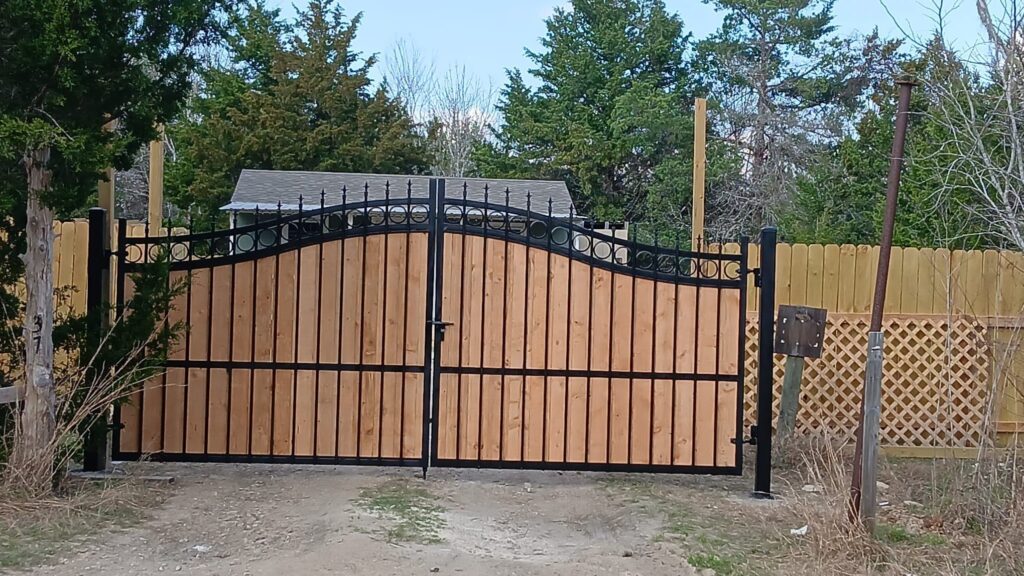
Straight answers from a local fence and gate contractor serving Galveston, Brazoria, and Chambers Counties.
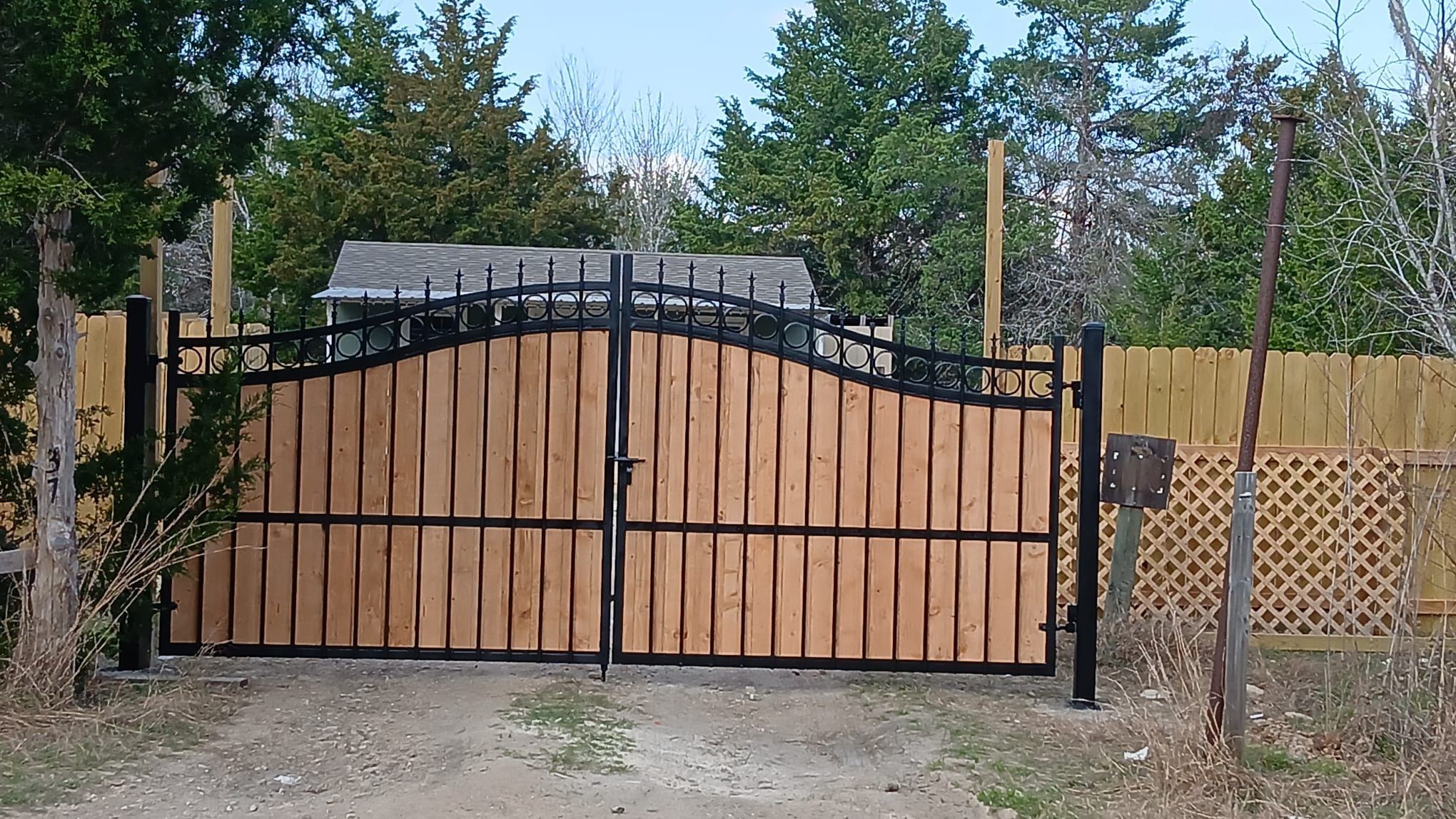
A sagging gate is one of the most common fence complaints, and the good news is that it’s rarely a sign the whole fence needs to be replaced — it’s almost always a localized, fixable problem.
Why gates sag in the first place
Gates sag because, unlike a fixed fence panel, they have no support along the latch-side edge — the entire weight of the gate hangs off the hinge side, which puts constant leverage on the hinges and the post they’re mounted to. Over time, that leverage loosens hinge screws, causes hinges to bend or rust, or — most seriously — causes the hinge-side post itself to lean or loosen in the ground. Warped wood from moisture cycling (a common issue in our humid climate) and general wear from frequent use both make the problem worse over time.
Diagnosing which part is actually the problem
Before fixing anything, check the hinges first: look for rust, bent hardware, or screws that have backed out or stripped their holes. If the hinges look solid but the gate still sags, the post itself may be loose or leaning — grab the post and gently check for movement at ground level.
Fixing a sagging gate without replacing the fence
- Hinge issues: Often solved simply by tightening or replacing screws, or upgrading to heavier-duty hinges if the gate is heavy or seeing frequent use.
- An anti-sag kit: A turnbuckle-and-cable kit run diagonally from the bottom hinge-side corner to the top latch-side corner lets you tighten the cable and pull the gate back into square — a common, effective fix for wood gates.
- A diagonal cross brace: A board fastened diagonally across the gate frame (bottom hinge-side corner to top latch-side corner) distributes the gate’s weight more evenly and resists future sagging.
- A loose post: If the hinge-side post itself has loosened, it typically needs to be reset — dug out, checked for rot, and reset in fresh concrete if the wood itself is still sound.
When it actually does signal a bigger problem
If the post is rotted through rather than just loose, or if sagging keeps recurring shortly after each fix, that’s a sign of a deeper structural issue at that post — worth replacing that section properly rather than continuing to patch a failing post. But this is a localized fix, not a reason to replace the surrounding fence unless the rest of it shows separate signs of failure. See our gates page for hardware options built for frequent use and coastal conditions.
Related Questions
Can I fix a sagging gate myself?
How often do gate hinges need to be replaced?
Does a heavier gate need different hardware than a lighter one?
Ready for a real number for your property? Request a free on-site estimate from Mustang Fencing Services.