
Straight answers from a local fence and gate contractor serving Galveston and Brazoria Counties.
Cedar is naturally rot- and insect-resistant thanks to oils in the wood, which leads a lot of homeowners to ask whether it needs to be sealed at all — especially in a climate as humid as Galveston’s.
What cedar resists on its own
Cedar’s natural oils genuinely do slow rot and deter insects better than any other common softwood, which is why it can survive for years completely untreated. Left alone, an unsealed cedar fence will simply weather to a silvery-gray patina over time — that’s a cosmetic change, not a sign of failure, and plenty of homeowners like that look.
Why coastal humidity changes the calculus
The natural oils that protect cedar from rot don’t do much to stop moisture absorption itself. In a climate with Galveston’s humidity and frequent rain, unsealed cedar takes on more ambient moisture than it would inland, which can lead to two things a dry-climate cedar fence rarely deals with: surface mildew or mold growth (a cosmetic, cleanable issue, not structural) and a faster fade to gray, since UV plus moisture breaks down the surface oils more quickly. Salt air adds a mild abrasive and corrosive element that also speeds surface graying.
Should you seal it or not
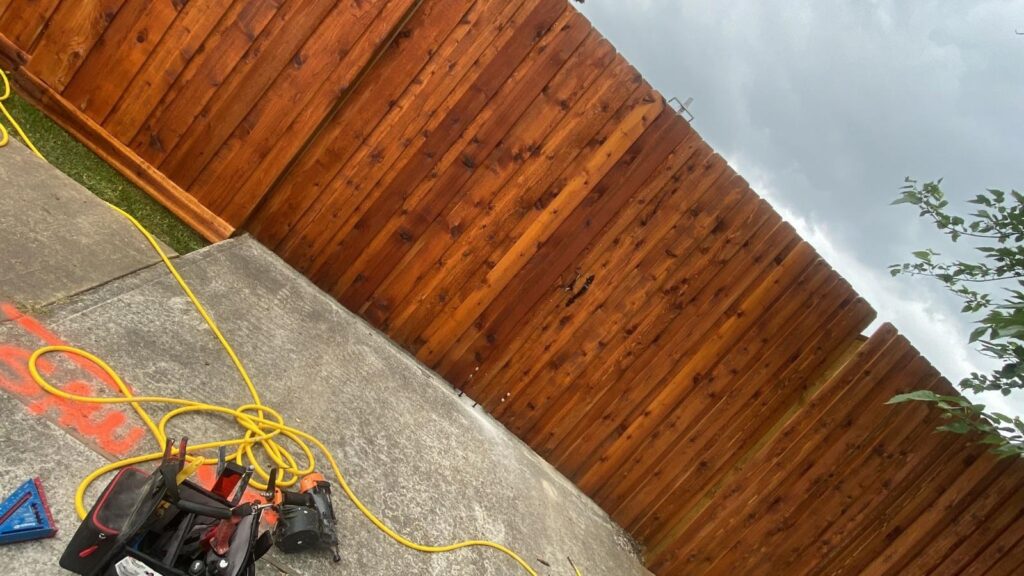
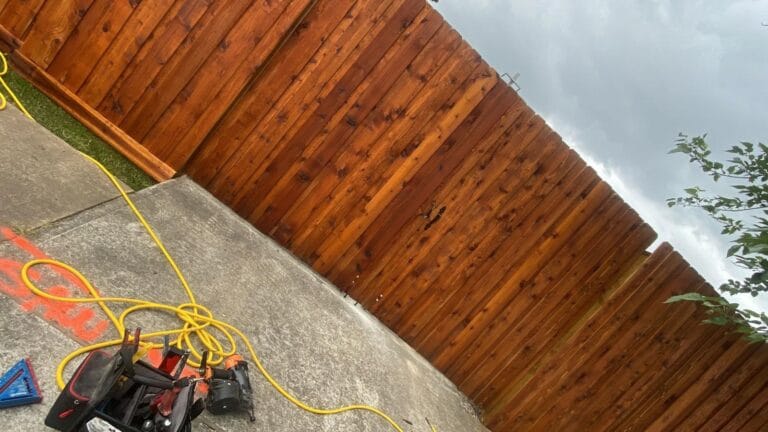
If you want cedar to hold its warm reddish-brown color, a water-repellent sealant or semi-transparent stain applied every 2-3 years (sooner than the 3-5 year window recommended in drier states) will meaningfully slow both graying and surface mildew. If you’re fine with the natural silvering look and just want the wood to last, sealing is optional — cedar will still resist rot well without it, though periodic washing to remove mildew and salt residue is still worth doing.
The bottom line for coastal properties
Sealing cedar here is a cosmetic and moisture-management choice more than a survival requirement. For homeowners closer to the water in areas like Galveston Island, Bacliff, or San Leon where salt air is heaviest, we generally recommend sealing on the shorter end of the interval and rinsing the fence occasionally with a garden hose to clear salt buildup between applications. See our cedar wood fence and coastal fence durability pages for more on how we build and finish cedar fences for this climate.
Related Questions
How can I tell if my cedar fence has mildew or actual rot?
What’s the best type of finish for cedar in a humid climate?
Does sealing cedar change its color?
Ready for a real number for your property? Request a free on-site estimate from Mustang Fencing Services.