
How Close to the Property Line Can You Build a Fence in Texas?
Texas has no statewide number. The distance comes from three places: your city’s code, the easements recorded on your plat, and your HOA. In the City of Galveston the fence section sets heights but no side or rear setback; Tiki Island and Bayou Vista bar fences past the property line and in utility easements. Here is how to read your lot before the posts go in.
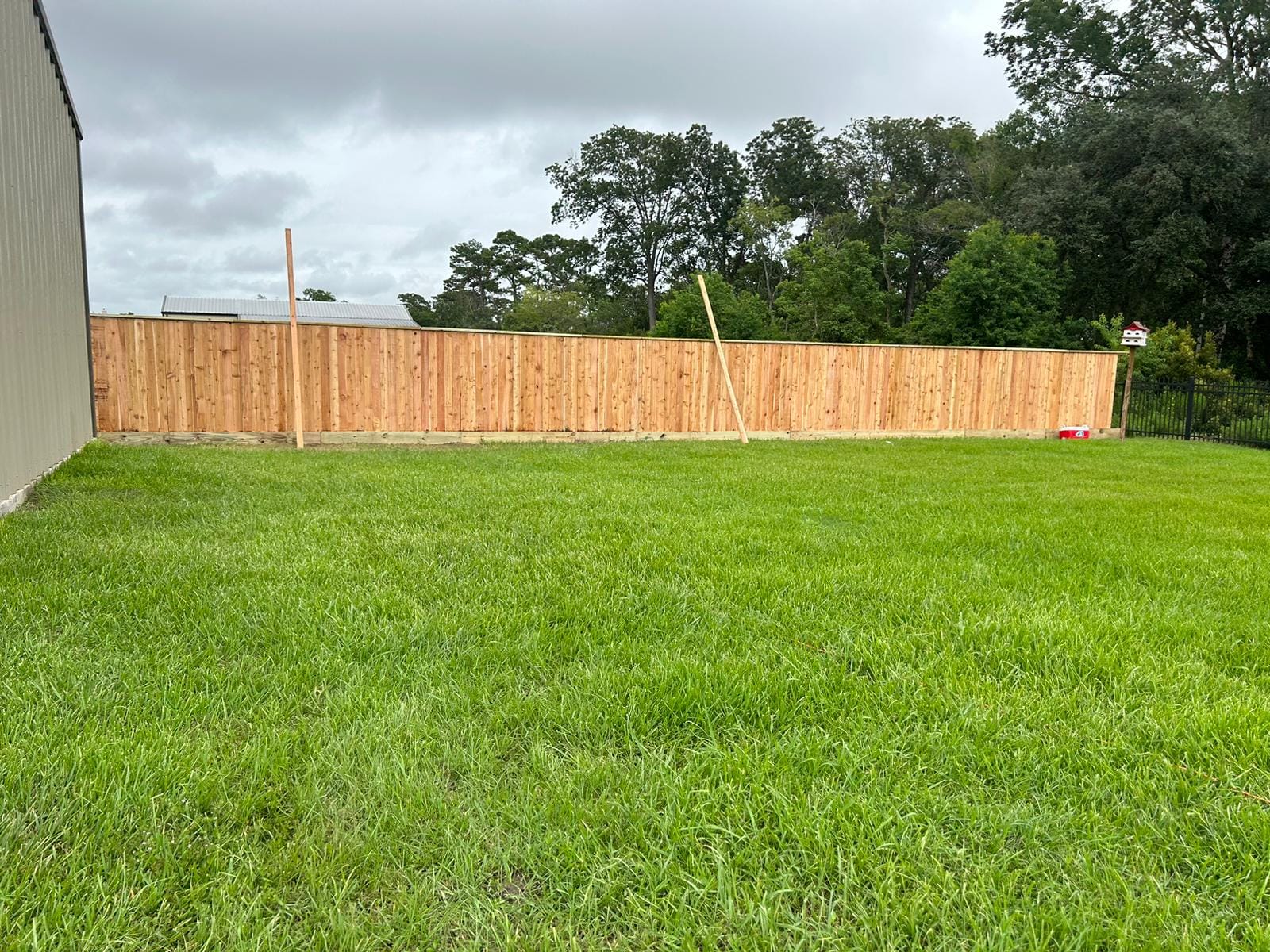
Texas has no statewide setback for a residential fence. Where it can go is set locally. In the City of Galveston, the residential fence section (LDR 2.501) sets heights only: 8 ft on the lot, 4 ft for a solid fence in a front yard or 5 ft if it is at least 60% transparent. The limit that bites is usually an easement: in an easement the City requires, only fences that allow maintenance access are allowed, and the City can remove others at the owner’s cost (LDR 6.308(F)). Tiki Island and Bayou Vista make it unlawful to build past the property line or in a utility easement. An HOA can add its own placement rules. Build on your side of a surveyed line unless your neighbor agrees in writing.
Sources: City of Galveston Land Development Regulations 2.501, 6.308 and Fence Permit Application (Rev. 03/2023); Village of Tiki Island Code 6-301, 6-302; City of Bayou Vista Code 3.13.01, 3.13.02; Texas Property Code 202.023. Read September 27, 2026.
What Texas law sets, and what it leaves to your city
No Texas statute sets a standard distance between a residential fence and your side or rear lot line. The state does touch fences in other ways, and each one affects placement:
- HOAs. An HOA may regulate the type of fencing, bar fencing that obstructs a sidewalk, a drainage easement or a licensed area, require a driveway gate on a laned road to sit 10 ft back from the right-of-way, and, if a covenant says so, bar fencing in front of the front-most building line (Property Code 202.023(c)(2) to (5)). See common HOA fence rules.
- Boundary disputes. A fence on land that isn’t yours can become evidence in a dispute over where the line is; Texas has 3, 5 and 10 year adverse possession periods (Civil Practice and Remedies Code 16.024 to 16.026). See who pays for a shared fence.
- Digging. Post holes run deeper than the 16 inches that triggers the state’s one-call law. See do you need to call 811 before installing a fence?
Everything else, including heights, easements and any setback, comes from your city and your plat. The three island-area codes below say quite different things.
Fence placement rules by city
| Rule | City of Galveston | Village of Tiki Island | City of Bayou Vista |
|---|---|---|---|
| Past the property line | Permit applicant certifies the owner’s permission (Fence Permit Application) | Unlawful (6-302(a)) | Unlawful (3.13.02(A)) |
| Side or rear setback number | None in the residential fence section (LDR 2.501) | None stated; easement rule below | None stated; easement rule below |
| Utility easement | In City-required easements, only fences that allow maintenance access (6.308(F)) | No fence in it, or between it and the lot line (6-302(c), (d)) | No fence in it (3.13.02(D)) |
| Street side / front | Front yard: 4 ft solid, 5 ft if 60% transparent (2.501(B)(2)) | See-through fences only, anywhere (6-302(b)) | No fence beyond the street-side set-back build line (3.13.02(C)) |
| Waterfront | Within 1,000 ft of mean high tide: site plan to the coastal division (permit form) | See-through only (6-302(b)) | See-through only within 20 ft of the bulkhead (3.13.02(B)) |
| Maximum height | 8 ft (2.501(B)(1)) | 6 ft (6-302(e)) | 7 ft (3.13.01(F)) |
| Survey | Sample site plan on the permit form | Required, showing easements, corners staked (6-301(c)) | Plans to the building inspector (3.13.01(G)) |
City of Galveston LDR 2.501, 6.308 and Fence Permit Application (Rev. 03/2023); Village of Tiki Island Code of Ordinances Ch. 6, Div. 6; City of Bayou Vista Code Ch. 3, Art. 3.13.00. Read September 27, 2026. Jamaica Beach, Texas City and other cities have their own codes; check with the city.
City of Galveston: heights, easements and the permit
The City’s residential fence rule, Land Development Regulations 2.501, has two parts: where it applies and how tall a fence can be. 8 feet for any residential use; in a front yard, 4 feet for a solid fence or 5 feet if it is at least 60 percent transparent (6 feet for single-family attached and multifamily front yards). It sets no distance from a side or rear lot line.
Easements are where placement gets decided. In an easement the City requires under its subdivision rules, “no permanent encroachments or structures are allowed … except: a. Fences that allow access as needed to maintain the easement.” The City “may remove any encroachment” and may charge the owner for it, “including placing a lien on the property” (LDR 6.308(F)). The City’s standard utility easement is 10 feet along a rear lot line or alley and 5 feet along street rights-of-way or in front, side or rear yards (Table 6.308), but your plat is what counts: read the actual easement on it.
The fence permit ties it together. The application asks whether the lot is in a historic district or the Cedar Lawn conservation district and whether the fence is within 1,000 feet of mean high tide (if so, a site plan goes to the coastal division), and the applicant certifies the owner’s permission and that the fence doesn’t violate deed restrictions. The historic districts have their own review; see fences in the East End Historic District.
Planning where a new fence line goes?
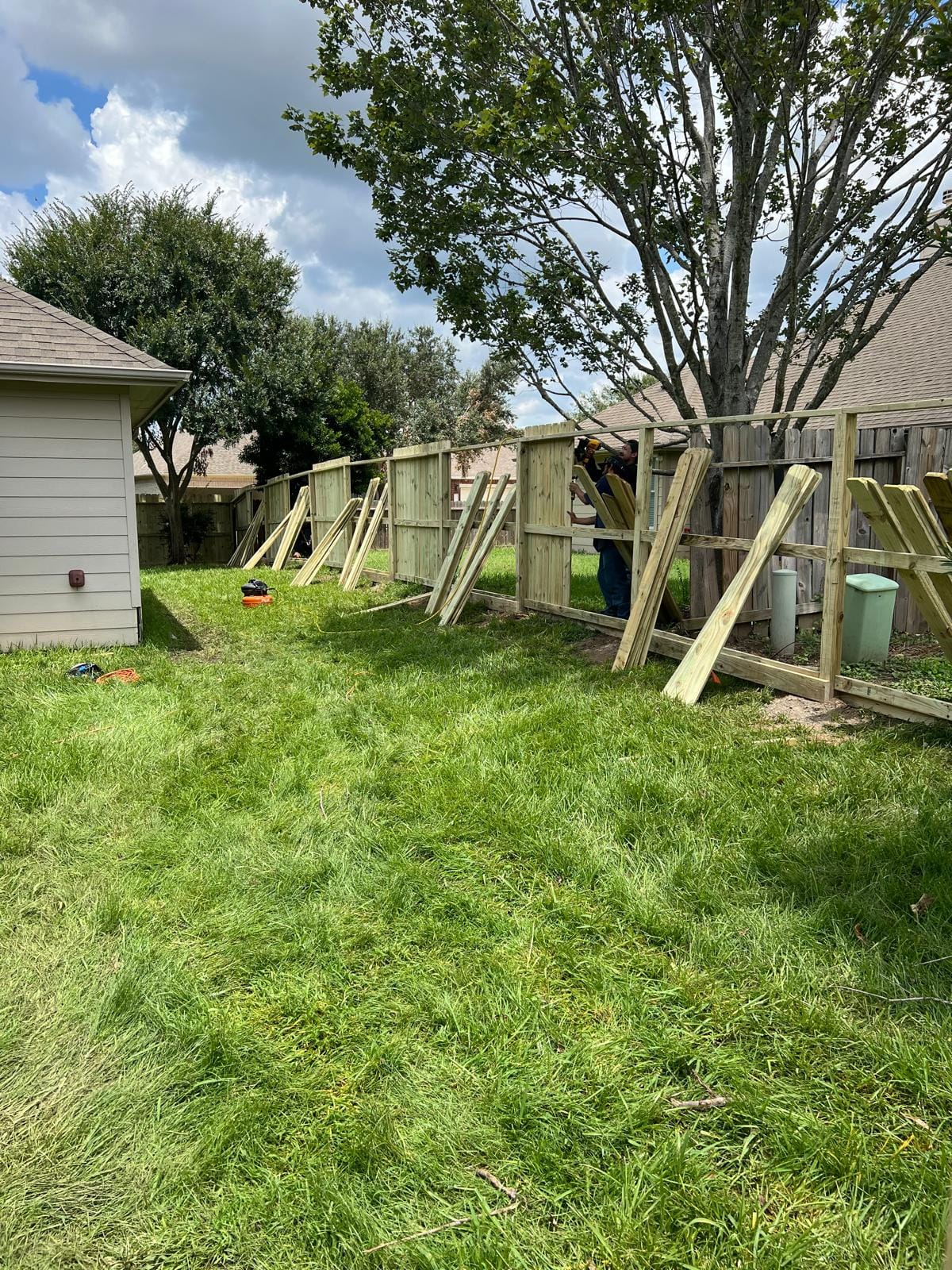
Bring your survey and we’ll confirm the line, the easements and the city rule before anything is quoted. Free on-site estimates across Galveston County.
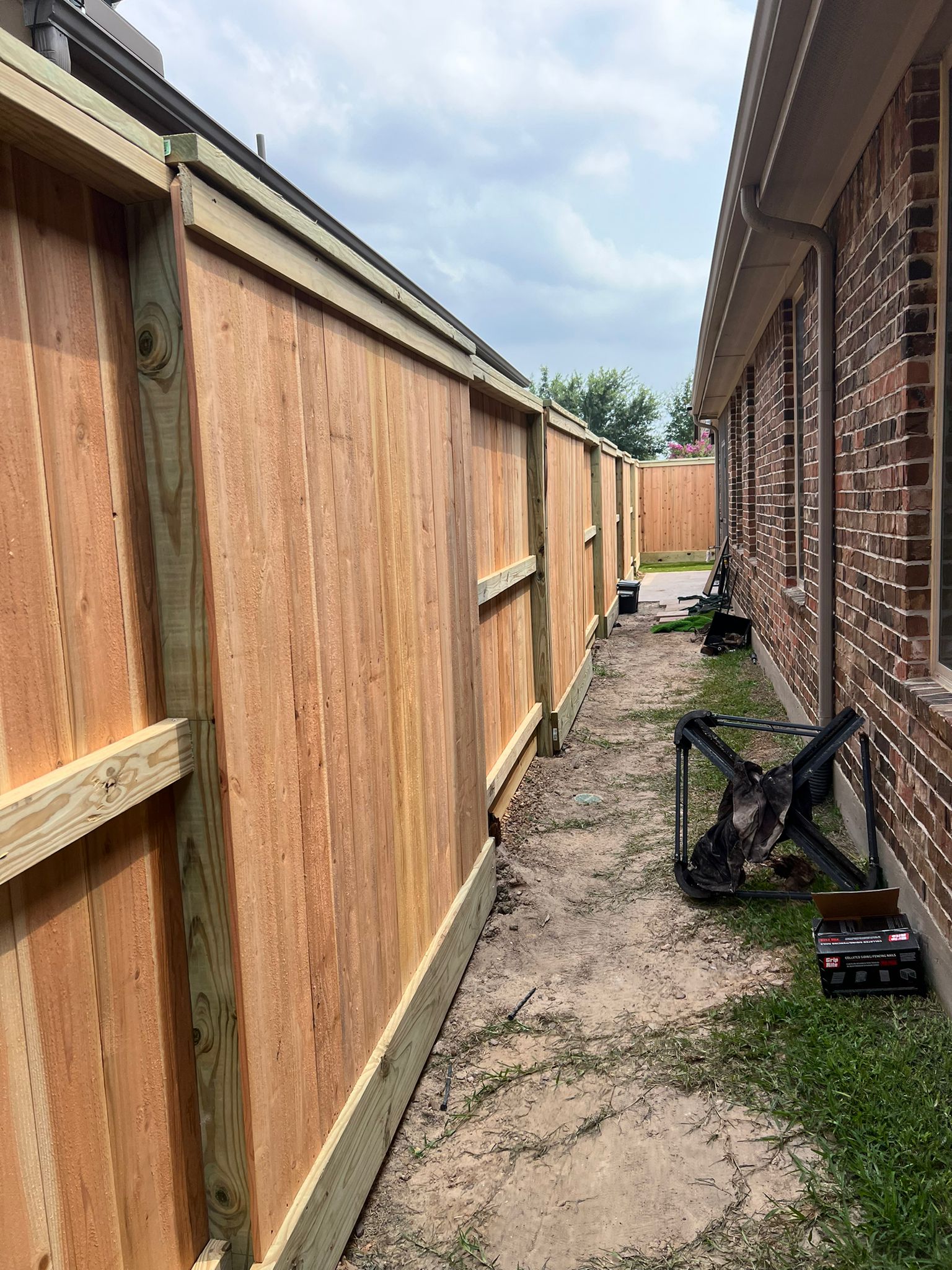
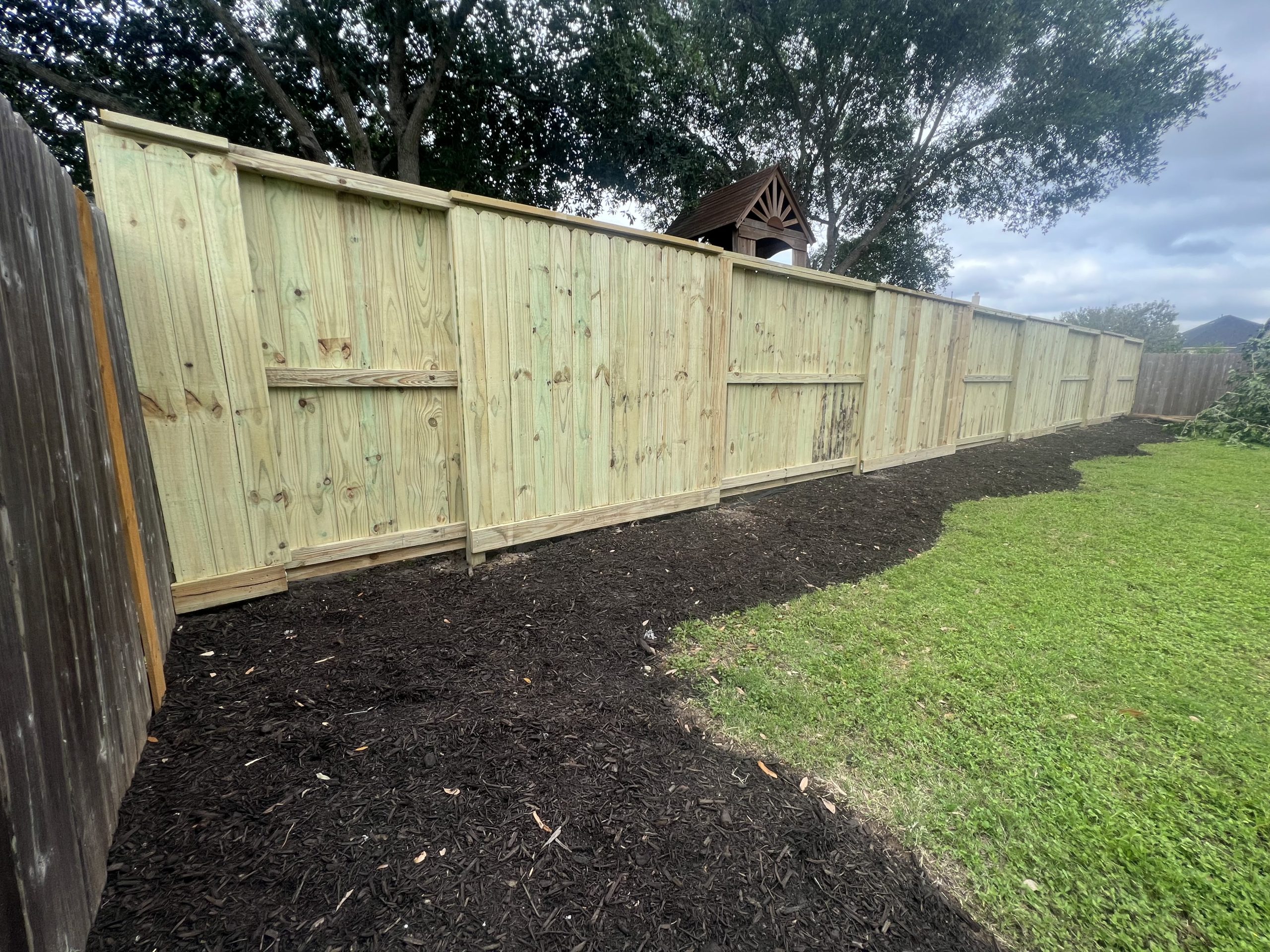
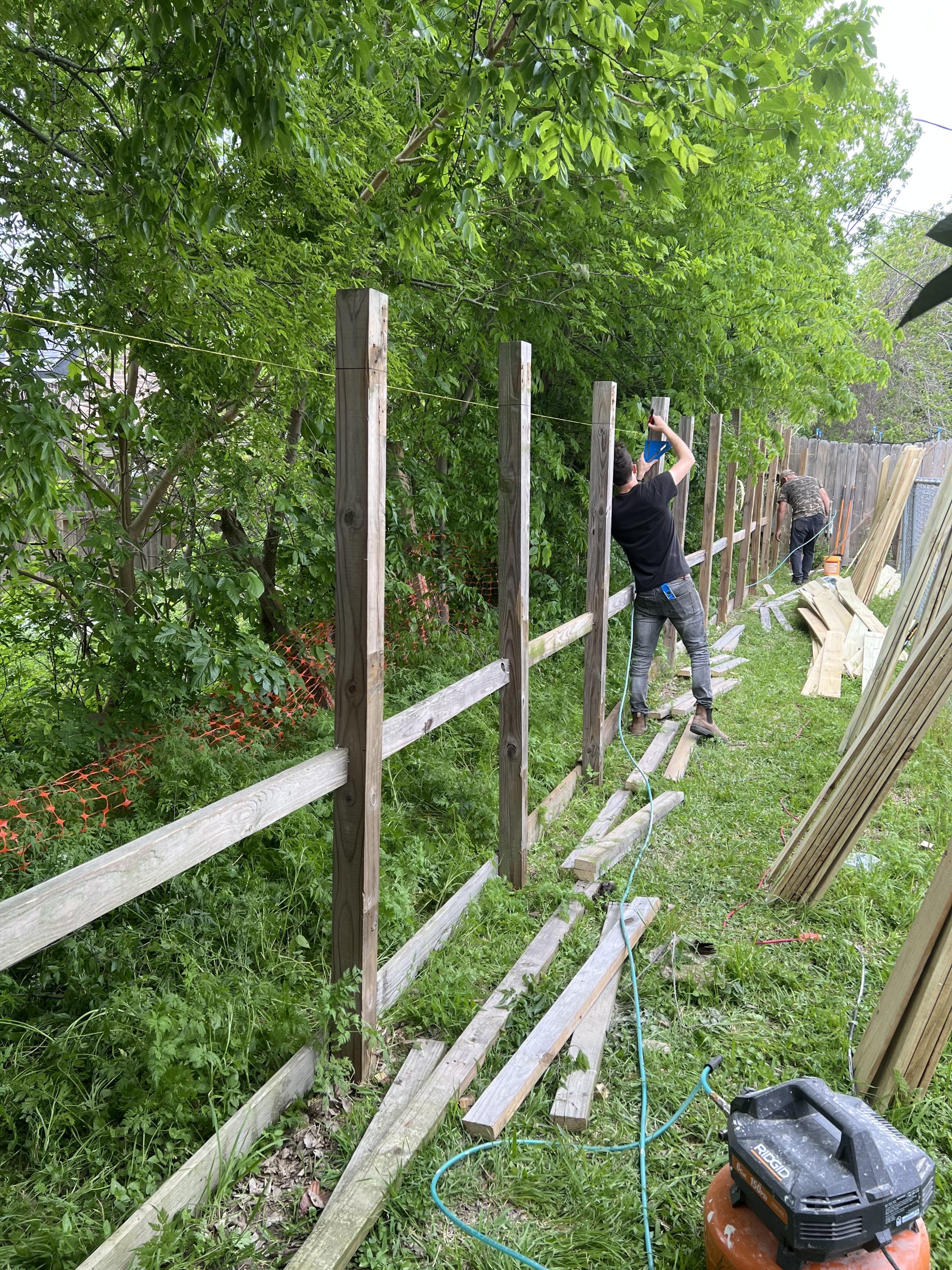
Tiki Island and Bayou Vista: stricter lines
Both waterfront municipalities write their placement rules as prohibitions:
- Village of Tiki Island. Before any fence, a registered public surveyor must survey the lot, show “all utility easements and any other easement,” and stake the corners (6-301(c)). It is unlawful to build “any fence beyond the property lines” (6-302(a)), in a utility easement (6-302(d)), or “in the area of a lot which is beyond the inside boundary line of any utility easement,” with aerial and drainage easements excepted (6-302(c)). Fences must be see-through, 6 feet at most, with no batter boards, and the permit application needs a drawing of the fence line (6-302(b), (e), (f)). See fences and gates on Tiki Island.
- City of Bayou Vista. No fence beyond the property lines (3.13.02(A)), beyond the street-side set-back build line (3.13.02(C)), or in a utility easement (3.13.02(D)). Within 20 feet of the bulkhead, only a see-through fence, one that lets light through at least 50 percent of its area, “Example: 6″ board, then 6″ space” (3.13.02(B)). A solid fence is allowed between the house’s sidewalls and the adjacent property line (3.13.01(E)), and the limit is 7 feet (3.13.01(F)). See fences and gates in Bayou Vista.
Fence line placement checker
Pick the city, where the fence will run and what your survey shows. The checker lists the placement, easement and height rules that apply, with the code section for each. It reads the codes; it can’t see your plat, so confirm with the city before posts go in.
Based on City of Galveston LDR 2.501 and 6.308 and its Fence Permit Application (Rev. 03/2023); Village of Tiki Island Code 6-301 and 6-302; City of Bayou Vista Code 3.13.01 and 3.13.02; Texas Property Code 202.023. Read September 27, 2026. Not legal advice.
On the line, or a few inches inside?
On the line puts half of each post on your neighbor’s lot. In Tiki Island and Bayou Vista that is a fence “beyond the property lines,” which their codes make unlawful. In the City of Galveston it takes your neighbor’s written agreement, since the permit has you certify the owner’s permission. Either way, it is a shared fence, and the cost, the face and the upkeep should be agreed in writing.
Just inside keeps the fence yours. How far inside is your call where no code or easement sets it. The practical question is the far face: a fence built tight to the line faces into your neighbor’s yard, so staining or repairing that side means asking them. Leaving room to reach it, or choosing a good neighbor style that looks the same from both sides, avoids the conversation.
Don’t use the old fence as the line. Fences get rebuilt where the last one stood, and the last one may never have been on the line. A survey with the corners staked settles it; see do I need a survey before installing a fence?
Before the posts go in
- Get the survey or plat and find the lot lines and every easement along the fence route. In Tiki Island the survey is required.
- Read your city’s rule: height, easements and any setback or build line. Use the table above for Galveston, Tiki Island and Bayou Vista; ask the city elsewhere.
- Check the HOA, if there is one, before you apply to the city. See do I need HOA approval?
- Talk to the neighbor if anything will touch the line, and put it in writing.
- Pull the permit, then call 811 at least 48 hours before digging.
When we come out for an estimate, have the survey handy. The fence line on the quote should match it. See our privacy fence installation page for styles, or browse every fencing material we install.
What Galveston customers say
5.091 Google reviews · read them all on Google
“I had a fantastic experience with Mustang Fencing Services. Their professionalism and commitment to delivering high-quality work were impressive. The team demonstrated excellent time management, completing the project on schedule without compromising on the quality of the materials or craftsmanship. I highly recommend them for anyone looking for reliable and efficient fencing services!”
I highly recommend using these guys as they’re very professional. Their work stands out and have very high attention to detail.
"Mustang Fencing Service did an amazing job on my new fence! The team was professional, efficient, and communicative. The quality of the materials is outstanding, and they finished on time and within budget. Highly recommend them for any fencing needs!"
Reviews shown word for word from the Mustang Fencing Services Google Business Profile (Galveston), captured 2026-10-05.
Questions we get about this
How close to the property line can I build a fence in Texas?
Can I build a fence right on the property line in Galveston?
Can I put a fence in a utility easement?
How tall can a fence be in the City of Galveston?
Can my HOA tell me where to put my fence?
Is the old fence the property line?
Sources
Checked September 27, 2026. Rules change, so confirm with the City before you build.
- City of Galveston, Fence Permit Application (Rev. 03/2023) — Historic district, Cedar Lawn and 1,000 ft of mean high tide questions; owner permission and deed restriction attestation; sample site plan.
- City of Galveston, Land Development Regulations — 2.501 Fences and Walls (residential heights); 6.308 Easements, (F) encroachments, Table 6.308 easement widths.
- Village of Tiki Island, Fence Ordinance (Code Ch. 6, Div. 6) — 6-301(c) survey with easements and staked corners; 6-302(a)–(f) property lines, see-through, utility easements, 6 ft, permit drawing.
- City of Bayou Vista, Code of Ordinances Ch. 3, Art. 3.13.00 Fence Regulations — 3.13.01(E)–(G) solid between sidewalls and line, 7 ft, permit; 3.13.02(A)–(D) property lines, 20 ft bulkhead see-through, street-side build line, utility easements.
- Texas Property Code, Chapter 202 — 202.023(c)(2)–(5) and (d): what an HOA may regulate about fence type and placement.
- Texas Civil Practice and Remedies Code, Chapter 16, Subchapter B — 16.024–16.026 adverse possession limitation periods.
Planning a fence along a lot line?
Bring your survey to the estimate. We’ll walk the line with you, note the easements, and put the fence line, height and style on one written estimate. Free on-site estimates across Galveston County.