
Do You Need to Call 811 Before Installing a Fence in Texas?
Yes. Texas’s one-call law covers powered digging 16 inches deep or more, and a fence post footing goes deeper than that. Near a gas pipeline, the Railroad Commission’s rule counts a hand post hole digger too. Here is who files the ticket, how long the wait is, what the paint means, and which lines nobody will mark for you.
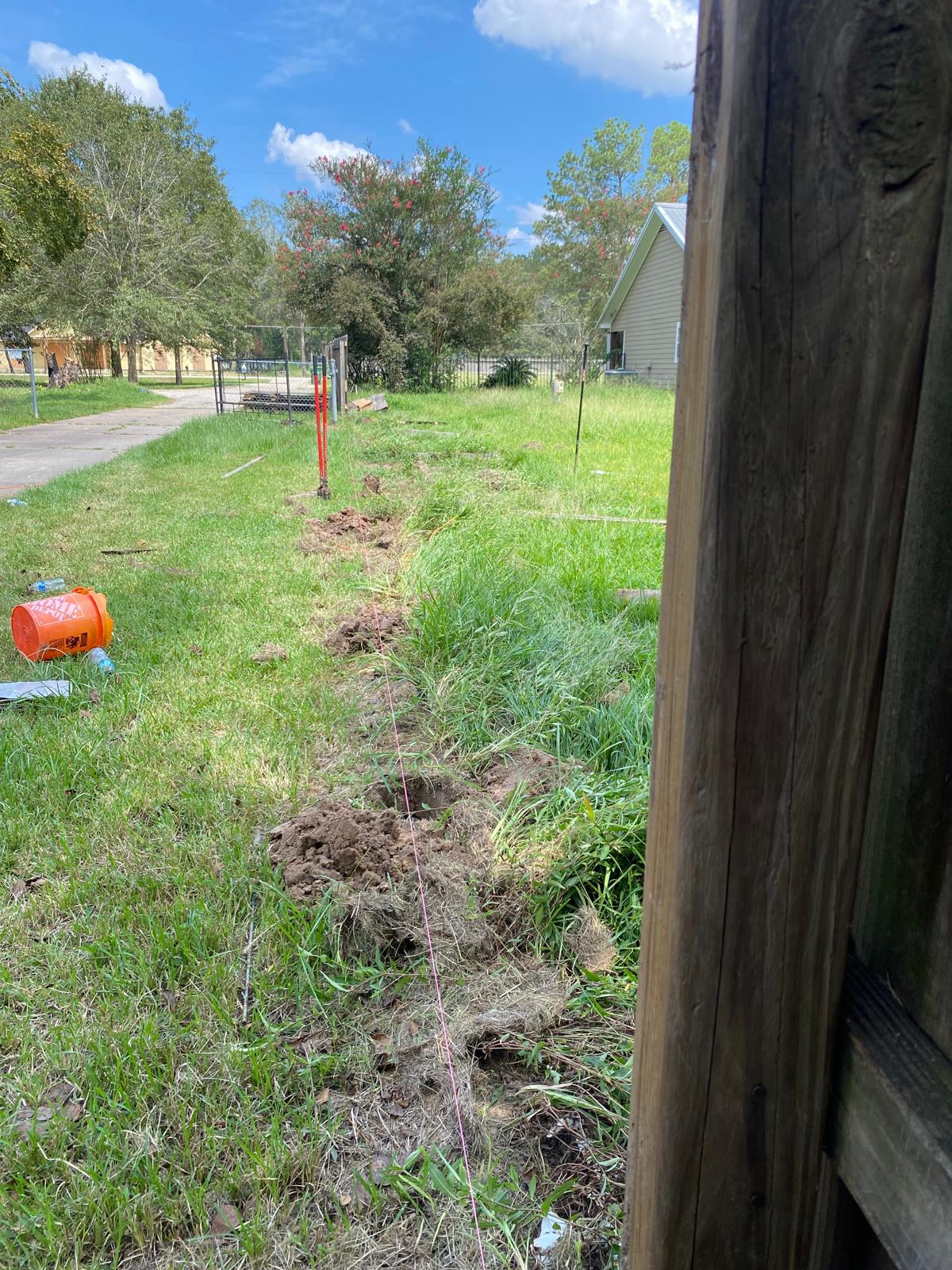
Yes, before the first post hole. Texas Utilities Code Chapter 251 makes anyone who digs 16 inches or deeper with an auger or other powered equipment notify the one-call center at least 48 hours ahead, not counting Saturdays, Sundays and legal holidays. Fence post footings go well past 16 inches: the chain link installation standard, ASTM F567, calls for 24 inches minimum, and more for taller fences. Near a gas or hazardous-liquid pipeline, the Railroad Commission’s rule also counts hand digging with a manual post hole digger. When you hire a contractor, the company doing the digging files the ticket; ask for the number. Calling is free. It won’t find your own lines past the meter (sprinklers, pool, lighting, a gas line to the grill), so plan for those separately.
Sources: Texas Utilities Code Ch. 251; 16 Texas Administrative Code Ch. 18 (Railroad Commission); Texas811 homeowner pages; CLFMI guide specification 32 31 13 citing ASTM F567. Read September 27, 2026.
What Texas law actually requires
Texas’s one-call law is Utilities Code Chapter 251, the Underground Facility Damage Prevention and Safety Act. It turns on one definition. To “excavate” means to use “a motor, engine, hydraulic or pneumatically powered tool, or other mechanized equipment of any kind”, including auguring, digging and drilling, to disturb soil “to a depth of 16 or more inches” (251.002(5)). A powered post hole auger is named in the list of mechanized equipment (251.002(10)).
A person who intends to excavate must notify a notification center no later than the 48th hour before digging starts, and no earlier than the 14th day before, “excluding Saturdays, Sundays, and legal holidays” (251.151(a)). The notice gives the address and where on the lot the digging will be, who is digging, how to reach them, the start and finish dates, and whether explosives are involved (251.152). You make it by calling 811 or online through Texas811, which operates the Texas 811 system.
Two more rules matter for a fence or gate job:
- Pipelines have a stricter rule. The Railroad Commission’s damage-prevention rule, 16 TAC Chapter 18, applies to anyone moving earth near a pipeline carrying flammable, toxic or corrosive gas, a hazardous liquid or carbon dioxide. There, “excavate” means movement of earth by any means (18.2(4)), and hand digging expressly includes “manual post hole diggers” (18.2(6)). The rule doesn’t apply to earth moved no deeper than 16 inches (18.1(d)(2)). People exempt from Chapter 251 still have to follow it (18.1(c)).
- A permit doesn’t replace the call, and the call doesn’t replace the permit. Having a permit, an easement or the owner’s permission doesn’t change the duty to notify, and complying with Chapter 251 doesn’t excuse a required permit (251.006). In the City of Galveston you still need the fence permit; see do I need a survey before installing a fence?
Texas811 lists “Building or Repairing a Fence” first among the homeowner projects that need a ticket. The penalty for digging without notice is a civil penalty of $500 to $1,000 (251.201(a)), but the real reason is the other side of the rule: an excavator who has fully complied “may not be liable for damage to an underground facility that was not marked” as the law requires (251.157(c)).
Minimum post footing depth by fence height, in inches
ASTM F567 minimum for chain link: 24 in, plus 3 in for each foot of fence height over 4 ft. Every bar is past the 16 in line.
Who files the ticket: you or your fence company?
The law puts the duty on the person who intends to excavate (251.151). So:
- You hire a company to build the fence. Texas811’s homeowner guidance: “it is the contractor’s responsibility to contact 811 two-business days prior to digging,” and you “may want to make sure your contractor has notified 811 before the work begins by requesting the ticket or notification number.” Ask for that number when you book the install date.
- Part of the job is subcontracted. Texas811 is blunt: “There is no such thing as a blanket ticket provided to a general contractor. The ticket processed by the general contractor does not cover subcontractors.” If an electrician trenches power to an automatic gate operator, that crew needs its own ticket.
- You dig the holes yourself. Then you are the excavator. Mark the fence route in white paint or flags first (white-lining, 16 TAC 18.3(c) and 18.7) so the locators mark the right strip.
You don’t have to be home when the locators come, but they need access to the yard, and Texas811 asks owners to shut pets away: locators may not enter a yard with a dog in it, even a friendly one.
The lines 811 won’t mark
This is where most fence-line surprises come from. Chapter 251 exempts “an underground facility that serves only the owner of the underground facility or the owner’s tenant and that is located solely on the owner’s property” (251.003(3)). In plain terms, the utilities mark their lines, not yours. Texas811’s FAQ says the same: public utilities “may not mark utilities that run from the meter onto private property or to the house,” and getting those located is the property owner’s responsibility.
On a residential lot, that list can include:
- Sprinkler mains and zone lines.
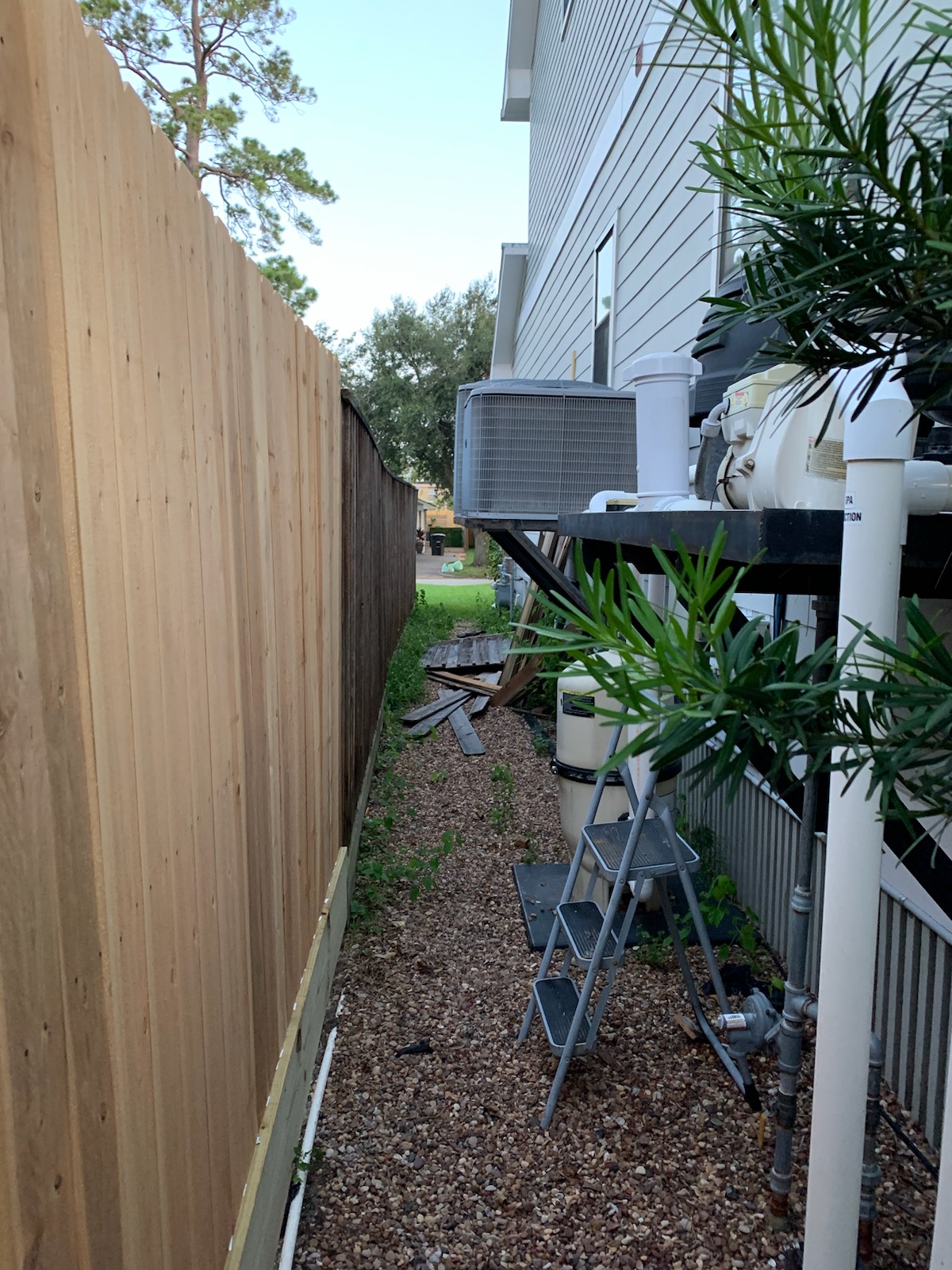
- Pool and spa plumbing and the equipment wiring. The photo below shows a side yard where a new fence runs past AC units and pool-style equipment on a raised house.
- Landscape lighting and the feed to an existing gate operator.
- Gas from the meter to a grill, outdoor kitchen or standby generator.
- Power or water to a detached garage, shed or barn.
Two more gaps to know about. Water, slurry and sewage lines are “Class B” facilities, and when you call, the center has to warn you that those operators may not be notified (251.153(a)); only Class A operators (electric, gas, petroleum, telecom, steam) must join a notification center (251.107). Your ticket lists the utilities that were notified, so read it. And if a locator marking a pipeline finds a customer-owned pipe, the rule only asks them to make “a reasonable effort” to tell you (16 TAC 18.8(c)).
What to do about it: pull out the pool or sprinkler installer’s drawings if you have them, walk the fence route and note every sprinkler head, fixture and piece of equipment near it, and consider a private locating service for anything you can’t trace. Tell your fence company about every private line at the estimate, while the post layout can still move.
How the wait fits your install date
The 48 hours are working hours: Saturdays, Sundays and legal holidays don’t count (251.151(a)). A request made Monday at 10 a.m. clears Wednesday at 10 a.m. A request made Friday afternoon clears Tuesday afternoon. A Saturday request is its own rule: digging may begin the following Tuesday at 11:59 a.m., or Wednesday at 11:59 a.m. if Monday is a holiday (251.151(b)).
The utilities work to the same clock. Each Class A operator must mark by the 48th hour (or the Saturday deadlines), or tell the excavator by then that it doesn’t plan to mark (251.157(a), (d)). Under the pipeline rule, an excavator who gets no positive response has to call again before digging (16 TAC 18.4(e)).
The ticket also runs out. Notice can’t be given more than 14 days before digging starts (251.151(a)), and under the Railroad Commission’s rule a locate ticket lives 14 days unless the operator and excavator agree otherwise in writing (18.1(h), 18.3(f)); the rule counts days as working days (18.1(g)). If the job isn’t finished when the ticket expires, it is refreshed for the part not yet dug (18.3(e)). For a fence, that mostly matters when weather or a material delay pushes the install back.
After a hurricane or severe flood, the marking deadline can lapse: an operator facing an “extraordinary circumstance” such as a hurricane or severe flood must notify the center and the excavators waiting, with an approximate time it will mark (251.158). If you are planning a new fence for after storm season, leave slack for that. More on scheduling in how long does wood fence installation take? and the automatic gate installation timeline.
811 dig-date calculator
Enter when the locate request goes in. The calculator counts Texas’s 48-hour wait the way the statute does (Saturdays, Sundays and the holidays Texas811 publishes don’t count), shows the Saturday rule, and lists the lines on your property that 811 won’t mark. It is a planning aid; the dates on the ticket itself are the ones that count.
Lines on the property that run past a meter (tick any you have):
Based on Texas Utilities Code 251.002(5), 251.003(3), 251.151 and 251.157; 16 Texas Administrative Code 18.1 and 18.2; and Texas811’s homeowner pages and 2026 holiday list, read September 27, 2026. Holidays after January 1, 2027 aren’t published yet, so later dates count weekends only. Not legal advice.
Reading the paint and flags
Operators mark using the American Public Works Association color code (251.157(b)). Texas811 publishes it this way:
Underground utility color code
| Color | What it marks |
|---|---|
| White | Proposed excavation: the fence route you or your contractor marked |
| Pink | Temporary survey markings |
| Red | Electric power lines, cables, conduit and lighting cables |
| Yellow | Gas, oil, steam, petroleum or gaseous materials |
| Orange | Communications, alarm or signal lines, cables or conduit |
| Blue | Potable (drinking) water |
| Purple | Reclaimed water, irrigation and slurry lines |
| Green | Sewer and drain lines |
Texas811, Underground Utility Color Code (APWA uniform color code), read September 27, 2026.
Planning the fence line around marked lines
A mark is a horizontal location, not a depth. Locators mark “the approximate horizontal location” and the “approximate center line” of a pipeline (16 TAC 18.2(10), 18.8(b)), with marks no more than 20 feet apart and at least three separate marks for each line (18.8(f), (i)). Nothing on the ground tells you how deep the line is, and for a gas or hazardous-liquid pipeline the rule sets a tolerance zone of half the pipe’s diameter plus 18 inches on each side (18.2(21)). Inside it, the rule points to hand digging, soft digging or vacuum excavation (18.10).
For a fence, the fix is usually in the layout, not the dig:
- Move a line post. Line post spacing has some give. Chain link line posts go no more than 10 feet apart (CLFMI 32 31 13), so a post can often shift a foot or two off a mark and still fall inside that limit. Wood and privacy fences can use a shorter bay the same way.
- Place gates first. A gate post carries the hinge load and needs a larger footing (ASTM F567, via CLFMI), and a driveway gate opening is fixed by the driveway. Check the marks at gate openings before anything else.
- Cross, don’t follow. A fence that runs along a marked line for its whole length puts every post near it. Offsetting the fence line, where the property and any HOA or City rule allow it, keeps posts clear of the band.
- Keep the marks until the posts are set. Texas811 recommends that whoever requested the marks remove them when the work is done, not before.
Property-line questions come first, since you can’t move a fence onto your neighbor’s lot to dodge a line. See how close to the property line can I build a fence? and common HOA fence rules.
If a line gets hit anyway
The statute spells out the steps (251.159): contact the line’s operator immediately; if you don’t know who it is, contact the notification center; don’t backfill around the damage until it is reported and a repair is agreed; and only the operator or someone it authorizes repairs it. If flammable material is involved, keep ignition sources away. For a pipeline, the Railroad Commission adds a one-hour deadline to report the damage through the notification center, and a 911 call if gas or a hazardous liquid is escaping (16 TAC 18.11(b), (c)).
What Galveston customers say
5.091 Google reviews · read them all on Google
I recently hired Mustang Fencing Services for a fence installation, and I couldn’t be happier with the results. The team was professional, punctual, and very knowledgeable. They provided a detailed estimate and completed the job on time and within budget. Overall highly recommended Mustang fencing services
I am so pleased with the fence!! Your solution was exactly the right one and the team did a highly professional job. Frankly, I was amazed at how clean the job site was at the completion of the project. Feel free to list me as a reference and a very happy customer. Thanks again and please let the men know That I appreciate their hard work and quality craftsmanship.
We took the services to replace our decade-old rotten fence with a modern one. The Services were Professional, completed the job on time, and the fence looked great, giving a new look to our house and they left the yard spotless. Highly recommend!
Reviews shown word for word from the Mustang Fencing Services Google Business Profile (Galveston), captured 2026-09-27.
Questions we get about this
Do I need to call 811 before installing a fence in Texas?
Does my fence company call 811, or do I?
Do I need to call 811 if I dig post holes by hand?
How long do I have to wait after calling 811?
Will 811 mark my sprinkler lines or pool plumbing?
Does 811 tell me how deep a line is?
Sources
Checked September 27, 2026. Rules change, so confirm with the City before you build.
- Texas Utilities Code, Chapter 251: Underground Facility Damage Prevention and Safety — 251.002(5) and (10) excavate, mechanized equipment; 251.003(3) owner-only lines exempt; 251.006; 251.107; 251.151 48-hour notice, 14-day window, Saturday rule; 251.152; 251.153(a); 251.157; 251.158; 251.159; 251.201.
- 16 Texas Administrative Code, Chapter 18 (Railroad Commission of Texas): Underground Pipeline Damage Prevention — 18.1(c), (d)(2), (g), (h) scope, 16 in, working days, 14-day ticket; 18.2(4), (6), (10), (21) definitions incl. manual post hole diggers and tolerance zone; 18.3; 18.4(e); 18.7 white-lining; 18.8 marking; 18.10; 18.11.
- Texas811, Homeowner / DIYer — Fence projects need a ticket; free; contractor’s responsibility when hired; ask for the ticket number.
- Texas811, Homeowner FAQs — No blanket ticket; a general contractor’s ticket doesn’t cover subcontractors; utilities may not mark lines past the meter; pets and access; removing marks.
- Texas811, Underground Utility Color Code — APWA colors; 2026 holidays not counted in the two-working-day wait.
- Chain Link Fence Manufacturers Institute, guide specification 32 31 13 and Wind Load Guide WLG 2445 (2018) — ASTM F567 minimum footing depth 24 in plus 3 in per ft of height over 4 ft; larger gate post footings; line posts no more than 10 ft apart.
Planning a new fence or gate?
Tell us about the sprinklers, pool lines, lighting and anything else in the ground along the route when we come out. We’ll lay out posts and gates with that in mind and put it all on one written estimate. Free on-site estimates across Galveston County.