
How Long Does Automatic Gate Installation Actually Take?
A simple retrofit onto a sound existing gate can be hours. A new sliding gate with fresh electrical service is a multi-day project — and a UL 325 safety-testing step applies either way, with its own minimum sensor counts straight from the standard.
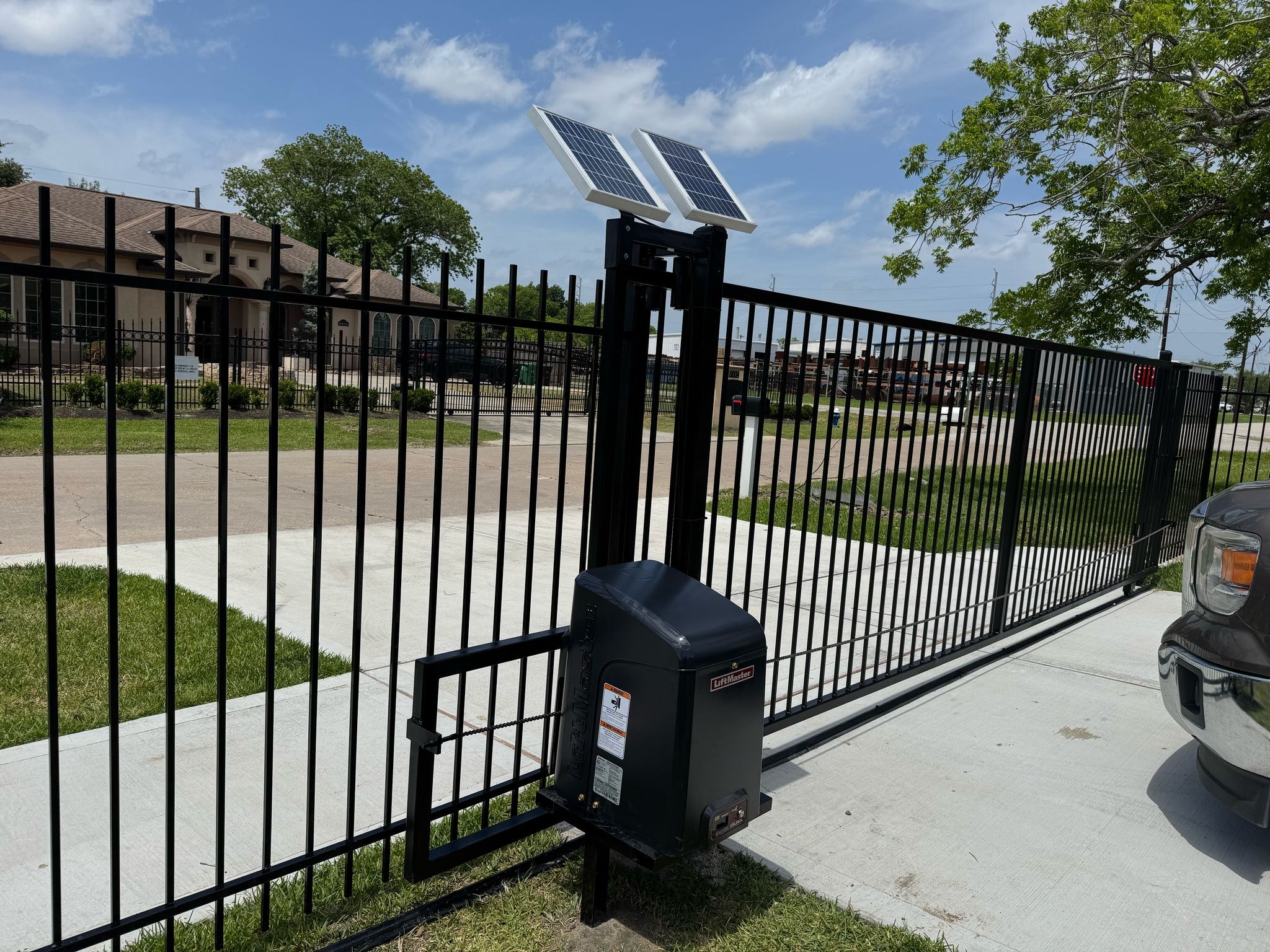
Automatic gate installation timelines vary widely: a retrofit of an existing, structurally sound swing gate can sometimes finish in hours, while a new sliding gate with fresh electrical service is usually multi-day. Two steps apply no matter which: if new posts are set, the concrete must cure before the operator is mounted, and every installation must pass UL 325 entrapment-protection testing — the City of Galveston has adopted the 2021 IRC Appendix AO, which requires automatic vehicular gates to comply with ASTM F2200 construction and UL 325-listed operators.
Sources: DASMA TDS 353 (reprinting UL 325 Table 32.1/32.2); City of Galveston Ordinance 23-012 (2021 IRC Appendix AO); LiftMaster CSW24UL/CSL24UL operator manuals.
The typical project sequence
Most automatic gate installations move through the same general phases, whether it’s a small residential retrofit or a larger commercial entrance: a site visit to measure the opening and confirm power availability; gate fabrication or repair; posts set in concrete (if new); the operator mounted and wired; UL 325-required entrapment-protection sensors installed and tested; access control programmed; and a final full-cycle test.
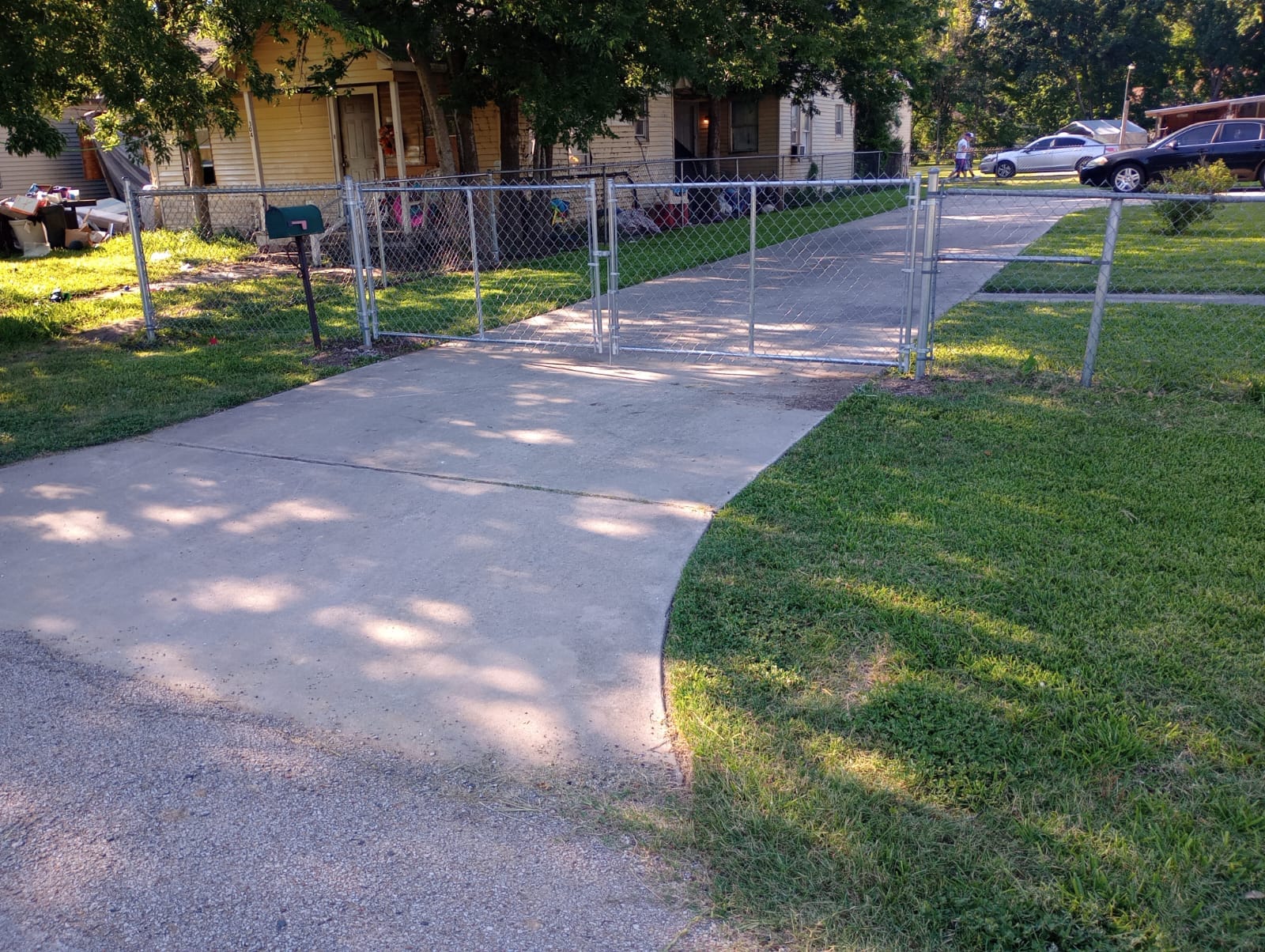
A straightforward retrofit of an existing single swing gate can sometimes skip most of the early steps and move quickly. A new sliding gate installation with a fresh electrical run, safety sensors and access control from scratch is more often a multi-day project — there’s no single number that fits both.
Why the safety-testing step isn’t optional
The City of Galveston adopted the 2021 International Residential Code’s Appendix AO (Automatic Vehicular Gates) via Ordinance No. 23-012, which requires that vehicular gates intended for automation be designed and built to ASTM F2200, and that the gate opener itself be listed to UL 325. That’s the code basis for why the testing step on the previous sheet is a real requirement, not an upsell.
UL 325 spells out specifics: after an operator senses an obstruction, it must begin reversing within 2 seconds and travel at least 2 inches. Every external sensor has to be monitored by the operator on every open/close cycle — if a sensor faults, the gate can’t run normally until it’s fixed. Activation controls (keypads, push buttons) must sit at least 6 ft from the gate to reduce reach-through risk, and at least two warning signs must be posted at the gate.
How many entrapment sensors does your gate type need?
Minimum independent means required, straight from UL 325 Table 32.2 — not a suggestion.
Source: UL 325 Table 32.2, reprinted in DASMA TDS 353. All external means must be monitored every cycle; activation controls must be at least 6 ft from the gate. Not a substitute for the operator manufacturer’s own instructions.


What extends the timeline
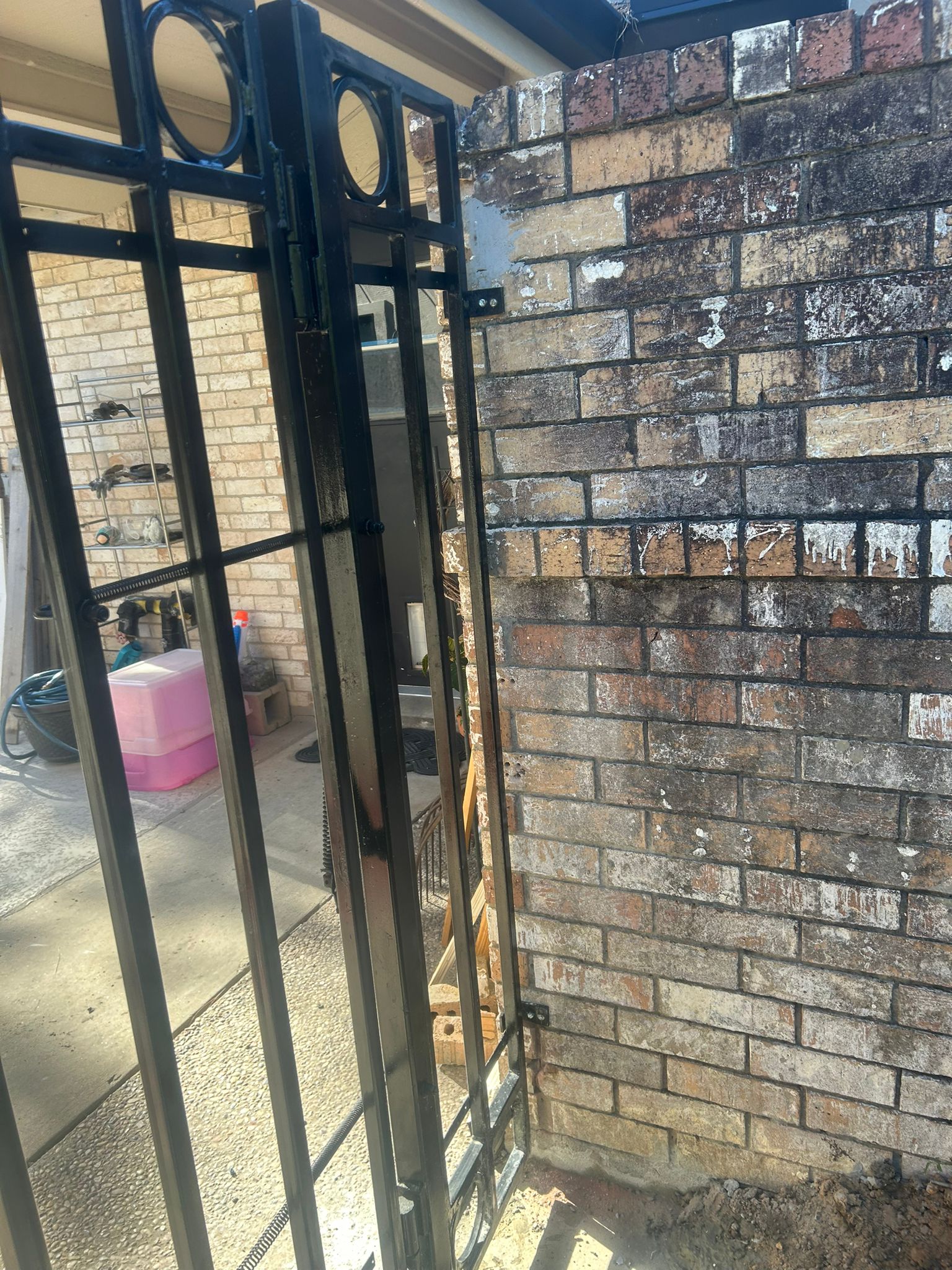
A few things reliably add time to a project: needing an electrician to run new service to the gate location, especially if that means trenching under a driveway; discovering during the site visit that posts or the existing gate structure need reinforcement or replacement; permit/plan review time where required; and larger commercial projects with multiple access-credential types (keypad plus telephone entry plus card/fob access, for example).
Outdoor concrete and electrical work is also weather-dependent, and Gulf Coast rain patterns — along with tighter contractor scheduling during hurricane season — can shift installation dates. Building in some flexibility, especially for projects that involve setting new posts in concrete, is a realistic expectation rather than a sign anything has gone wrong.
What Galveston customers say
5.091 Google reviews · read them all on Google
Very professional and friendly. Gotten automatic gates done and they are done to perfection! Thank you
We just installed iron gate and it looks amazing thank you very much mustang fencing .
True professionalism is very rare in this day and age, these guys live upto their word and deliver on their service! Our fence was down in the July storm and these guys came and gave a reasonable quote, after confirming I received a time line and they delivered! Will recommend them to everyone I know who needs fencing done.
Reviews shown word for word from the Mustang Fencing Services Google Business Profile (Galveston), captured 2026-10-12.
Questions we get about this
What’s the fastest type of automatic gate project?
Why do sliding gates usually take longer to install than swing gates?
Does concrete curing time affect the schedule?
How many safety sensors does my gate need?
Does Galveston require a permit or code compliance for automatic gates?
Sources
Checked October 17, 2026. Rules change, so confirm with the City before you build.
- City of Galveston Ordinance No. 23-012 (2021 IRC, incl. Appendix AO) — Adopts Appendix AO, Automatic Vehicular Gates; requires ASTM F2200 construction and UL 325-listed operators.
- ASTM F2200, Standard Specification for Automated Vehicular Gate Construction — Scope: performance- and prescriptive-based construction requirements for automated vehicular gates, referenced by Galveston’s adopted code.
- DASMA TDS 353, Vehicular Gate Operators and the ANSI/CAN/UL 325 Standard — UL 325 Table 32.1/32.2 minimum entrapment-protection means; 2-second reversal/2 in travel rule; sensor monitoring requirement; 6 ft control clearance.
- LiftMaster CSW24UL / CSL24UL operator installation manuals — Concrete pad or post-mount guidance, grounding, and battery-replacement interval referenced for the installation sequence.
Want a real timeline for your gate?
The most accurate answer comes from a site visit, since gate type, site conditions and whether new electrical service is needed all affect the schedule. Free on-site estimates across Galveston County.