
Can You Automate the Manual Gate You Already Have?
Often, yes. But the standard in every gate operator manual says a manual gate that is going to be automated has to be brought up to it first. The latch comes off, wheels come off a swing leaf, slide gates get screened and guarded, and people get their own walk gate.
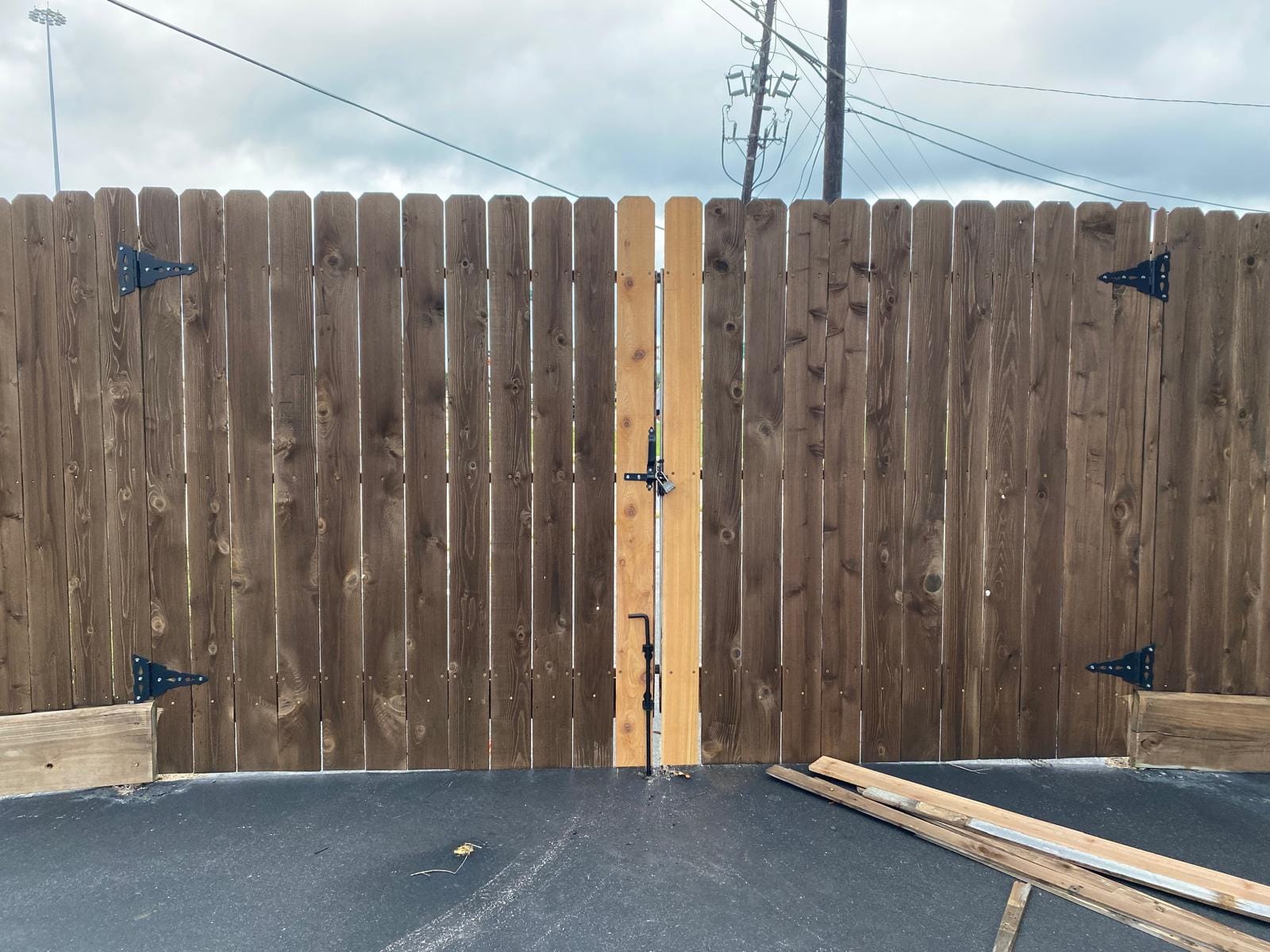
Usually, if the gate is sound and can be brought up to the automated-gate standard. The ASTM F2200 provisions printed in LiftMaster’s operator manuals say “any non-automated gate that is to be automated shall be upgraded to conform,” and DASMA says UL 325 applies to “existing gates intended to be motorized.” In practice that means: the latch is disabled, a swing leaf hangs on its hinges alone with any wheel removed, a slide gate gets guarded rollers, stops, a receiver guide and screening to 6 ft, the gate can’t open into a sidewalk or street, and there is a separate walk gate. Then the operator has to be rated for the gate’s length and weight.
Sources: ASTM F2200 and UL 325 instructions as printed in the LiftMaster CSW24UL and CSL24UL installation manuals; DASMA TDS 356 and TDS 370. Read September 27, 2026.
The rule: upgrade the gate, then add the operator
A manual gate is built for a person who is standing next to it. An automatic gate moves on its own, with people and cars nearby, so it is held to a different standard. ASTM F2200 covers how an automated vehicular gate is built, and UL 325 covers the operator. The operator manuals print both, and the F2200 section is explicit about retrofits:
- “Any non-automated gate that is to be automated shall be upgraded to conform to the provisions of this specification.”
- “An existing gate latch shall be disabled when a manually operated gate is retrofitted with a powered gate operator,” and no latch may be installed on an automatic gate.
- When an old operator is replaced, the existing gate is upgraded too.
DASMA, the gate-operator manufacturers’ association, explains why: a manual latch “would become a hazardous protrusion and should be removed prior to automation,” and a receiver guide or stop takes its place. The rest of this page is what that upgrade usually involves for each type of gate. For the standards themselves, see UL 325 and ASTM F2200 explained.
Swing gates: what usually changes
- The latch and drop rod. Disabled or removed. The operator holds the gate closed; a stop or receiver takes the latch’s place.
- Wheels. The LiftMaster CSW24UL manual says to “remove ANY/ALL wheels from the bottom of gate,” that the gate must not drag, and that it must be “supported entirely by its hinges.” A leaf that has sagged onto a wheel needs its hinges, frame or post fixed first. See why gates sag.
- Hinges and clearances. The pivot centre sits no more than 4 in from the edge of the post, and an open leaf stays at least 16 in from a wall or column, or the operator needs entrapment protection there. On a slope, a 4 to 16 in gap under the leaf calls for a bottom-edge sensor (swing gates on sloped drives).
- Direction. “Swinging gates shall not open into public access areas,” so a gate that swings out over a sidewalk or street is re-hung to swing in, if there is room (single vs double swing).
- Two leaves, two operators. Each leaf gets its own operator.

Slide gates: what usually changes
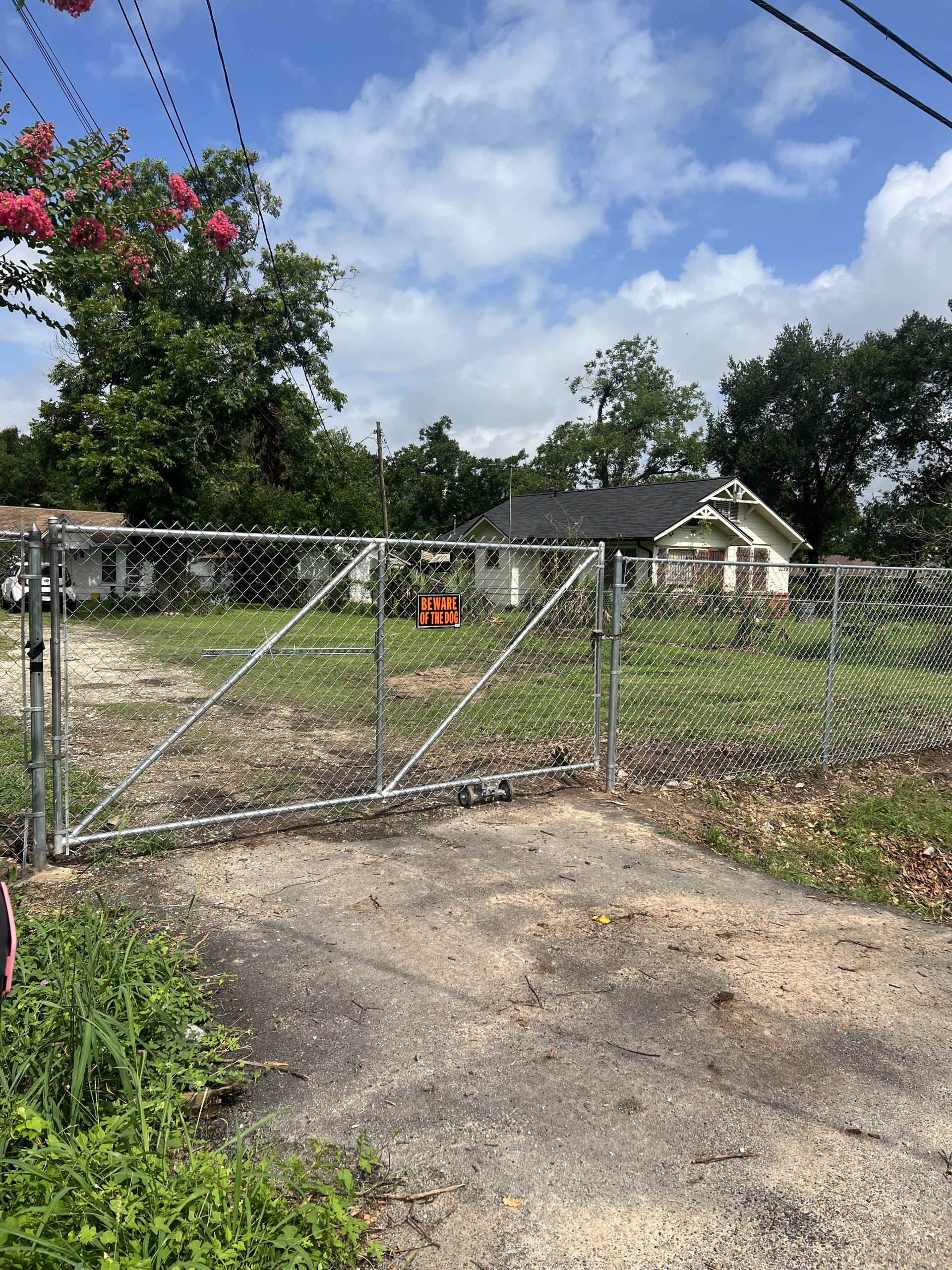
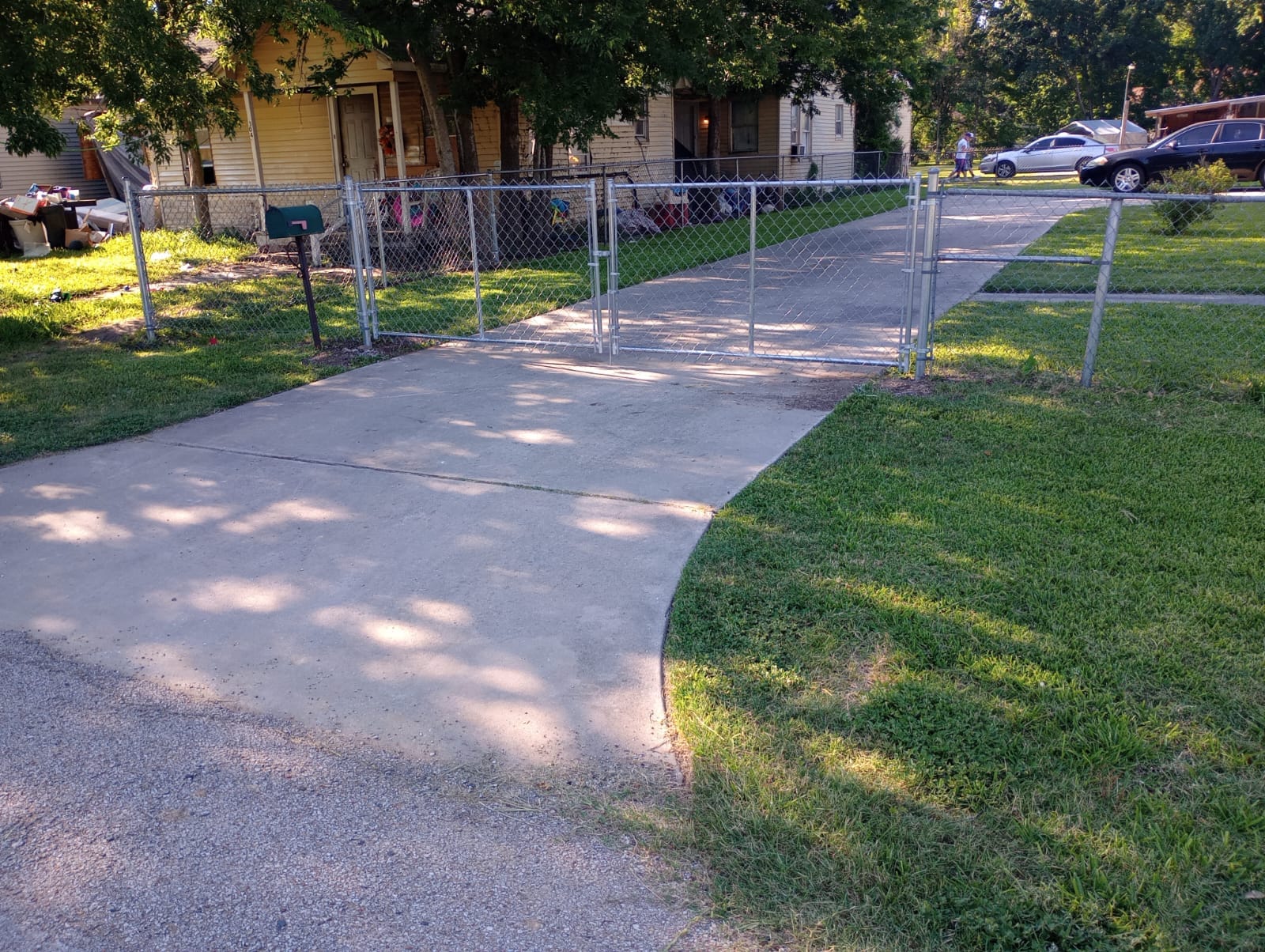
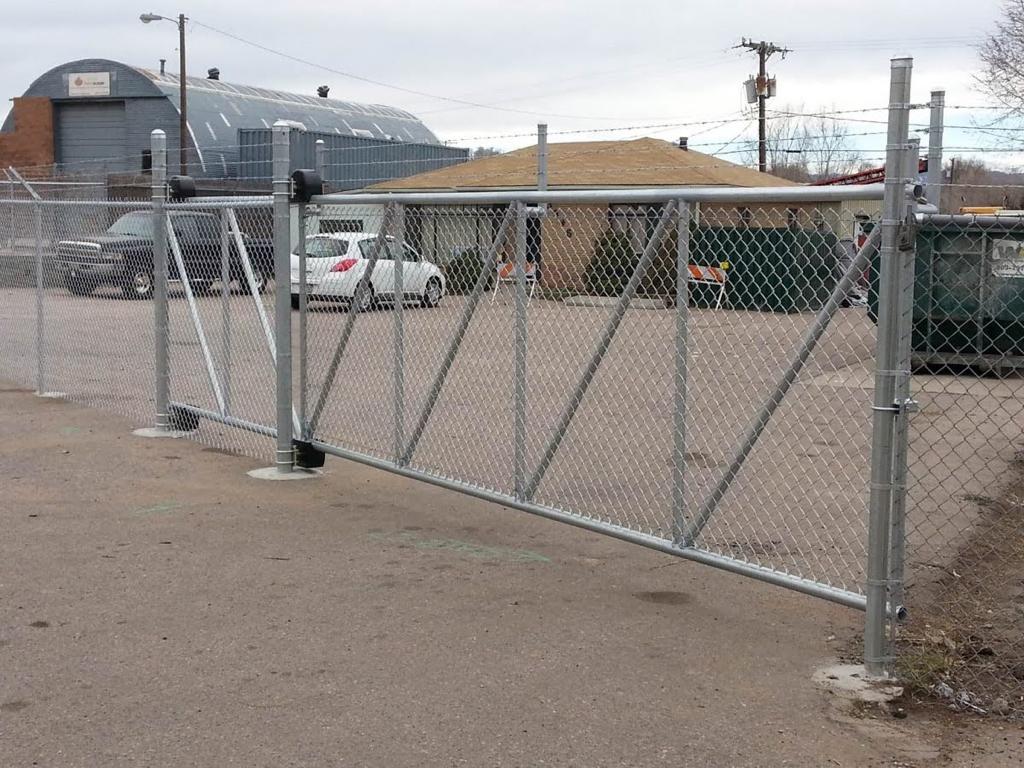
Slide gates carry the most retrofit work, because the standard guards the places a moving slide gate can catch a hand:
- Screening. Openings are screened from the bottom of the gate to the top or 6 ft, whichever is less, so a 2¼ in ball can’t pass, “anywhere in the gate, and in that portion of the adjacent fence that the gate covers in the open position.” An open chain link or picket slide gate usually needs a screen mesh added, and so does the fence it rolls along.
- Rollers, stops and guide. Weight-bearing rollers 8 ft or less above grade are guarded or covered; positive stops limit travel at fully open and fully closed; and a receiver guide catches the gate.
- The gap at the post. With the gate fully open or closed, the gap to the post nearest the road is 2¼ in or less.
- Gravity. With the operator disconnected, the gate must not roll on its own. On a sloped run that can mean re-levelling the track or rollers.
For how much room a slide gate and its operator need, see sliding gate space requirements.
Retrofit checklist: what your gate needs first
Answer for the gate you have. The checklist lists the upgrades the standard printed in the operator manuals calls for, so you know what an automation quote should include. It doesn’t replace a site visit.
From the ASTM F2200 provisions and UL 325 instructions printed in LiftMaster’s CSW24UL and CSL24UL manuals, and DASMA TDS 356 and 370. Operator limits are for those two models; other operators have their own. Read September 27, 2026.
The operator, the posts and the power
Match the operator to the gate. Every operator is rated for a gate length and weight. The LiftMaster CSW24UL swing operator, for example, is rated for 800 lb on a leaf up to 16 ft or 600 lb up to 18 ft; the CSL24UL slide operator for gates up to 1,500 lb. A heavy wood or iron leaf may need a heavier-duty operator, or the gate itself changes. The operator must also be listed for the site’s UL 325 class: Class I for homes of one to four families, Class II for commercial and general-access sites.
The posts carry more. The operator pushes and pulls against the hinge post every cycle, so a post that has leaned, rotted or cracked its footing is replaced or reset before the operator goes on. We look at that on site, rather than assume every wood post has to go.
Power. A hard-wired operator needs a trench to the gate. A power trench dug by machine 16 in or deeper counts as excavation under Texas law, so the 811 ticket comes first (calling 811 before you dig). Solar is the other route (solar gate openers and daily cycles). For the full picture of an automatic gate, see electric gate installation.
Retrofit at a glance
| Swing gate | Slide gate | |
|---|---|---|
| Latch | Disabled or removed | Disabled or removed |
| Hanging | On hinges alone; wheels removed; no dragging | Doesn’t roll on its own with the operator off |
| Guarding | 16 in from walls when open, or entrapment protection | Screened to 6 ft (gate + covered fence); rollers guarded |
| Stops | Operator holds it; no latch | Positive stops and a receiver guide |
| People | Separate walk gate | Separate walk gate |
| Direction | Never opens into a public area | Keep 2¼ in or less at the road-side post |
What drives the cost of a retrofit
We don’t publish prices on guide pages. What moves a retrofit quote: how much of the list above your gate already meets, whether the posts and hinges can carry an operator, the operator for the gate’s weight and length (and one or two of them), screening for an open slide gate and the fence it covers, a walk gate if there isn’t one, the power run or solar kit, and the entrapment devices and access controls you choose. Sometimes the upgrades add up to more than a new, automation-ready gate would; we’ll price both when that’s close (gate repair vs replacement). Financing is available through the providers on our financing page, subject to credit approval.
What Galveston customers say
5.091 Google reviews · read them all on Google
Very professional and friendly. Gotten automatic gates done and they are done to perfection! Thank you
had an excellent experience with mustang fencing From the initial consultation to the final installation, the team was professional, punctual, and attentive to detail. They helped me choose the perfect fence style to match my property and ensured everything was installed with precision. The quality of materials is top-notch, and the fence has completely transformed the look and security of my home. I highly recommend mustang services to anyone looking for reliable and high-quality fencing services!
My new fence looks fantastic and has added both privacy and style to my yard. Highly recommend their services for anyone in need of fencing!
Reviews shown word for word from the Mustang Fencing Services Google Business Profile (Galveston), captured 2026-09-27.
Questions we get about this
Can I add an automatic opener to my existing manual gate?
Do I have to remove the latch to automate a gate?
Can a gate with a support wheel be automated?
Does UL 325 apply to an old gate I am automating?
Why does my slide gate need screening to be automated?
Sources
Checked September 27, 2026. Rules change, so confirm with the City before you build.
- LiftMaster CSL24UL slide gate operator installation manual — ASTM F2200 gate construction provisions (retrofit upgrade, latch, protrusions, pedestrian gate, slide screening, rollers, stops, receiver guide, gap); 1,500 lb maximum gate weight.
- LiftMaster CSW24UL swing gate operator installation manual — 800 lb / 16 ft and 600 lb / 18 ft ratings; remove wheels; hung on hinges; 4 in and 16 in swing clearances; no opening into public access areas.
- DASMA TDS 356, UL 325 and Gate Installations: FAQ — UL 325 applies to existing gates intended to be motorized; separate pedestrian entrance.
- DASMA TDS 370, Rationale Behind the Provisions of ASTM F2200 — manual latch becomes a hazardous protrusion; receiver guide in its place; existing gates may need upgrading.
- DASMA TDS 353, Vehicular Gate Operators and the UL 325 Standard — UL 325 classes I–IV.
Want to automate the gate you have?
We’ll check the gate, hinges, posts and clearances against the standard, and give you a written price for the upgrades, the operator, the safety devices and power, next to a new-gate option if that’s close. Free on-site estimates across Galveston County.