
How Do You Maintain a Wood Fence in Humid Gulf Coast Weather?
Humidity doesn’t attack a wood fence one way — it attacks it three ways. Moisture swells and shrinks the wood itself, mildew and algae break down the finish on top of it, and repeated wetting and drying loosens the nails and screws holding it together. The U.S. Forest Service’s own research flags the Gulf States specifically as a region where lumber often can’t air-dry fast enough to avoid fungal decay without the right upkeep — here’s what the data actually says to do about each mechanism.
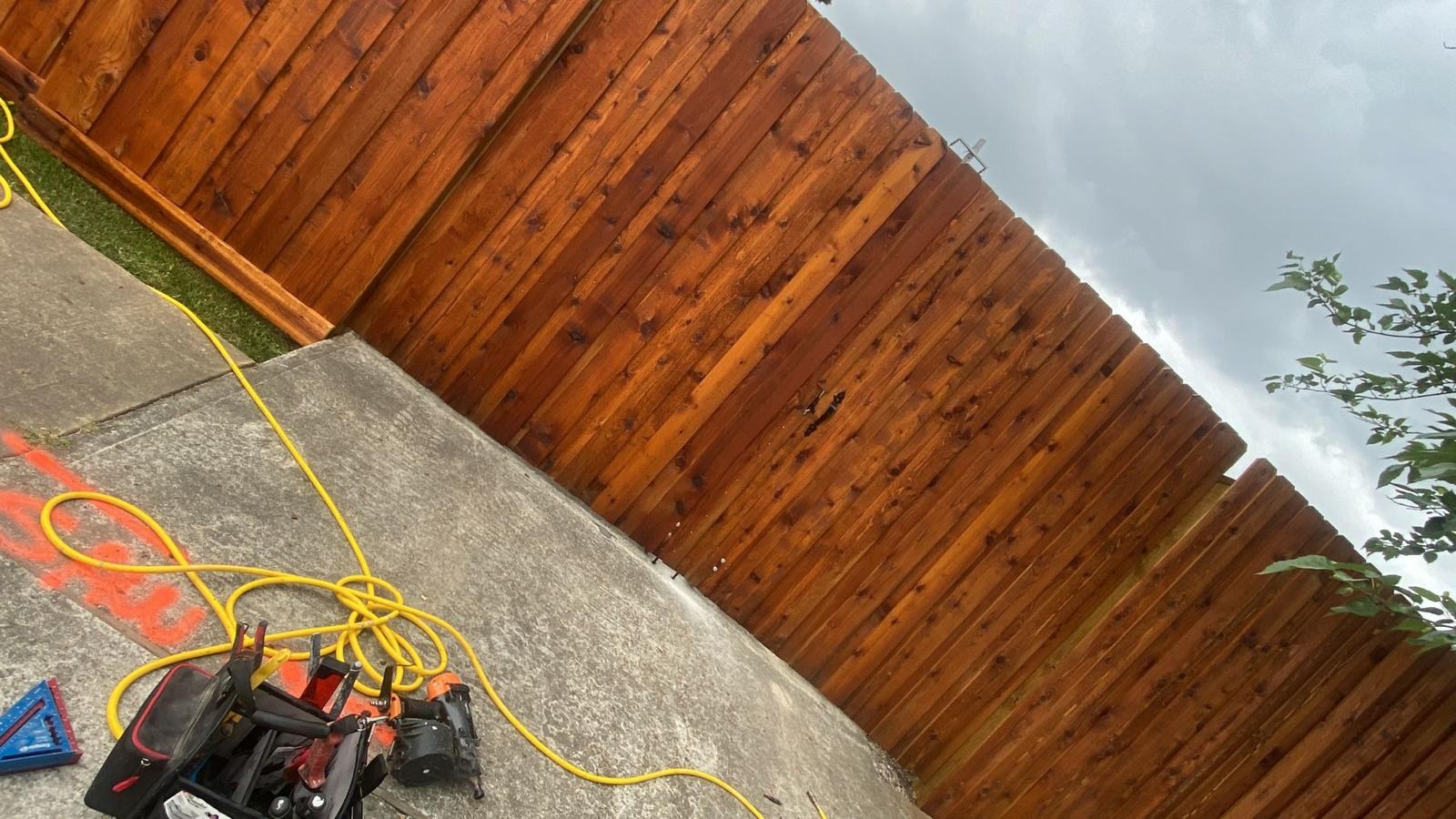
Three separate things need watching, not one. Moisture movement (swelling, shrinking, and in the worst case decay) is a wood-and-climate problem; finish failure (mildew, algae, extractive bleed) is a coating problem; and loose fasteners are a hardware problem that gets worse the more the wood wets and dries. The USDA’s Wood Handbook treats all three separately, and so does the maintenance that actually works on each.
Sources: USDA Forest Products Laboratory, Wood Handbook (FPL-GTR-282, 2021), chapters 8, 13, 14 and 16.
Humidity attacks a wood fence three different ways
“How do I maintain a wood fence in humid weather” sounds like one question, but it covers three different, mostly unrelated mechanisms. Movement and decay: wood keeps absorbing and releasing moisture with the air around it, and in a humid enough climate without the right species or treatment, that moisture supports fungal decay — the USDA’s Wood Handbook specifically names the Gulf States as a region where this is a real risk for untreated lumber. Finish failure: whatever stain or paint is protecting the wood degrades on its own schedule — through mildew, algae, UV, and (for cedar and redwood specifically) extractive bleed. Fastener loosening: the same wetting-and-drying cycle that moves the wood also loosens whatever is holding it together.
Each one has its own warning signs and its own fix, covered in order below.
What the humidity swing itself does to the wood
The USDA’s equilibrium moisture content data doesn’t include Galveston or Houston directly, but the nearest Gulf Coast stations — Mobile, AL and New Orleans, LA — sit at roughly 13% to 15% outdoor equilibrium moisture content for most months of the year. That constant swing is what moves wood seasonally (covered in depth on wood vs. metal gate material), and in sustained humid conditions without preservative treatment, the Wood Handbook is specific about the risk: “In humid regions, such as the Gulf States, these products often do not air-dry fast enough to avoid losses from fungi.” That’s a statement about untreated lumber generally, not a claim that every fence decays — species, treatment and ground contact all change the actual risk.
Expected finish service life on cedar & redwood siding (the closest published reference)
| Finish type | Smooth surface | Saw-textured surface |
|---|---|---|
| Semi-transparent stain | 2–4 yrs (moderate suitability) | 4–8 yrs (high suitability) |
| Solid-color stain | 6–10 yrs | 10–15 yrs |
| Paint (3-coat system) | 8–12 yrs | 15–20 yrs |
USDA Wood Handbook, Table 16-2. The table covers siding and decking — a fence is not separately listed — so these numbers are the closest published reference, not a fence-specific rating.
Finish failure: mildew, algae and extractive bleed
Past mildew, cedar and redwood have a finish problem the Wood Handbook calls extractive bleed: water-soluble compounds in the heartwood dissolve when the wood gets wet, migrate with the moisture, and leave a reddish-brown stain as the water evaporates — showing up as diffuse blotching or streaks running down from joints and fasteners. The fix isn’t another coat of the same finish; it’s a stain-blocking primer, applied after cleaning the surface, followed by a fresh topcoat. Pine, fir and spruce don’t have this specific problem, but they generally need more attention to decay resistance than cedar or redwood’s naturally resistant heartwood.
One more timing detail that surprises people: newly installed wood shouldn’t be left to “weather” before its first coat. In the USDA’s own test, boards left exposed to sun for 16 weeks before painting had the paint peel and need refinishing within 3 years; boards exposed only 1 week held up for 13 years before peeling; boards primed before any sun exposure were still in good condition after 20 years. The old advice to let a new deck or fence weather first predates this finding — for cedar and other low-density species especially, prime as soon as possible after installation, or even before.
Your fence’s next maintenance step
Answer for your fence. This points to a general next step from published wood-finish data — it isn’t a substitute for a look in person.
USDA Forest Products Laboratory, Wood Handbook (FPL-GTR-282, 2021), chapters 8, 13, 14 and 16. Expected finish life is for siding — the closest published reference, since no wood-fence-specific data exists. Confirm in person before deciding.
What customers say
5.091 Google reviews · read them all on Google
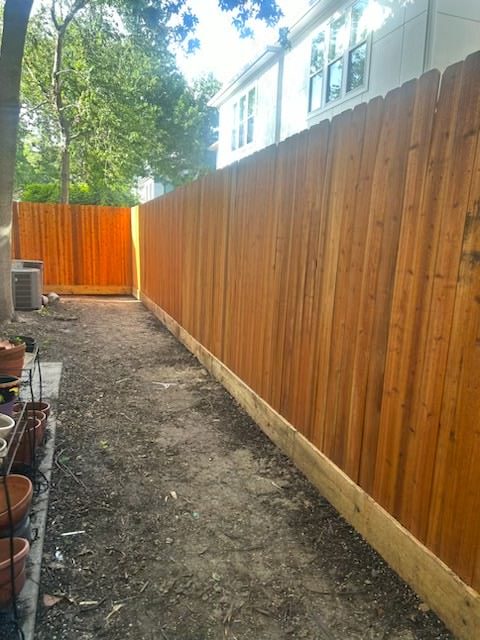
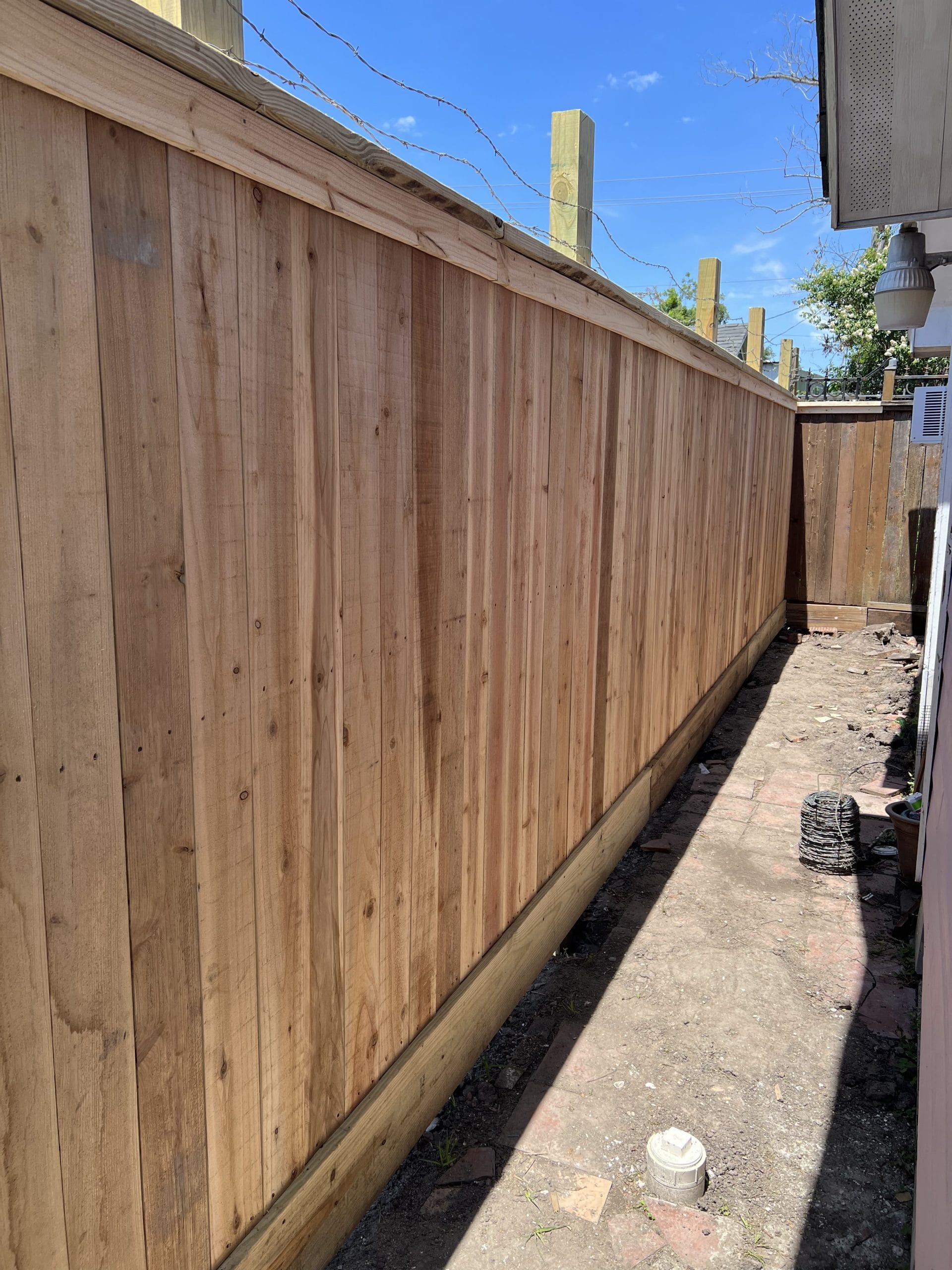
Amazing work will go ahead and recommend everyone in friends and family We installed 8ft tall double sided stained cedar wood fence in our backyard, it’s really looks great, installed perfectly nice finishing and cost effective, thanks mustang fencing.
Installed Stained cedar wood fence yesterday by mustang fencing, thanks for the beautiful work.
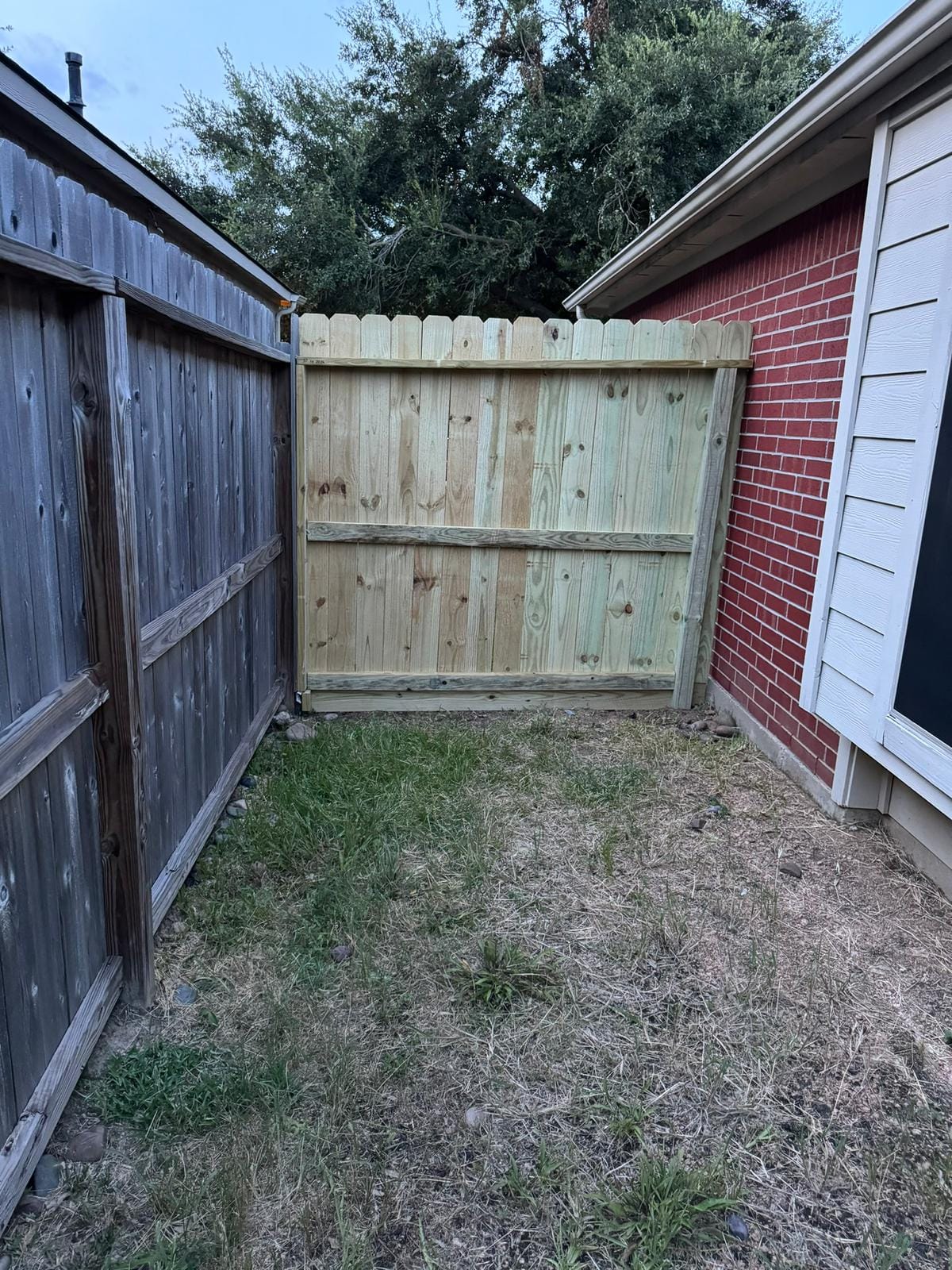
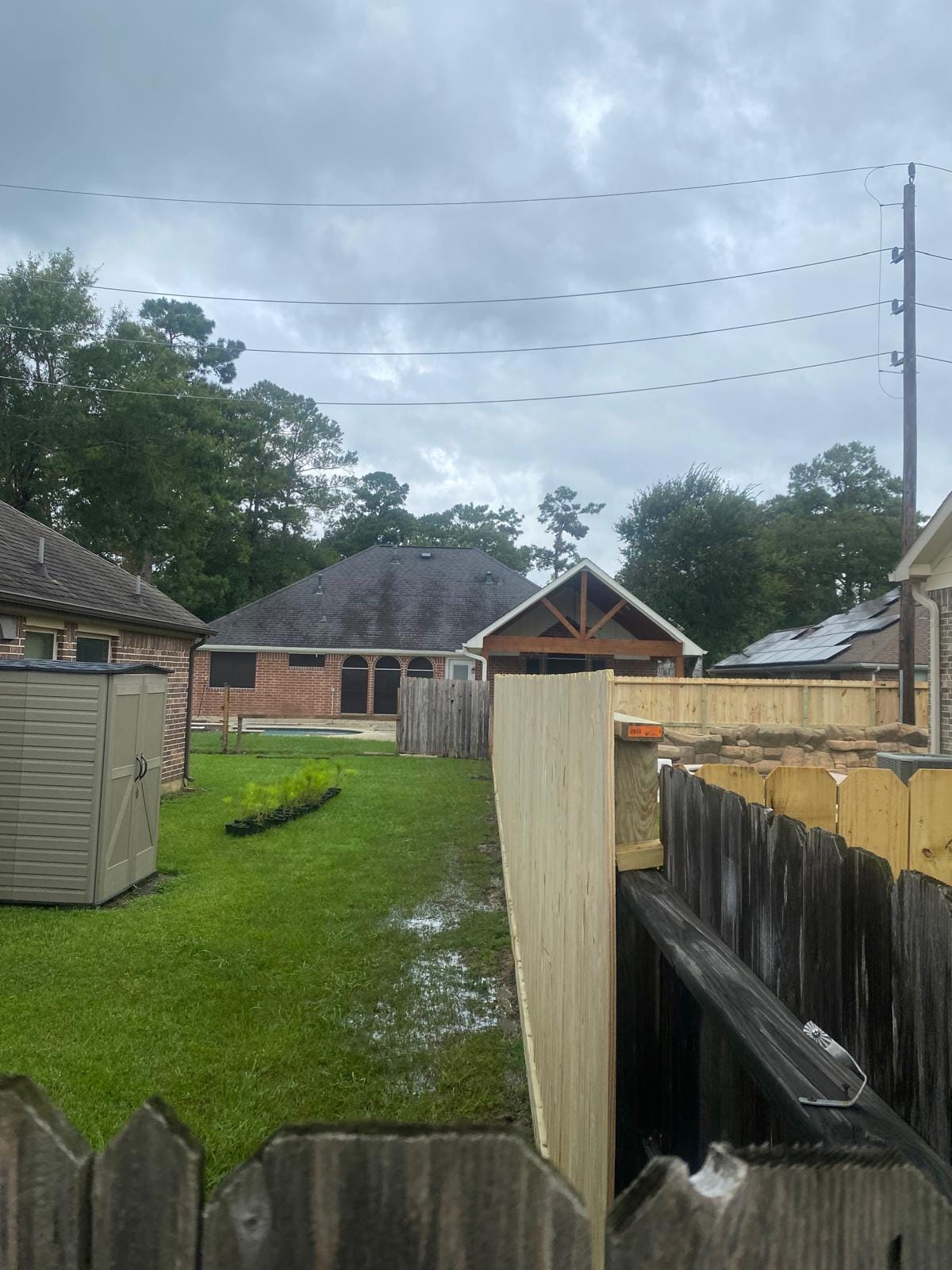
I have hired Mustang fencing services to fix my backyard fencing. Good wood to used. I really like theirs work. Best of luck
Reviews shown word for word from the Mustang Fencing Services Google Business Profile (Galveston), captured 2026-10-19.
Questions we get about this
How often should I reseal or restain a wood fence in Galveston’s humidity?
Does mildew on my fence mean it’s rotting?
Why do my fence nails or screws feel loose after a few years?
Should I let new wood weather before staining or painting it?
Is cedar lower-maintenance than pine in a humid climate?
Sources
Checked October 20, 2026. Rules change, so confirm with the City before you build.
- USDA Forest Products Laboratory, Wood Handbook: Wood as an Engineering Material (FPL-GTR-282, 2021), Ch. 13–14 — Table 13-1 (outdoor equilibrium moisture content, Gulf stations), Ch. 14 Gulf States air-drying/decay note.
- USDA Forest Products Laboratory, Wood Handbook, Ch. 16 Finishing Wood — Table 16-2 (expected finish service life, cedar/redwood siding); mildew/algae, extractive bleed, stain-blocking primers, and the pre-paint sun-exposure (“sunburn”) test.
- USDA Forest Products Laboratory, Wood Handbook, Ch. 8 Fasteners — Withdrawal resistance of nails subjected to wetting/drying cycles, “as low as 25%” of the seasoned-wood value.
Not sure if your fence needs repair or just a refinish?
A free on-site look can tell the difference between a finish problem, a hardware problem and real decay — before you spend on the wrong fix.